Mostrando entradas con la etiqueta Debra Lee Baldwin. Mostrar todas las entradas

miércoles, 3 de junio de 2026

Summer Prep for Winter Storms Amazing tips

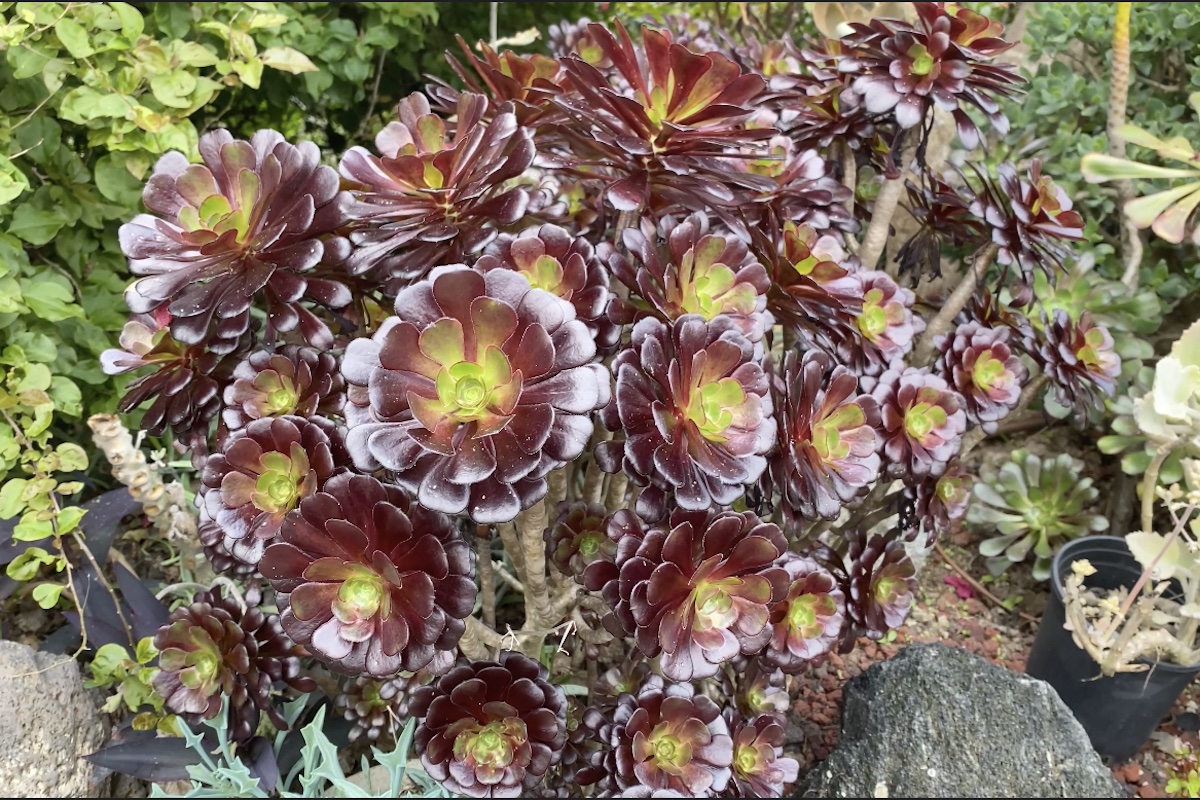
During rainy weather, succulents, which come from arid climates, may rot. Stems or trunks turn squishy and collapse. It may be possible to take cuttings from healthy top growth and restart the plants---as I did after one rainy winter with aeoniums. Fortunately, the rest of my succulents came through fine, despite double normal rainfall. After all, it's not water that causes roots to rot, but drowning from lack of oxygen (plus microbes).

If succulents occupy low-lying areas of your garden where rain tends to puddle, and you don't want to move the plants to higher ground, use a patio umbrella to keep them from being soaked. Channel run-off with rocks, sandbags or trenches; and top-dress soggy soil with pumice to absorb standing water.


Succulents in Hilo, Hawaii

Above: Agave attenuata, crassulas, yuccas and other succulents thrive in Hilo, Hawaii, where precipitation averages 200+ inches a year. Rain bathes the roots continually, but they stay aerated and healthy because the soil is fast-draining lava rock.

Snails love rain...and succulents

While gardening between El Niño storms, I inadvertently threw a snail through the open window of a passing pickup truck. I realized this because, unlike previously tossed mollusks, I didn't hear the sound of shell hitting asphalt. If the driver had stopped, I would've apologized and explained that it wasn't personal---at least not where he was concerned.

Snail on Succulent

The snail photo is from the first edition of Designing with Succulents, which means the snail would be 10+ years old had it lived. Of course it didn't.

Snails reproduce in abundance in wet weather and unless stopped chew unsightly holes in plants. This is truly a shame because succulents keep their leaves a long time. An environmentally friendly bait is Sluggo, but it's expensive, as are decollate (predator) snails---which in any case are not legal in every California county. The most expedient method, squashing underfoot, leaves a sticky residue on shoes. So I step on a leaf instead, which is one reason I grow nasturtiums. Set a snail on the ground, place a nasturtium leaf atop it, and step on it. If there's no crunch, find harder ground. But not your patio; snails stain.

Pumice absorbs moisture


The best soil amendment for succulents is pumice, a lightweight crushed volcanic rock that aerates the growing medium and absorbs excess moisture. I mix pumice half-and-half with bagged potting soil for containers; and with equal parts compost and garden soil or decomposed granite for in-ground beds. [Learn more about pumice.]

Related info

On this site:

How to Water Succulents These fleshy-leaved plants from hot, dry regions are designed to live off water stored in their leaves and tissues in order to survive periods without rainfall. But this doesn't mean you shouldn't water them at all...[Continue reading]

Learn about pumice. No other soil amendment is as widely used by succulent growers and collectors as pumice (crushed lava rock). Here’s why...[Continue reading]

Oh, No, My Succulents Froze!  Will succulents recover from frost damage? It depends. Here’s how frost-tender succulents looked before temps dropped into the mid-20s F, and after...[Continue reading]

Winter Protection for Succulents: Products  Soggy soil, dim light, high humidity and freezing temperatures can be death to succulents native to warm, arid climates. These items will help you get your succulents through cold, wet North American winters...[Continue reading]

On My YouTube channel: 

Why Succulents Rot and How to Prevent It
Why Rain is Good for Potted Succulents

Post-Rain Must-Do's for Succulent Gardens

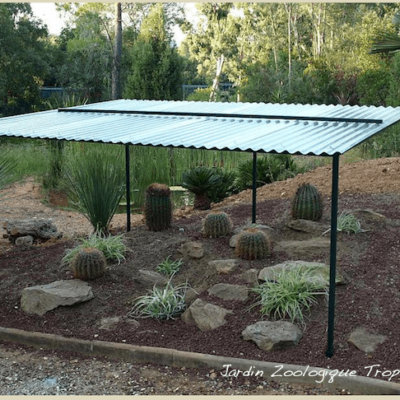
Succulents and Too Much Rain, A French Solution

Want to protect your succulents from too much rain? Here’s how the Jardin Zoologique Tropical in southeastern France keeps their succulents from becoming waterlogged during seasonal rainstorms. Corrugated fiberglass panels atop metal bars tent the plants so excess rain doesn’t soak the soil. The structures are tall enough to allow good air circulation, and the panels are translucent, enabling maximum sunlight to reach the plants. The…
Rain on agave (c) Debra Lee Baldwin

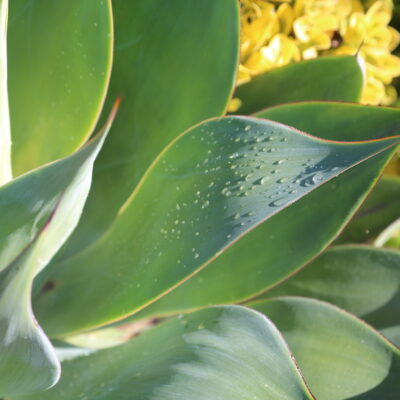
How Rain Benefits Succulents

Here’s how rain benefits succulents: It provides dissolved minerals and washes away dust that inhibits photosynthesis; it dilutes and flushes salts and harmful chemicals that have built up in the soil from tap water; and it provides nitrogen essential to growth,

The post Summer Prep for Winter Storms appeared first on Debra Lee Baldwin. Copyright © Debra Lee Baldwin.


from Debra Lee Baldwin https://ift.tt/jsl9Zbx
via IFTTT

miércoles, 14 de mayo de 2025

12 Collectible Succulents Anyone Can Grow Amazing tips

At the recent convention of the Cactus & Succulent Society of America (CSSA) in San Diego, it was fun to catch up with old friends and meet collectors, and vendors from all over. To break the ice, and because I was curious what they'd say, I asked a dozen experts:

Question for CSSA experts

My question for CSSA experts

Haworthias won by a narrow margin

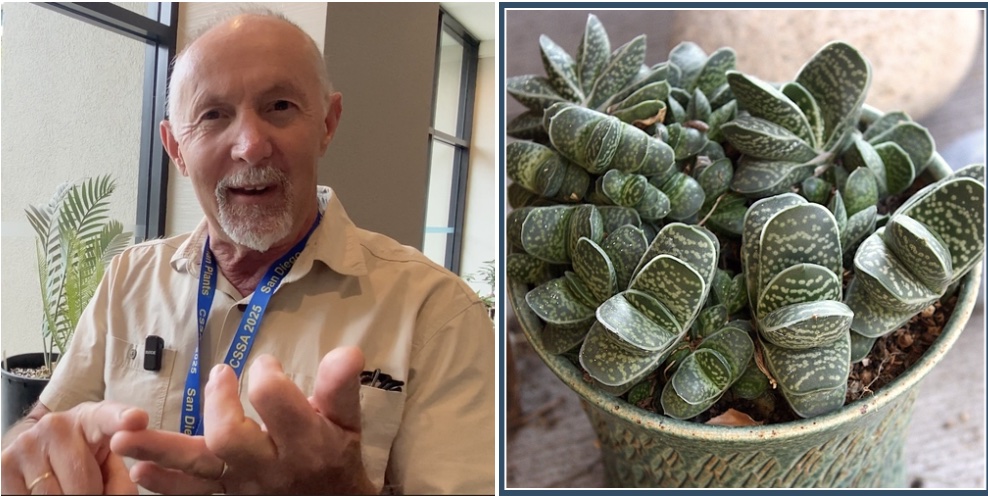
Attila Kapitany and Gasteria bicolor var. liliputana

Attila Kapitany and Gasteria bicolor var. liliputana

Surprisingly, only two chose the same type of succulent. Convention speaker Attila Kapitany from Australia said, "There are so many choices, but if anything, it has to be safe, hardy, versatile, non-poisonous, and non-spiny. Haworthias!" His second choice was gasterias. "A little more demanding, but just as versatile. And both haworthias and gasterias can grow indoors."

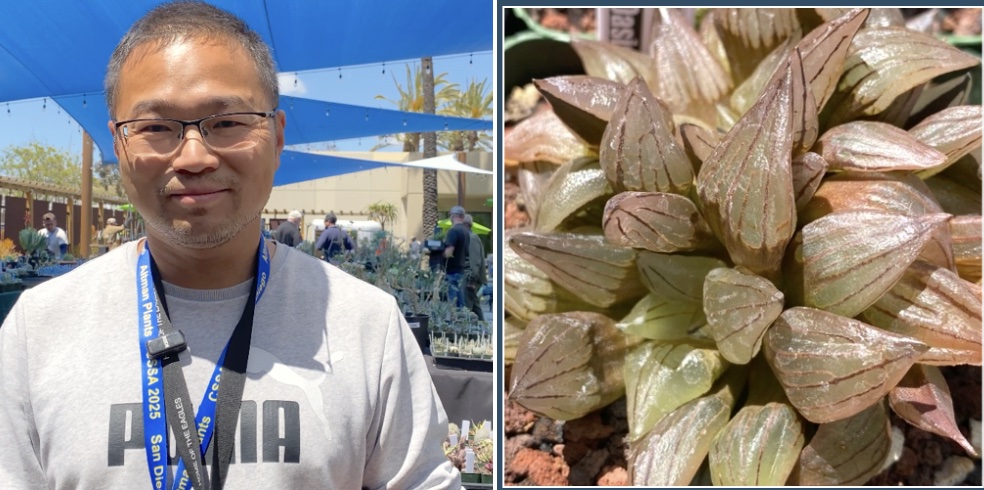
Jack Tian and Haworthia atrofusca 'Watermelon' (c) Debra Lee Baldwin

Jack Tian and Haworthia atrofusca 'Watermelon'

For beginners eager to collect unusual succulents but who "don't have much experience," Jack Tian of Thorn Oasis also recommends haworthias. They're widely grown, Jack said, adding that hybridizers in the US and beyond continually introduce new varieties with wonderful forms and patterns.

Euphorbias: one common, one unusual

Al Klein and Euphorbia obesa (c) Debra Lee Baldwin

Al Klein and Euphorbia obesa

Two expert growers, also vendors, recommended plants in the genus Euphorbia, but the species each chose couldn't be more different. Al Klein of Botanic Wonders went with bestselling Euphorbia obesa. He recommends growing "baseball plants" in a fast-draining mix---his is 80 percent pumice and 20 percent peat moss---in pots not much larger than the diameter of the plant. "Letting them get pot-bound is OK."

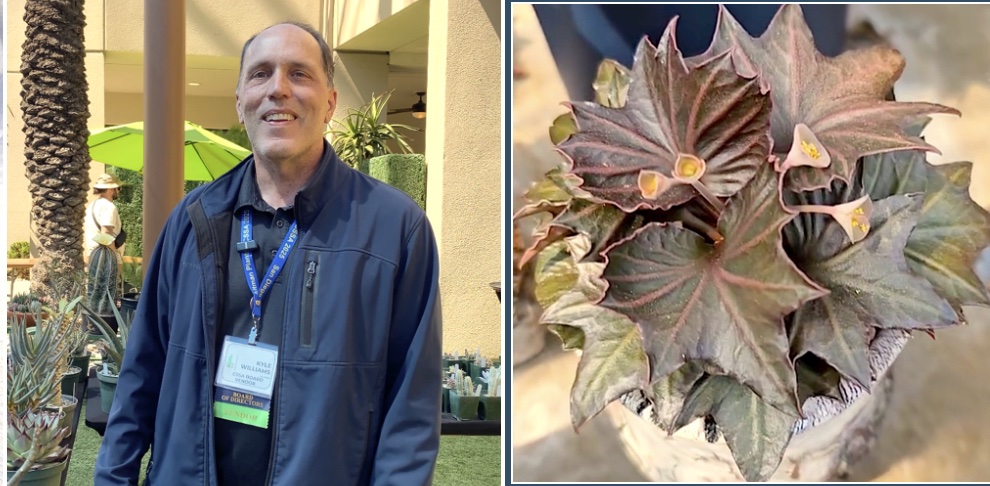
Kyle Williams and Euphorbia francoisii (c) Debra Lee Baldwin

Kyle Williams and Euphorbia francoisii

The other Euphorbia enthusiast, Kyle Williams of Kyle's Plants, surprisingly recommended obscure Euphorbia francoisii ("fran-SWA-see-eye"). Kyle, who often goes to Thailand, brings back these leafy, seed-grown succulents that form a caudex over time. Collectible Euphorbia francoisii specimens are multicolored, often with prominent veining, and may have overlapping, star-shaped leaves. "They're amazing houseplants," Kyle said. "They need low to medium light, and warm, even temperatures." And typical of succulents, "They don't want to be soaking wet, but don't let them go dry."

For cactus lovers

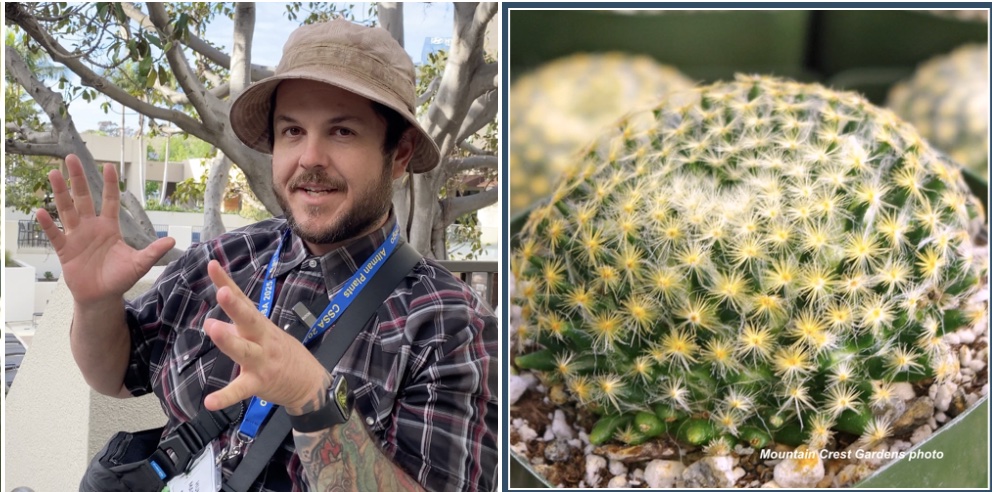
Hunter Martinez and Mammillaria shiedeana (c) Debra Lee Baldwin

Hunter Martinez and Mammillaria shiedeana

Collector Hunter Martinez of Cactus Quest on YouTube chose the genus Mammillaria, because "their geometry and forms are really beautiful." For people who don't like spines, he suggests mams with fine, flexible, pectinate spines, which are "more like feathers covering the body than knives sticking out." One pectinate species Hunter is "infatuated" with after seeing it in habitat in Querétaro, Mexico is Mammillaria shiedeana.

Ralph Moran with San Pedro cactus (Echinopsis pachanoi) (c) Debra Lee Baldwin

Ralph Moran with San Pedro cactus (Echinopsis pachanoi)

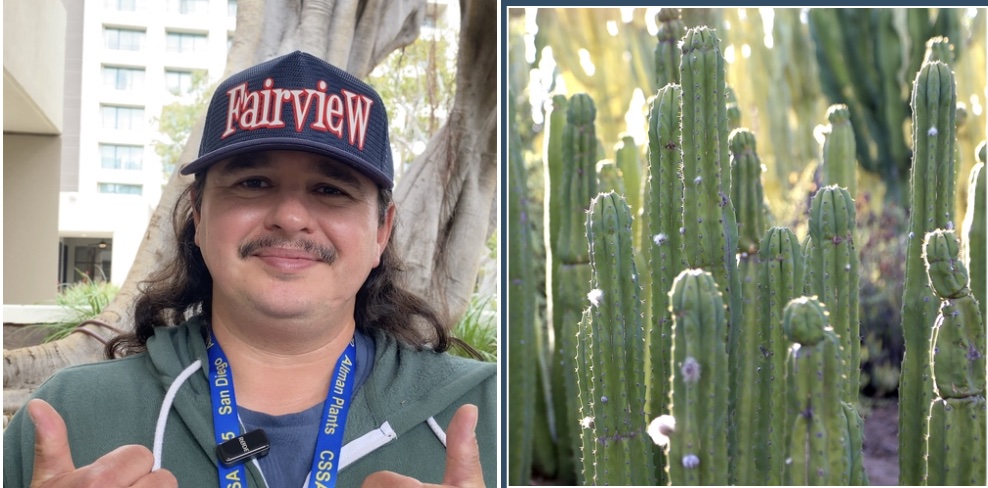
Ralph Moran is a horticulturalist on staff at the San Diego Zoo, where the plant collection exceeds that of the animals. He likes how easy succulents are to propagate and grow. One he said is "so common people give it away," makes a statement in any landscape and starts readily from cuttings: Echinopsis (Trichocereus) pachanoi (San Pedro cactus). "Chop, callus, plant," Ralph said with a smile. "Neglect them, water whenever, and they'll give you a nice, tall, columnar cactus."

Aloes tall and small

Phuc Huynh with dwarf aloe hybrids (c) Debra Lee Baldwin

Phúc Huynh with a pot of sedum and dwarf Aloe hybrids

Phúc Huynh ("Fook Hwin") from Redlands, CA, serves on the CSSA Board of Directors. He recommends aloes as a genus that's rewarding, easy-care, and fast-growing. Phúc personally prefers tree aloes (now split into Aloidendron), but for beginners, he suggests such in-ground varieties as Aloe vera, Aloe cameronii, or others in nurseries and garden centers. For pots, Phúc recommends colorful, dwarf cultivars from Altman Plants. (Which are sold at Oasis nursery north of San Diego -- DLB.)

Online live-sale vendors

Rita Lunceford with spiral cactus (Cereus forbesii spiralis) (c) Debra Lee Baldwin

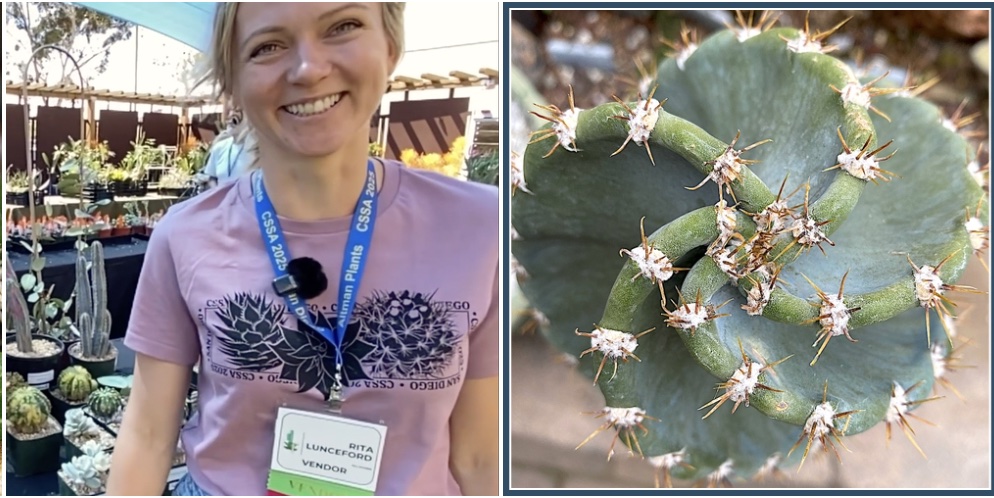
Rita Lunceford with spiral cactus (Cereus forbesii spiralis)

Rita Lunceford of Grow Margo and Poon Thongpool of Beleaf and Grow both have online shops specializing in succulents and exotics, and both do live sales. For beginning collectors, Rita recommends one of her bestsellers: spiral cactus (Cereus forbesii spiralis).

Poon Thongpool with Dracaena (Sansevieria) 'Moonshine' (c) Debra Lee Baldwin

Poon Thongpool with Dracaena (Sansevieria) 'Moonshine'

Poon, originally from Thailand, imports plants from there, China, and Italy. She suggested sansevierias (now lumped with Dracaena), especially her favorite: silvery-green 'Moonshine'.

Btw, if you're looking for a particular succulent, Poon or Rita might be able to help. Both keep up with what's available from growers in San Diego and beyond.

For the climate-challenged

Cindy and Richard Schreiber with Crassula ovata (pink variety)

Cindy and Richard Schreiber with Crassula ovata

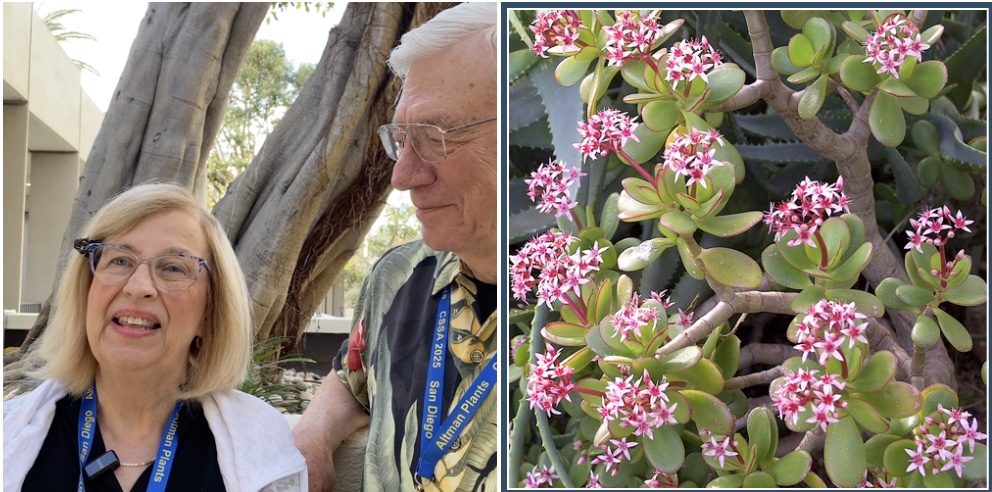
Richard Schreiber, president of the Mid-Iowa CSS in Des Moines, and his wife---club treasurer Cindy Schreiber---suggest that aspiring collectors who contend with harsh winters start with jade (Crassula ovata), of which there are many varieties. To get them to flower indoors, Cindy says, "Take them outside so they're happy all spring and summer, and when you bring them indoors in September, you'll notice they'll have little buds." She added that "shorter days and longer nights are what causes them to bloom."

Addictive caudiciforms

Tina Zucker with Pachypodium brevicaule (c) Debra Lee Baldwin

Tina Zucker with Pachypodium brevicaule

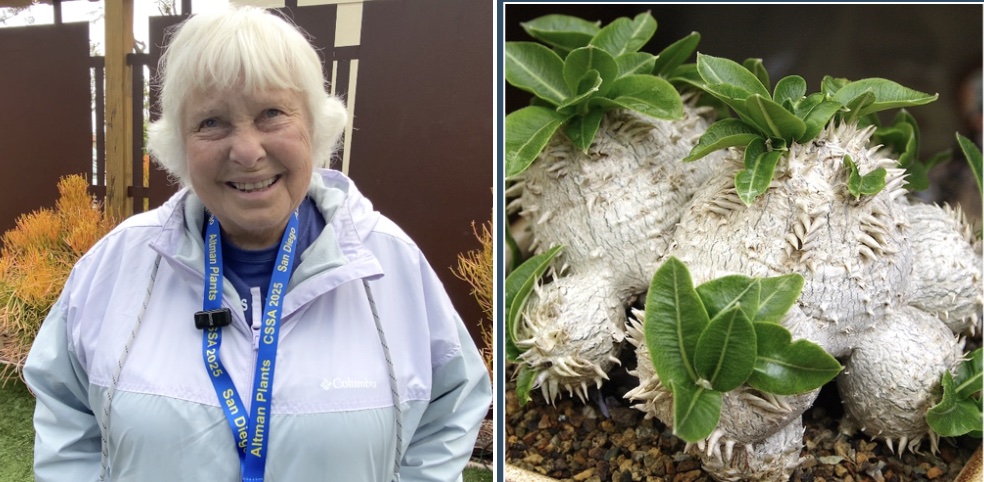
San Diego CSS member Tina Zucker has been collecting, propagating and selling succulents for nearly 50 years. What first  excited her about succulents were caudiciforms: plants with a caudex---a thickened, fleshy, bulb-like base or trunk that stores water and nutrients. Many caudiciforms are succulents, despite having thin leaves. "They're addicting," Tina says. "There are so many kinds."

Agaves and More

Gerhard Bock and Agave victoriae-reginae (c) Debra Lee Baldwin

Gerhard Bock and Agave victoriae-reginae

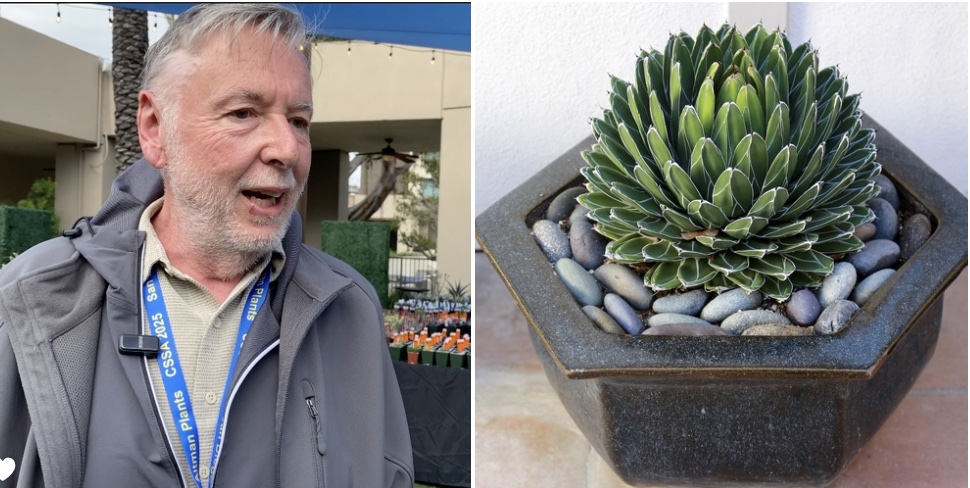
Agaves are still his first love, says another plant addict: Gerhard Bock, who does the popular blog, "Succulents and More." "They're so variable," he explained. Gesturing to juvenile agaves in the sale area, including Agave albopilosa, he added, "you might think those were completely unrelated plants." Agaves that get large "make great landscape plants," Gerhard noted, "and small ones make great potted specimens." His favorite species? Agave victoriae-reginae. "It has beautiful markings, and can live in a pot for 30 years before flowering."

Related Info on This Site

Types of Succulents from Aeonium to Zebra Plant, Photos & IDs

Debra’s Dozen Easy-Grow Succulent Plants for Beginners
Trying to make sense out of succulents? There are numerous varieties, but these are the most common succulents and those you’ll likely run across. Enjoy growing and discovering these fascinating “plants that drink responsibly!”

The post 12 Collectible Succulents Anyone Can Grow appeared first on Debra Lee Baldwin. Copyright © Debra Lee Baldwin.


from Debra Lee Baldwin https://ift.tt/iskYZyV
via IFTTT

jueves, 1 de mayo de 2025

May Succulent News & Events Amazing tips

We've an exciting May ahead! Here's what you can look forward to, succulently speaking, during this merry month.

Sat., May 17: Join me at Wanda's

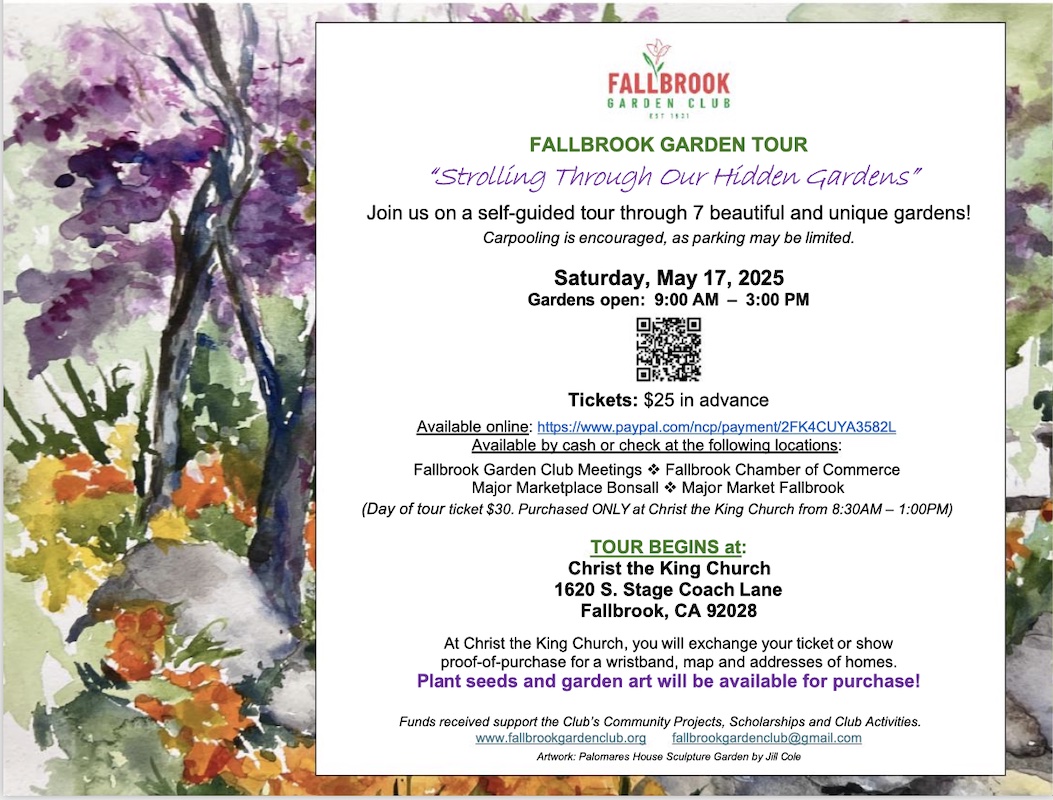
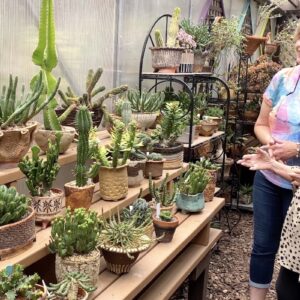
I'm a docent during the Fallbrook Garden Tour at Wanda Mallen's garden (yes, THE Wanda Mallen, shown above in her garden with yours truly).

Fallbrook Garden Tour 2025

Fallbrook Garden Tour 2025

A group of professional landscape designers recently toured her two-acre estate, so that tells you there's more to see at Wanda's than merely (!) her renowned potted collection of rare and oddball succulents. Mature, exotic trees---many in bloom---provide an ideal microclimate for cycads, in-ground succulents, and numerous other lovelies.

Sat., May 24: My Palomar Presentation---Do Come!

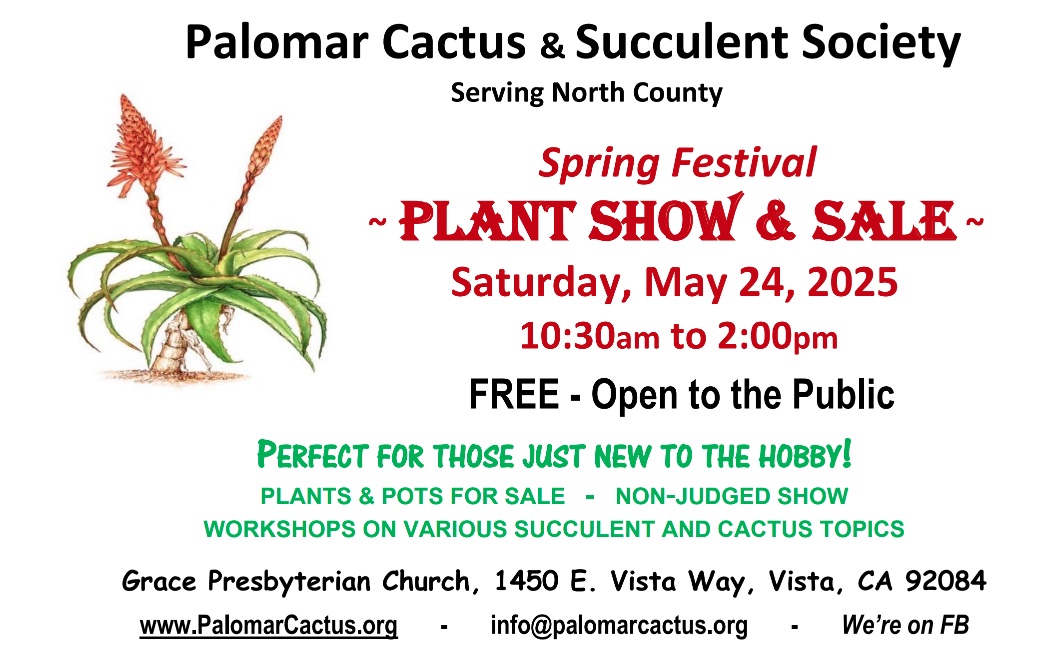
At the Palomar Cactus & Succulent Society's spring show-and-sale I'll present Why Aeoniums are Perfect Landscape Succulents. You'll see wildly colorful cultivars, learn their pedigrees,  and get cultivation and care tips.

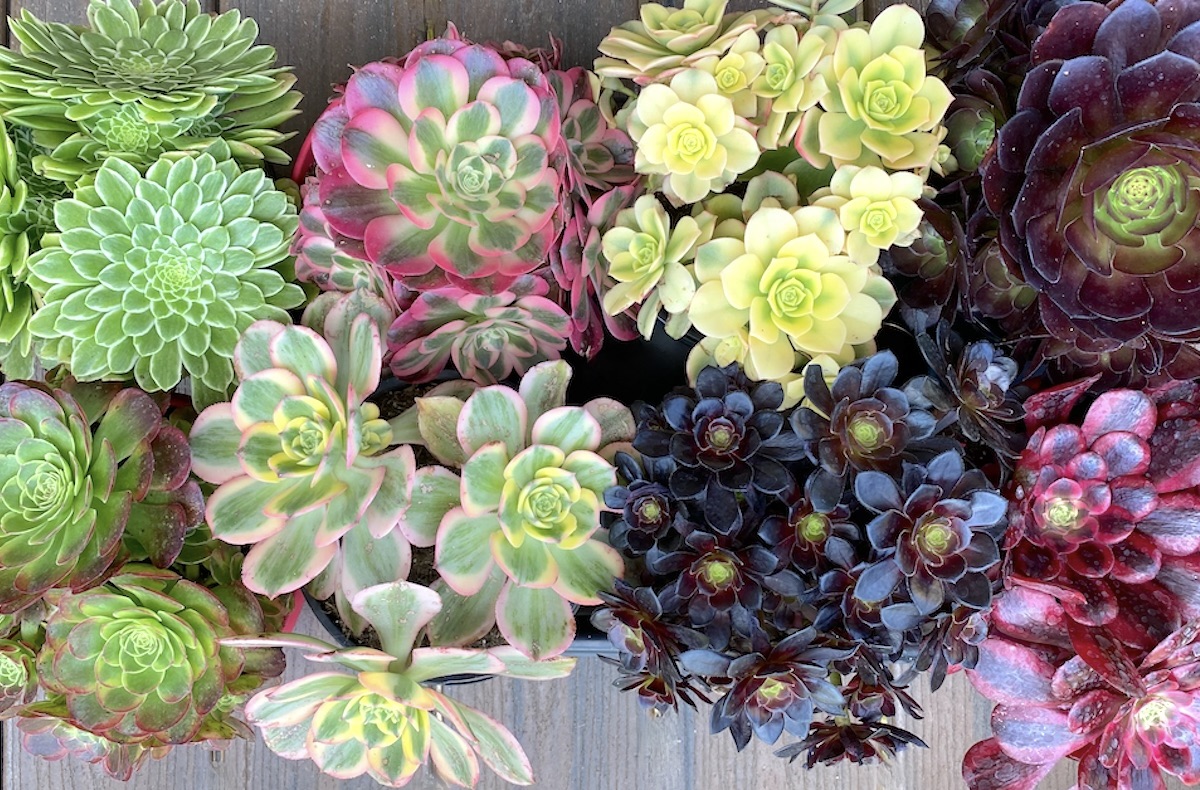
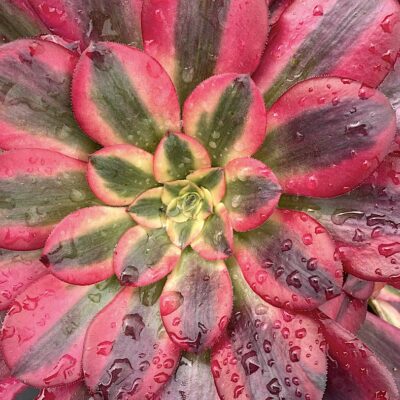
Colorful pinwheel succulents, Aeonium carnival cultivars (c) Debra Lee Baldwin

I'm bringing these and more to show-and-tell at the Palomar event.

Notice the new location:

Palomar CSS spring show flier 2025


Should you attend a Cactus & Succulent Society show-and-sale near you? Absolutely! Find out why in my recent interview with Fiona Ng, Weekend Editor, LAist (NPR).

Showy hesperaloes

Currently in bloom is a landscape succulent good planted in multiples: Hesperaloe parviflora. These desert natives with upright, slender, gray-green leaves get several feet high. They make great, easy-care, dry-garden filler plants.

Hesperaloe 'Brake Lights' (Monrovia photo)

Hesperaloe 'Brake Lights' (Monrovia photo)

Flowers that line tall, slender stalks vary from red through shades of pink, orange and yellow. One cultivar with vibrant red blooms is 'Brakelights', perhaps because in Arizona (where it's planted in street medians), drivers slam on their brakes for a closer look.

Ice plants ablaze

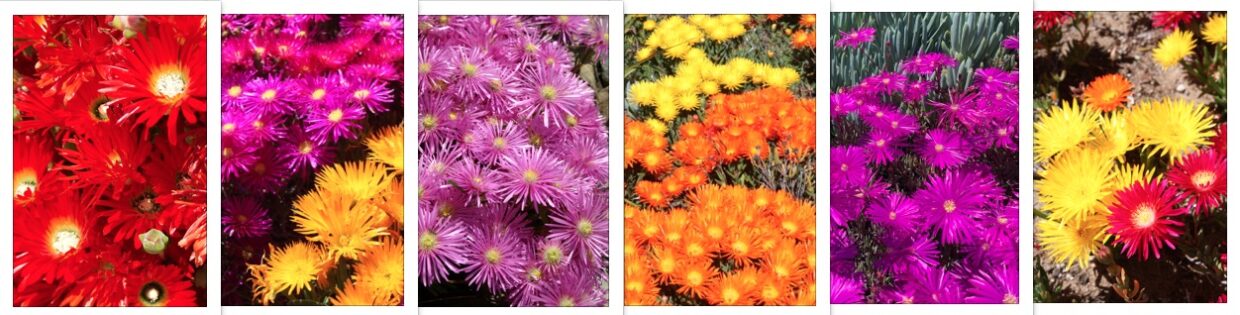
Ice plant colors (c) Debra Lee Baldwin

Ice plants in bloom now

These ground-cover succulents are low green shrubs until all hues break loose in spring. Now's time to select colors. Find ideas and IDs on my site: Ice Plant Uses, Photos and Varieties.

In your yard now, wow!

Also on my May calendar is "watch for baby birds." You can tell them apart from their same-sized parents by the way they flutter, beg, and cheep-cheep-cheep. Nothing cuter. Enjoy and discover fresh fledglings in my video:

Attending the Fallbrook tour? And/or the Palomar CSS Show-and-Sale? LMK in the Comments!

Coming soon to my YouTube channel: "Collectible Succulents Anyone Can Grow." Insights from engaging experts I interviewed at the recent biennial CSSA convention.

Related Info on this site

Wanda Mallen and Debra Lee Baldwin with Wanda's euphorbia collection (c) Debra Lee Baldwin

Wanda’s Collection of Weird & Wonderful Plants

Wanda Mallen’s collection of weird and wonderful plants on two acres in Fallbrook, CA, is a must-see for succulent enthusiasts.  For 25 years she’s directed husband Gary Vincent in planting (sometimes jackhammering) the property’s decomposed granite substrate. “The good thing is DG drains well,” Wanda says. The result is a many-layered landscape unlike any other.…
Red striped aeonium succulents (c) Debra Lee Baldwin
Red and Pink Aeoniums, Varieties and Care

I was excited to see “Carnival” Aeonium cultivars at Oasis Nursery in Escondido, CA.  A spokesperson for Altman Plants (which owns Oasis) told me these pink-and-ruby beauties “are going out to garden centers as a limited item through April.” To create new hybrids striped with red, pink, cream, green, or yellow, breeders likely crossed dark…

The post May Succulent News & Events appeared first on Debra Lee Baldwin. Copyright © Debra Lee Baldwin.


from Debra Lee Baldwin https://ift.tt/dW4ADVy
via IFTTT

sábado, 19 de abril de 2025

Carol’s Cuttings and Craigslist Garden Amazing tips

Scroll down to see a gallery of Carol's best-performing succulents, all ID'd.

What Carol Kent has achieved on her quarter-acre lot shows what a homeowner can accomplish with a can-do attitude, a love of gardening, and minimal cost.

A former boat captain, Carol created two distinctive succulent gardens: a sea-themed backyard with gorgeous plants and great stories; and a high-style, front-yard tapestry complete with a dry creek bed.

Free items from Craigslist

"While I was doing this, I'd check Craigslist several times a day," Carol says. "I love saving money." Freebies include boulders, crushed rock and pebble topdressings, and decorative accessories. Husband Patrick helped with irrigation and electrical installation, and hauling heavy items.

Laura Eubanks' influence

To get ideas, learn techniques, and better understand succulents and their care, Carol consulted my book Designing with Succulents and watched YouTube videos by landscape designer Laura Eubanks of Design for Serenity. Laura's known for using mounded soil, boulders, swaths of rocks, colorful succulents, and dramatic statement plants. She suggested I visit Carol and see her "DIY dream come true."

When I visited, Carol had finished her front yard, a two-month project. She had grown nearly all the succulents herself from cuttings.

How much she saved

Cost of Carol's garden

Based on bids from landscapers, Carol saved over $200K by doing both gardens herself. Plus she enjoyed tracking down bargains and the creativity of designing and planting the areas.

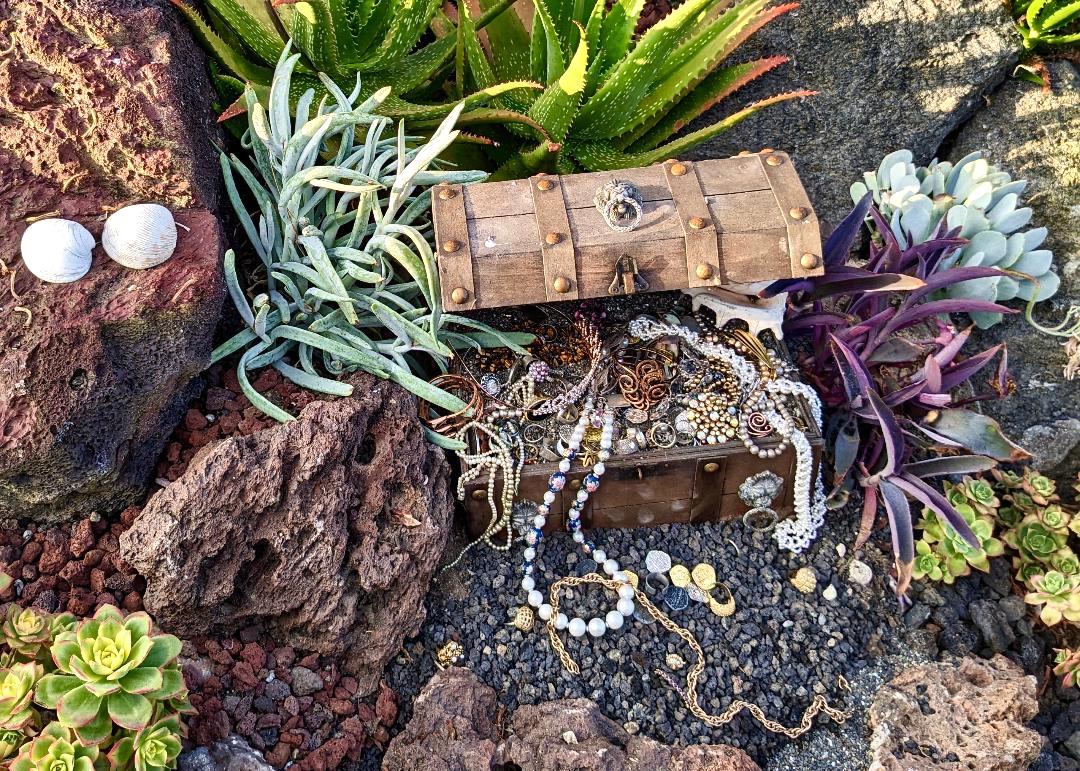
Carol on the garden's treasure chest

"I had been thinking of adding a treasure chest for a year or two and almost added a large one since there are many free chests on Craigslist. Then I found this small one on Etsy and thought I’d try it, but I wasn’t sure what to put in it.

Undersea garden treasure chest

Treasure chest of keepsake jewelry

"I was going through my Mom’s jewelry and a lightbulb went off. I could fill it with costume jewelry that I have from people that have passed away (my Mom, Patrick’s Mom, and a few friends).

So every day when I’m out in the garden, I pass by this chest and think about people who added so much joy to my life."

Carol on discouraging critters

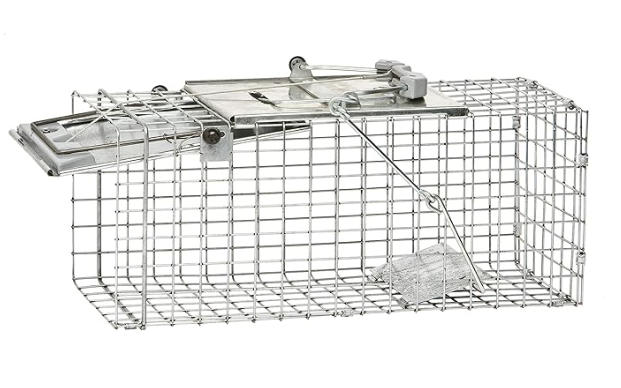
"I have two barking dog sensors from Ranxinyuan on Amazon. One is about 3 years old; the other is 1-1/2 years old, and both are still working.
"I used them in the front yard to keep the sweet neighborhood cats out while the fresh dirt was exposed. Now I just use them in the back.
Havahart trap

Havahart Trap 

The humane trap is by Havahart that I got on Amazon three years ago. Works great."

Carol on her garden lighting

"I would not have even thought about lighting if it hadn’t been for Laura Eubanks' videos, where she says it’s like having a second garden.
"Patrick and I still can’t believe how much joy the lighting brings us.
Low voltage landscape lights

Low voltage landscape lights

"We used 5W low voltage LED Landscape lights from Eleglo. We had talked to people who bought expensive ones that started breaking in 1-2 years. So we went with the moderately inexpensive ones (which was counterintuitive).
"We’ve used 22 lights so far. The ones in the back are 4 years old and we haven’t had a single problem.
(Above links are affiliate.)

Carol on irrigation

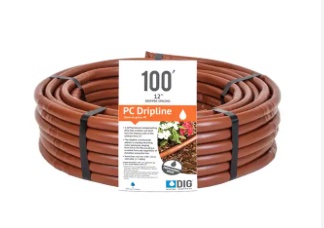
"I got irrigation lines from Home Depot or Site One. I bury both types of line, half-inch and quarter-inch. I use the quarter-inch with emitters every 6 inches. I'm amazed that only one emitter has failed in more than 4 years.
Drip tubing

Drip tubing, 1/2-inch

"Of course I've cut them with a trowel or shovel, and twice ponytail palms have grown so big and put so much pressure on the lines that they have popped out. Even so, I'm very pleased."
More helpful links 

Landscape designer Laura Eubanks of Design for Serenity on YouTube.

Short video several years earlier by Laura Eubanks of Carol's undersea garden (before Carol did the front yard) to help promote Clairemont Garden Tour.

Laura Eubanks' team shows irrigation installation tips, YouTube video.

Laura Eubanks' Day One of a succulent front yard installation, YouTube video.

Vista Succulent Nursery

Waterwise Botanicals Nursery

Oasis Water Efficient Gardens

Great Soil 

Gallery of Carol's top performers

Related Info on this Site

Large succulent garden of rescued plants (c) Debra Lee Baldwin

Jodi’s Grand Garden of Rescued Succulents

Jodi and John Visosky’s garden in Spring Valley, CA, showcases thousands of mature succulents on nearly an acre. Although the landscaping looks decades old, the large plants have been there fewer than five years. How’s that possible? The couple rescue and re-home cacti and succulents that are up for grabs. Most had become too big…

Hannah Eubanks succulent reef garden (c) Debra Lee Baldwin

Hannah’s Stunning Succulent Reef

Hannah Eubanks, 24, shows us a stunning succulent reef garden she created for a client in Vista, CA. The youngest of three daughters of celebrity landscaper Laura Eubanks, Hannah expedited the project start-to-finish. “My mom was totally hand’s-off,” she says proudly.

The post Carol’s Cuttings and Craigslist Garden appeared first on Debra Lee Baldwin. Copyright © Debra Lee Baldwin.


from Debra Lee Baldwin https://ift.tt/Tt6eaGb
via IFTTT