domingo, 22 de abril de 2018

The Joys of Cholla (Cylindropuntia) Amazing tips

In Baja recently I was showing off my knowledge of native succulents when one “got” me. The friend who was taking a video with my phone gasped when I unsuccessfully tried to set a 3-inch-long chunk of cholla (“choy-ah”) cactus back onto a boulder. It resolutely clung to my fingers.

When I tried to shake it off, the cholla hopped into a more secure position. Next I tried to remove it with my other hand, and spines stuck to that one too. Wow, what a determined little cactus!

I had help removing these cholla spines. Watch the 20-second tweezered extraction.

Cylindropuntia, of which there are 30+ species, are sometimes referred to as “jumping chollas” or “horse cripplers.” Like many other succulents, chollas reproduce via both seeds and cuttings. Cylindrical joints detach readily from the mother plant and cling with astonishing tenacity to whomever or whatever brushed them. They take root where they fall off, usually far enough from the original plant so they’re not competing with it for water, sun or nutrients.
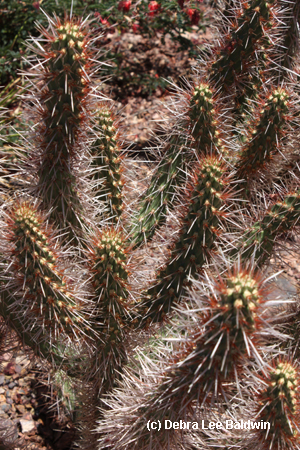


My Mexico experience reminded me of when I addressed the Tucson Cactus & Succulent Society, where I made the mistake of saying I don’t recommend that anyone grow cholla. “Could there be a more unfriendly plant?” I asked the group. Well, you’d think I’d insulted the entire state of Arizona.
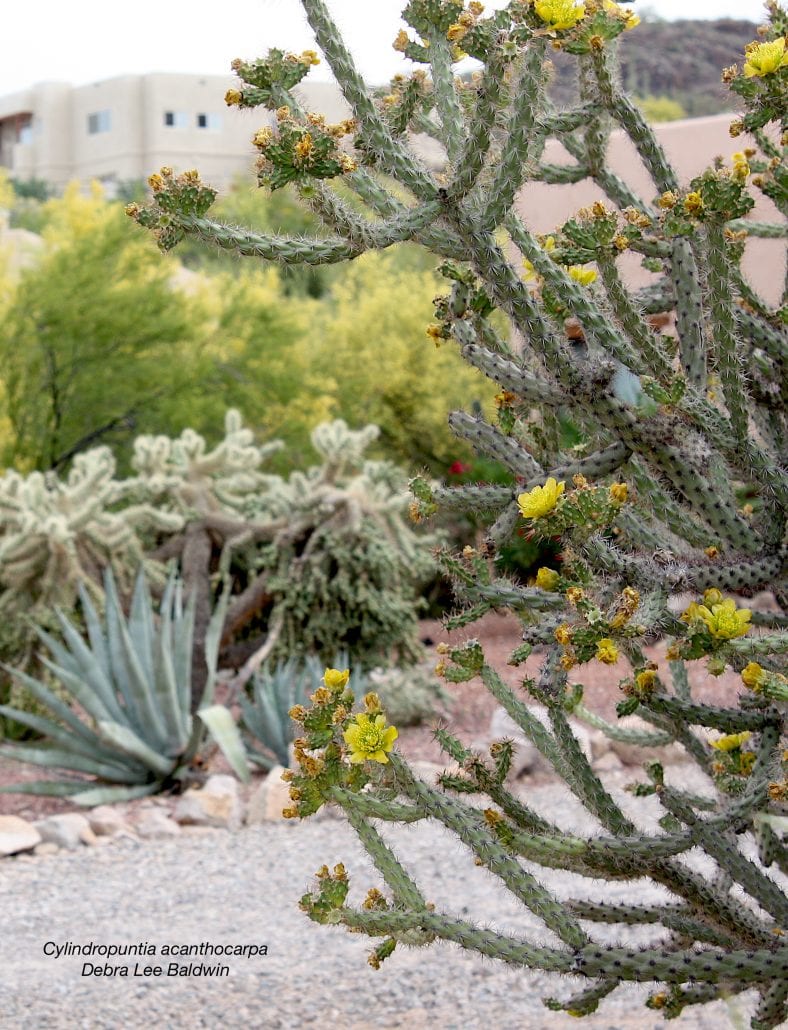
“There are more than a dozen different species,” members told me, each more eager than the last to extol the virtues of cylindropuntias. “Cholla is beautiful.”

“This is my cholla comb,” one told me, pulling a small comb from his shirt pocket. “If I get spines in my clothing or skin, I just comb them out.”

A mourning dove nests in Cylindropuntia fulgida at the Arizona-Sonora Desert Museum near Tucson.

“Cholla is an important part of the desert ecology,” said another. “Nesting birds feel safe in it. Snakes, coyotes and other predators can’t get to them or their young.” Birds aren’t alone in using cholla as a security enhancement, she added. “I have it below my bedroom window to keep burglars out.”

Intrigued, I went on a cholla hunt. I found this orange-flowered one at Tohona Chul botanic garden near Tucson. Not bad looking, considering it survives broiling desert heat and temperatures below freezing, with no water for months.

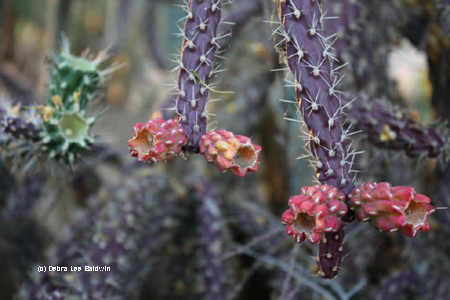
Cholla comes in more colors than I’d assumed—not just its flowers, but even its spines and skin. The specimen of Cylindropuntia versicolor above has green, rose-red and maroon segments, and translucent, rust-red flowers.

Cylindropuntia bigelovii is commonly called teddy bear cholla. Look how fuzzy it is, and its cute little ears. Like all chollas—like most spiny cacti, for that matter—it’s beautiful backlit.
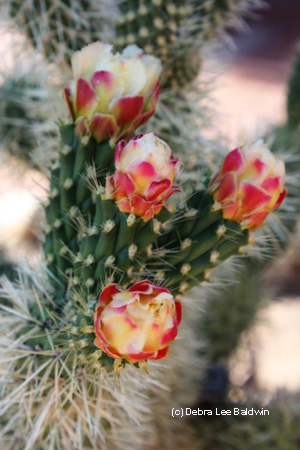

The flower petals of teddy bear cholla are buttery yellow tipped in rose-red.
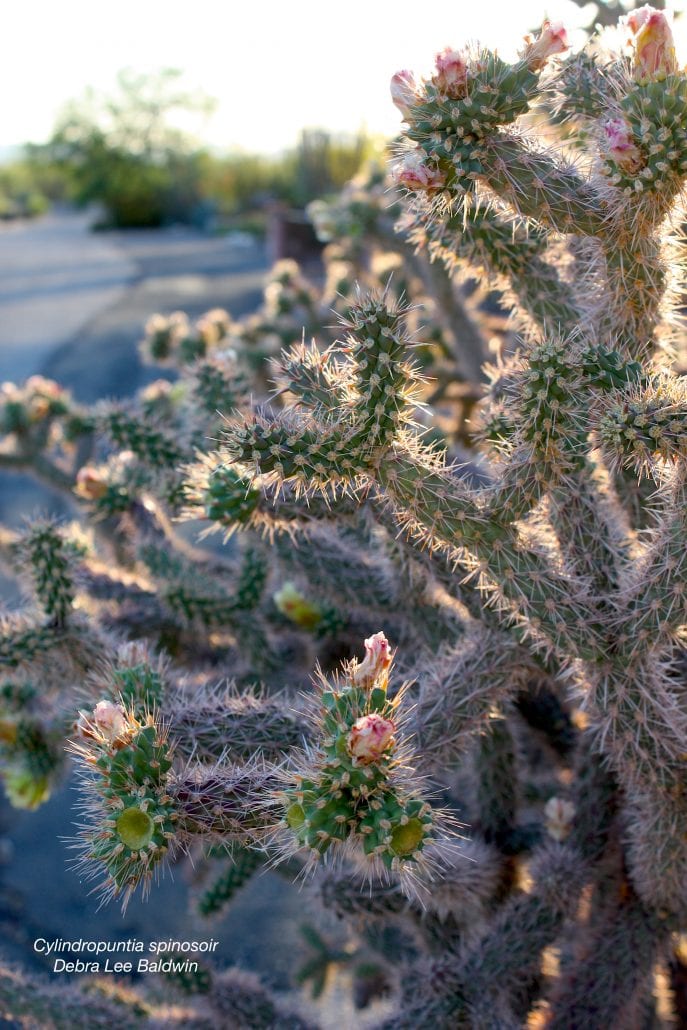
Cylindropuntia spinosoir, illuminated by late afternoon sun in a Tucson suburb, glows pink.

Cylindropuntia fulgida var. mammillata (chain fruit cholla) forms ropy, pendant strands. Doesn’t this one look like a face?

Diamond cholla at the Desert Botanical Garden in Phoenix.

Cylindropuntia ramosissima, aka diamond cholla, has pencil-thin stems lined with glittering, translucent toothpicks.

I pretended to hug a Cylindropuntia fulgida, then sent this photo to my new friends at the Tucson Cactus & Succulent Society.

As for my Mexico adventure, what was it about those spines that made them stick? Like those of all cacti, cholla spines are modified leaves. But cholla spines differ in that they have papery sheaths lined with microscopic barbs. Try to pull one from your skin, and you’ll discover it’s well anchored. Sure it’ll come out, but if a bit of barb remains, you’ll feel it whenever pressure is applied to the area. If that’s just too annoying, you may have to dig it out with a needle.

“Living and working around cactus is an art that requires the balance of a dancer, the strength of a weight lifter and a high tolerance for pain,” one of my favorite authors, Maureen Gilmer, wrote in the Desert Sun. “In time we become immune to the arrows of these New World beauties, and in all our homes are the tools of the trade. These are the magnifying glass, sharp needles and tweezers with a bit of Neosporin afterwards if the going gets bloody.”

Fortunately, “my” cholla’s spines were shallowly embeded. The only thing that stung was my pride.


Related Info

On this site:
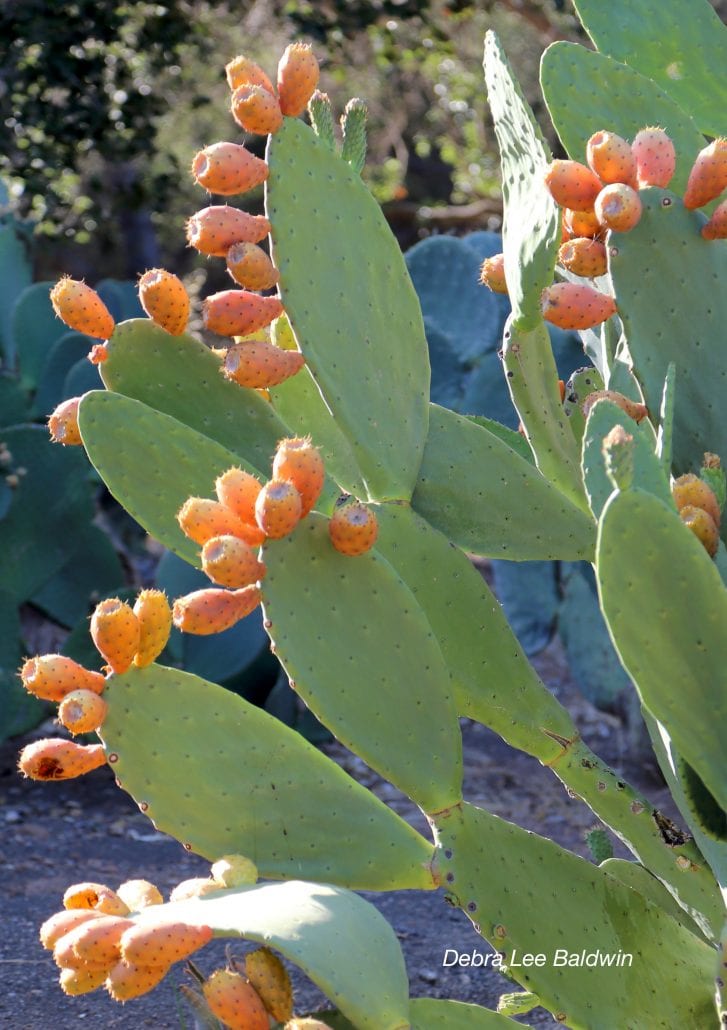
Of the dozen or so types of cacti in my garden, I have more opuntias than any other. Also known as paddle cactus or prickly pear, Opuntia species have stems shaped like [Continue reading]


Is Cactus the New Black?

Aug. 9, 2017 — Long a pariah plant, cactus is becoming cool. Spiny succulents are following smooth ones in popularity, notably in [Continue reading]
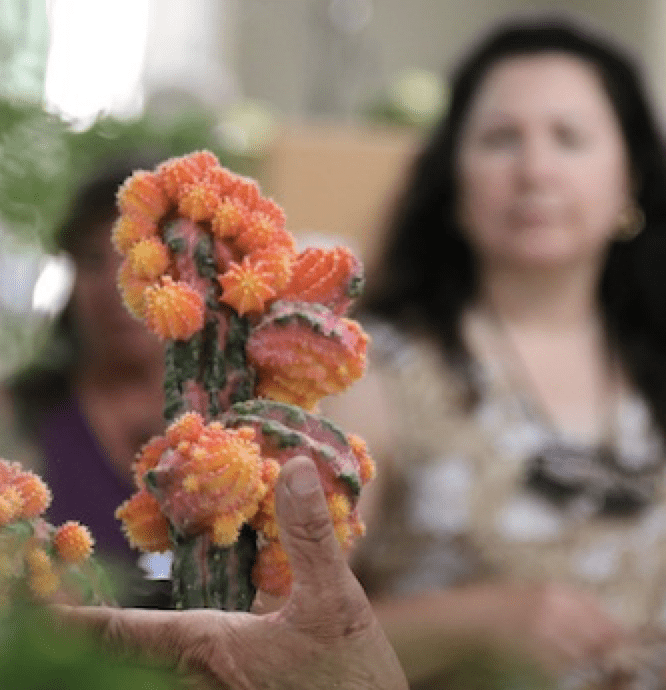
Succulent enthusiasts flock to the annual Cactus & Succulent Society Show at the Los Angeles Arboretum mid-August. It’s the largest of its kind in [Continue reading]

The post The Joys of Cholla (Cylindropuntia) appeared first on Succulents and Succulent Garden Design | Debra Lee Baldwin.


from Succulents and Succulent Garden Design | Debra Lee Baldwin https://ift.tt/2K8VADd
via IFTTT

Why Grow Paddle Cacti? DLB’s 16 Reasons Amazing tips

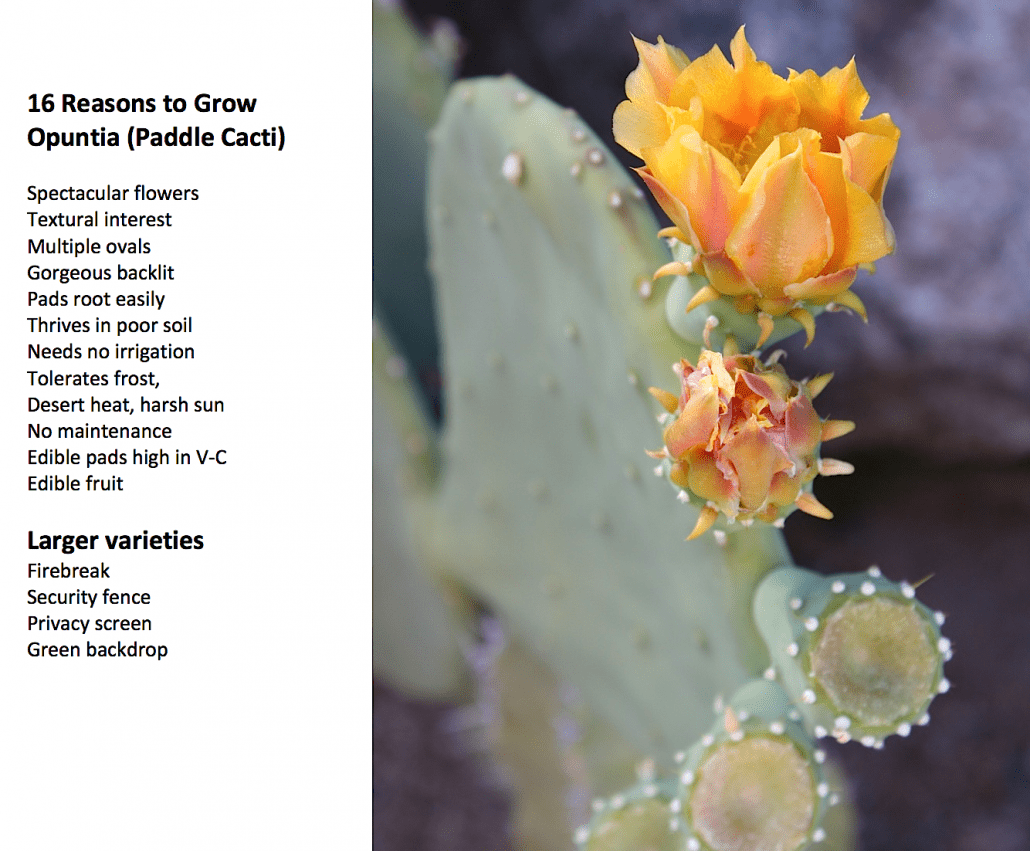
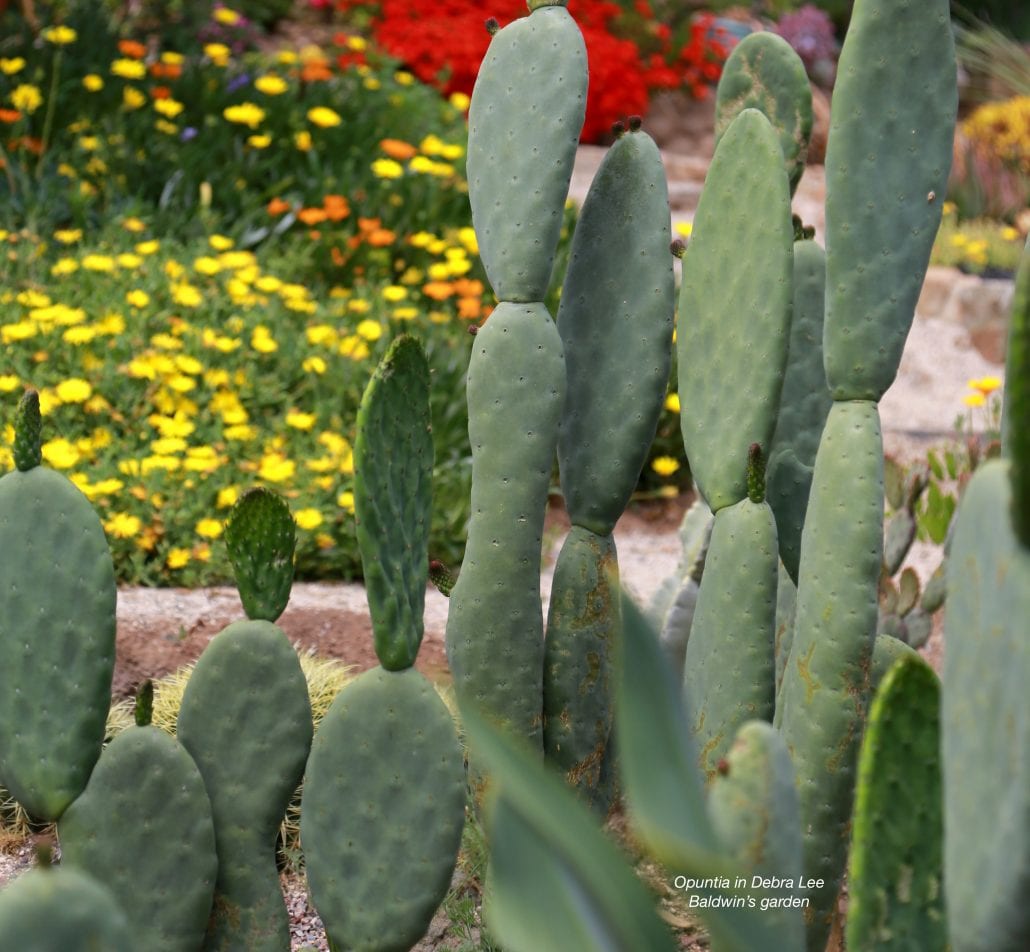
Of the dozen or so types of cacti in my garden, I have more opuntias than any other. Also known as paddle cactus or prickly pear, Opuntia species have stems shaped like ping-pong paddles. New pads grow from older ones after rains drench the roots and help fuel new growth. Typically these new pads, and flowers that turn into fruit, form along the edge of the pads and orient themselves for maximum sun exposure. For garden plants, I prefer spineless or near-spineless varieties, like Opuntia cacanapa ‘Ellisiana’, O. ‘Burbank’s Spineless’ and O. ficus-indica. These grow from 3 to 7 feet tall.

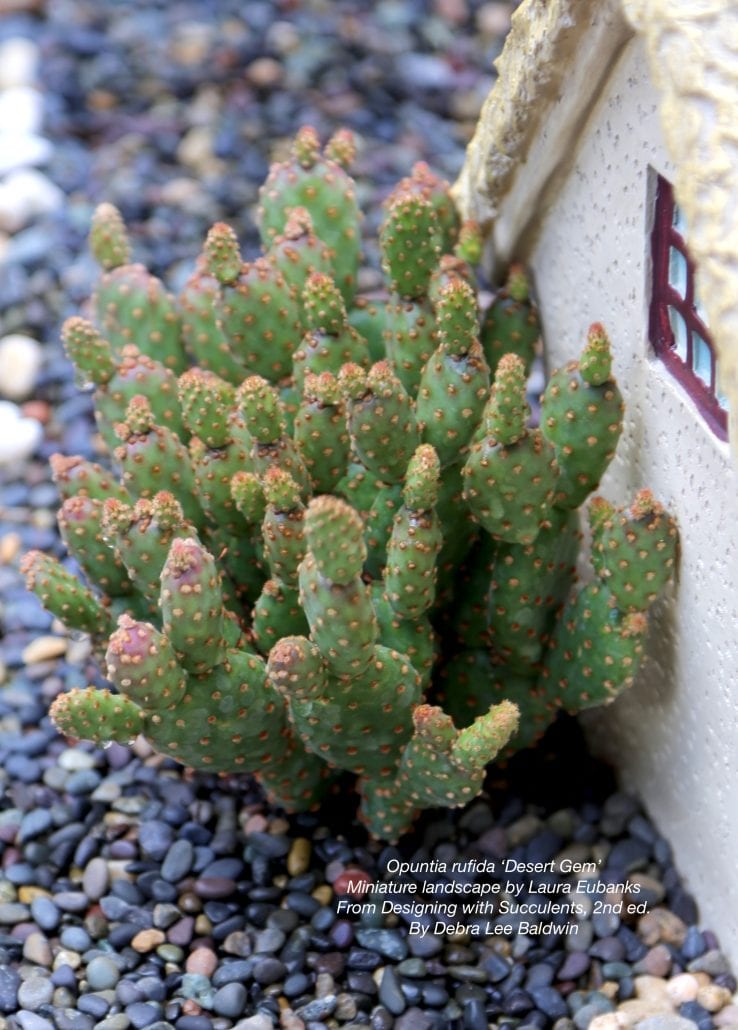
I also have dwarf varieties in my miniature landscape, which I designed to suggest a Latin American mountain town. Photos of it and the specimen below are in my book, Designing with Succulents, 2nd ed.

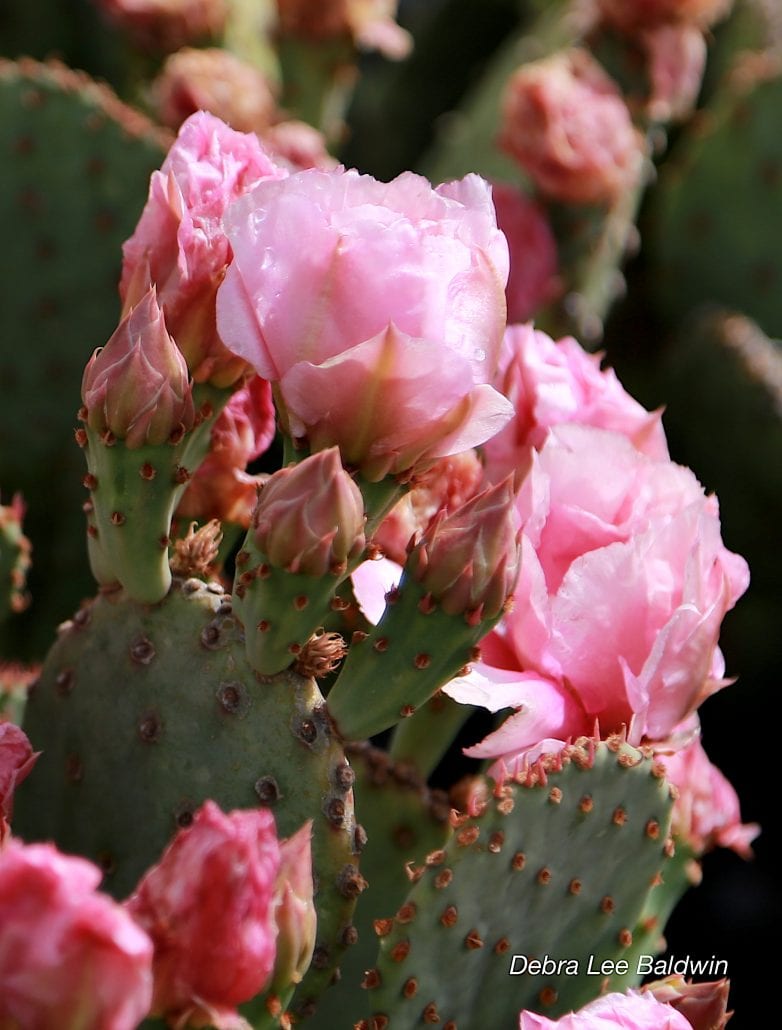
Flowers of opuntias are spectacular, and open in succession. So although the blooms last only a day or so, the show lasts a week or more.

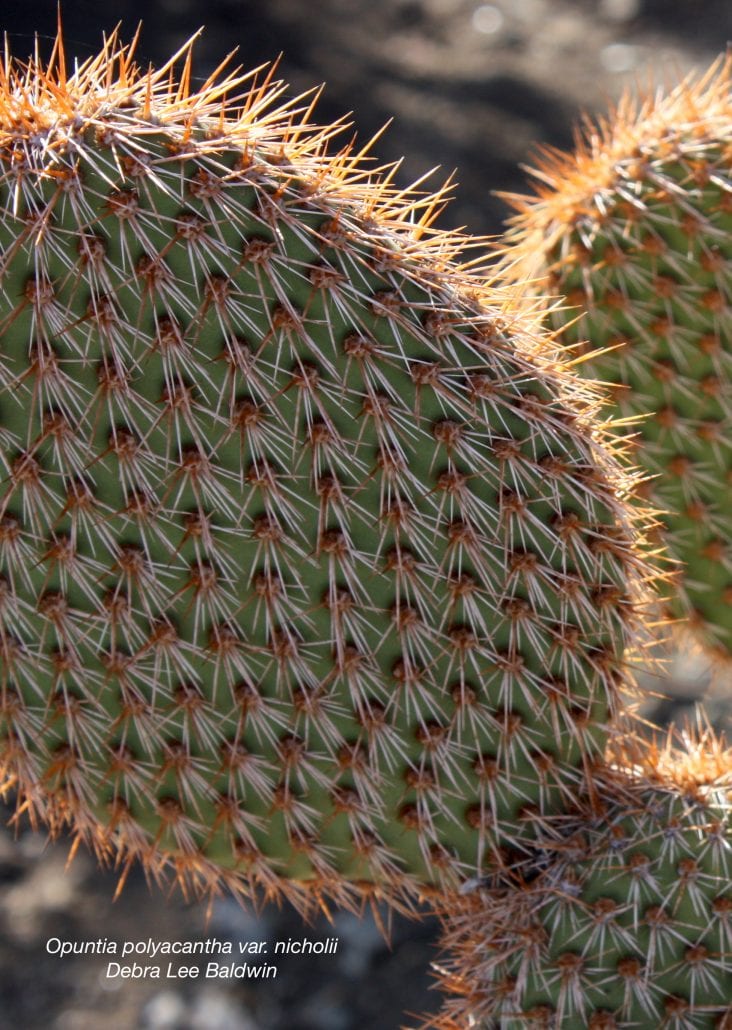
As with all cactus, opuntia spines are modified leaves. There’s a good reason to grow prickly varieties—whether Opuntia species or others, they’re breathtakingly beautiful when late afternoon or early morning sun backlights translucent spines.

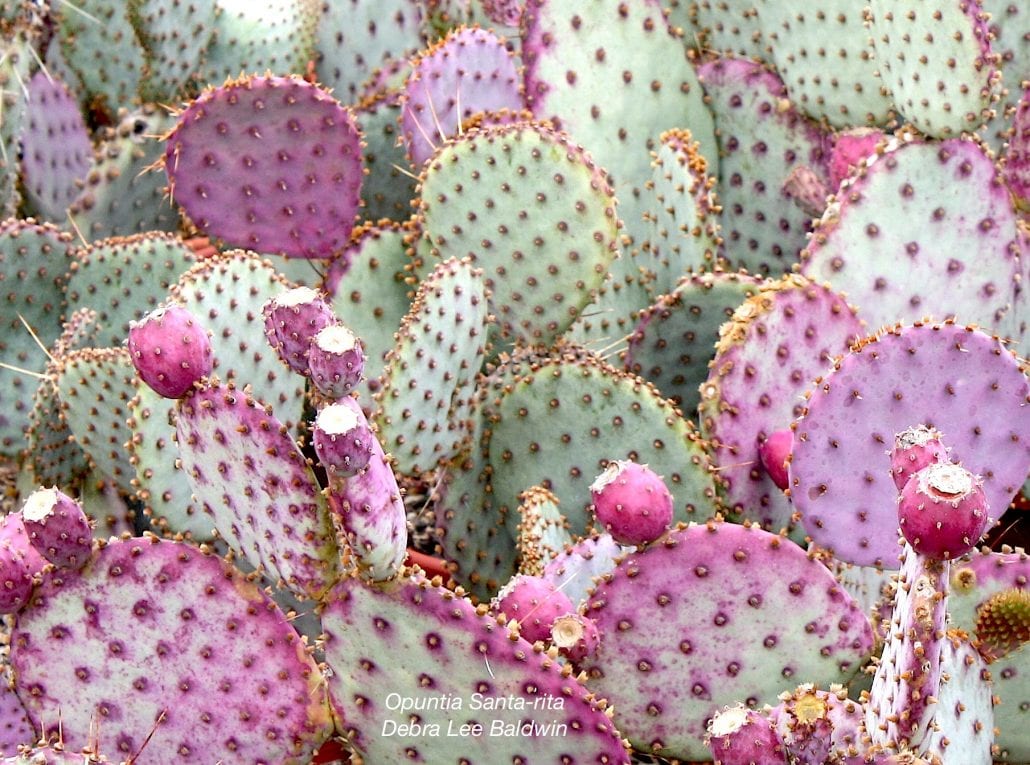
Certain varieties, such as O. Santa-rita, have purple pads. It’s been my observation that these tend to attain their best color in desert gardens; here in Southern CA, the pads stay green with a purple tinge.

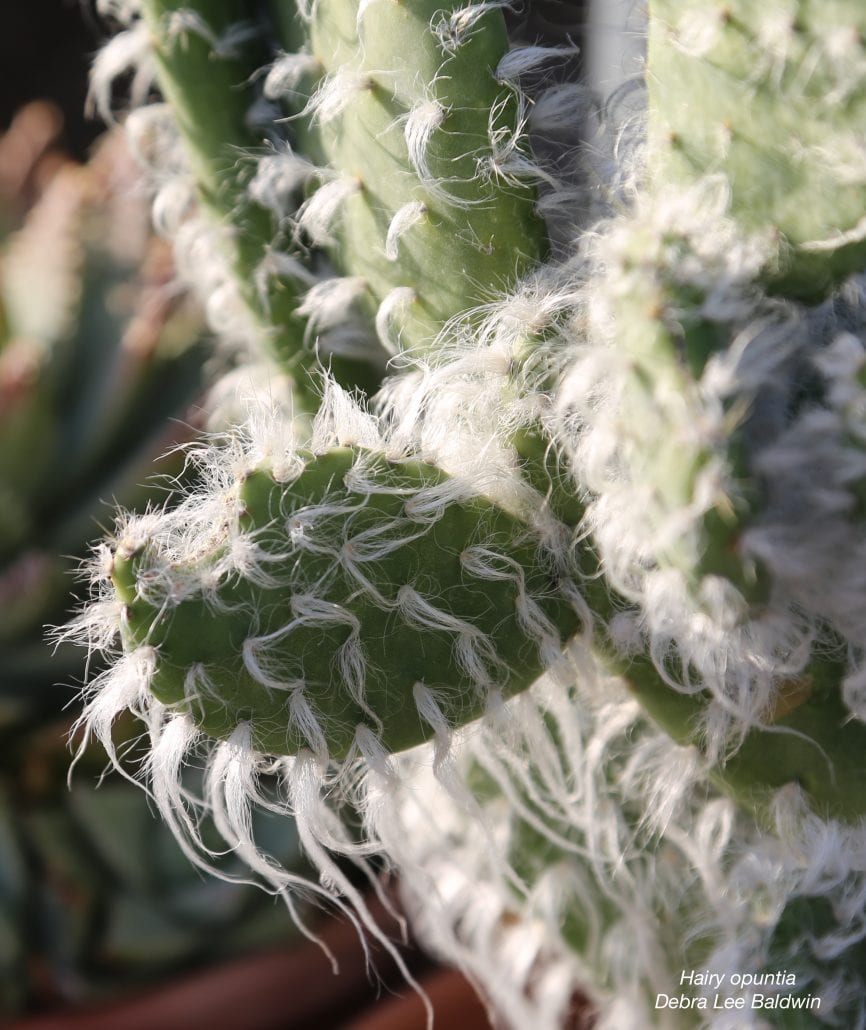
I grow an intriguing variety that has beard-like white filaments, but I recently had to trash much of the plant because scale insects snuck under the threads and colonized the pads unnoticed. I did manage to keep a few unblemished ones, which I treated with Safer soap and replanted.

Opuntias are easy to start from pads; simply slice or break one off and stick it in the ground. Knock one off, and where it falls it’ll form roots.

The egg-shaped fruit of opuntias is edible and a colorful garden enhancement.

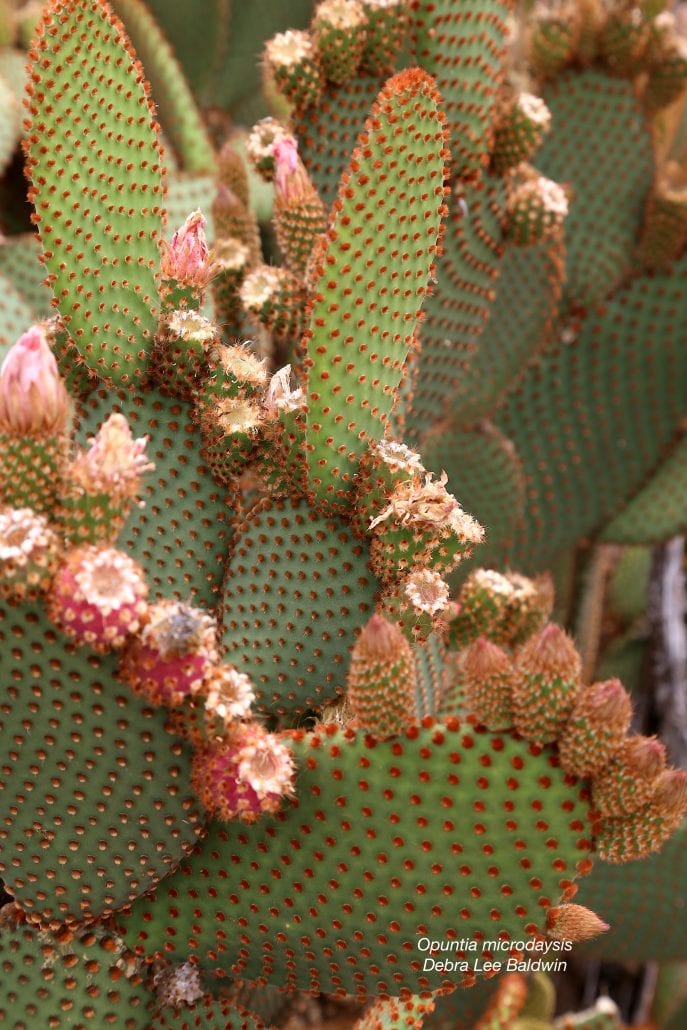
Opuntias are unique among cacti in that they have two types of spines—needles and glochids. The latter often is nearly invisible, barbed, and will go home with you if you touch it. Glochids create fuzzy polka-dots on the paddles of Opuntia microdaysis. Beautiful…but beware.

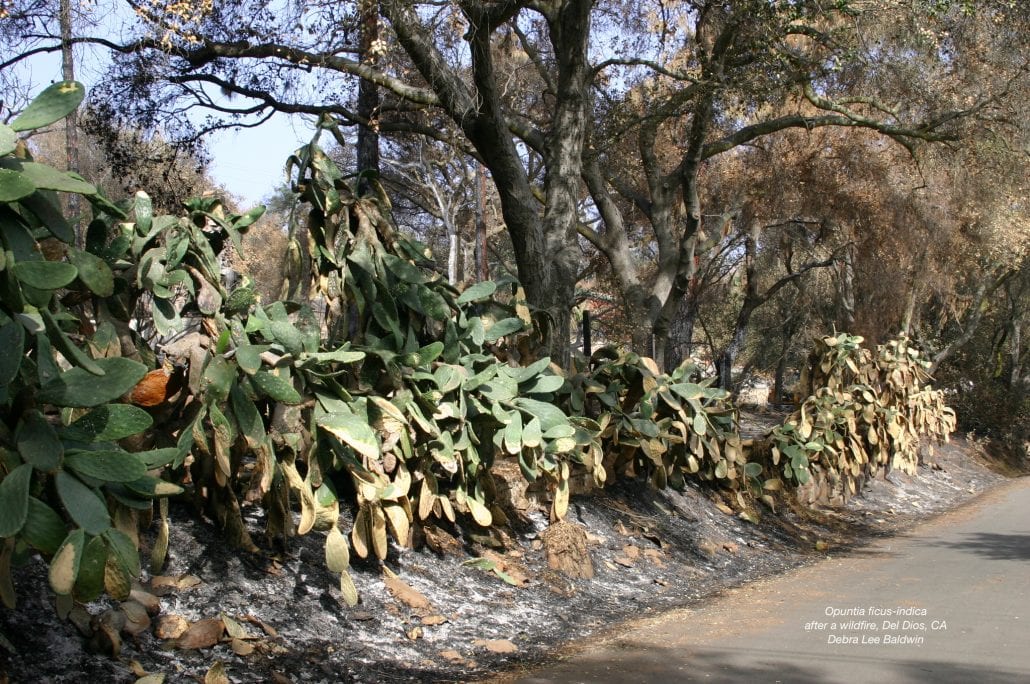
Because cactus pads are moisture-storage organs filled with a mucilaginous gel and protected by a tough, waxy skin, they’re slow to catch fire. Opuntias not only make great firebreak plants in wildfire-prone areas, they’re efficient at conserving water and need no irrigation other than rainfall.

Tender new opuntia pads (nopalitos) are sold in Mexican markets. They’re good in salads and can be cooked as a vegetable dish that tastes like green beans.

Let me know what you think. I always enjoy hearing from you! ~ Debra 


Related Info

On this site: 

Is Cactus the New Black?
Aug. 9, 2017 — Long a pariah plant, cactus is becoming cool. Spiny succulents are following smooth ones in popularity, notably in [Continue reading]
 
Succulent enthusiasts flock to the annual Cactus & Succulent Society Show at the Los Angeles Arboretum mid-August. It’s the largest of its kind in [Continue reading]
 
Recently in Baja I was showing off my knowledge of native succulents when one “got” me. The friend who was taking a video with my phone gasped when I unsuccessfully tried to set a 3-inch-long chunk of cholla (“choy-ah”) cactus back onto a boulder. It resolutely clung to my fingers [Continue reading]


The post Why Grow Paddle Cacti? DLB’s 16 Reasons appeared first on Succulents and Succulent Garden Design | Debra Lee Baldwin.


from Succulents and Succulent Garden Design | Debra Lee Baldwin https://ift.tt/2F7PRdn
via IFTTT
viernes, 13 de abril de 2018

Ten Predictions for the Succulent Decor Marketplace Amazing tips

April 13, 2018

In May of 2016, I predicted that textiles and decorative items themed with succulents would soon be commonplace. Back then there were a few T-shirts, socks, pillows and posters, but not much from major retailers except fake succulents. (Gotta love the irony: Succulents already are the closest thing to plastic in the plant world.)  Now they’re everywhere: Pier One, TJ Maxx, Cost Plus World Market, Wayfair, Home Goods, JOANN and more.

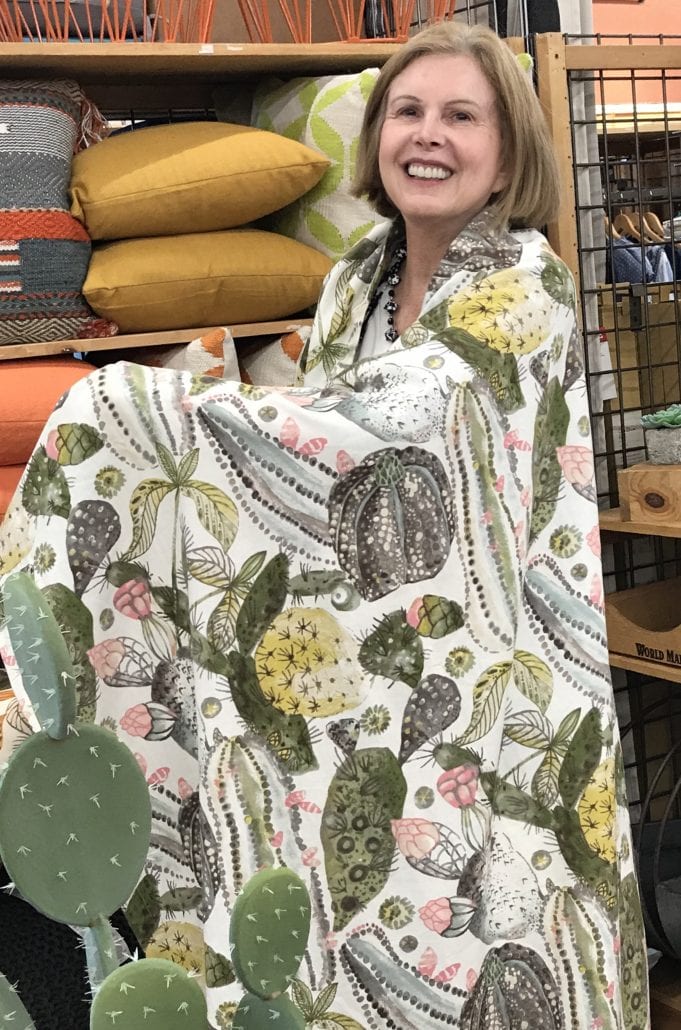
Above: I’m holding a succulent shower curtain ($30) at Cost Plus World Market. In the foreground is a $200 faux opuntia (prickly pear).  


“Cactus Serving Bowl” from Pier One, $30

You Heard It Here First ~ My 10 New Predictions for Succulent and Cactus Decor

In fabrics, dishes and other decorative items, rosette succulents such as echeverias have claimed a place forever in the palette of “florals” available to designers.

Early on, many retailers, hotels and restaurants went with mediocre, mass-produced prints of succulents. Those will be replaced with quality images that do the plants justice, along the lines of paintings by Dyana Hesson or Aaron Apsley (do follow them on Instagram).

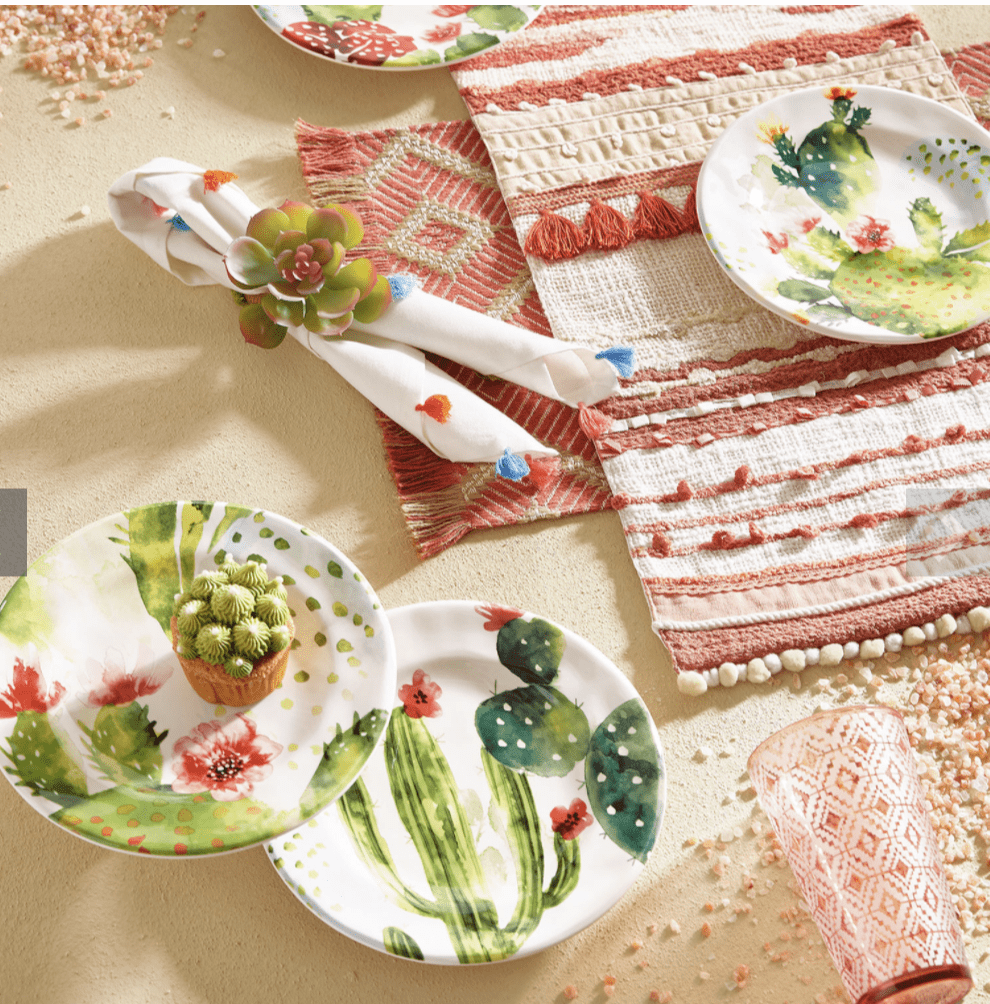
Cactus as a design element is trending, popping up on pajamas, place mats, wallpaper and more. As awareness of the plants grows, cliche images of “cactus” as saguaros and prickly-pear will give way to numerous other varieties.

Pink flowers on a saguaro? In nature they’re creamy white. Let’s hope depictions of cacti and succulents become more accurate.

Stylized cacti, unlike their living counterparts, are always in bloom. But as designers and consumers recognize that the true beauty of cacti is in their spines and symmetry, the perceived need for flashy flowers will diminish.

Spherical and columnar euphorbias, easily confused with cacti, are riding the popularity wave along with them—for example, those euphorbias in the cactus curtain I’m holding above. (And what those avocado-like leaves are, I have no idea.)

“Cactus Pete” flannel fabric at JOANN, $3.49/yard. 

Expect to hear the word “cute” in the same breath as “cactus” as graphic designers give the plants personality. Rotund, “chubby” varieties will be stylized for greeting cards, gift bags, night lights, plush toys, bed linens and more.

Check-out lines, already long at seasonal Cactus & Succulent Society of America shows, will get even longer. Vendors will offer impulse-buy gifts and collectibles for newcomers—items of little interest to long-time members who are mainly plant collectors.

Shops specializing in all things cacti-and-succulent will spring up online, in flea markets and mall kiosks. If these sell live plants, they’ll be secondary to themed merchandise.

Potters, ceramicists, mosaic artists and metal sculptors will produce works designed to contain and showcase specific succulents, such as those that form Fibonacci spirals.

Kids will clamor for cactus collections, leading to garden tools for small hands, rubber-tipped tongs and tweezers, and bright-colored pot sleeves.

Retro, cactus-themed trinkets from Mexico and the desert Southwest will be highly sought-after, leading to an outpouring of new items inspired by old.

Above: “Fiesta Chihuahua Doormat” from Pier One, $17. 

Related Info…

See my earlier predictions in articles on my site:
“Succulent Art, Decor and Gift Items”
“Is Cactus the New Black?” and
“Seven Ways to Make Money with Succulents.”

Enjoy my post: “Did I Find the Perfect Succulent Pillow?”
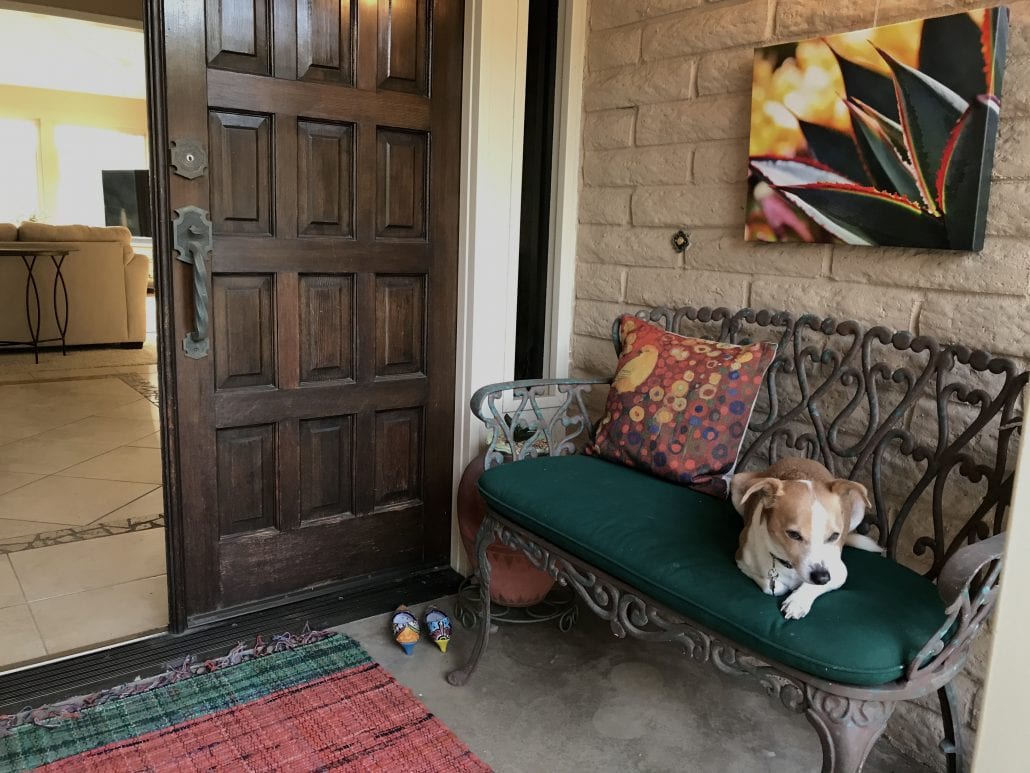
Follow my quest and view photos of my redone entryway along with dog-model Lucky, who happens to resemble the pup above. (Yes, he’s really thatcute.)

Don’t miss Part Two in my next newsletter: 
“Ten New Predictions for the Succulent Plant and Garden Market.”

Books by Debra Lee Baldwin

The post Ten Predictions for the Succulent Decor Marketplace appeared first on Succulents and Succulent Garden Design | Debra Lee Baldwin.


from Succulents and Succulent Garden Design | Debra Lee Baldwin https://ift.tt/2HwCzK4
via IFTTT
miércoles, 11 de abril de 2018

The Hard Part of My Succulent Pillow Hunt Amazing tips

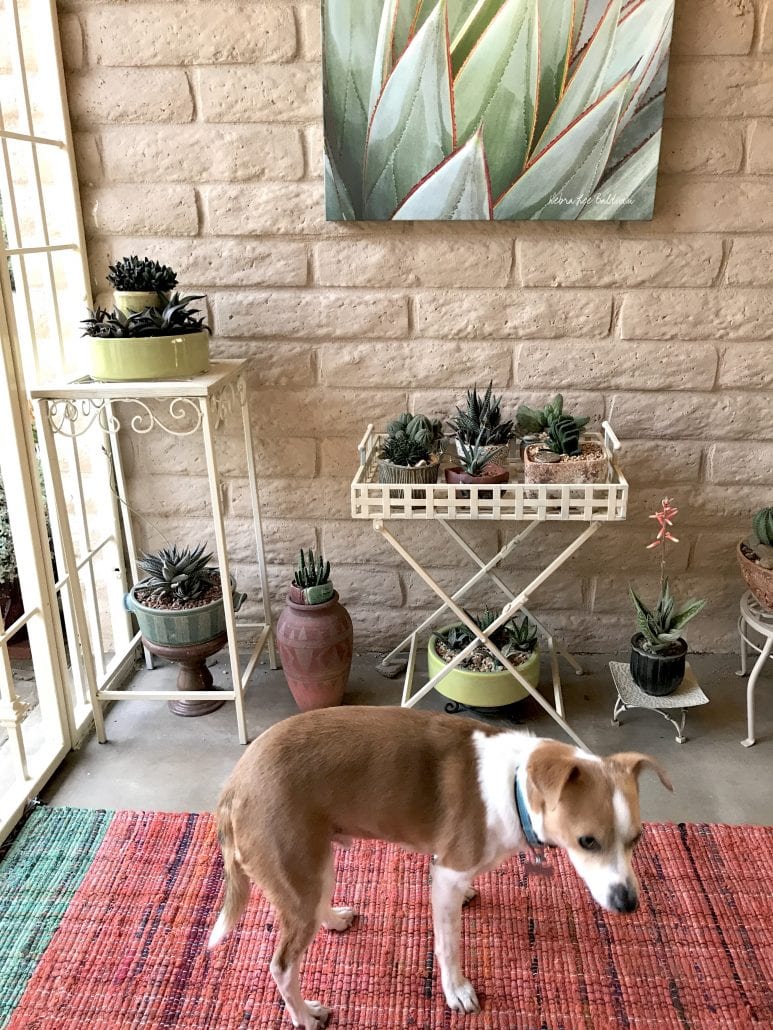
Recently I embarked on an intensive, two-day hunt for the perfect succulent pillow. I wanted it for the love seat in my home’s 5×5 entry, where I keep 40 small, low-light succulents in a dozen containers. These are shades of green, bronze, brown, terra-cotta, and rose.

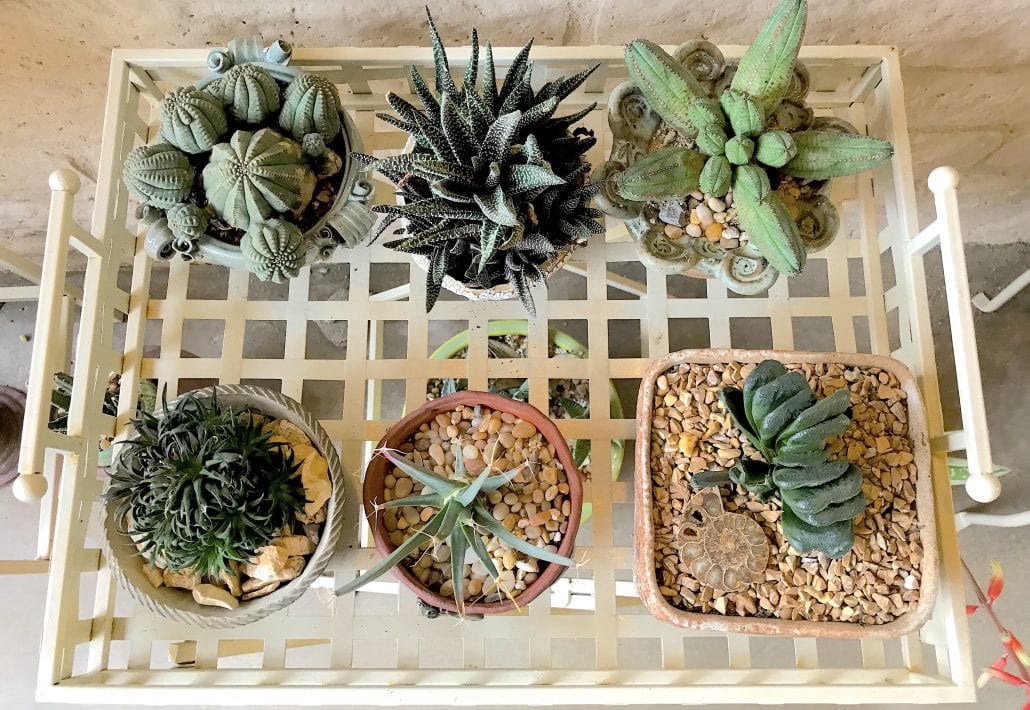
Small euphorbias, gasterias and haworthias thrive in the entry, out of direct sun.

Little did I realize how many succulent pillows are out there. Stores such as Pier One, TJ Maxx, Home Goods, Joanne’s and Cost Plus World Market seem to have taken my 2016 prediction to heart: That items themed with succulents and cacti would become commonplace.

From Pier One’s website.

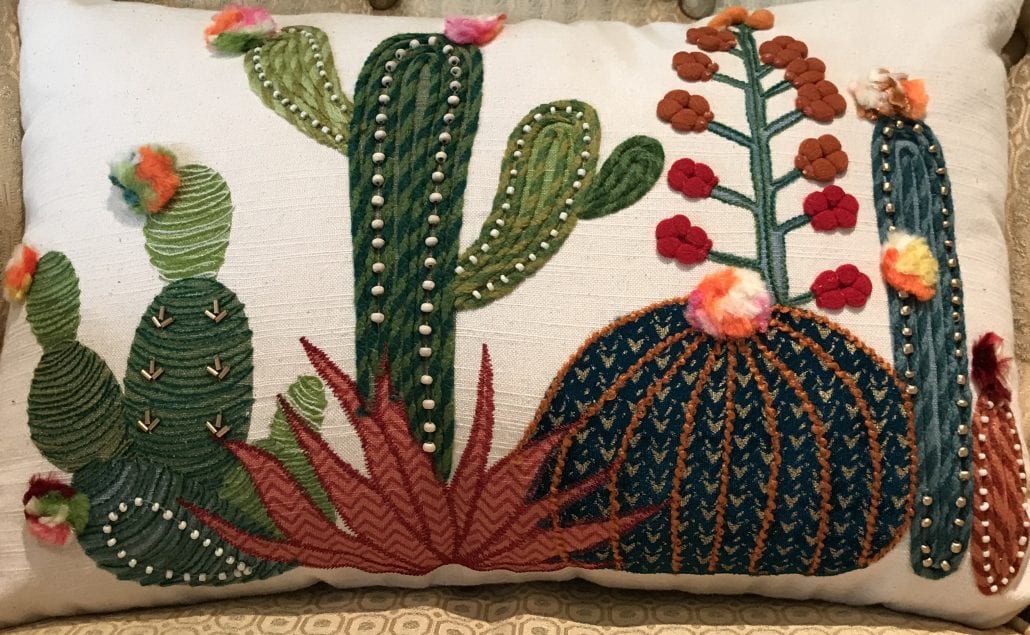
I bought seven pillows and two area rugs, and charged about $500 on my credit card. No biggie, I was going to return all but one pillow and one rug, right? Well, yes, but an embroidered and beaded cactus pillow from Pier One was a keeper regardless. Only $40!  (I have a thing for throw pillows.)

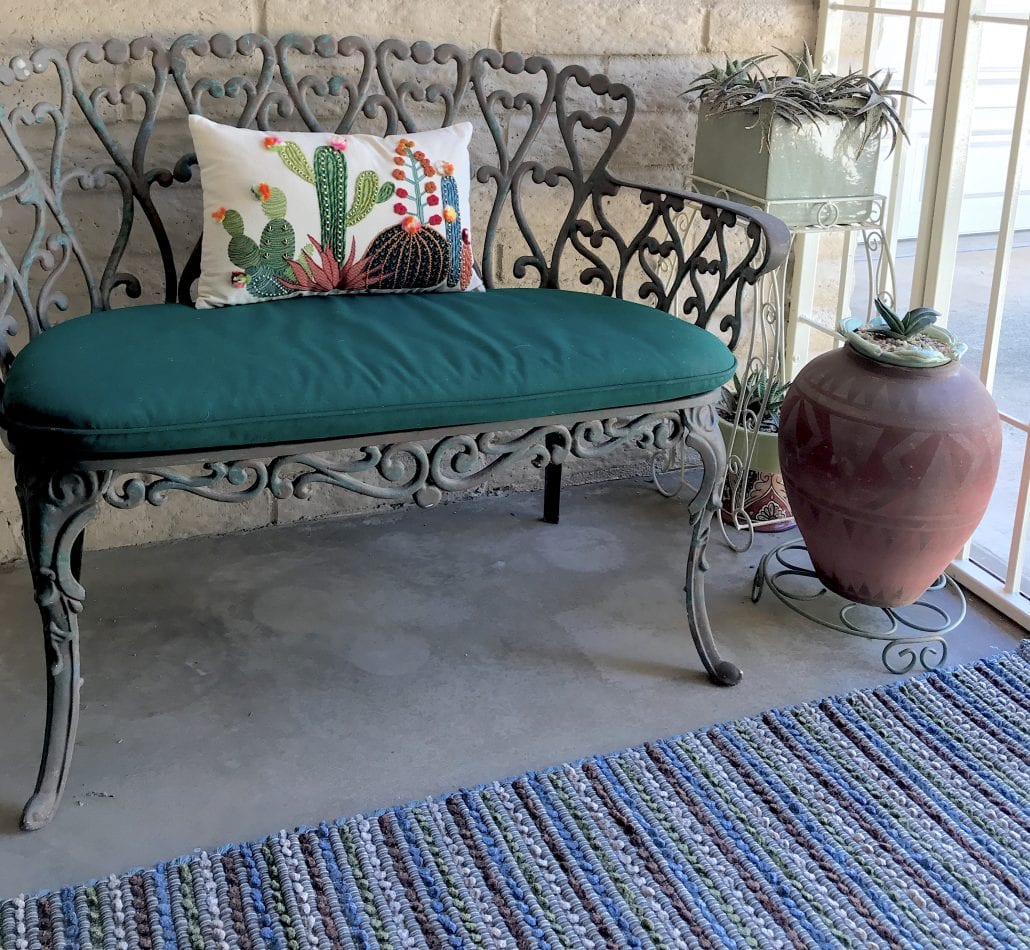
I figured just about any multicolored succulent pillow would work. The walls are tan, the trim cream, the floor concrete gray, the door and wrought iron brown, and the seat cushion dark blue-green. Hoping that a rug would add punch and help pull everything together, I bought a 3×5 one striped in brown, green, blue and beige. But—I should have known this, being a Pier One fan—the colors were so crisp, they made everything else look shabby. Also, when I saw it in situ, I realized it really needed some orange-red.

The first go-round: The pillow is a bit too small for the love seat. The rug, though the right size and a nice texture, lacks colors necessary to unify the design.

So back the rug went. Next stop: Cost Plus World Market, where colorful cacti greeted me from Melamine plates, shower curtains, and even nifty metal buckets. Watch the 50-second video I made while there. 

I model a soft fabric shower curtain at World Market.

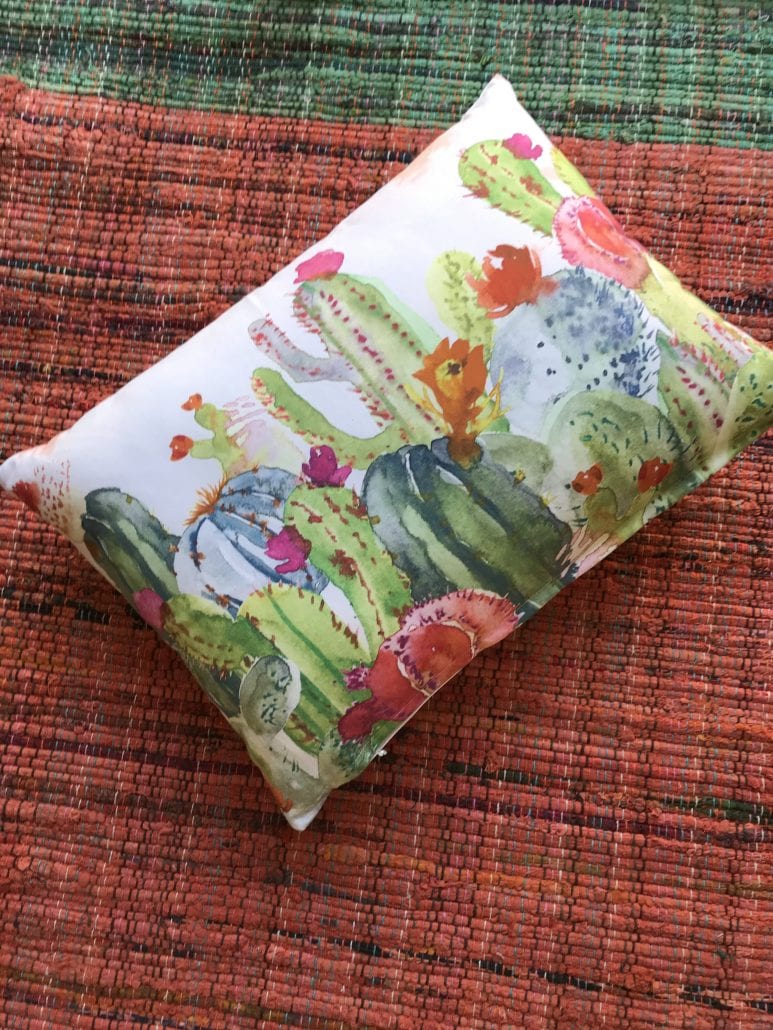
I found a pillow with a watercolor of a cactus garden that seemed the right shape and size: rectangular (“lumbar”) and bigger than Pier One’s for less money. Score! Or so I thought.

Cactus pillow and rug at World Market.

Back home. Aargh. No pillow with a white background looked right. There’s no white in the entry, and they all said “bedroom.” Yet while at World Market I’d also bought an orangey-red rag rug trimmed in blue-green. It worked! Who knew, all along it wasn’t the pillow that mattered most, it was the rug.

My Dorothy-in-Oz moment: I had the perfect pillow all along.

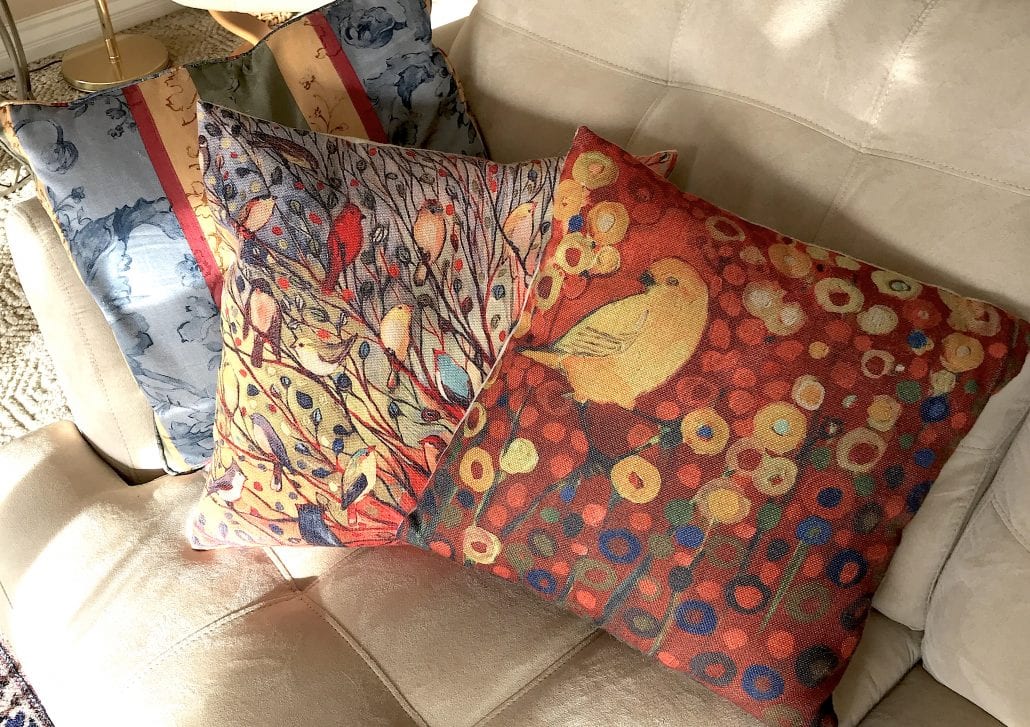
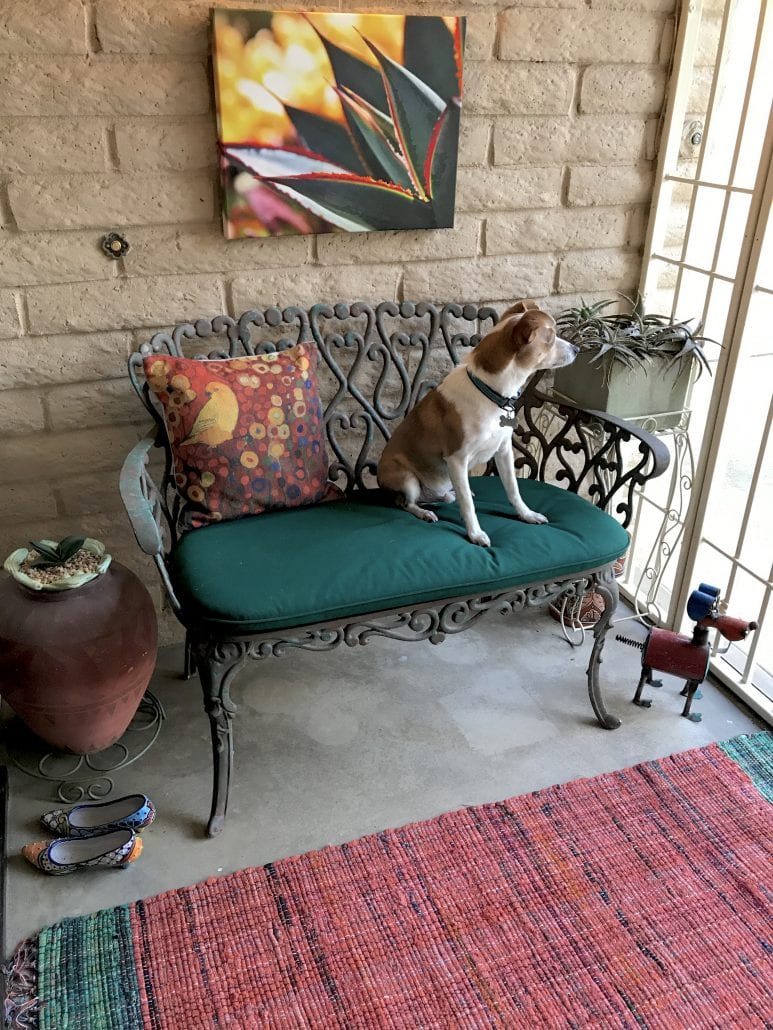
Next I went shopping in my own home, grabbing a pillow with all the right colors from the living room sofa and two stretched canvas prints of agaves from the hallway. (They’re from my online Zazzle store.) As it happened, none of the succulent pillows were ideal for the entry. However, I did keep two. One is now on my bed, the other on an armchair. The entry pillow has a bird on it, but hey, I’m into birds.

Cost: Two pillows that I kept despite not needing either one: $60. Rag rug from World Market: $40. Total: $100. Plus a day and a half of my time, but I had fun so I can’t complain.

Do you, like me, need to hunt, gather and try things on before everything clicks? Then you probably agree that the hard part—and hopefully you’re better at this than I am—is taking things back.

Now (drum roll) my pup Lucky would like to show you “his” new entry.

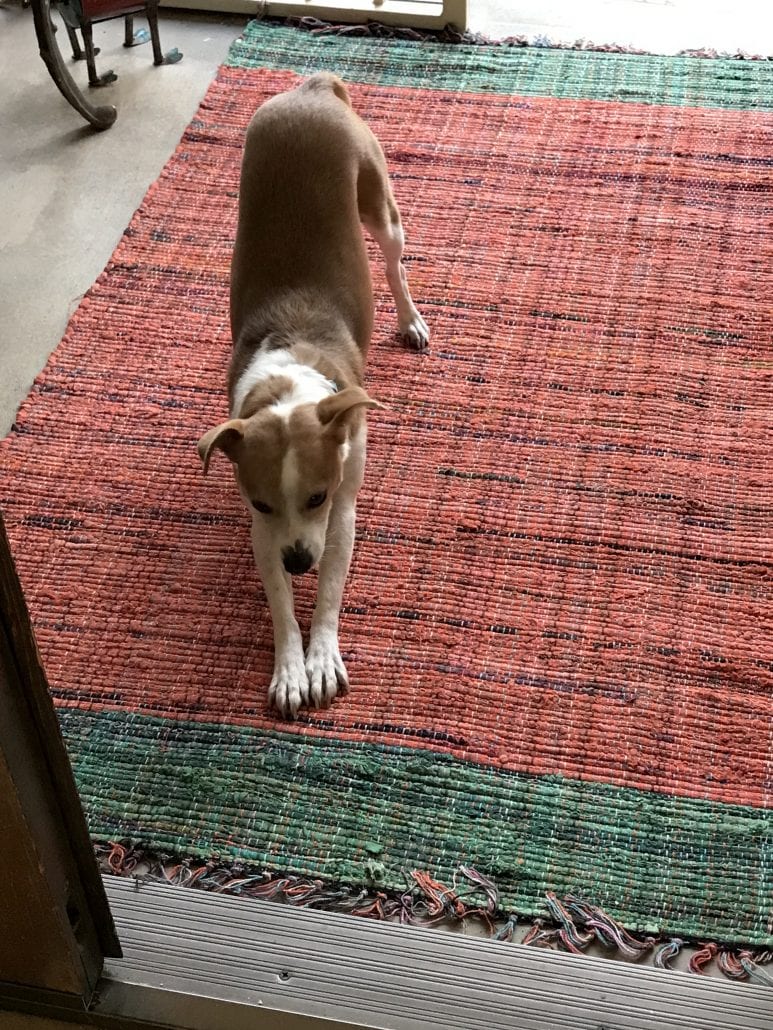
Lucky demonstrates “downward dog” on his new yoga mat.

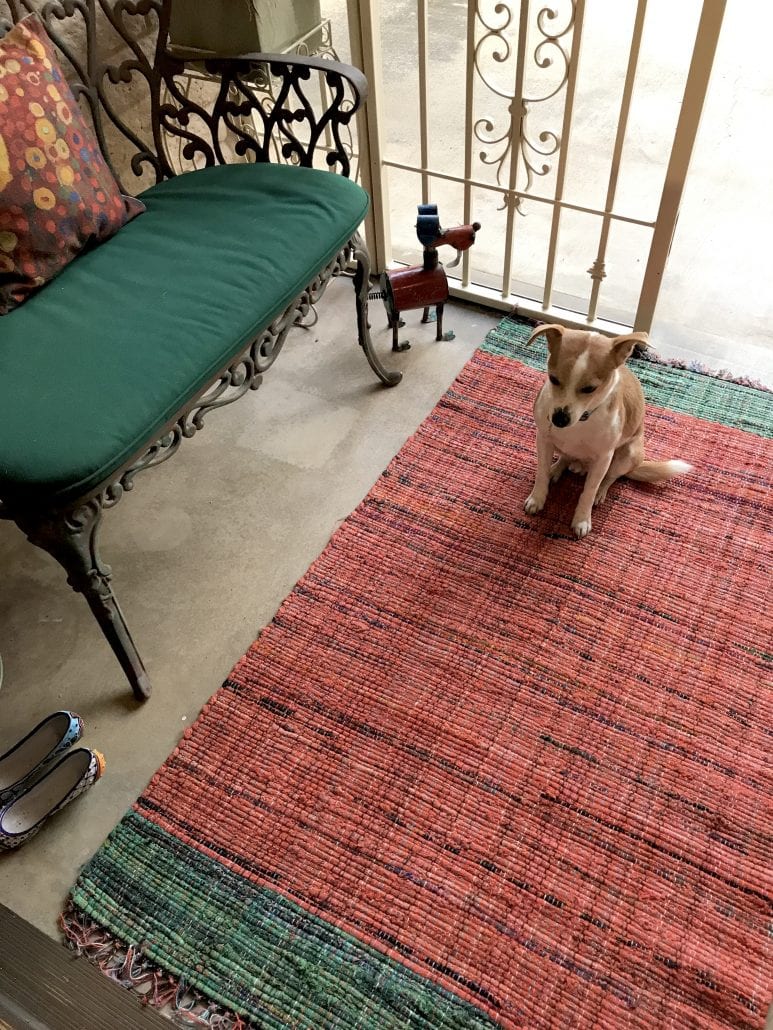
He meditates while digesting kibble.

The love seat is ideal for cat-watching.

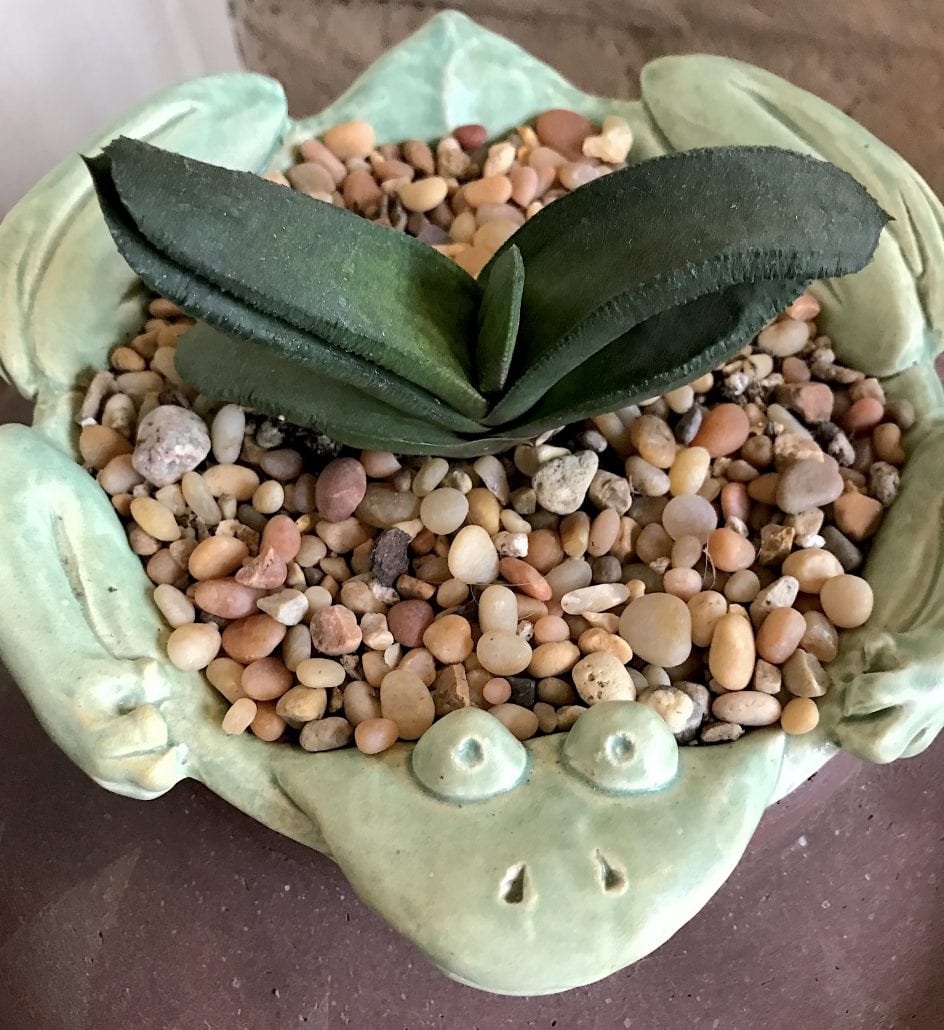
Lucky echoes the pose of a metal watchdog. At left are a pair of Talavera “shoes” and a frog pot atop a larger one. In the square pot are ‘Pink Blush’ aloes.

Items opposite the love seat include Gasteraloe ‘Green Ice’ in bloom.

Gasteria sp.

Related Info


The post The Hard Part of My Succulent Pillow Hunt appeared first on Succulents and Succulent Garden Design | Debra Lee Baldwin.


from Succulents and Succulent Garden Design | Debra Lee Baldwin https://ift.tt/2v4YmWF
via IFTTT
jueves, 5 de abril de 2018

Bill’s Best: A Top Designer’s Favorite Aloes Amazing tips

Looking for great succulents for your garden?

Plant aloes in well-draining soil and “they’ll soon become your favorite succulents,” says Bill Schnetz, one of Southern CA’s most sought-after landscape designers. Bill uses aloes of all sizes in mild-climate residential gardens. For a natural look, he suggests mixing one or two kinds with tough, drought-tolerant ornamental grasses and flowering perennials. For a contemporary look, he recommends planting similar aloes “in rows and geometric blocks.”

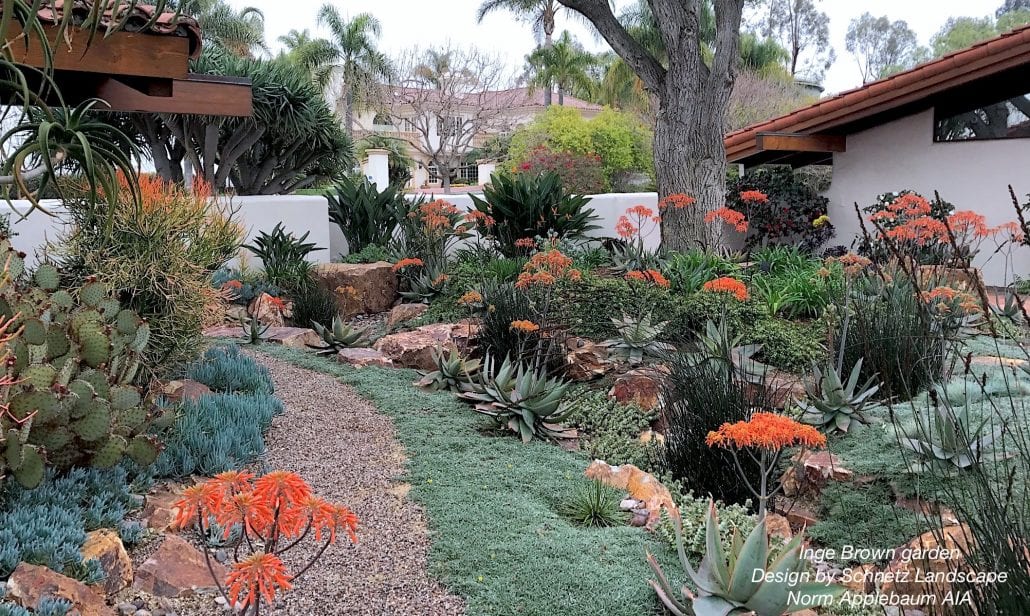
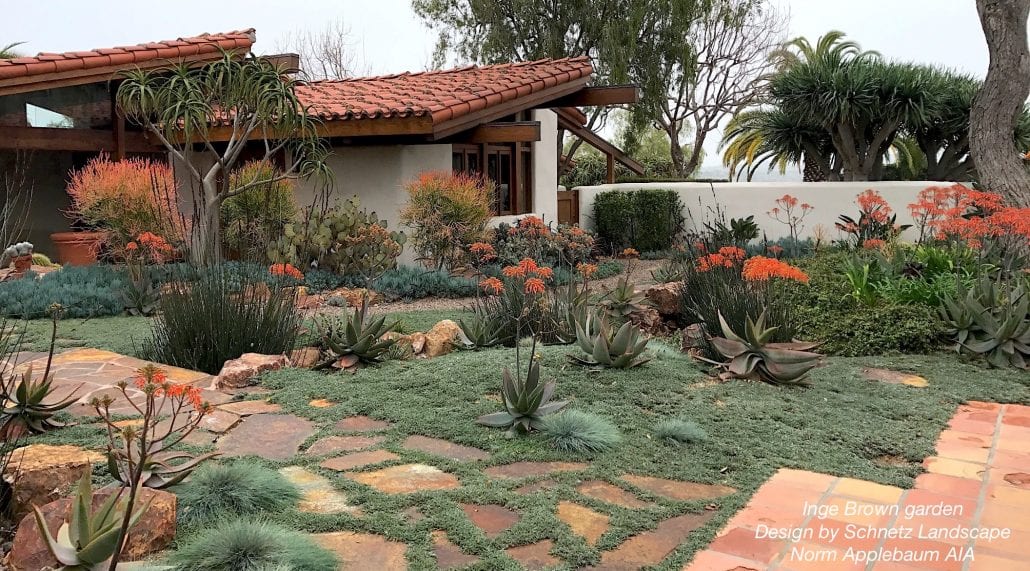
In this Rancho Santa Fe courtyard garden, Bill planted numerous coral aloes (Aloe striata). Their long-blooming flowers and translucent leaf margins repeat the orange of roof tiles, Euphorbia tirucalli ‘Sticks on Fire’ at left, and bird-of-paradise along the wall (when in bloom).

Blue, the color complement of orange, creates contrast via Senecio mandraliscae and Senecio serpens (at left) and tufts of blue fescue (below). Other ornamental grasses, paddle cactus and elephant’s food (Portulacaria afra ‘Variegata’) lend texture and interest. Dymondia, a walkable ground cover, serves as a low-water lawn substitute. Stone pavers and Saltillo tiles repeat the rust hues of boulders that line a dry creek bed. At upper left is Aloe bainseii, a tree aloe. (Also see this garden in Designing with Succulents, 2nd ed., page 58.)

Bill’s 14 Favorite Aloes

I asked Bill if he’d share which aloes he uses most often in clients’ gardens, and why. This list was compiled by Schnetz Landscape, Inc. with Rebecca Simpson.

Small aloes. These tough, toothed aloes handle adverse conditions.  Height: 8 to 18 inches.

Aloe x nobilis, Aloe aristata, and Aloe humilis all grow tight and stay low.

Aloe ‘Rooikappie’ is Bill’s favorite small aloe. It gets a little bigger than the three above and is a good fit for small and large landscapes. It’s a repeat bloomer and transplants easily.

Mid-size aloes are good for borders and large-scale massing.  Height: 18 to 36 inches.

Aloe striata has nice plump leaves and good floral color.

Aloe vera is dramatic planted en masse, and yes, the gel is useful for burns and cuts.

Aloe x spinosissima is a 2- to 3-foot sprawler great on hillsides and rocky soil.

Aloe cameronii is Bill’s favorite 2-foot aloe. Stays red all year if given full sun.

Tree aloes tend to be slow growing and may not look their best in cold winter months. Don’t plant them near foundations or under eaves—they do get big.

Aloe bainesii is a moderate grower, 15 to 30 feet tall. Leaves may turn yellow and get black spots, but with summer warmth and feeding they’ll green up.

Aloe dichotoma is slow-growing to 15 to 20 feet. It has nice gray leaves and is very drought tolerant.

Aloe ferox is slow growing to 6-10 feet with a single trunk that holds dead leaves.

Aloe ‘Hercules’ is a faster-growing hybrid with a thick, strong trunk. Give it plenty of room.

Shade-tolerant aloes useful as firebreak plants are fast-growing and spreading.

Aloe ciliaris is a sprawling succulent that will climb palm tree trunks. Take care that it doesn’t get buried in leaves and melt away. Sometimes called ‘Fire Wall’ aloe, when grown on a slope, the plants form a 3- to 4-foot mat of fire-resistant growth.

Aloe arborescens is probably the most commonly grown aloe in the world. If you have room for it, you can’t go wrong. It solves a multitude of landscape problems, and thrives everywhere—coast, low desert, foothills—from Mexico to San Francisco. Originally from South Africa, it’s also found all around the Mediterranean. This multiheaded aloe makes a good background plant and tolerates filtered shade beneath tall trees. For a dense barrier, plant 6 to 8 feet apart in a line or triangles. Height: 4 to 8 feet and spreading.


More Info

In my books: Designing with Succulents, 2nd ed., pp. 182-190; Succulents Simplified, pp. 185-197.

On this site:

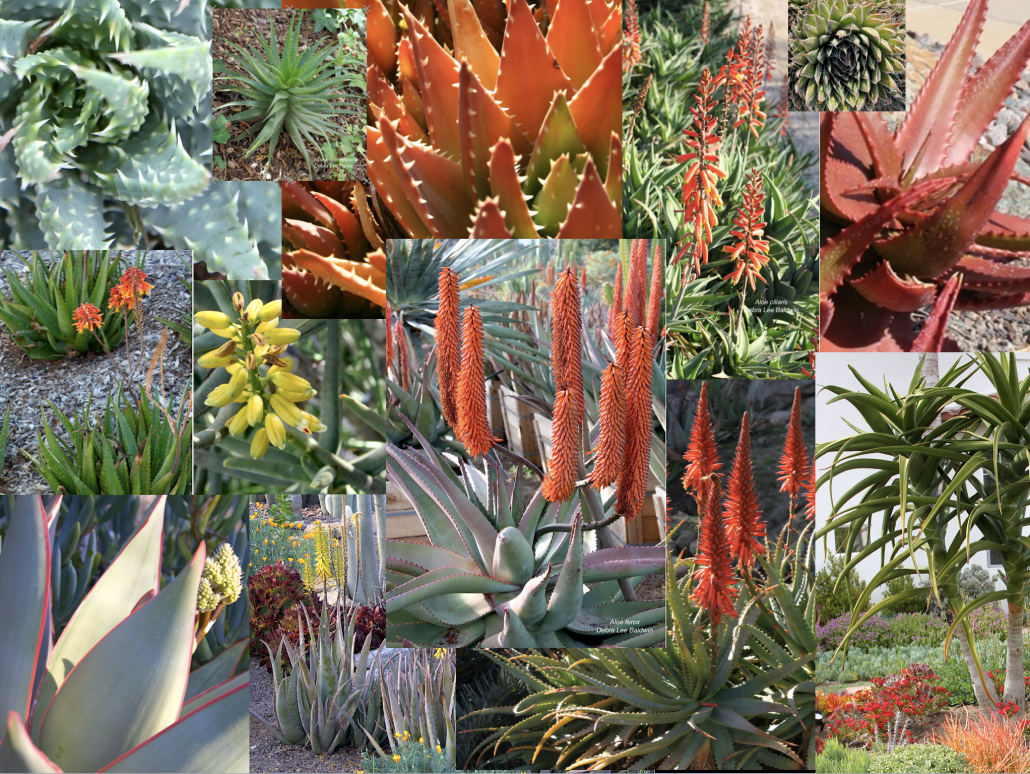
My photos of aloes on this page are identified according to genus and species, and sometimes common names… [Continue reading]
My ultimate aloes are any large, sculptural species with brilliant, Popsicle-like flowers that make striking garden plants even… [Continue reading]
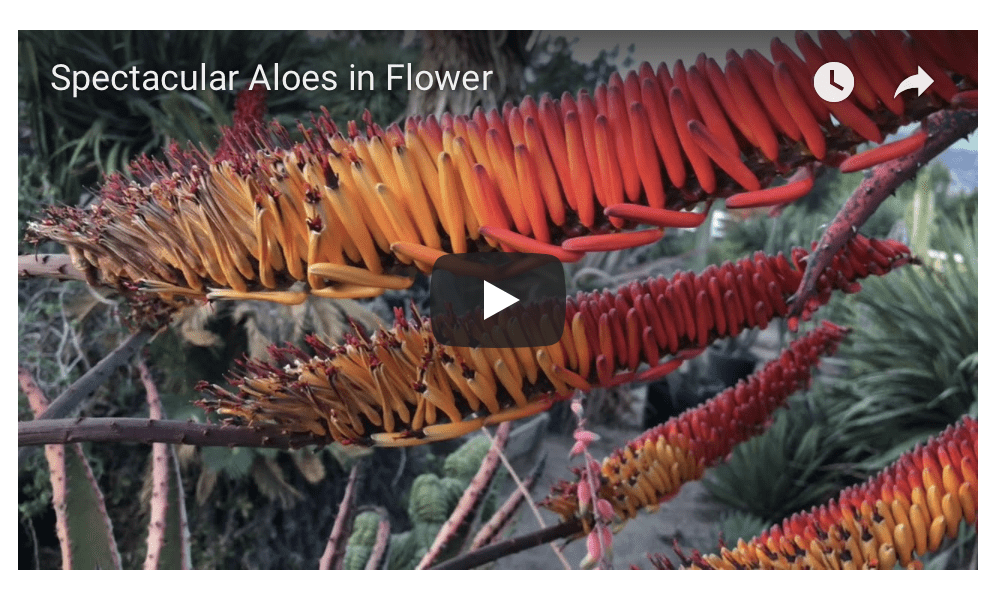
View my YouTube video: Spectacular Aloes in Flower

The post Bill’s Best: A Top Designer’s Favorite Aloes appeared first on Succulents and Succulent Garden Design | Debra Lee Baldwin.


from Succulents and Succulent Garden Design | Debra Lee Baldwin https://ift.tt/2IqcdbK
via IFTTT