jueves, 23 de enero de 2020

A Succulent Flower Garden by Linda Bresler Amazing tips

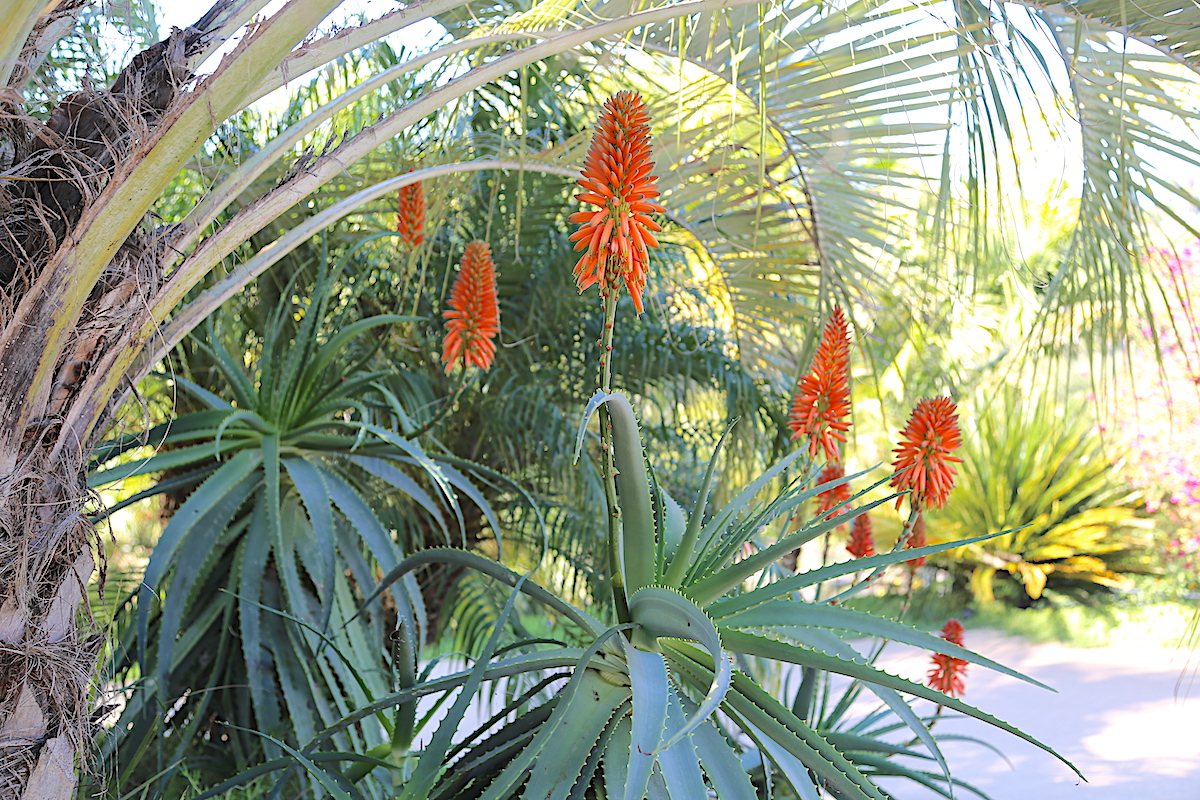
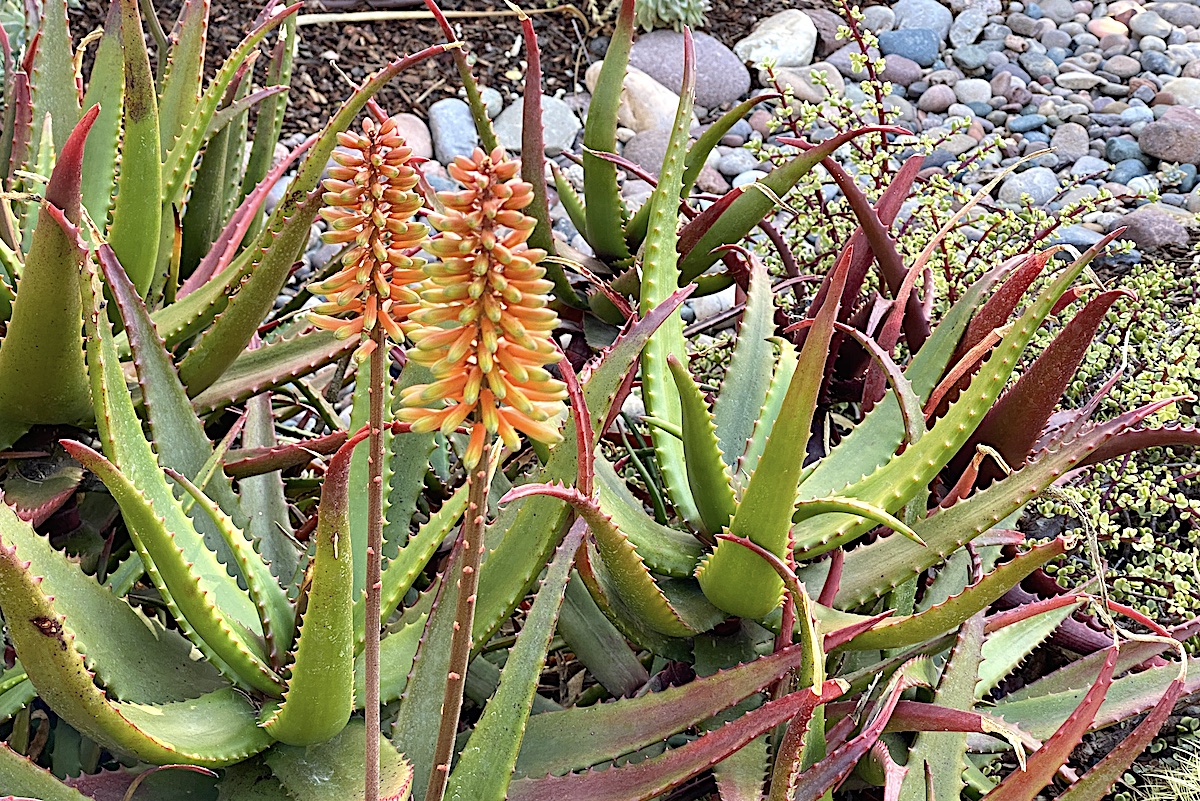
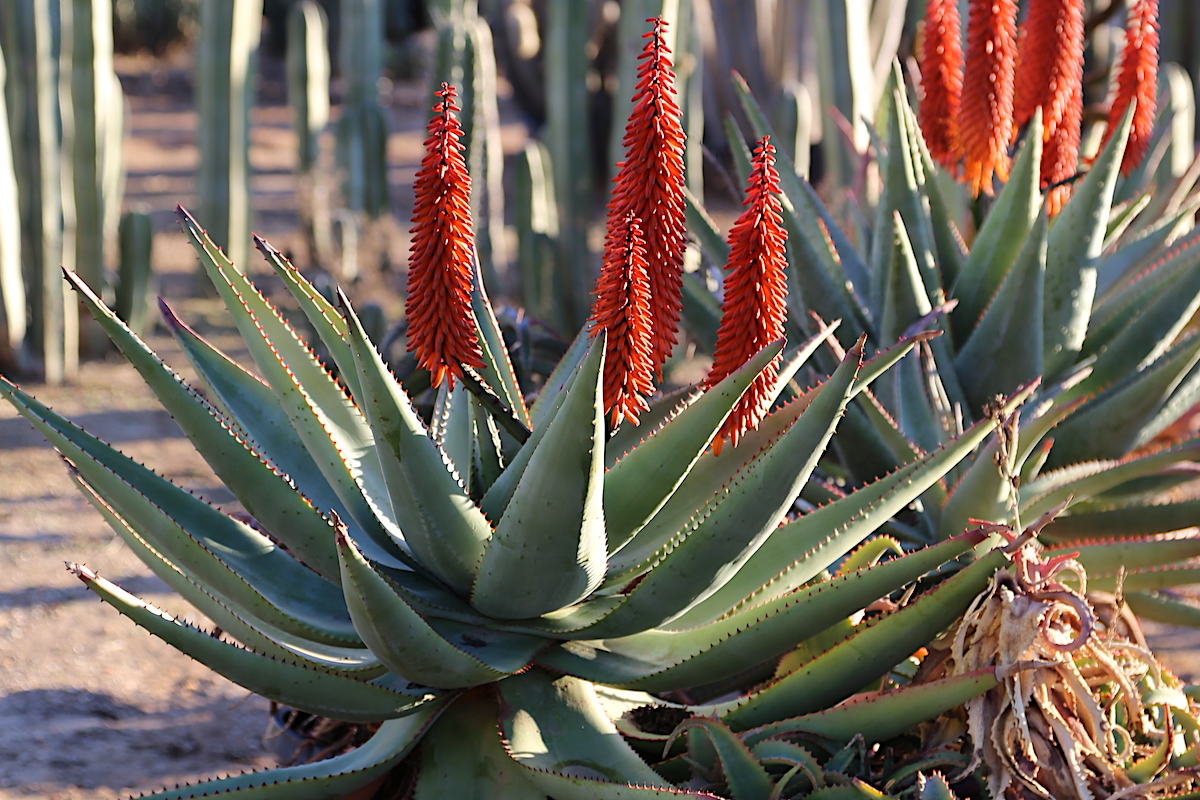
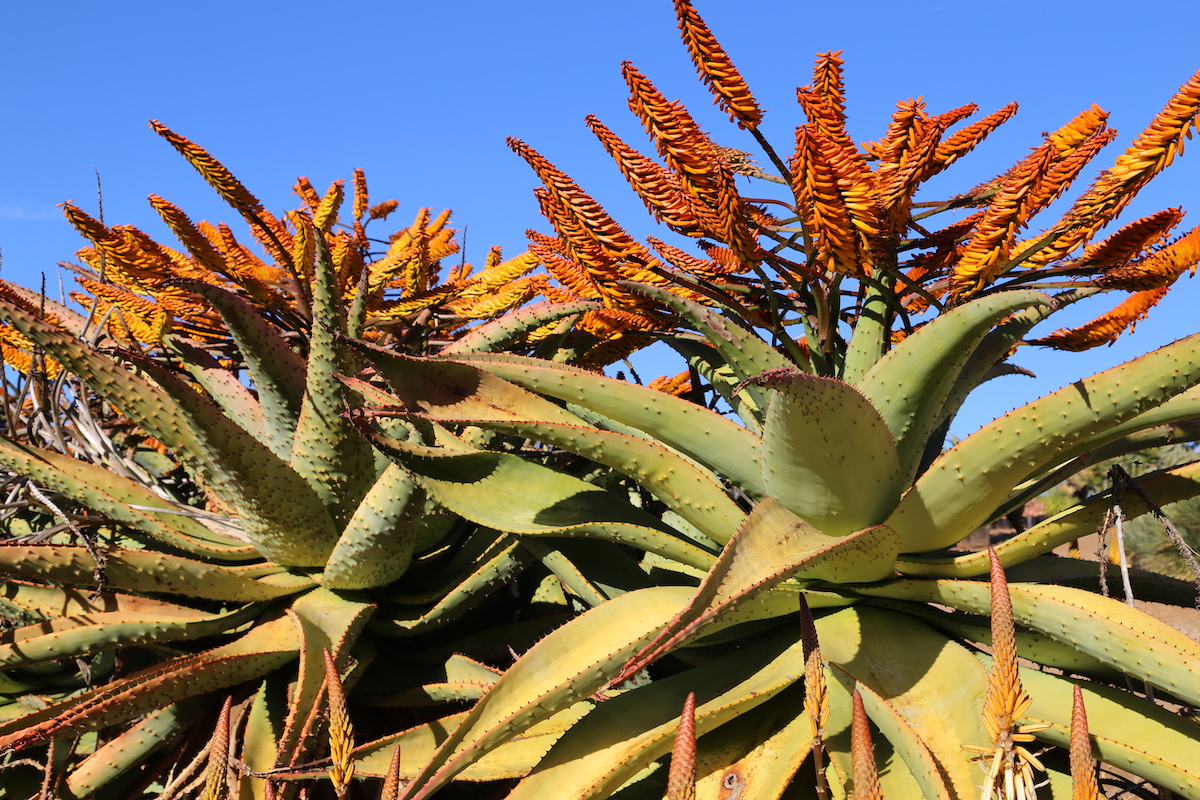
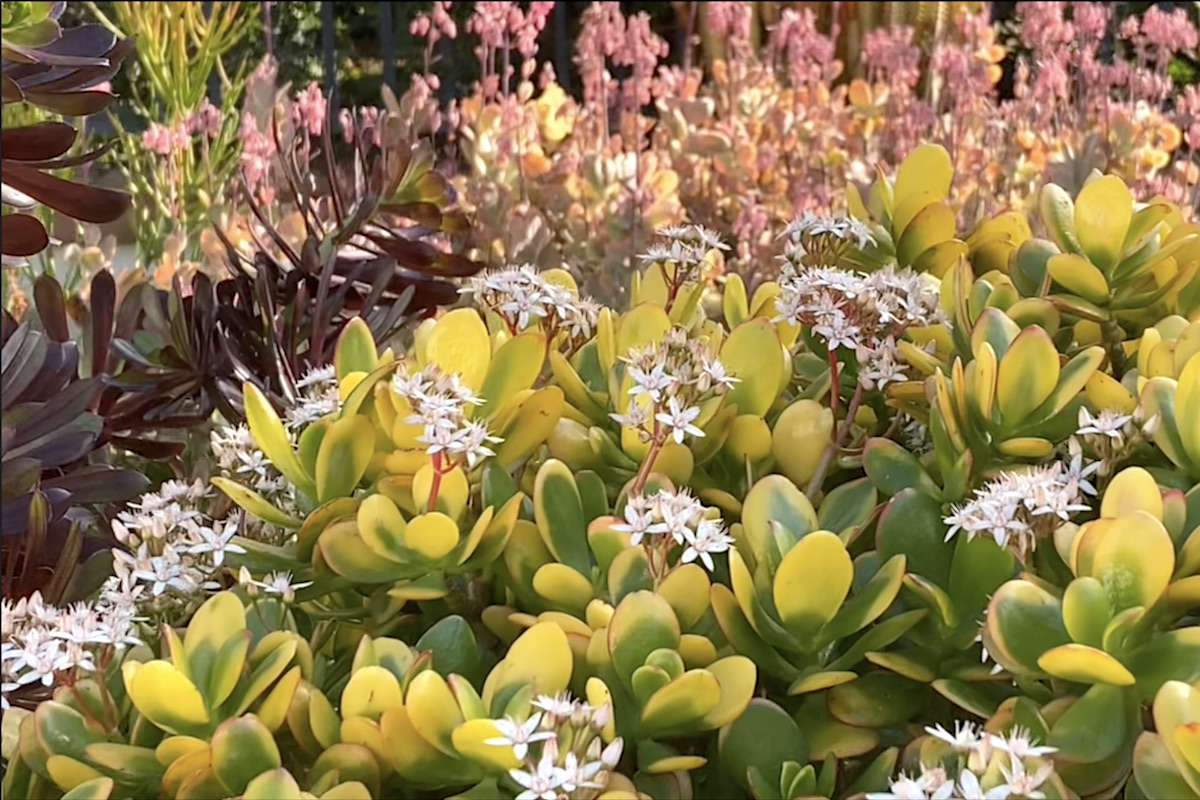
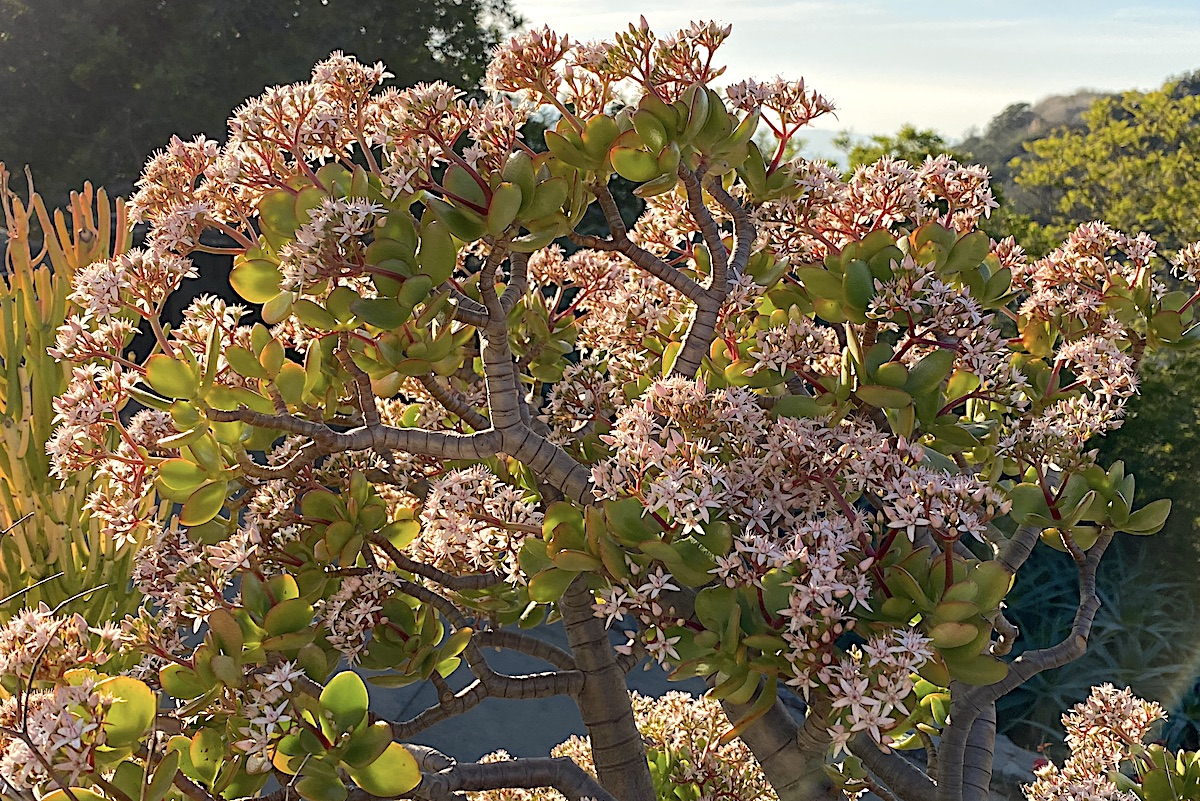
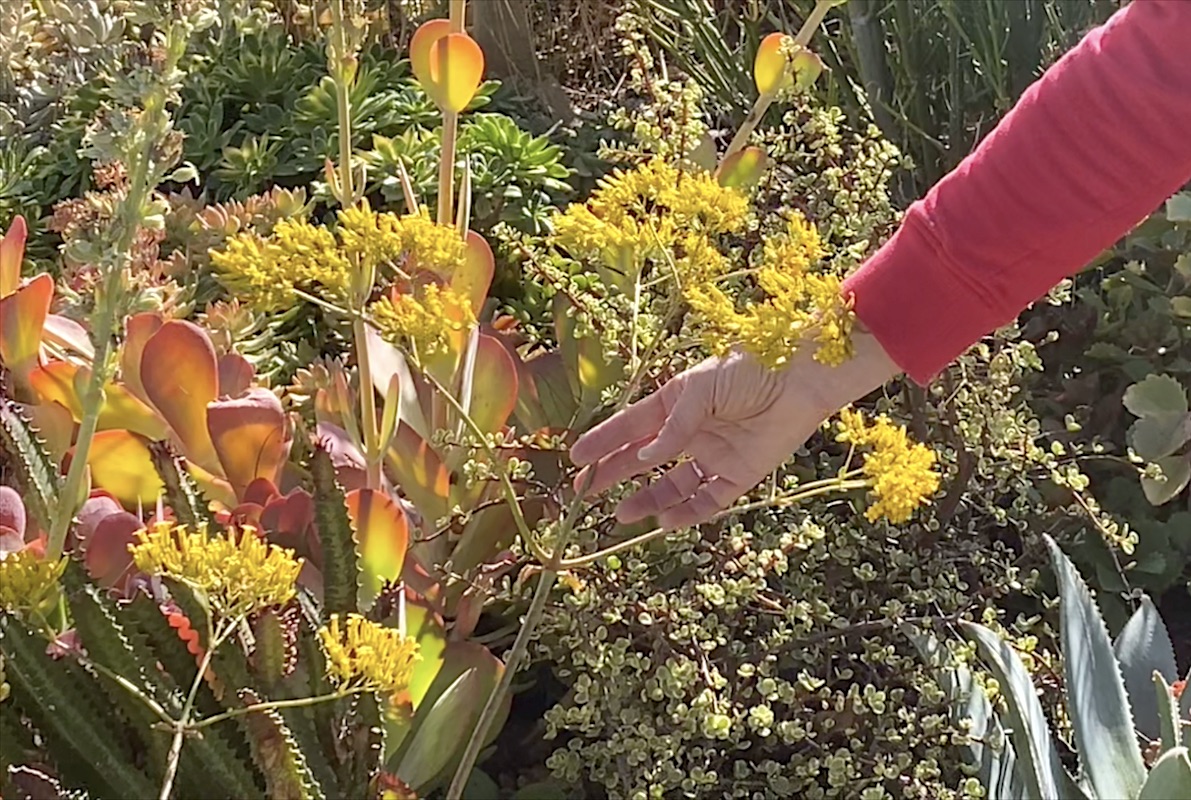
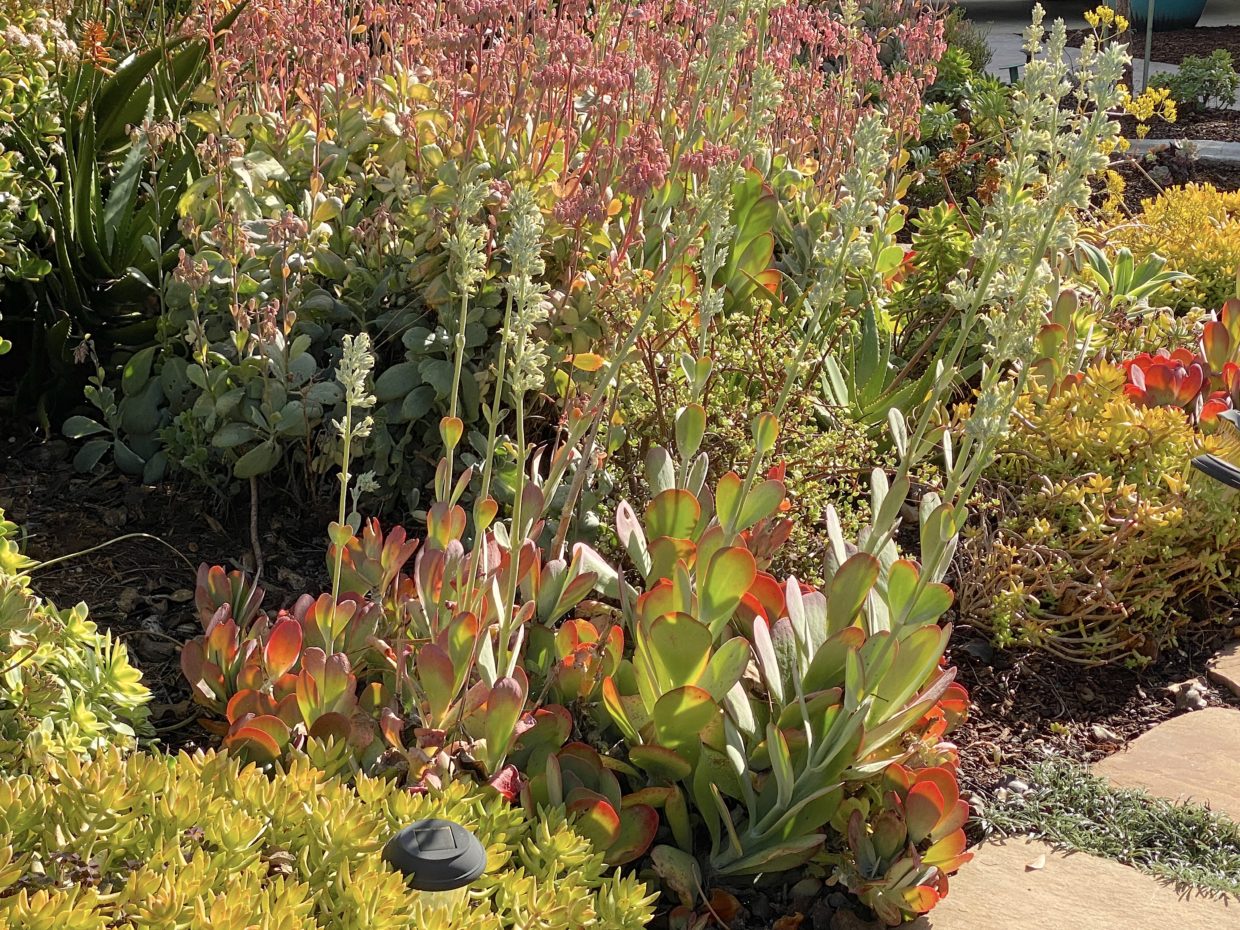
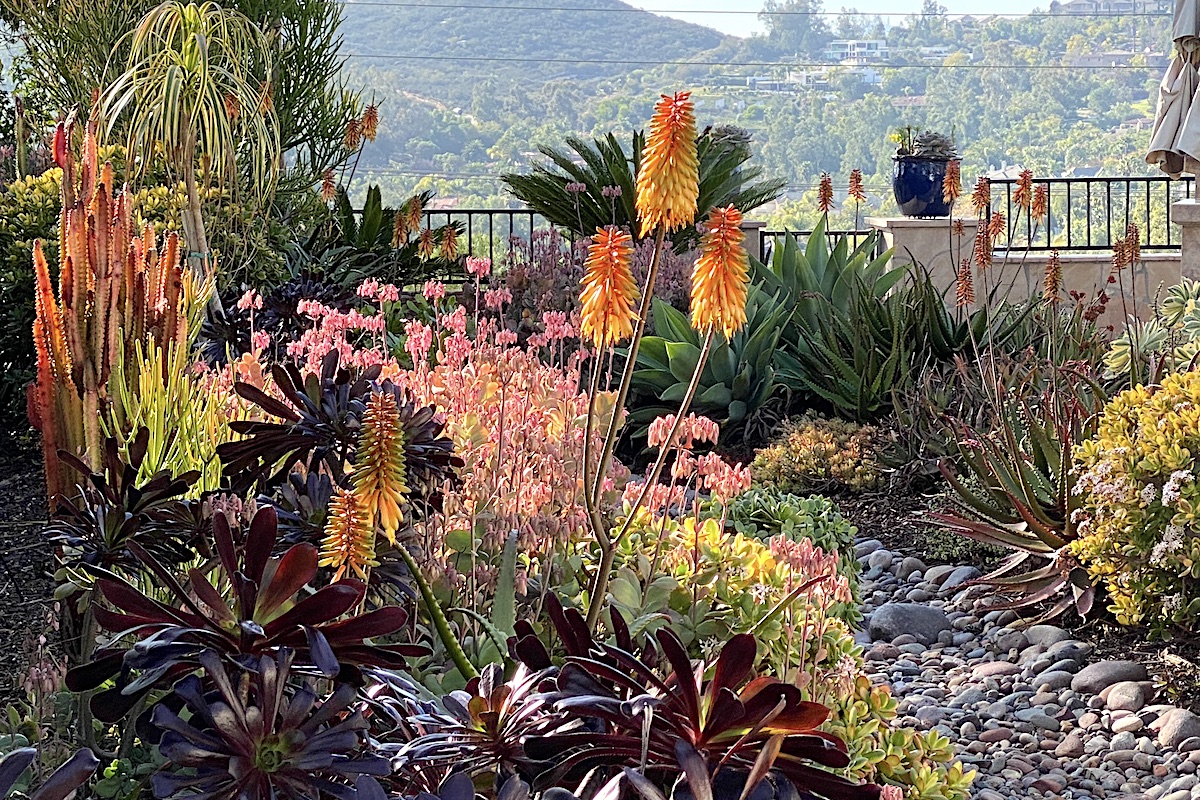
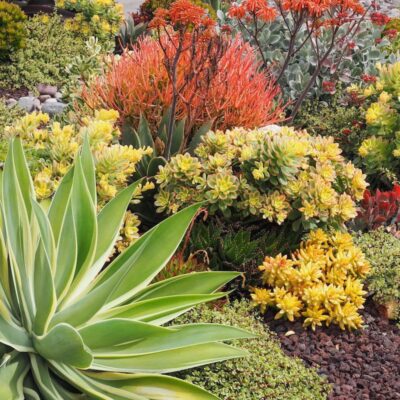
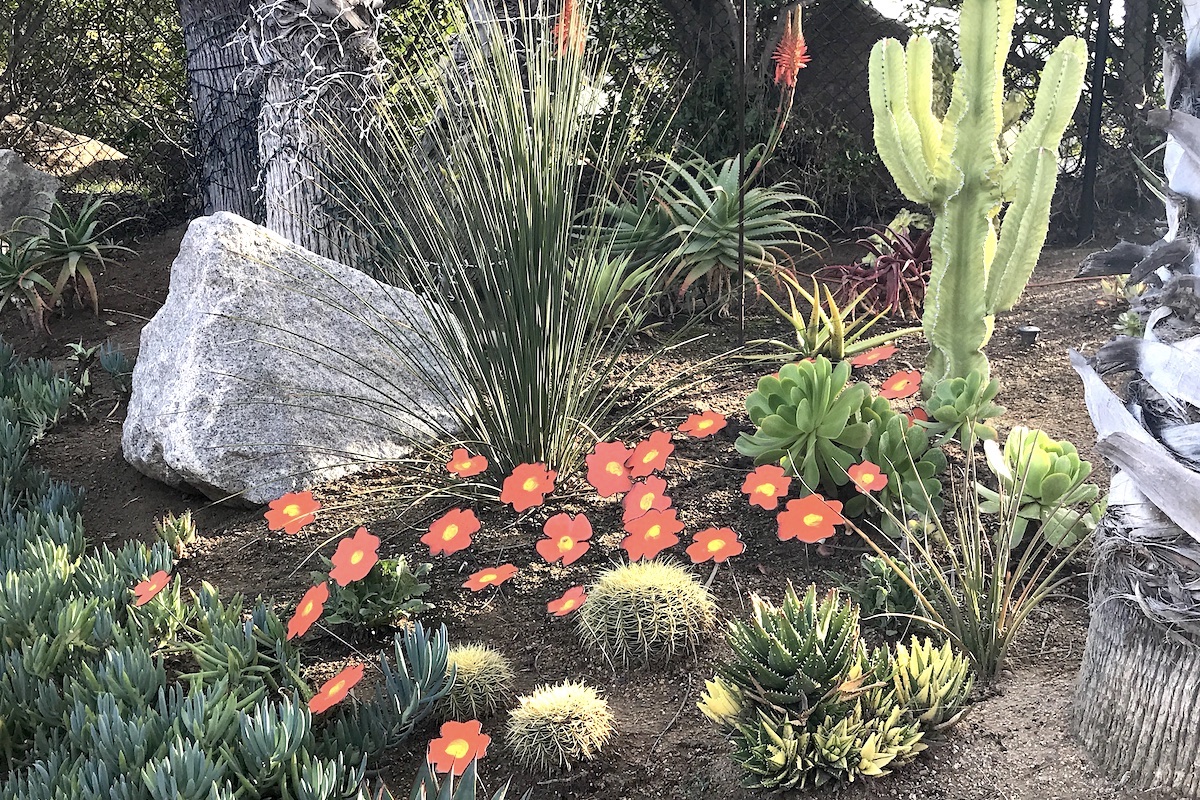
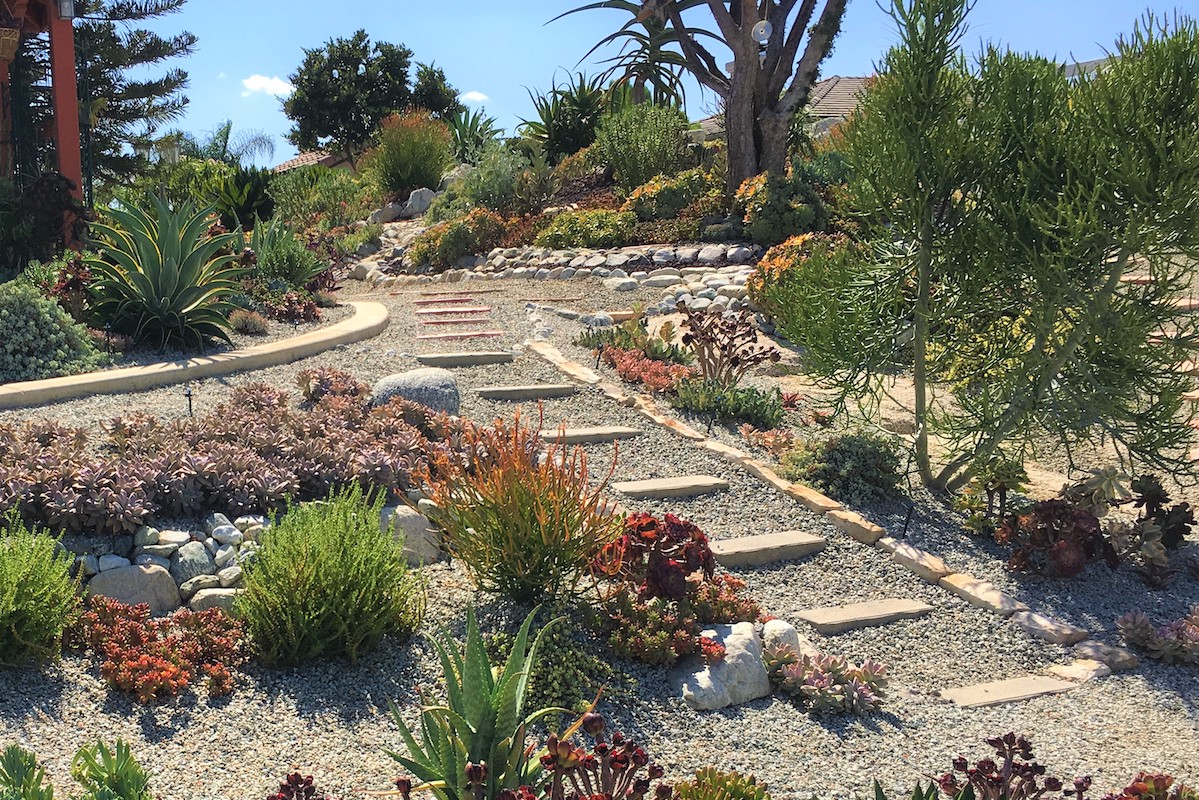
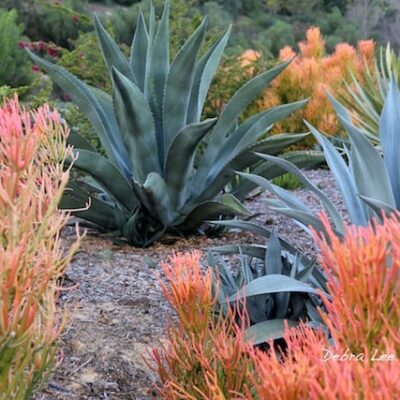
Recently I visited a succulent garden by designer Linda Bresler with many more flowers than most. The front and side yards of the home of Tom and Sharon James in Poway, CA, billow with succulent blooms. These overlap succulents with colorful foliage such as red Kalanchoe luciae (flapjack plant), bright yellow Senecio nussbaumerianum, and Crassula ovata 'Hummel's Sunset' (golden jade).

I made a video so you can see and enjoy it too: A Succulent Flower Garden Designed by Linda Bresler (5:15).

Also noteworthy in the garden are dry creek beds that double as pathways. These enhance the overall design with rounded river rocks that lend pleasing shapes and texture contrasts. Such serpentine beds visually break up drifts of flowers and lead the eye into the garden. Another benefit: "Succulents don't like wet feet," Linda says, "so planting areas that slope upward alongside the creek beds enhance drainage."

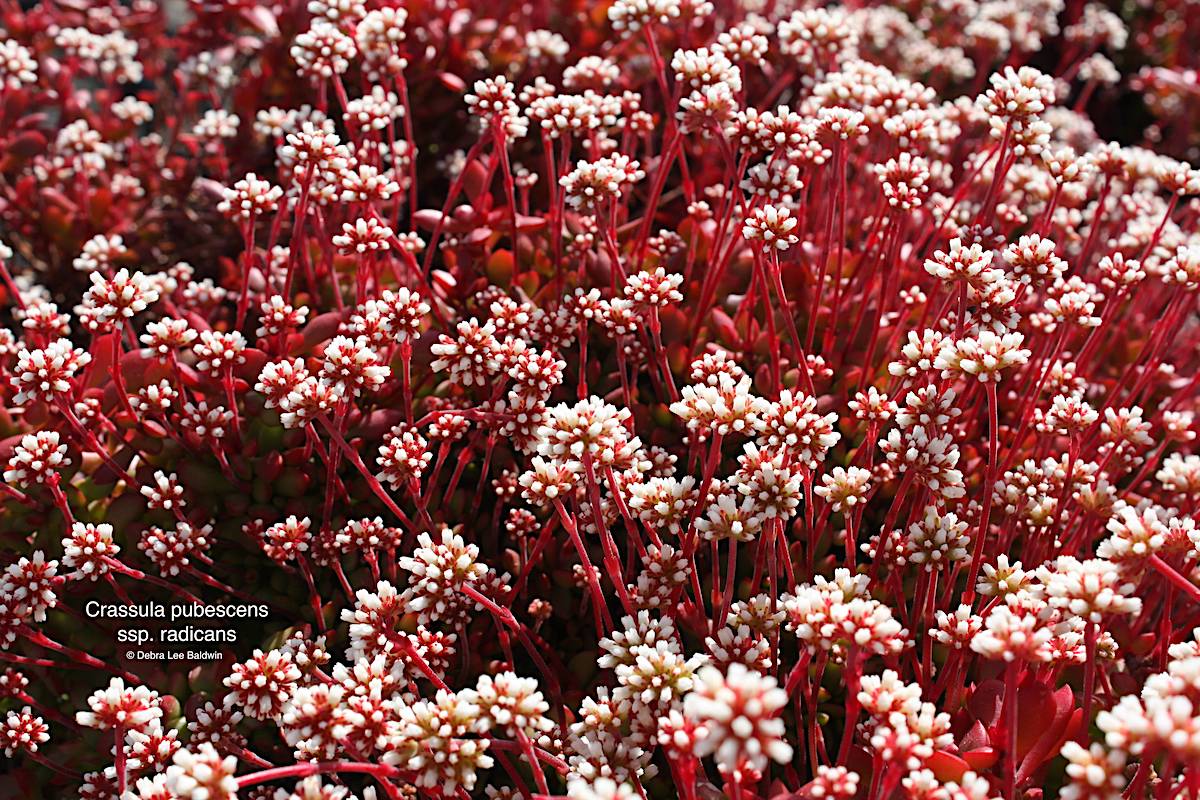
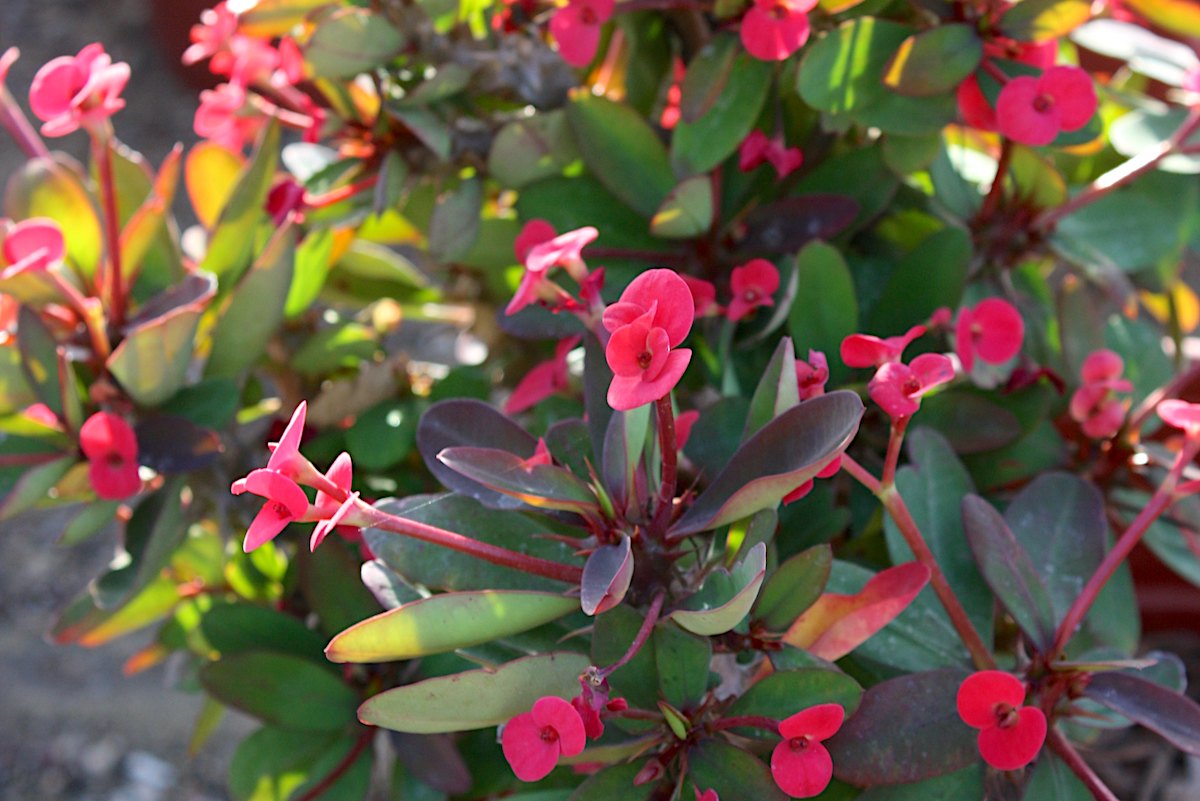
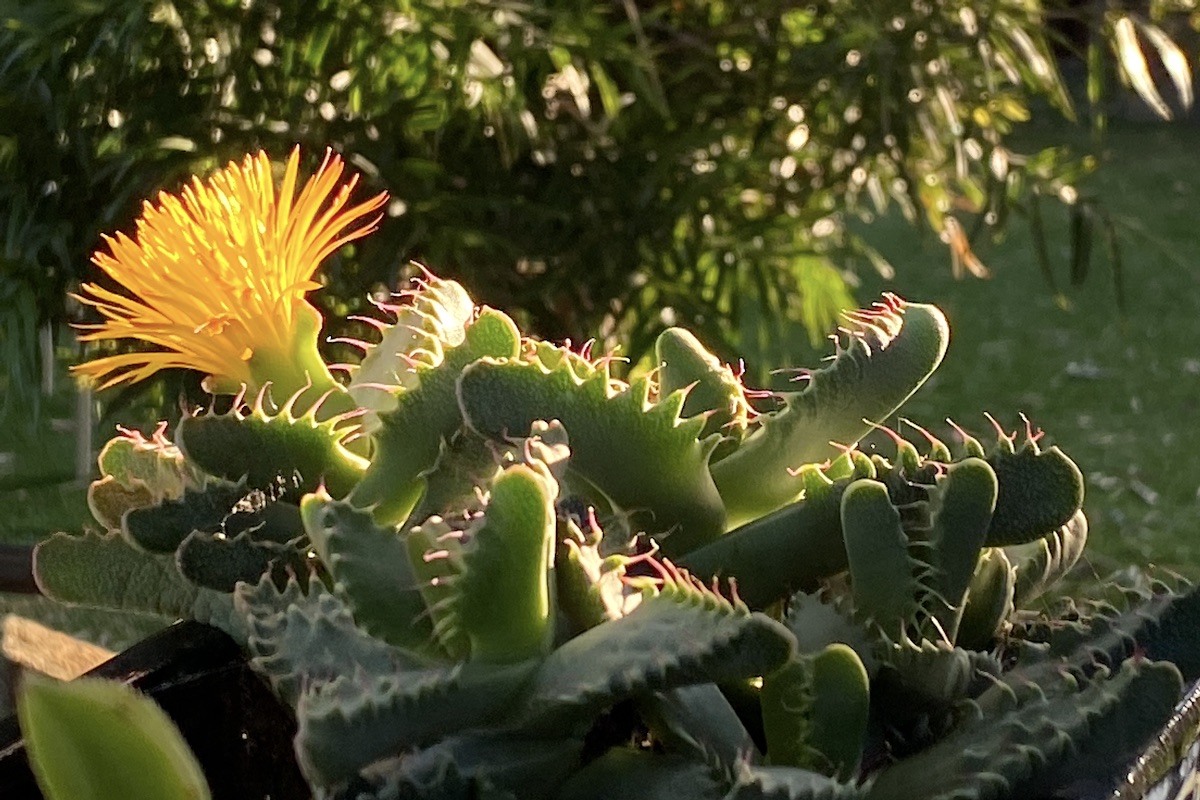
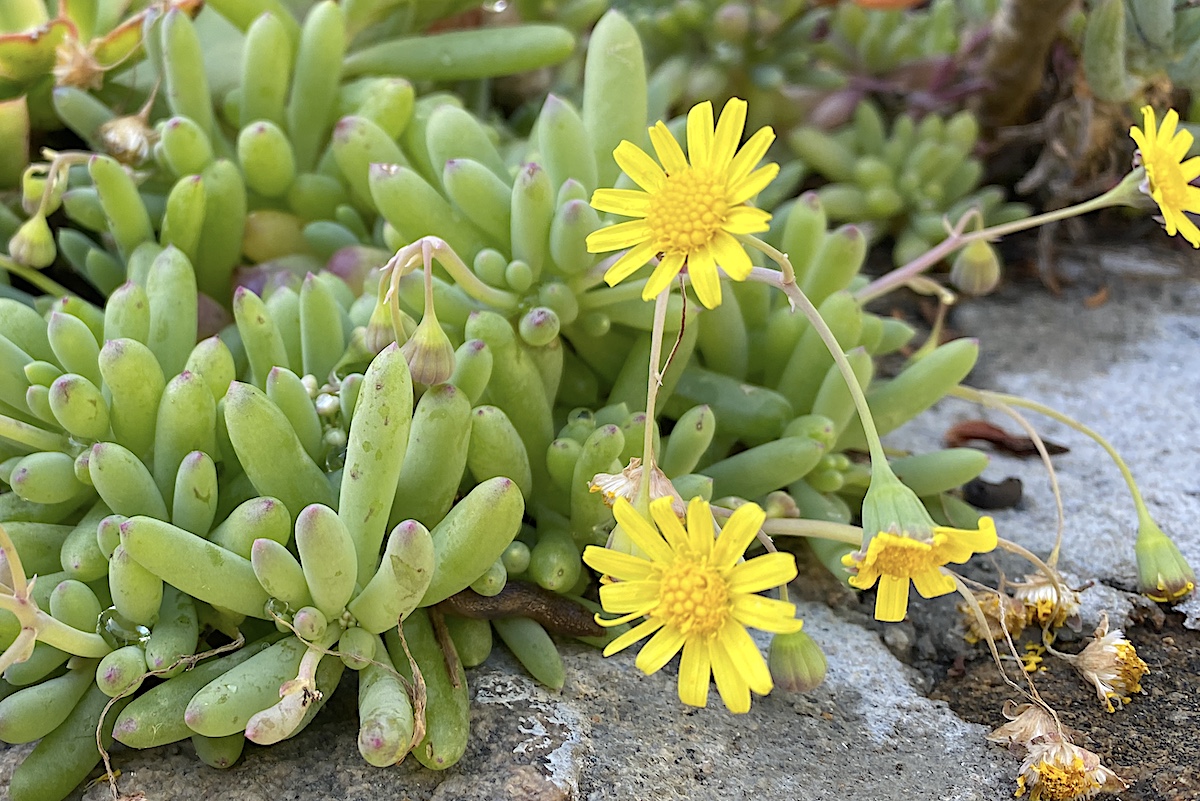
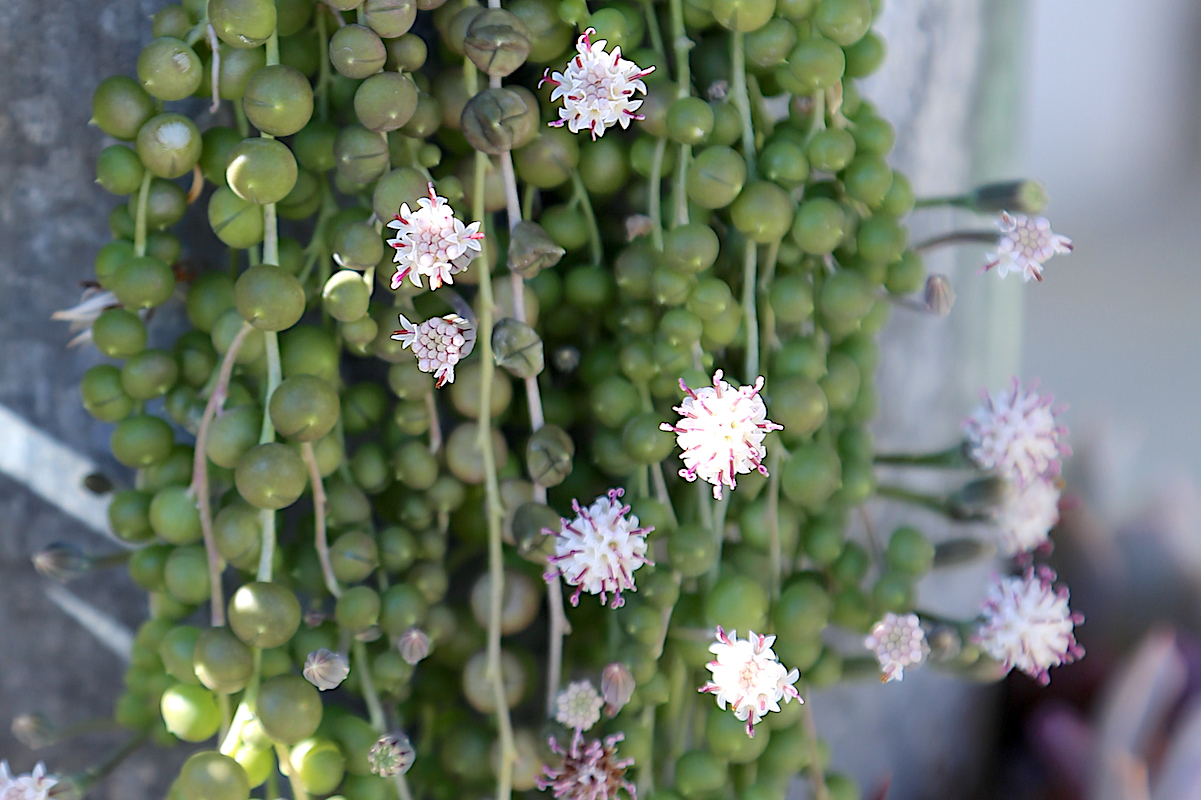
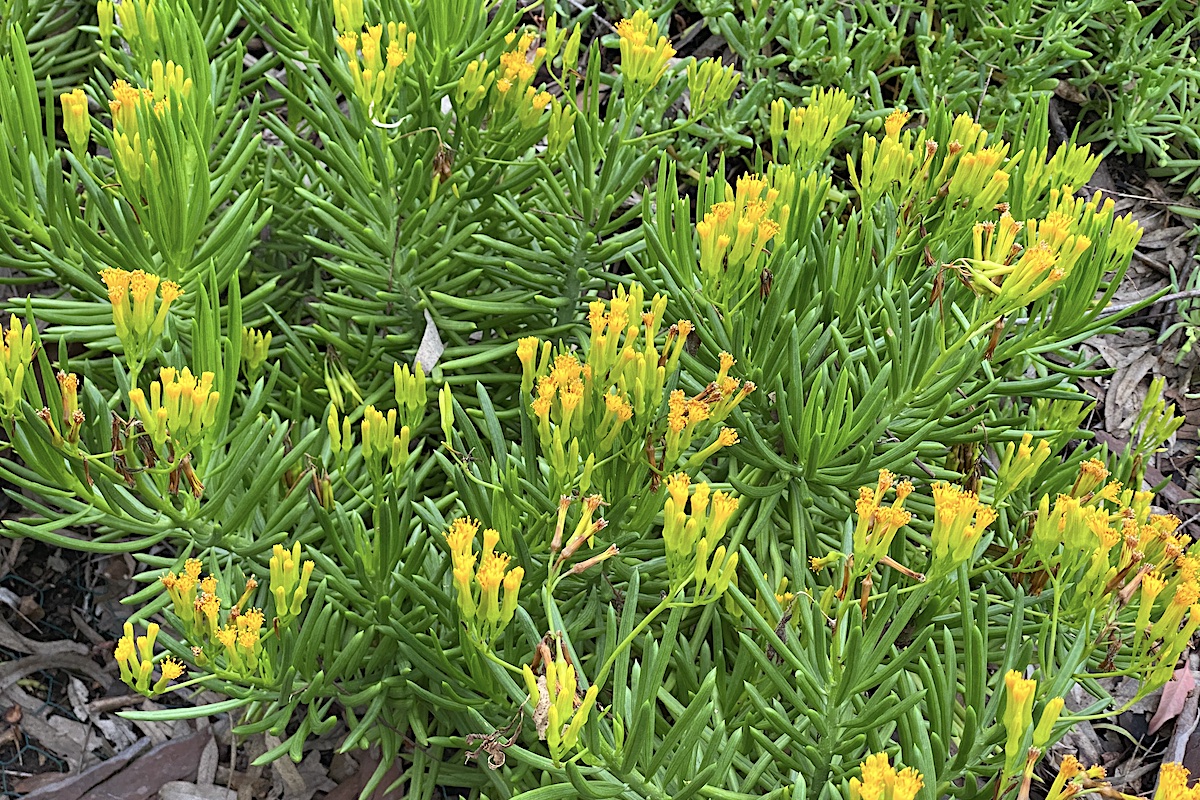
Crassulaskalanchoesaloes and lesser-known succulents bloom now, in midwinter, in coastal and southern CA. The lavish show lasts through spring---especially when, like this year, temperatures are mild and rain is ample. Most succulent flowers, though long-lasting, do need deadheading eventually. Linda advises post-bloom pruning to encourage new growth, fullness, "and to repeat the flower show next year."

Succulents in flower now (see many in the video too):

Related info on this site

Colorful Succulent Garden (c) Debra Lee Baldwin

Succulent Garden Design Essentials

Succulent Garden Design Essentials How to design and plant your succulent garden. To ensure your success and help you avoid mistakes, here are a dozen succulent garden design essentials to keep in mind. Many thanks to homeowner Nancy Dalton, whose award-winning succulent garden in San Diego is an example of smart landscaping for Southern California. …

The post A Succulent Flower Garden by Linda Bresler appeared first on Debra Lee Baldwin. Copyright © Debra Lee Baldwin.


from Debra Lee Baldwin https://ift.tt/2NTIWvr
via IFTTT

viernes, 17 de enero de 2020

Plant a Succulent Lantern Amazing tips

Candle lanterns make lovely containers for succulents. You might plant the succulents in a small pot and tuck it into the lantern, or if the lantern can hold soil, plant directly into it. Most aren't watertight---a good thing, because when you water the plants, the lantern will drain (leak).

Any time you display succulents under glass, you're literally "showcasing" them. A terrarium or planted lantern is reminiscent of a French-inspired, Victorian-era cloche---a glass box that holds treasures such as rare plants.
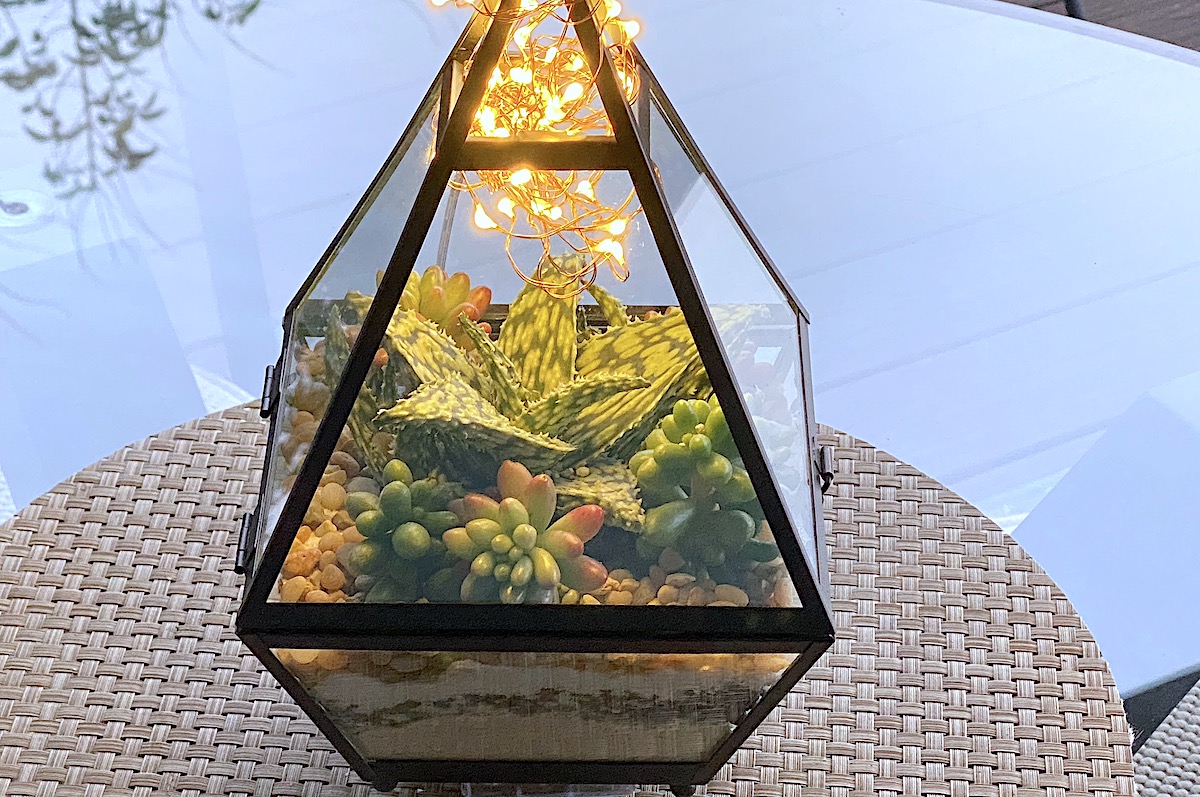
Succulents in a glass pyramid lantern

This tabletop terrarium/lantern also can hang. Inside it, Aloe 'Snowstorm' repeats the shape of the pyramid and echoes its angular lines.

Select Your Lantern

You'll find dozens of potentially plantable candle lanterns on eBay and Amazon; and at thrift shops and home decor stores like Pier One and Home Goods. You needn't obtain the exact ones I used in my video Plant a Succulent Lantern, Five DIY Ideas (4:49) or for that matter, use the same kinds of succulents. But if you'd like to, I've provided sources below.
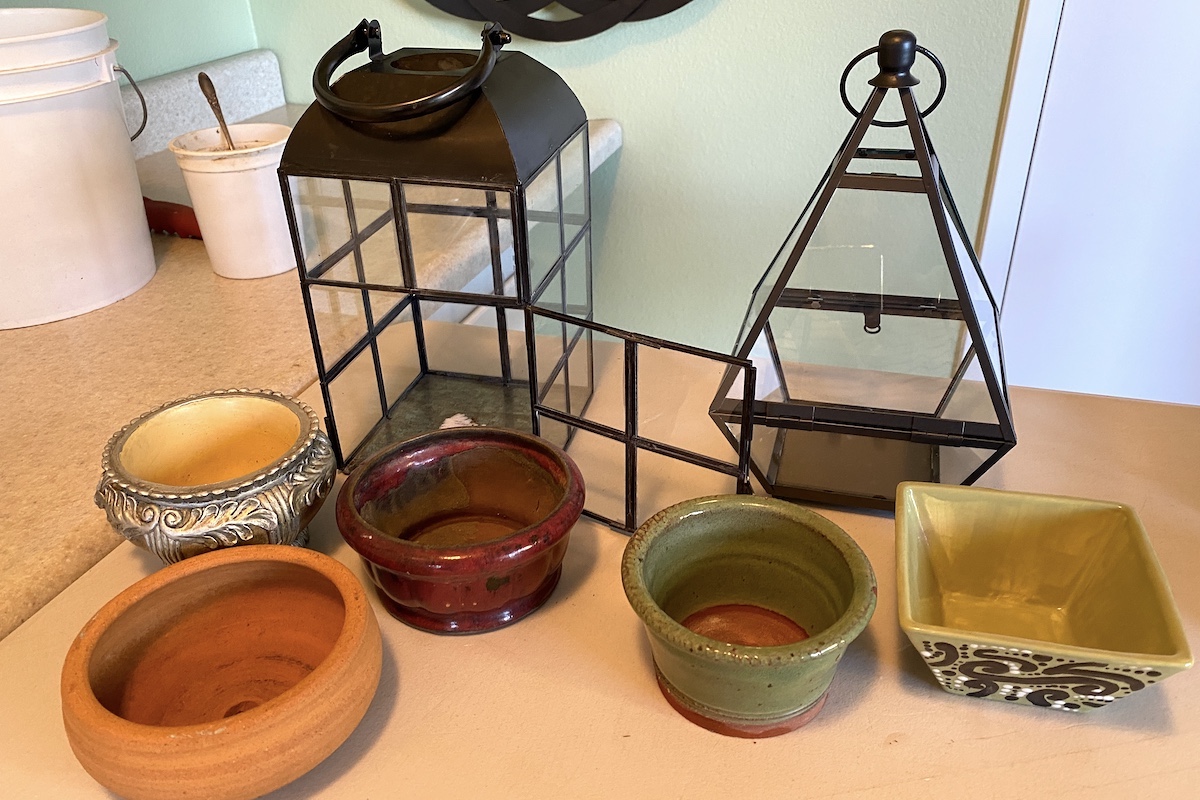
Lanterns and pots for succulents

For the video, I assembled lanterns along with assorted small pots the right size to fit into them.

Choose a lantern style with openings for air circulation. If you like the idea of letting succulents trail out of a lantern, choose one with a door that can stay open (it opens from the side rather than the top).

For vining, cascading and pendant succulents perfect for hanging applications, see my book, Succulent Container Gardens.

Method

There are two basic approaches: Plant a small pot and put it inside a lantern, or plant directly into the lantern.

If there's no area within the lantern to hold soil, you'll need to insert a container that does.
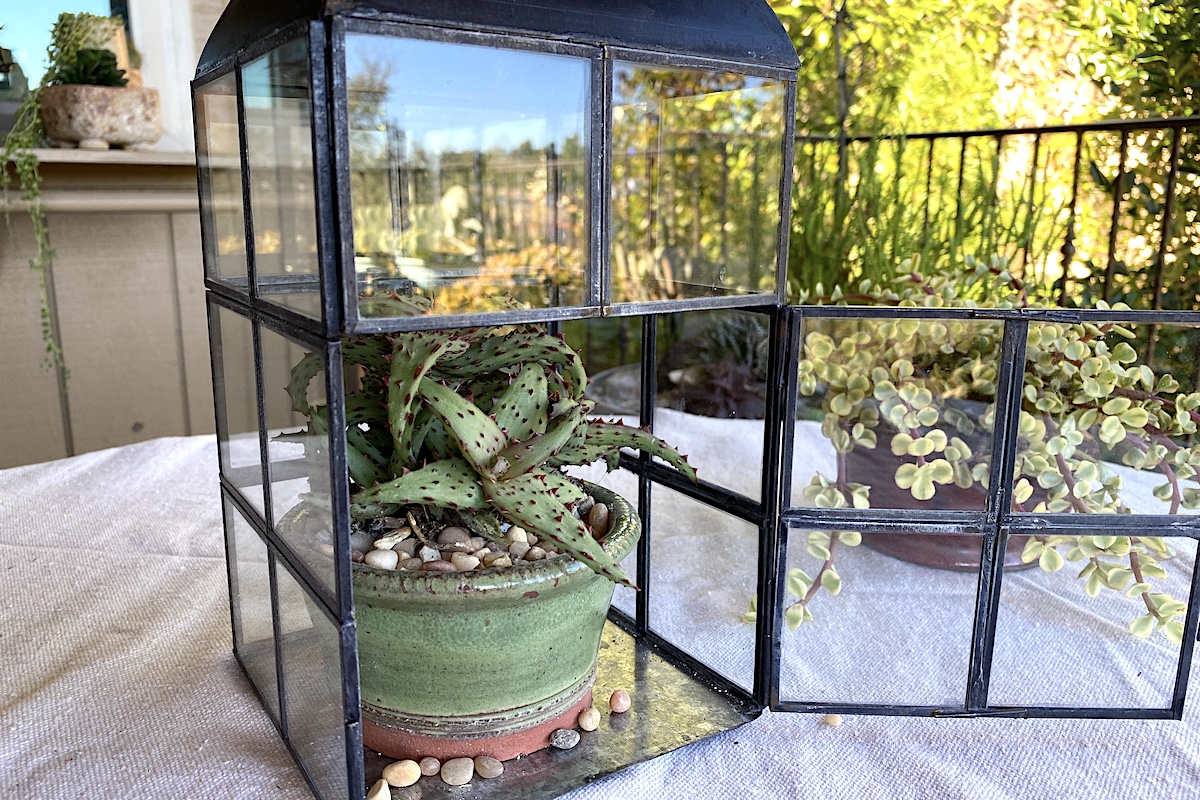
Aloe castilloniae lantern

Aloe castilloniae is a rare, collectible trailing succulent worth being showcased. It's in a lantern that can't be directly planted because there's no place to hold soil.

When planting directly into a lantern, for a cleaner, upscale look, don't let soil show through the glass. In my Plant a Succulent Lantern video, I slide succulents out of their nursery pots and arrange the plants in the center of a glass lantern, then I conceal their root balls with layers of crushed rock, pebbles and sand. These are visible through the glass, and they form pleasing striations that elevate the overall design.

Lighting

Create an eye-catching lantern that's also functional by adding tiny, battery-operated, fairy string lights. Tuck the light string into the top of the lantern and secure the battery pack where it won't show.
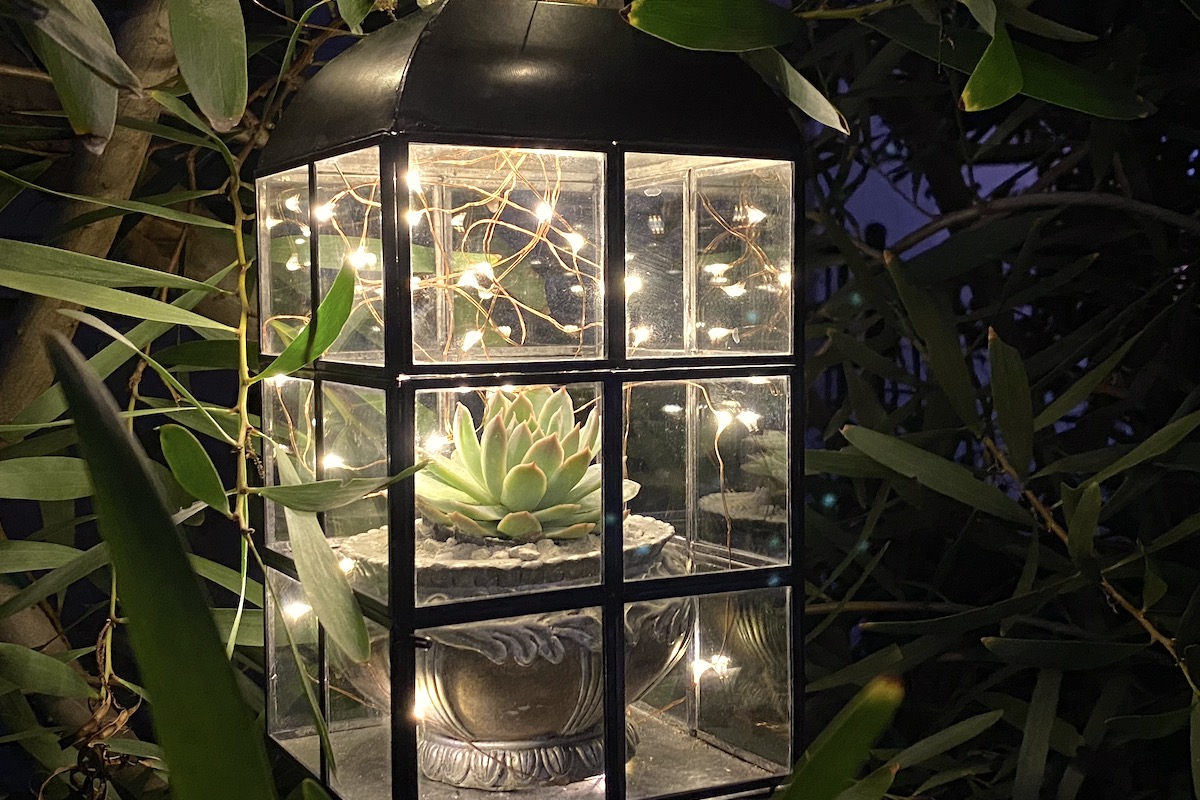
Succulent lantern at night

Fairy lights illuminate a lantern that holds a small echeveria in a thrift-store pot.

I used extra-hold duct tape to attach the battery pack under the base of the lantern, making sure I could access the on-off switch. Since the battery pack is flat like a deck of cards, the lantern can still serve as a table centerpiece without falling over.

Succulents in the video

When you plant a succulent lantern, chose succulents that won't get overly large and that also play off the shape of the lantern. For example, in the video I show a round blue echeveria in a round verdigris (turquoise) lantern. And in my pyramidal lantern, the main plant is a dwarf aloe with triangular leaves.
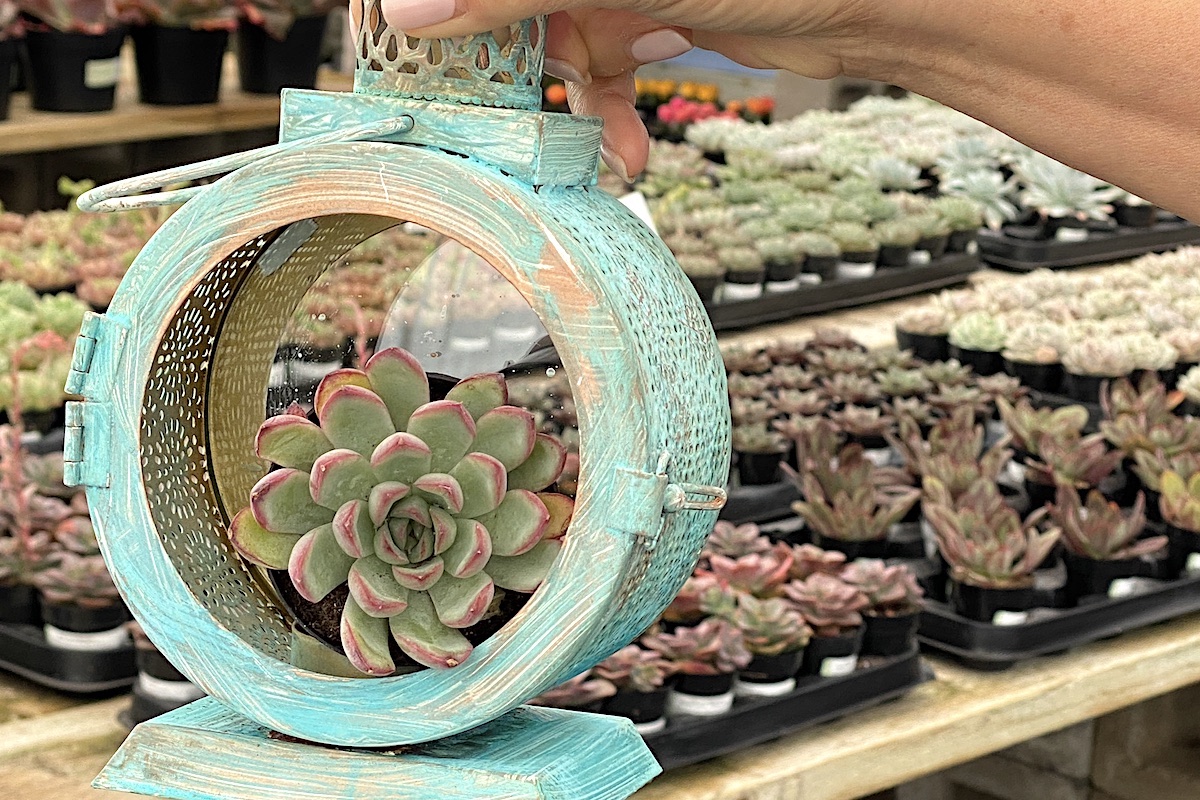
Round succulent lantern with echeveria

As I paired lanterns with succulents at the nursery, I discovered that this round thrift-store lantern perfectly frames an echeveria. And both are blue!

The succulents came from Oasis Water Efficient Gardens nursery north of San Diego. Oasis is owned by Altman Plants, which sells online. Links below go to Altman's site or to another excellent mail-order succulent nursery: Mountain Crest Gardens.

Aloe 'Snowstorm'

Small aloes

Sedum hernandezii

Sedum rubrotinctum 'Aurora'

Sedums

Portulacaria afra variegata

Aloe castilloniae

Echeverias

Materials

Pyramid (triangular) lantern, 6.37 x 6.37 x 10.5 inches, $20 at Pier One

Black Windowpane Lantern, 5.6 x 5.6 x 10.6 inches, $35 at Pier One

Small rounded pebbles, $9 at Amazon. 

Small black pebbles, $10 at Amazon. 

White sand, $7 at Amazon.

Fairy string lights, warm white. They're sold as 2-packs, and each needs three AA batteries. $9 at Amazon.

Extra-hold duct tape. Match the tape to the color of your lantern or use clear.
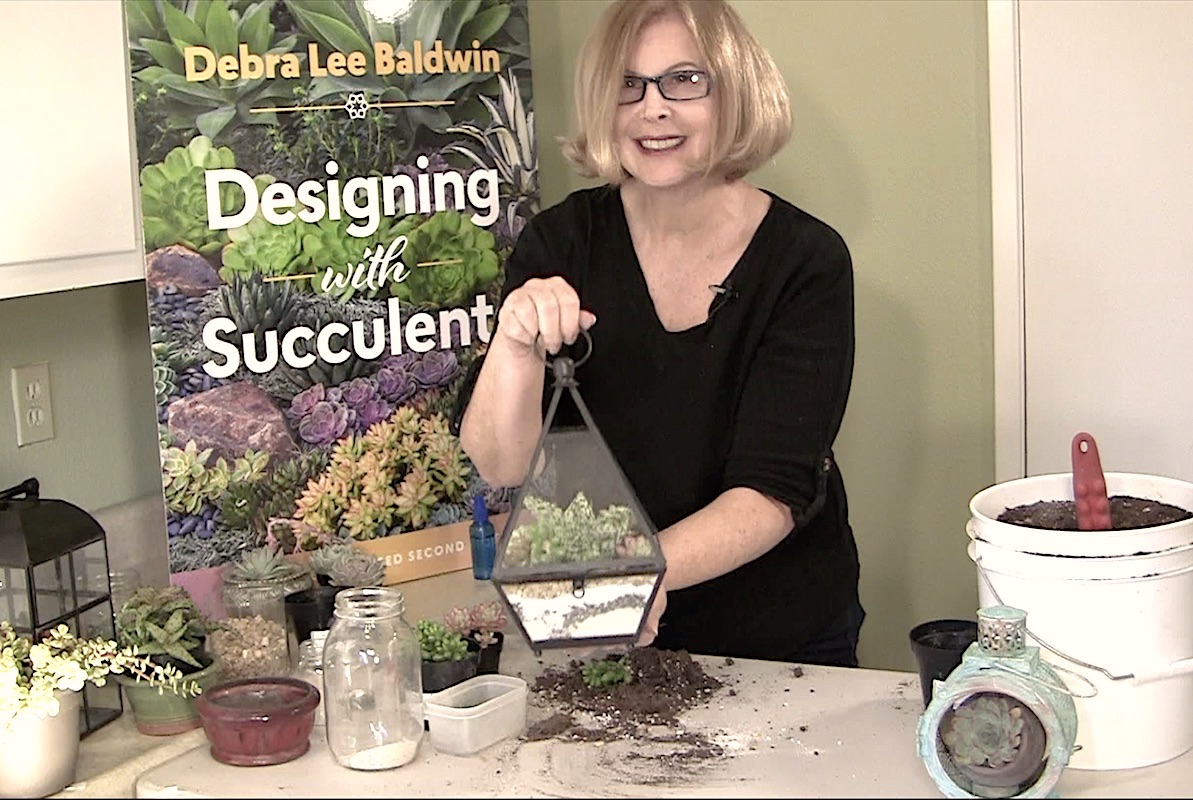
Succulent planted lantern

In the video, you'll see how I use the materials I've listed above.

The round verdigris lantern and the small glazed pots came from thrift stores or garden centers. I also used pumice and cactus-mix potting soil---any brand will do.

Care
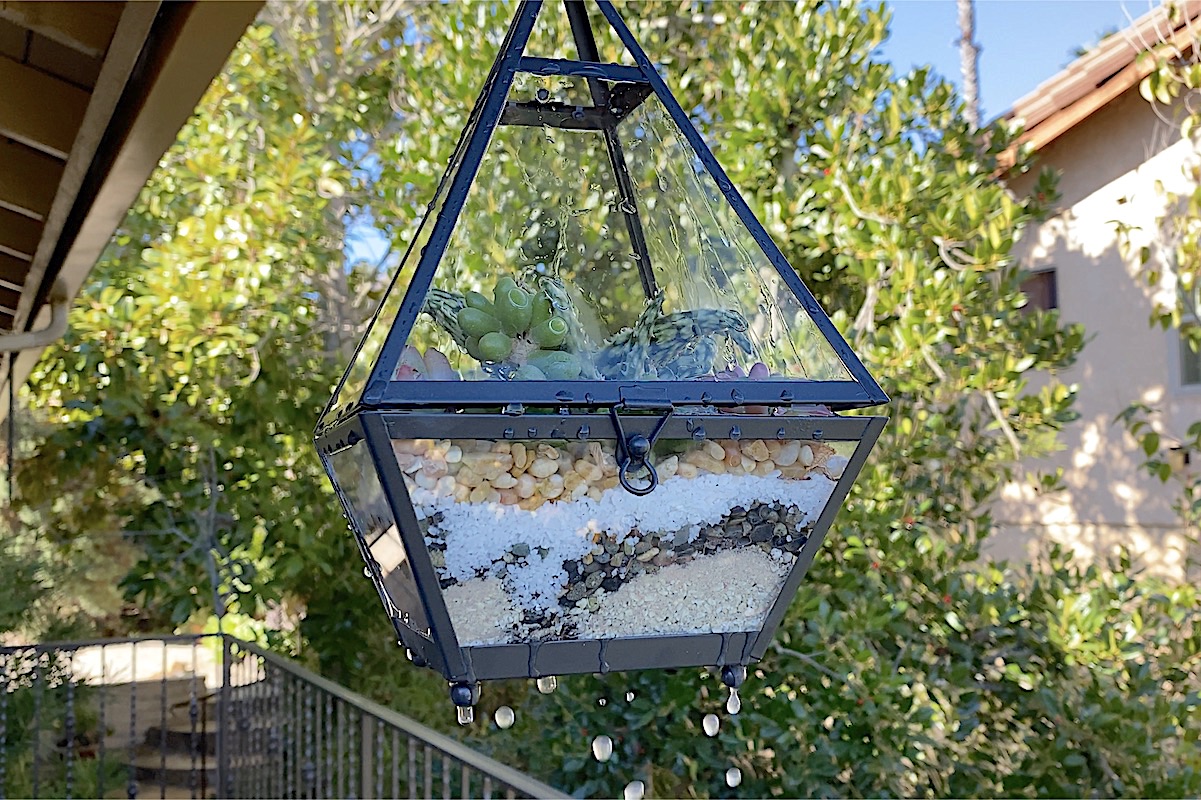
Succulent lantern, watered

Water drips from the recently watered pyramid lantern.

Display your planted lantern atop a patio table or hang it in a sheltered area outdoors or in a sunny indoor spot. Because glass can magnify ultraviolet rays, it should be in bright or dappled shade and not in full, hot sun.

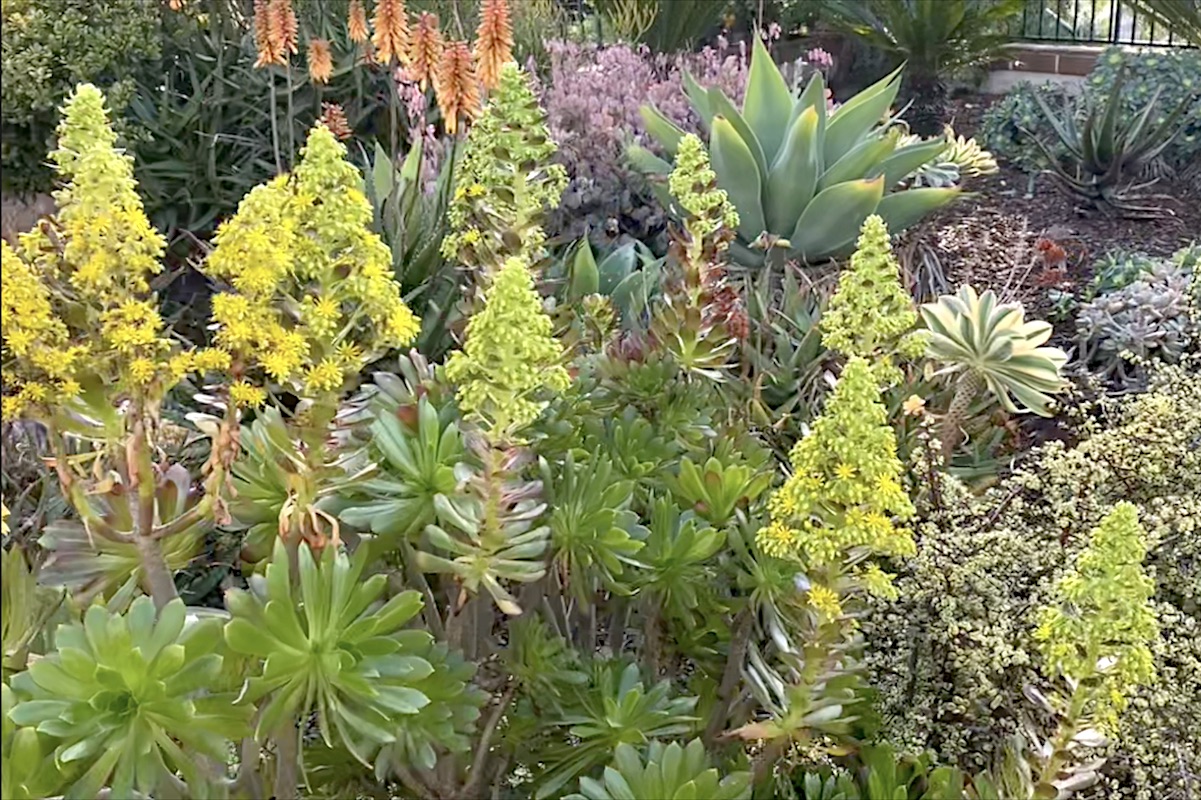
Succulent Gifts & Projects

Succulent Gift & Project Ideas DIY projects and fun gifts that feature succulents. Looking for my online gift-and-decor store? Go to Succulent Chic! Succulent Chic MAKE YOUR OWN Succulent Bouquets 12 Succulent Bouquets to Inspire You 12 Succulent Bouquets to Inspire You ~ When wired onto faux stems, succulent rosettes—despite having no roots, soil or water—make…

The post Plant a Succulent Lantern appeared first on Debra Lee Baldwin. Copyright © Debra Lee Baldwin.



from Debra Lee Baldwin https://ift.tt/361OdaC
via IFTTT

lunes, 6 de enero de 2020

Add Art to Your Succulent Garden Amazing tips

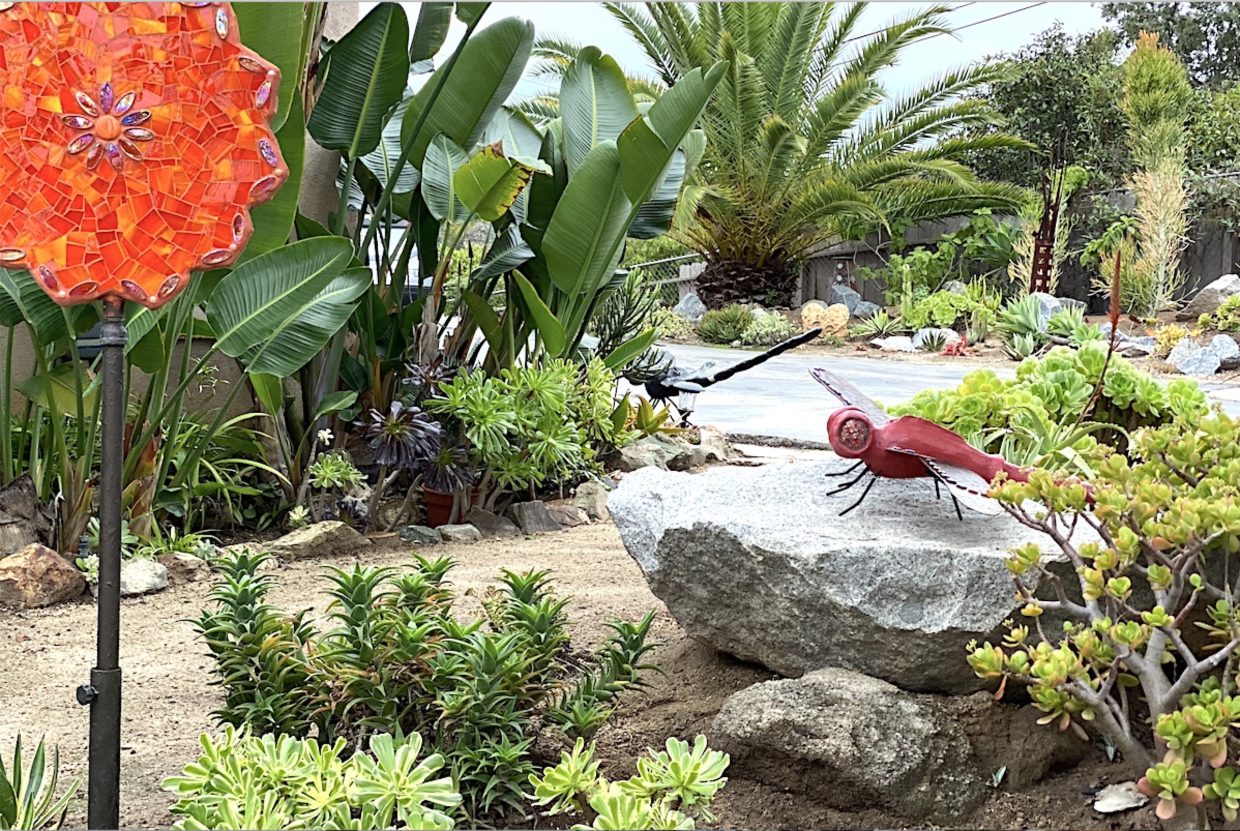
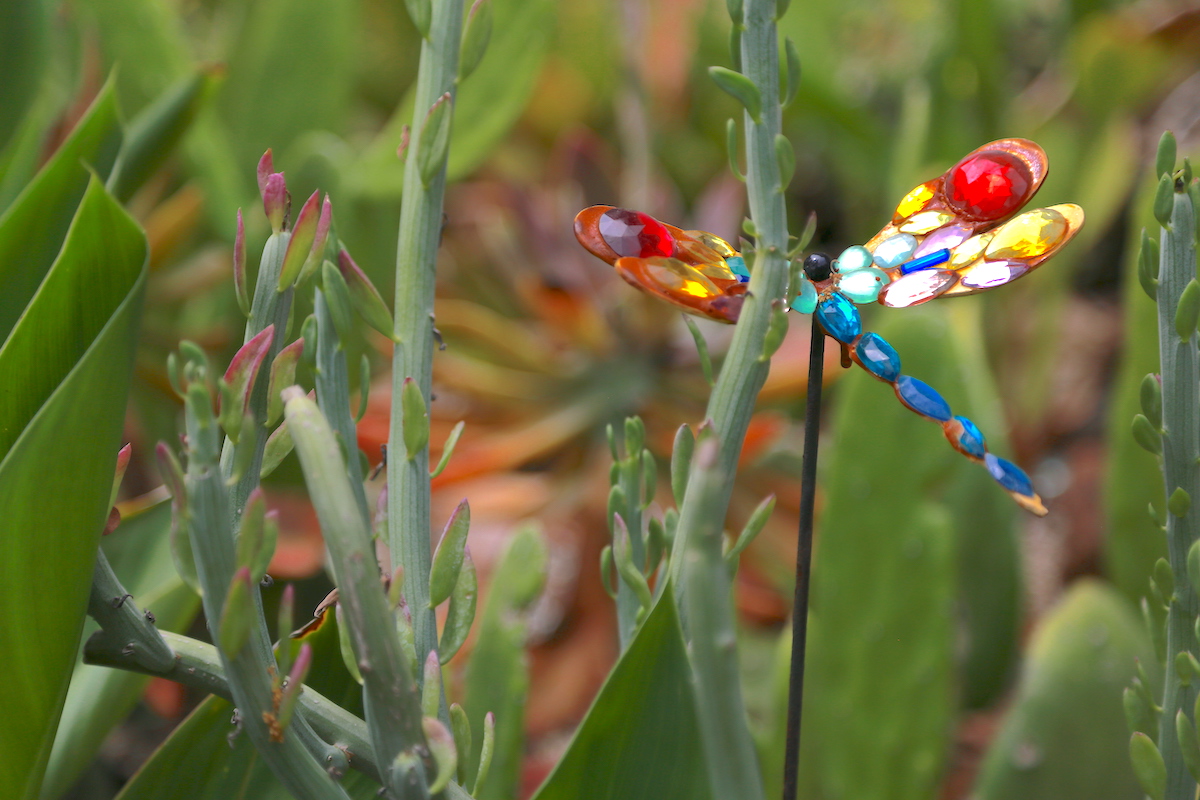
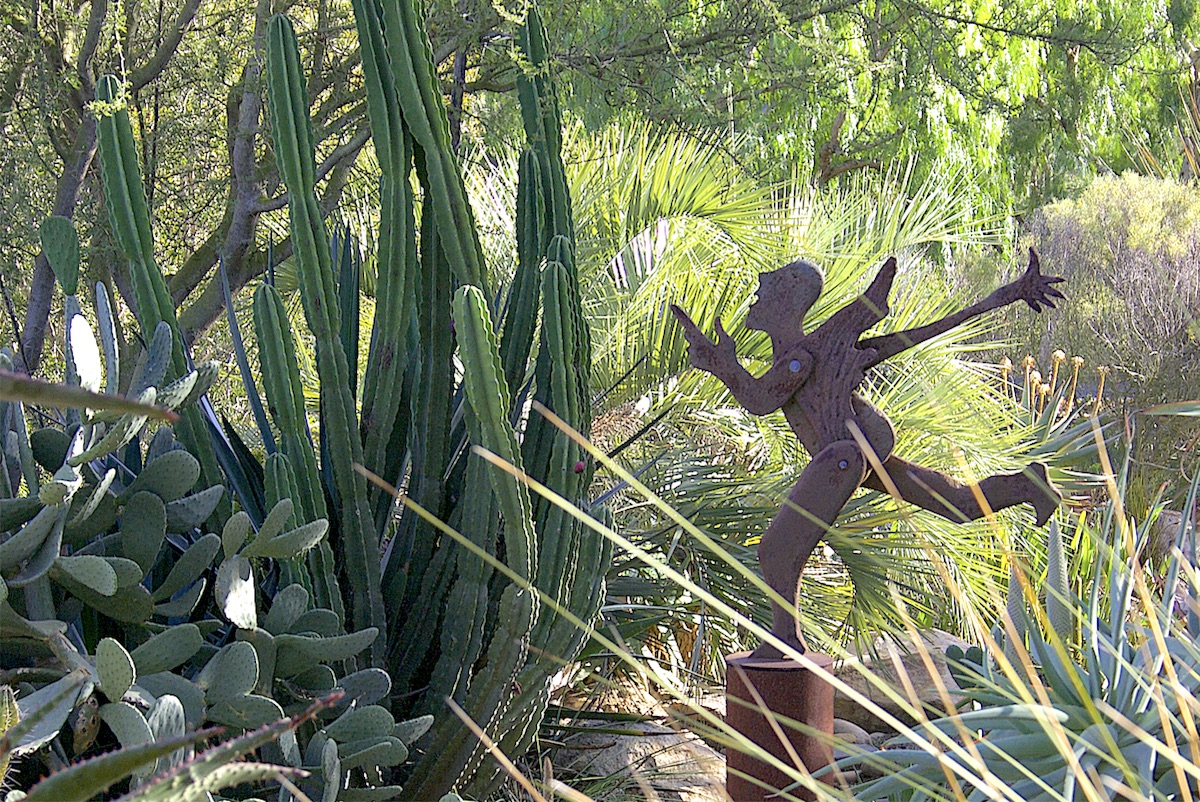
Why not make your succulent garden even more inviting with outdoor art? By using your garden as a gallery, you'll engage in a fun pursuit that expresses your special style. One key to getting the look right is to repeat, in the pieces you choose, aspects of what you love most about succulents. This will make you (and guests) aware of the plants' beauty in fresh ways, and create memorable, tour-worthy spaces.

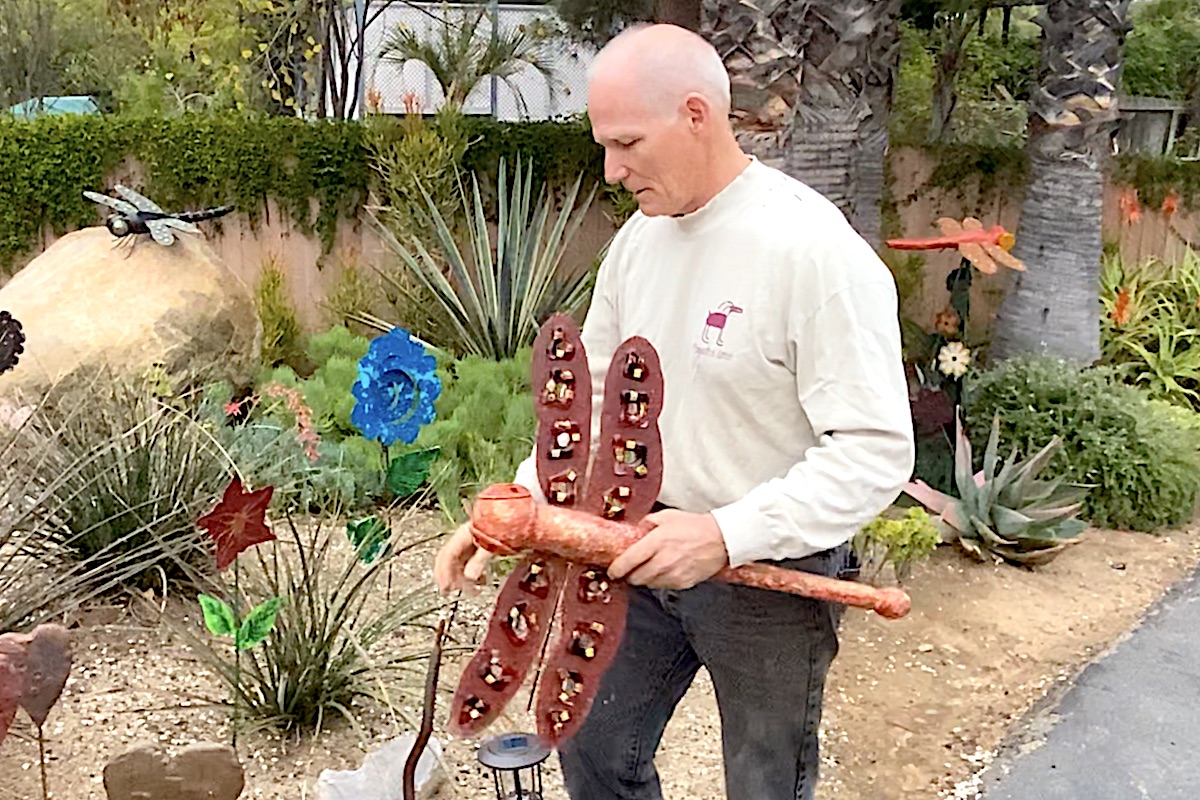
Artists Mark and Marsha Rafter in their garden. See the video. 

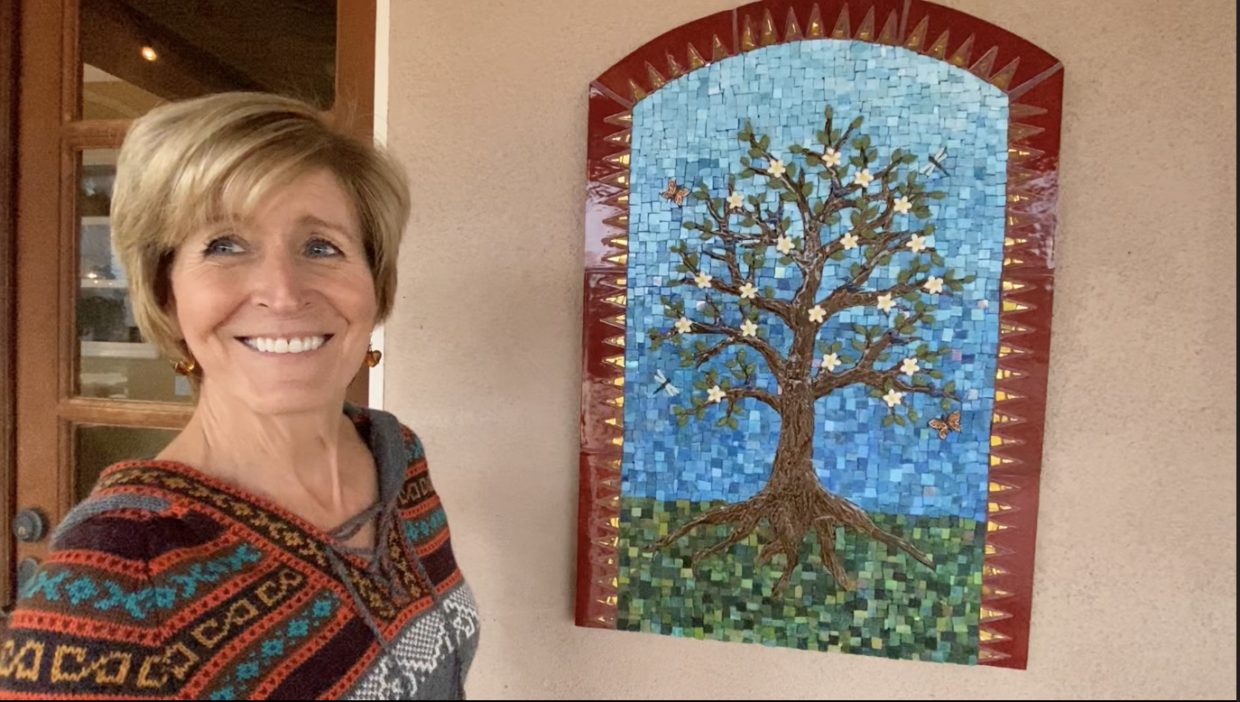
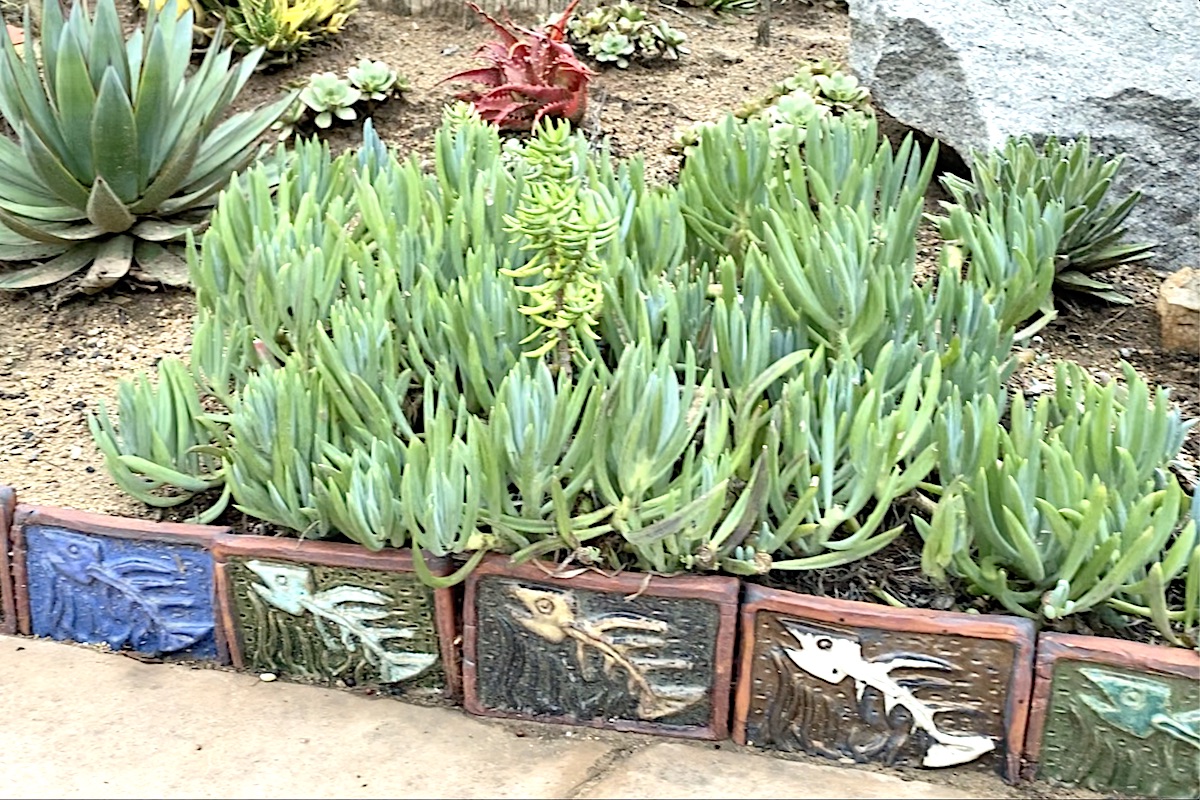
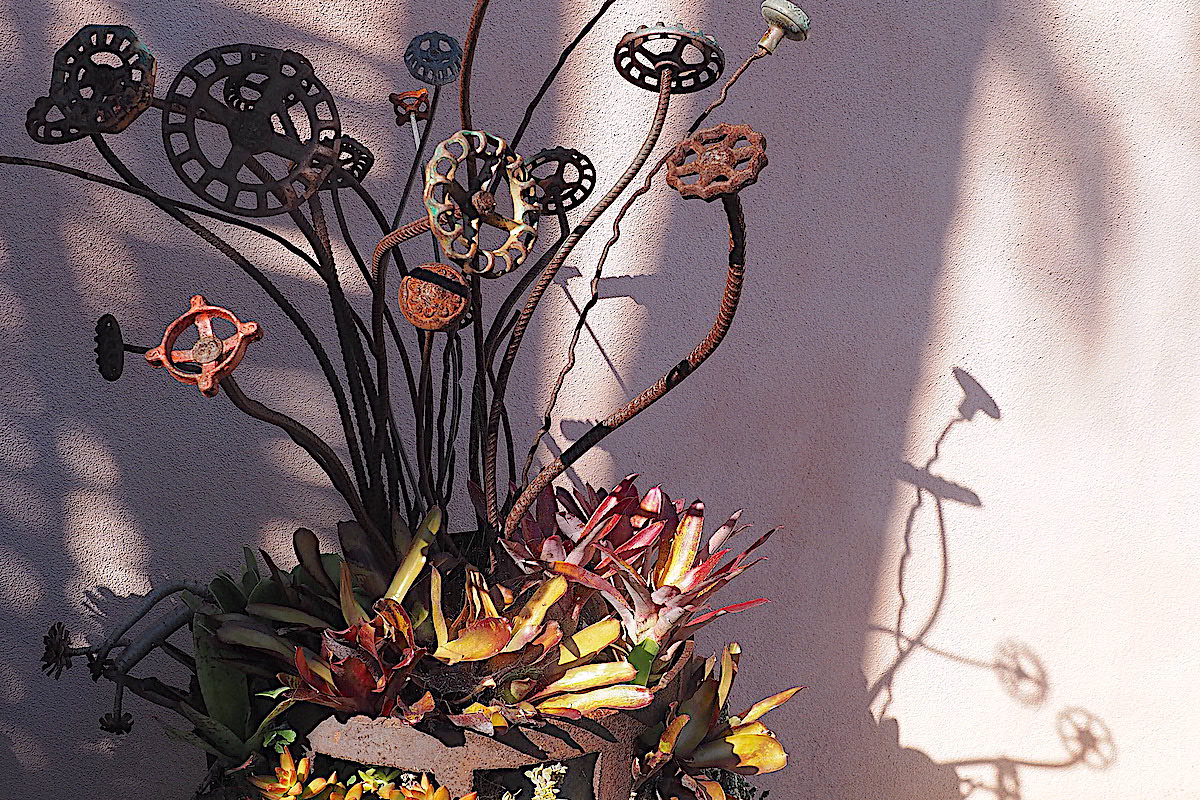
In my latest video, Mark and Marsha Rafter's Art-Gallery Succulent Garden, we visit husband-and-wife artists near San Diego. You'll love how these professionals beautifully showcase works of metal, ceramic and mosaic in their own garden.

Woven metal wall art by Mark Rafter

Woven metal wall art by Mark Rafter

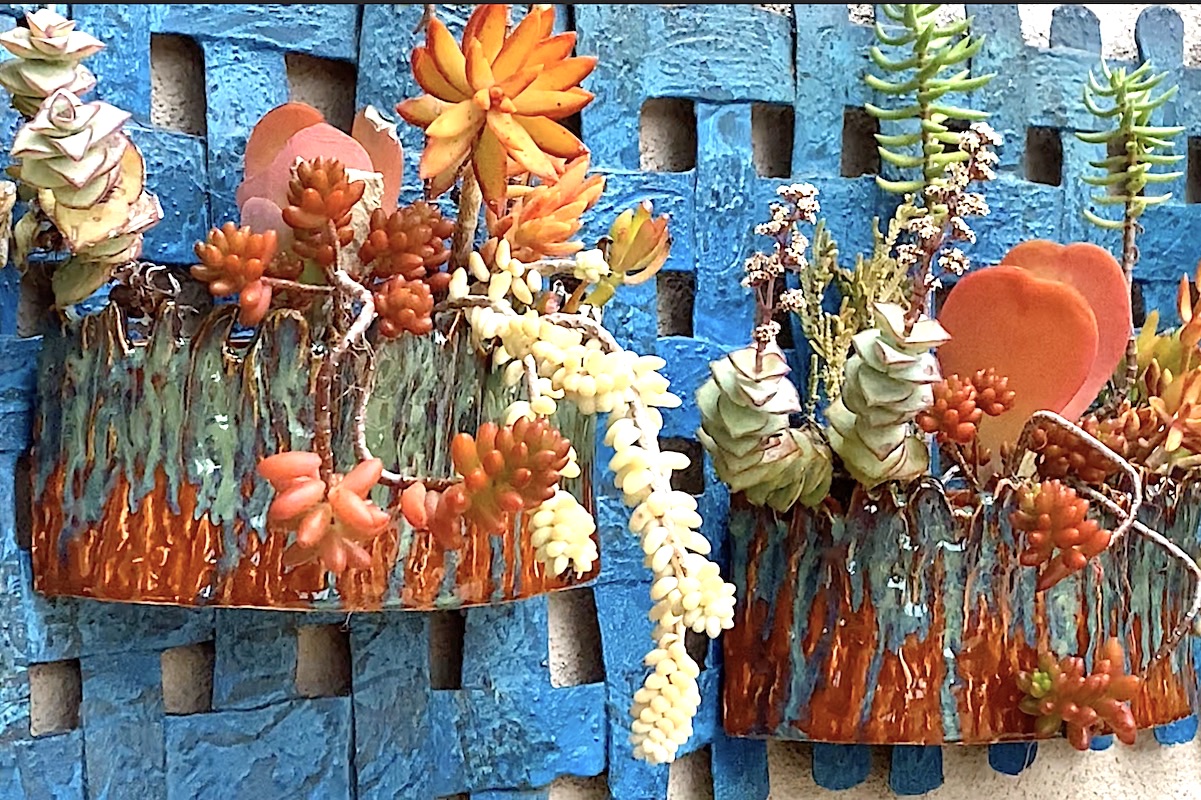
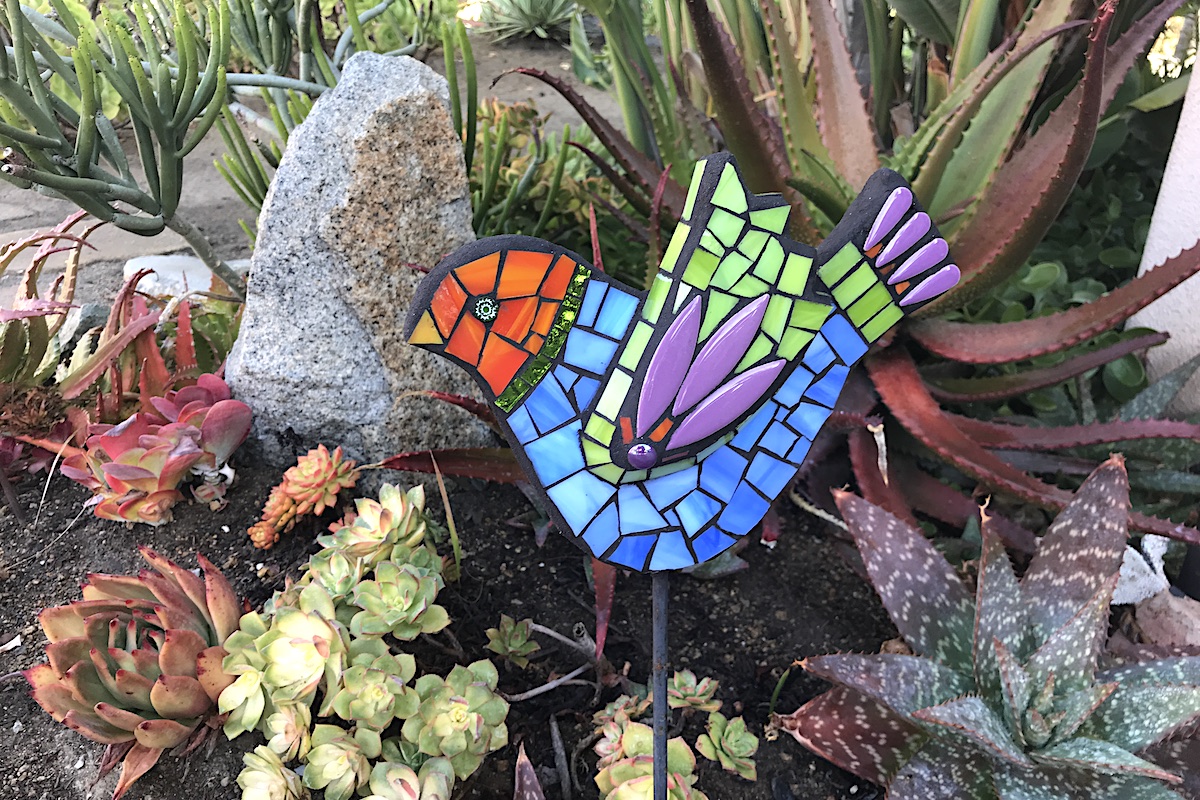
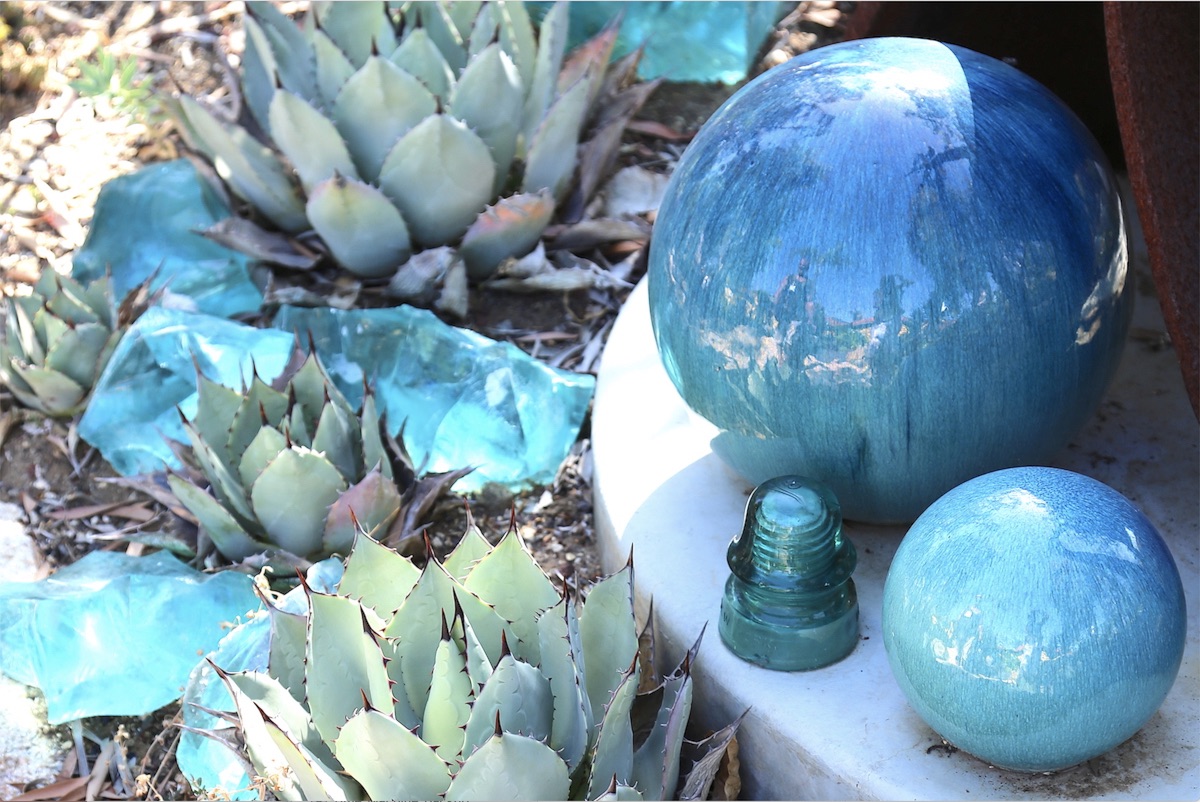
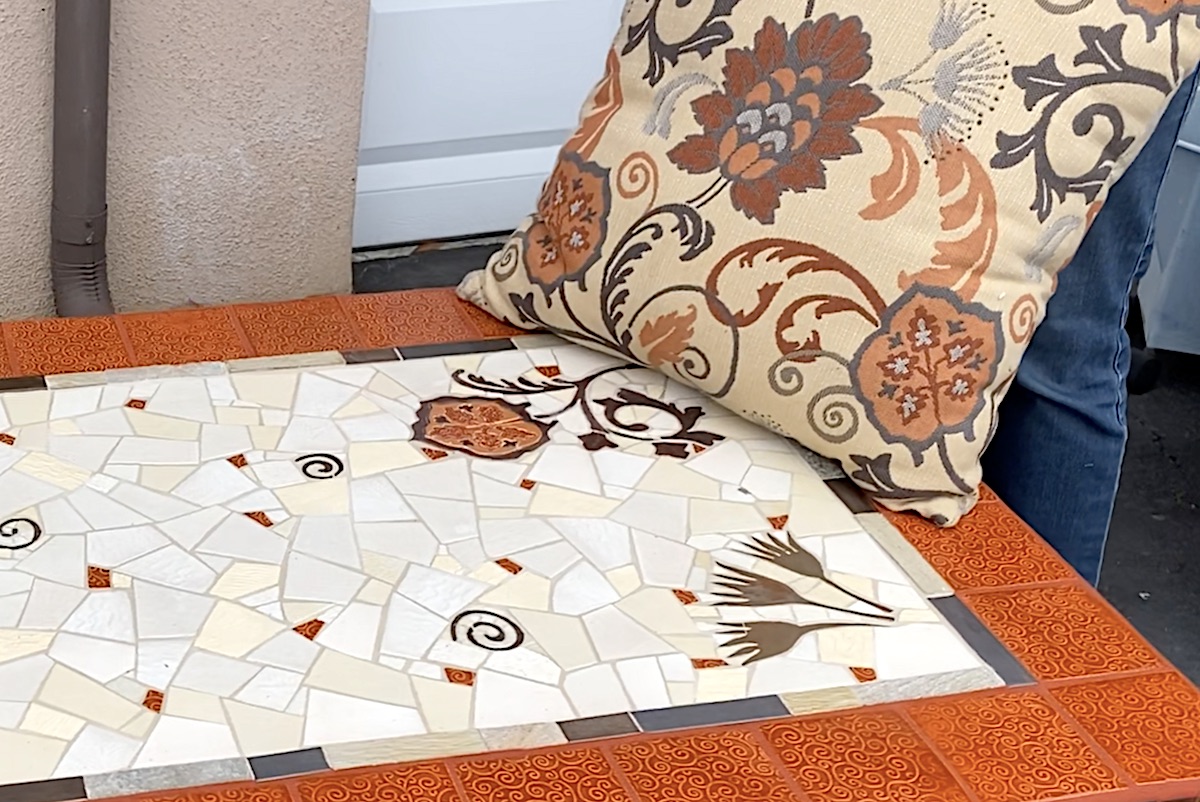
Mark and Marsha use bold hues of red, orange and blue that repeat and contrast with the colors of aloes, sedums, senecios and crassulas. They explore textures and reflective surfaces, and aren't afraid to experiment.

Mosaic bird by Marsha Rafter

Mosaic bird by Marsha Rafter

When hunting art for your garden, have fun discovering artists and collecting their works. Or become an artist yourself. Don't protest! Art is the expression of creativity that everyone has. What "artists" tend to possess that you may not is perseverance in the face of failure, the desire to acquire new skills, and a willingness to try new things.

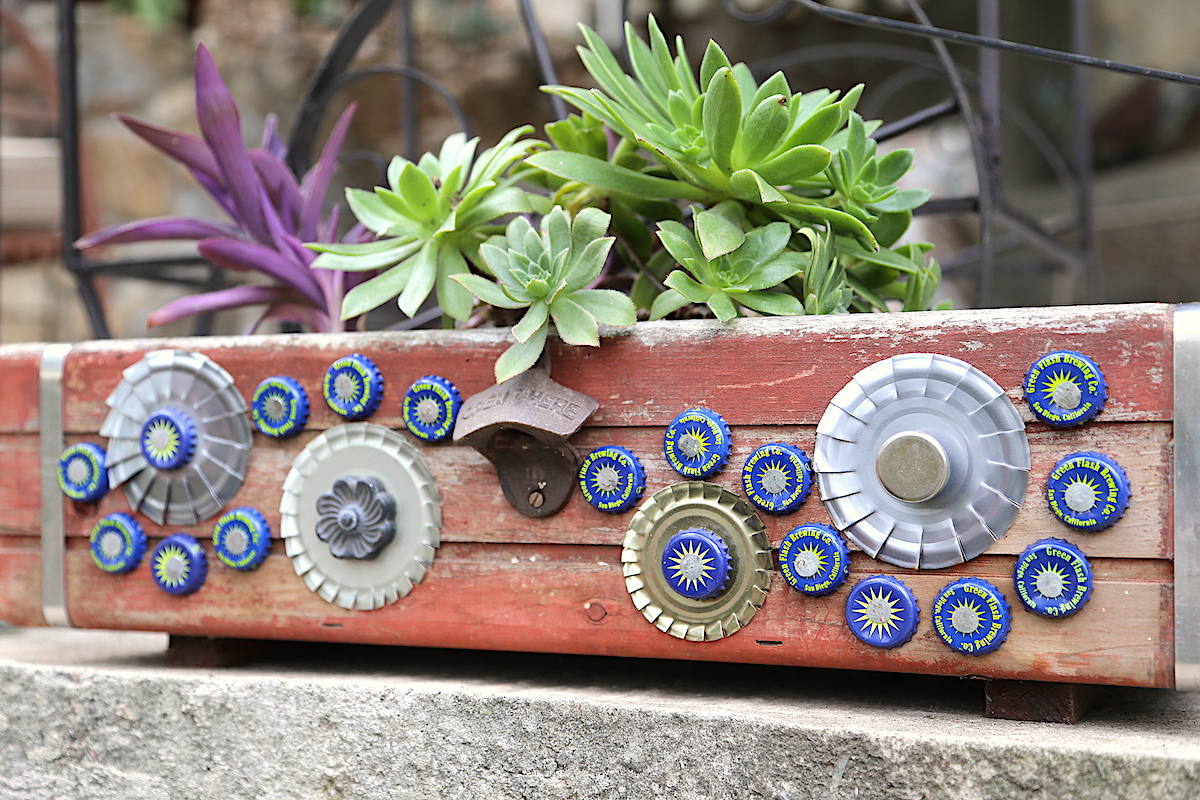
Planter with aeoniums in Louisa Campagna's garden

Aeonium planter with bottle caps in Louisa Campagna's garden, San Diego

You might learn a few techniques, then display the results in your garden---after all, you have only yourself to please.

Ten Tips for Adding Art to Your Garden

Here's how to take your succulent garden to the next level, aesthetically.

  1. Notice how the elements enhance works of art. Sun illuminating a sculpture enlivens it and make mosaic glass shimmer. "Kinetic art" moves in the wind. Fountains use water to engage the senses.
  2. Enjoy textures. As with cacti and fuzzy kalanchoes, art objects with rough or smooth surfaces make garden vignettes more interesting.
  3. Celebrate symmetry. Use art to echo the spirals, whorls and firecracker shapes of echeverias, aloes and agaves.
  4. Group smaller pieces (like pots) to give them greater visual impact. I cluster mine on my deck, where I'll enjoy them up close when dining outdoors.
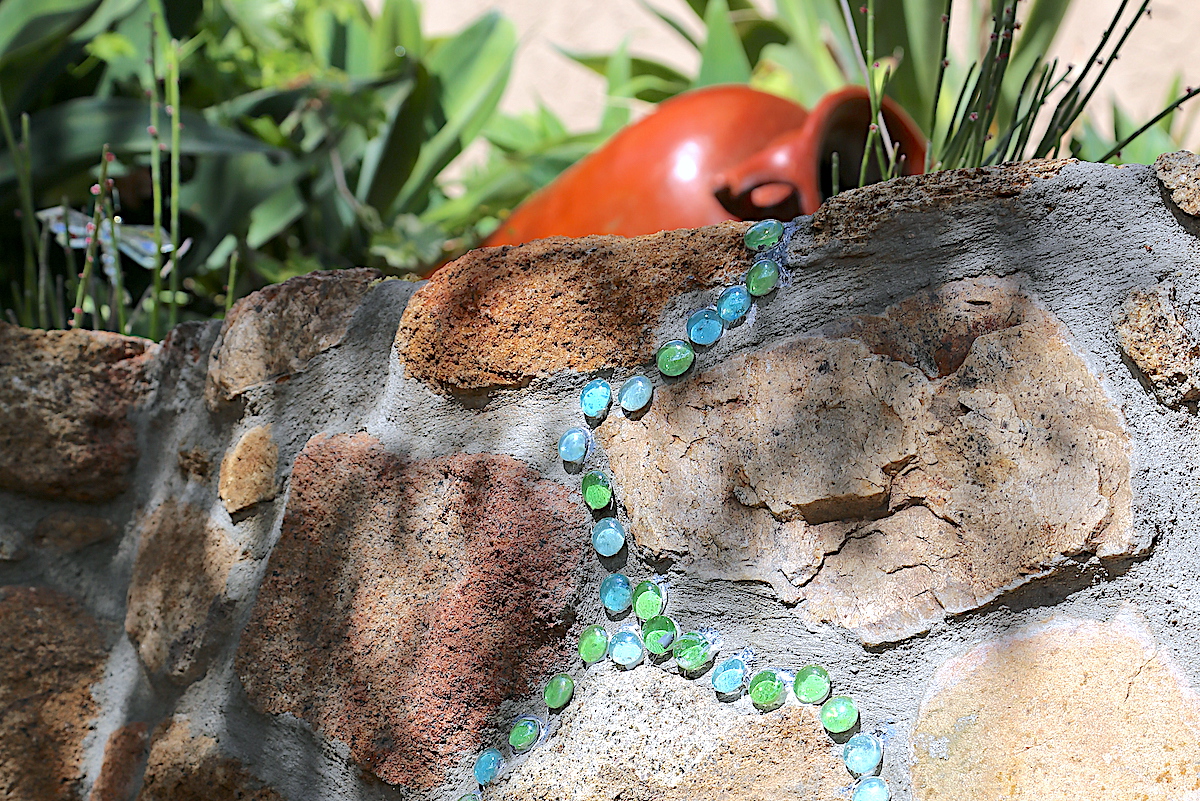
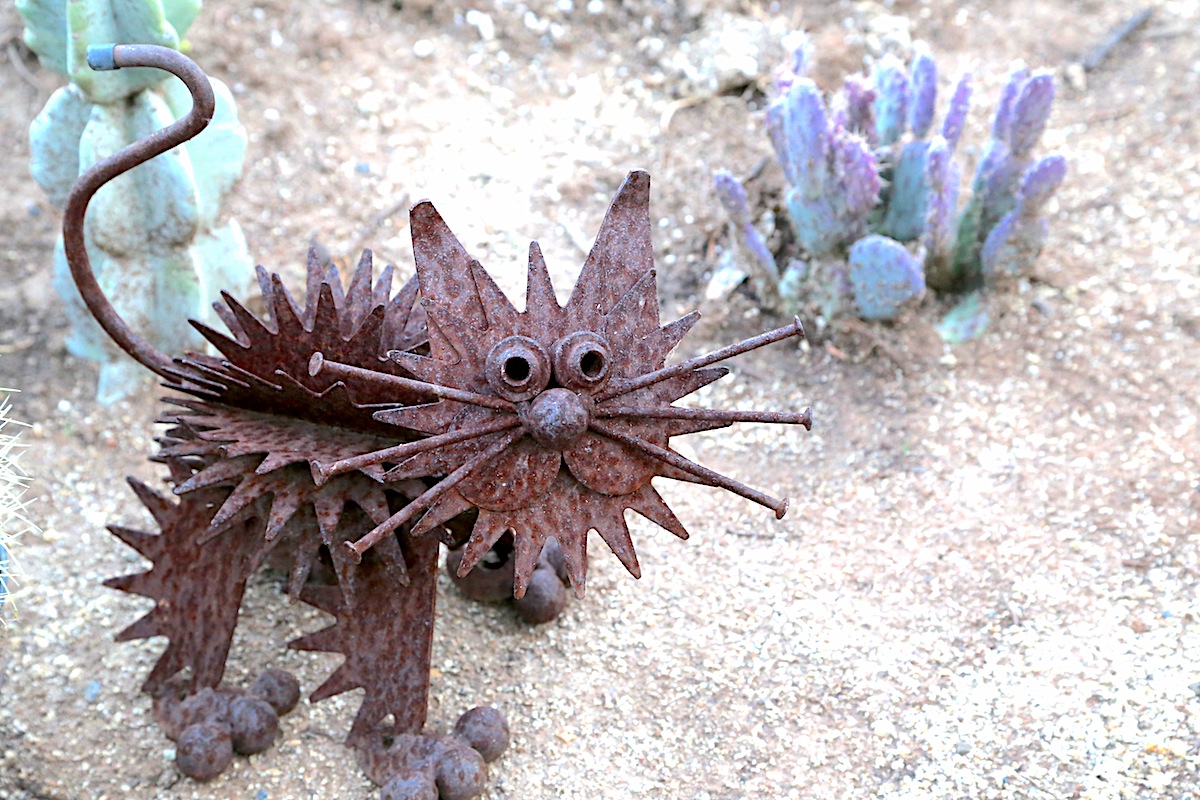
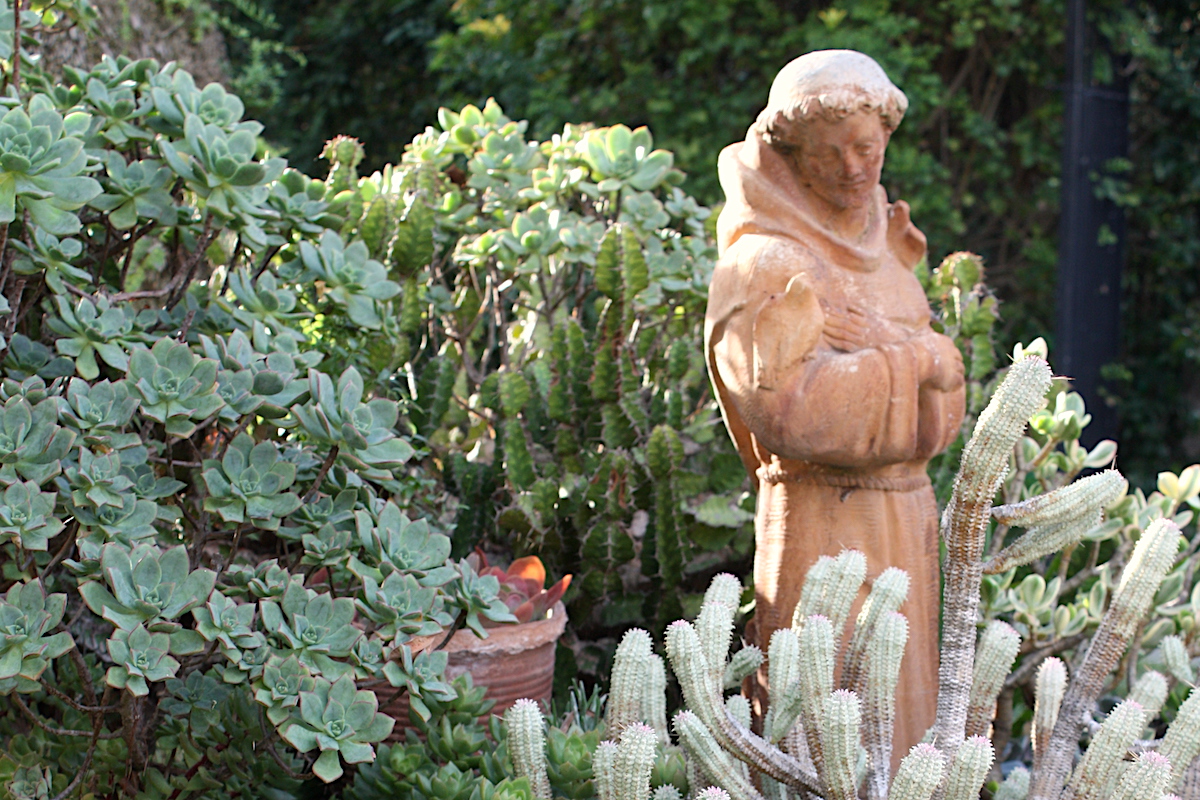
  5. Look for items to repurpose as art objects: birdbathsbird cages, wrought iron candle holders, brass fire pits, terra-cotta pots and more. Perhaps all a thrift-store statue needs is a verdigris patina or a necklace of ceramic succulents.
  6. Take a community college class in metalworking, glass blowing, ceramics or sculpture. Artists you admire might offer classes as well.
  7. It may seem obvious, but make sure your garden art is weatherproof. Objects made of wood will deteriorate if not sealed. Expect metal to rust, corrode or patina. That's not necessarily bad, but you don't want such changes to be a surprise.
  8. Outdoor art is an investment, so show it to advantage. Use sculptures as focal points, positioned where sight lines and pathways lead to them.
  9. Become a discerning patron of talented artists. Owning more than one work by the same sculptor will lend continuity to your garden.
  10. Tour estate gardens that are open to the public. Traditionally, adding art to gardens (as well as to interior walls) has been a pursuit of the wealthy. But do think beyond the obvious. If you're not into life-sized figures of Greek gods, then that's not the art for you. However, do notice their placement in the landscape.

Your Own Art: Show Us!

Are you proud and pleased with art you've added to your garden? Send me a photo that shows it in situ (if possible, with succulents). Include the name of the artist or the source, the size or dimensions, what you like about it, and what it's made of.

Learn More About Art and Succulents

Read about outdoor art and sophisticated whimsy on pp. 68-75 of Designing with Succulents (2nd ed.).


Gallery of garden art

The post Add Art to Your Succulent Garden appeared first on Debra Lee Baldwin. Copyright © Debra Lee Baldwin.


from Debra Lee Baldwin https://ift.tt/37K3WML
via IFTTT

lunes, 23 de diciembre de 2019

The Only New Year’s Resolution You Need Amazing tips

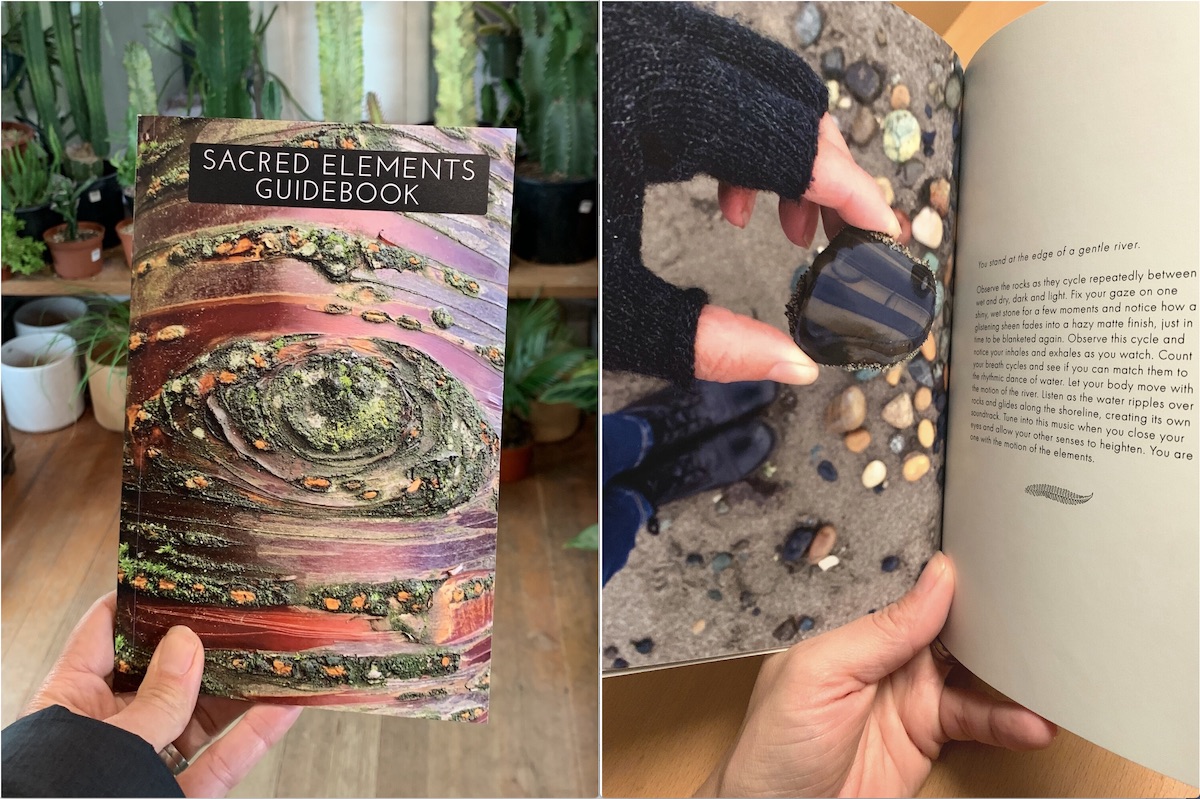
The only New Year's resolution you really need is effortless and costs nothing: Find beauty. In her newly released Sacred Elements Guidebook, author/photographer Karina Aldredge shows how momentary joys add up, creating a happier, more grounded you. What better way to start a new decade?

The Nature Diet

Karina explains that finding beauty in easily-overlooked aspects of nature benefits mind, spirit and body. "Soon it becomes a craving, and everywhere you look, you'll see more," she says. "It feeds you. It's the Nature Diet!"

The Sacred Elements Guidebook

Karina Aldredge's book is a guide to noticing and finding joy in simple, everyday things.

Karina draws us into delight by making the mundane transcendent, and she does it step-by-step. As in the excerpt below, she tells how to use all your senses to internalize natural beauty. This is more than "taking time to smell the roses." Finding beauty makes you so immediately in-the-moment that all you know is joy. Yes, you've already experienced this, but I suspect it hasn't been often or nearly enough.

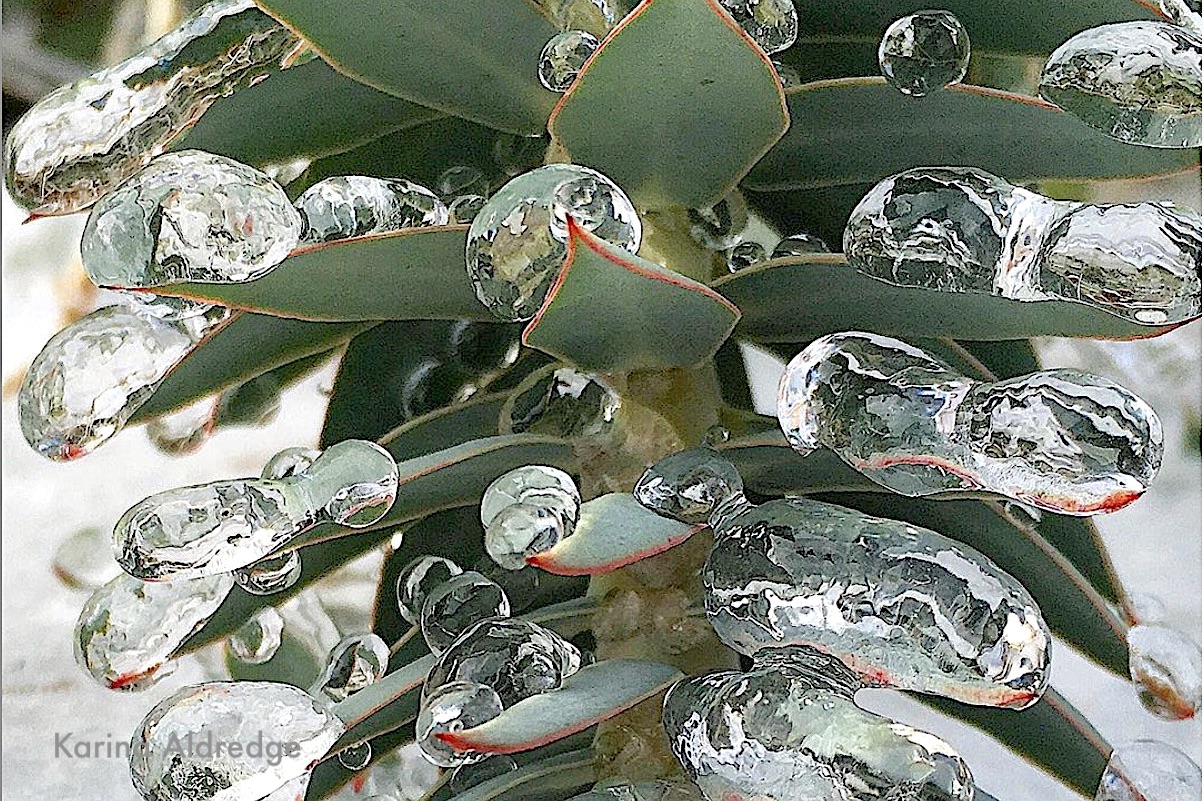
Ice crystals on Euphorbia rigida

This photo of frozen drops (on Euphorbia rigida in Karina's Zone 8b garden) is from her Instagram feed.

I first met Karina via Instagram, admired her photos, and when she was in the San Diego area---she lives in Portland, OR---she visited my garden (top photo).

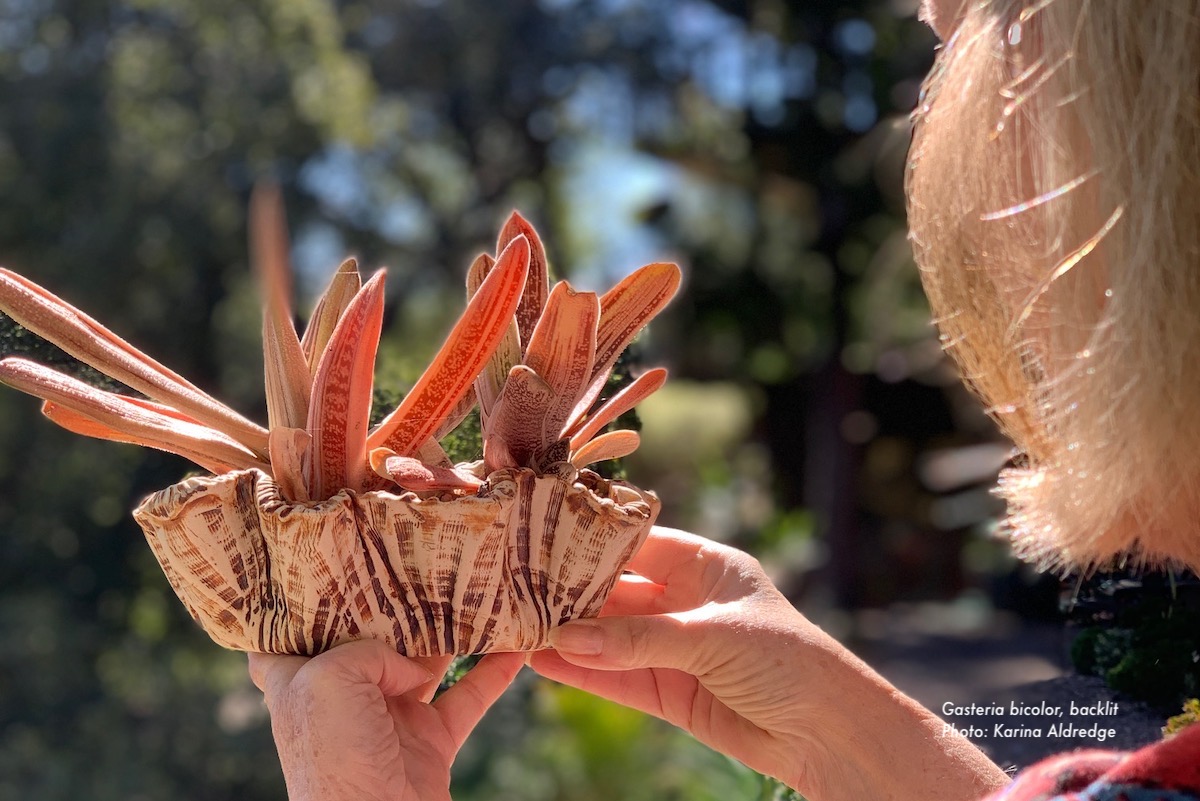
Sunlit Gasteria bicolor

Karina shot me showing the beauty of a backlit Gasteria bicolor. 

Sacred Elements Guidebook, Excerpt

"You wake to a gray winter morning
"The weight of the season makes it difficult to escape your warm bed. Turn and look out the window and observe air blanketed in a grayish white mist. Now glance up to notice a dense fog clinging to the inky treetops. They are pillars of strength, majestic giants. Let their energy pull you up and out of bed. Go to your window or door and open it for just a moment to allow the mist to float inside. Open your mouth and slowly inhale the thick, wet air. Let it linger on your tongue. Taste the mist. The flavor it holds inside those microscopic droplets carries a distinct essence. Feel the way it dissolves and enters your body, empowering you. You are one with the air and water elements. Let them energize your next few steps as you welcome the day ahead." 
...

This sample merely hints at what Karina offers. Like its lovely author, the book is slender but powerful. It's joy distilled: a healing balm for the overwhelmed mind.

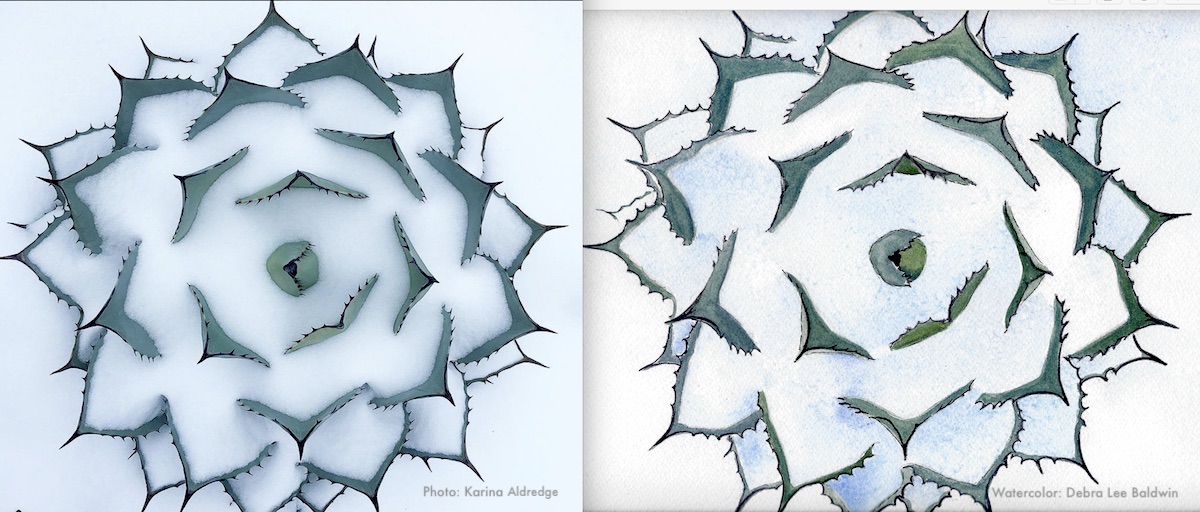
Agave in snow

Accompanying the book's "gray winter morning" exercise is a photo that I liked so much, when Karina initially posted it on Instagram, I asked if I could paint it. It became the December page of my 2019 Succulent Watercolor Calendar.

...

FYI, Karina's soul-nourishing practice is not a religion, but I can attest it has enriched and deepened my own faith. 

The post The Only New Year’s Resolution You Need appeared first on Debra Lee Baldwin. Copyright © Debra Lee Baldwin.


from Debra Lee Baldwin https://ift.tt/2MoEDYi
via IFTTT

miércoles, 18 de diciembre de 2019

Ten Tips for Establishing a Succulent Garden Amazing tips

These ten tips for establishing a succulent garden are from "Celebrating the Joy of Succulents" newsletter subscriber George Tabora of Riverside, CA (between Los Angeles and Palm Springs). His tips are hard-won, based on trial and error. Happily, after three years, George's garden is humming along.

Riverside's climate is similar to my own in the foothills NE of San Diego: dry, hot summers in the high-90s, and light frosts in winter. Rainfall averages 10-15 inches annually. Soil is shallow---3 to 4 inches deep---with granite underneath.

George, a former CPA who responded to my invitation to newsletter subscribers to share their succulent gardens, says his is "about 70 percent done," and covers a third of an acre. "The nice thing about being retired," George adds, "is there are no deadlines. You work until you get tired."

George Tabora's succulent garden, west slope

George Tabora's succulent garden, west slope

Want to see more of George's succulent garden? He created this video as a 2019 holiday greeting for family and friends. He (and I) would be glad to respond to comments you'd like to leave at the end of this post, and answer any questions you may have. Enjoy!

George's Ten Tips for Establishing a Succulent Garden

Having contended with less-than-ideal conditions while establishing his garden, George offers these tips:

  1. He installed an irrigation system but doesn't use it, preferring to hose-water. "I water infrequently, and drench the plants, then go back and drench them again," George says. He waits "seven to ten days, even in summer" before watering them again.
  2. Rain isn't a problem if soil drains well. "People worry their succulents will be overwatered after days of rain, but the plants love it."
  3. Gravel is a good topdressing, but---as George learned the hard way---"dark rocks get too hot in summer and can burn the plants."
  4. Start with small succulents. "They grow fast and they're easier to plant."
  5. Plan to buy plants at first, then use cuttings to fill in. You should have plenty after a year or two.
  6. It's better to root cuttings before planting them. Start them in 4-inch nursery pots you keep in bright shade.
  7. Design your garden with mounded planting areas supported by rocks you gather on-site.
  8. In summer, he gardens in the early morning and late afternoon to avoid the midday heat.
  9. Plant in 60% bagged soil and 40% pumice. "I used to buy Miracle Gro brand soil, but Ace Hardware's is cheaper and just as good," George says. And if you're in the area, "Orange County Farm Supply in Orange has 50-lb. bags of pumice for $10/bag."
  10. If you've put something in the wrong spot, "dig it out and replant it rather than waiting until it's too big and too late."
George Tabora's Succulent Garden, north side

George Tabora's succulent garden, north

Colorful Succulent Garden (c) Debra Lee Baldwin

Succulent Garden Design Essentials

Succulent Garden Design Essentials How to design and plant your succulent garden. To ensure your success and help you avoid mistakes, here are a dozen succulent garden design essentials to keep in mind. Many thanks to homeowner Nancy Dalton, whose award-winning succulent garden in San Diego is an example of smart landscaping for Southern California. …

Succulent Basics, Must-Do’s, FAQs, and Essentials for Success

Below are succulent basics, must-do’s and answers to FAQs—the essentials for growing succulents successfully. If all this is new to you, you’ll want to refer to this page often. And even if you’re experienced, you’ll find it a great resource!

The post Ten Tips for Establishing a Succulent Garden appeared first on Debra Lee Baldwin. Copyright © Debra Lee Baldwin.


from Debra Lee Baldwin https://ift.tt/2M8sarn
via IFTTT

jueves, 12 de diciembre de 2019

Succulent Podcast with a British Nurseryman Amazing tips

Recently I did a succulent podcast with British nurseryman Alan Lodge of Newlands Nursery. We were on opposite sides of the planet, but we chatted as though in the same room. Alan hosts weekly podcasts with international gardening experts. He proudly told me that Newlands participates in Royal Horticultural Society shows at Hampton Court and Tatton Park. "We've won numerous medals including Silver Gilts and Golds."

The Brits Love Houseleeks

Clearly the British have a challenging climate for succulents---all that rain---but we found common ground in sempervivums. Could there be a plant with a more Harry Potterish name than "houseleek?" These perky little succulents grow on cottage roofs throughout Northern Europe.

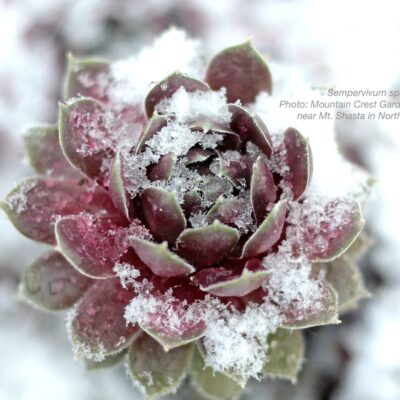
Houseleeks (Sempervivum sp., hens-and-chicks) have been known since Roman times for improving the longevity of roofs. Intriguingly, they're used today as green-roof plants in cities across the US, including Portland, OR and Washington, DC.

Alan asked how the succulent craze started, so I explained that back when I was researching my first book, Designing with Succulents (Timber Press, 2007), "Southern Californians didn't want jade or other succulents. They were using roses and Mediterranean perennials to create the look of English gardens. But then the drought came along..."

The beauty of podcasting is you're able to share an intimate conversation with people worldwide

If you're curious, do have a listen. Podcasts are great for when you're doing something fairly mindless, like folding laundry, peeling apples, or sitting in traffic. This one is 53 minutes, and it goes fast.

I'd love to know what you think of my British succulent podcast. Please leave your comments below. Thanks, and enjoy!


Cold Hardy Succulents: Details, Photos and Varieties

Cold-Hardy Succulents: Details, Photos & Varieties Looking for succulents that go below freezing? You’re in the right place! About cold-hardy succulents The common cold-hardy succulents shown here can handle northern winters, snow, rainstorms (if given excellent drainage) and summer dry spells. Most cold-hardy succulents are in the genera Sedum and Sempervivum. Sedum (stonecrop) Trailing varieties are lovely as…

50 Cold-Hardy Succulents for Northern Climates

The popular and readily available varieties shown here can handle northern winters, snow, rainstorms (if given excellent drainage) and summer dry spells. There are two main genera: Sedum and Sempervivum. Lesser known are Rosularia, Delosperma, and Orostachys. Notably, certain species of Agave and cacti don’t freeze in all but the coldest climates.

The post Succulent Podcast with a British Nurseryman appeared first on Debra Lee Baldwin. Copyright © Debra Lee Baldwin.


from Debra Lee Baldwin https://ift.tt/2LOjmXK
via IFTTT