martes, 13 de octubre de 2020

My Channel Passed 6,000,000+ Views! But… Amazing tips

My YouTube Channel has passed 6,000,000 views! If you've yet to visit it, I encourage you to do so. The content is free and dedicated to enhancing your appreciation and knowledge of succulents.

I've released over 150 videos since How to Stress Succulents and Why (3:46) came out in July, 2011. It's had 100K+ views, despite amateur mistakes like setting up the camera so the image is vertical.
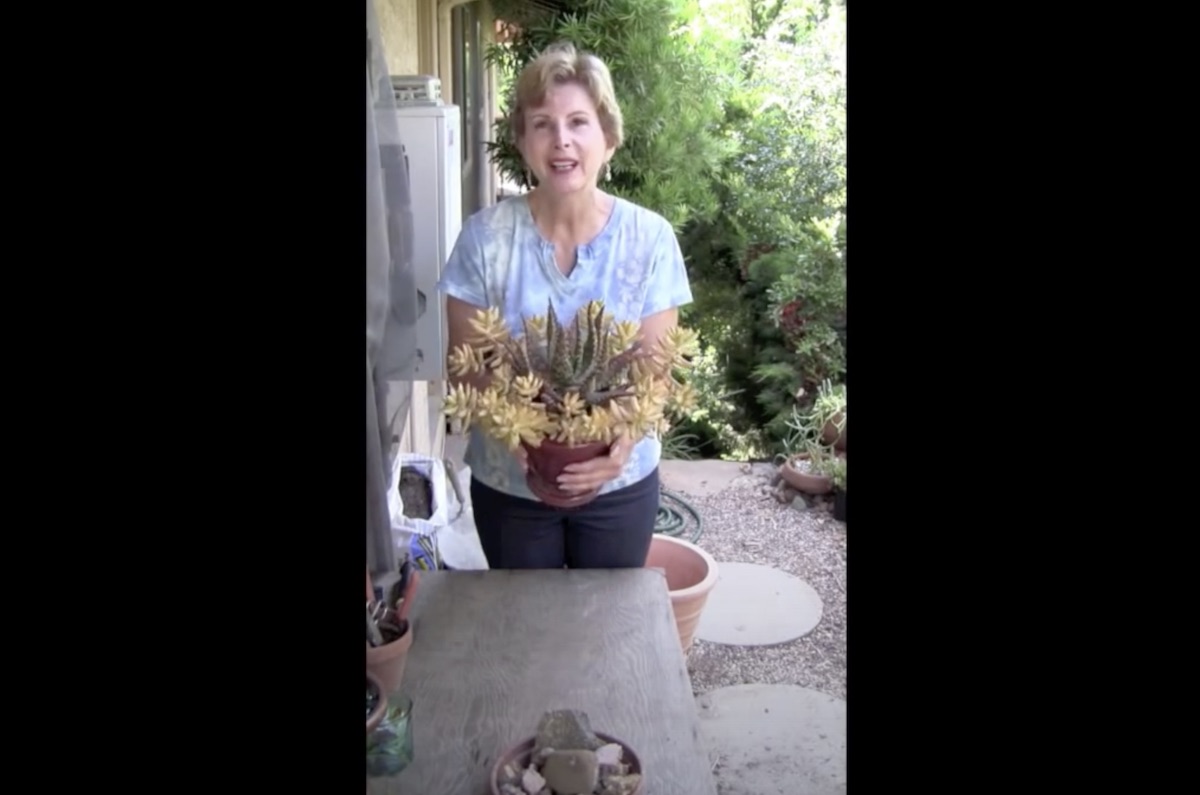
That first video's content is fine, but I just now noticed neglected comments and questions. That's a no-no. YouTube is a form of social media, which means it's interactive. I suspect it's too late...or is it? What if I answered your question nine years later? LOL

A bit of backstory

The year prior, in 2010, my books' publisher had commissioned a video to accompany the release of Succulent Container Gardens. We set up at Oasis Water Efficient Gardens nursery. In it, I show how to select and combine succulents in a blue pot. How to Plant a Succulent Container Garden (6:13 min., 400K views) is on Timber Press' channel. During filming, it dawned on me: "Hey! I could do this!"

Most popular videos
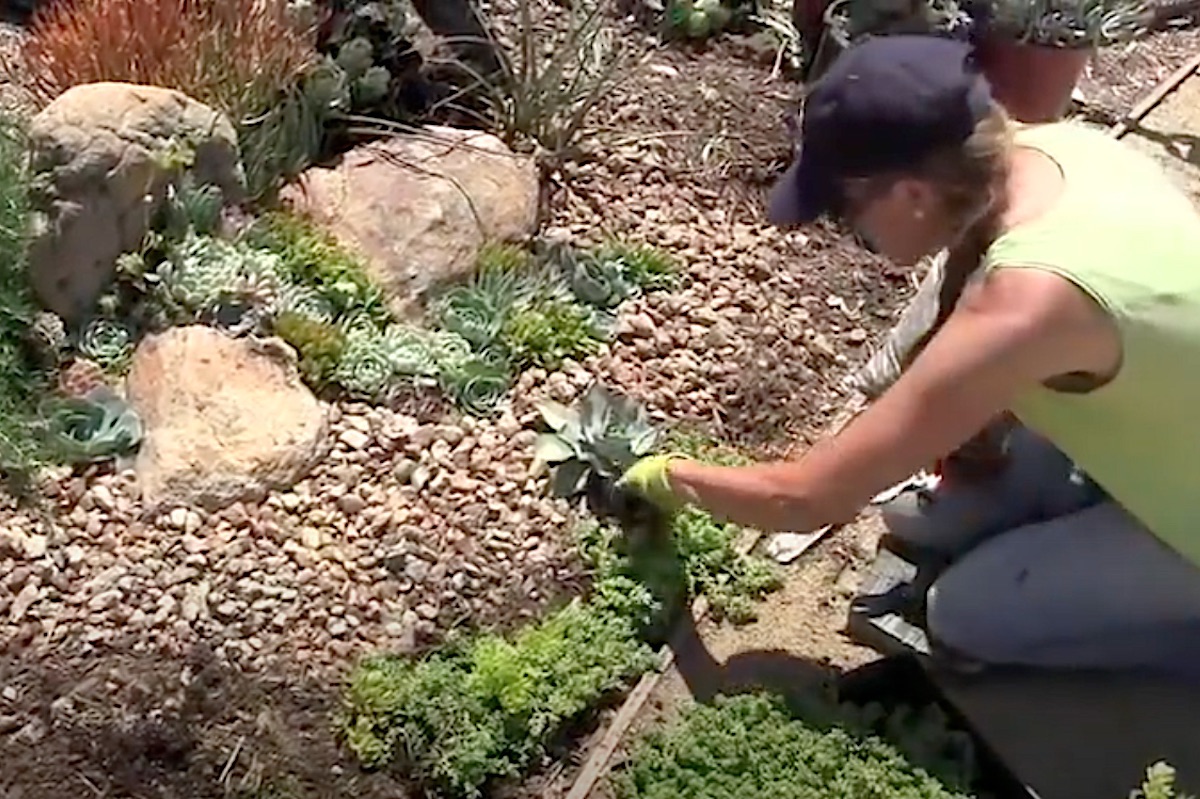
Laura Eubanks video

From one of my Laura Eubanks videos

YouTube is all about showing step-by-step how to do something. Seven years ago, I noticed that San Diego garden designer Laura Eubanks was amazingly good at demonstrating and explaining her methods. She was witty, engaging and fearless, with a distinctive and appealing design style.

I suggested that Laura let me make a video of her creating one of her pocket gardens. Then I edited the footage down to the best bits. The resulting releases: How to Create a Succulent Pocket Garden with Laura Eubanks (12:37 min., 347K views) and Laura Eubanks' Succulent Garden Design Secrets (3:40 min., 323K views) are among my channel's most popular. Since then, Laura has gone on to become a garden celebrity---deservedly so---and to create her own hugely popular YouTube channel.

What makes my channel unique
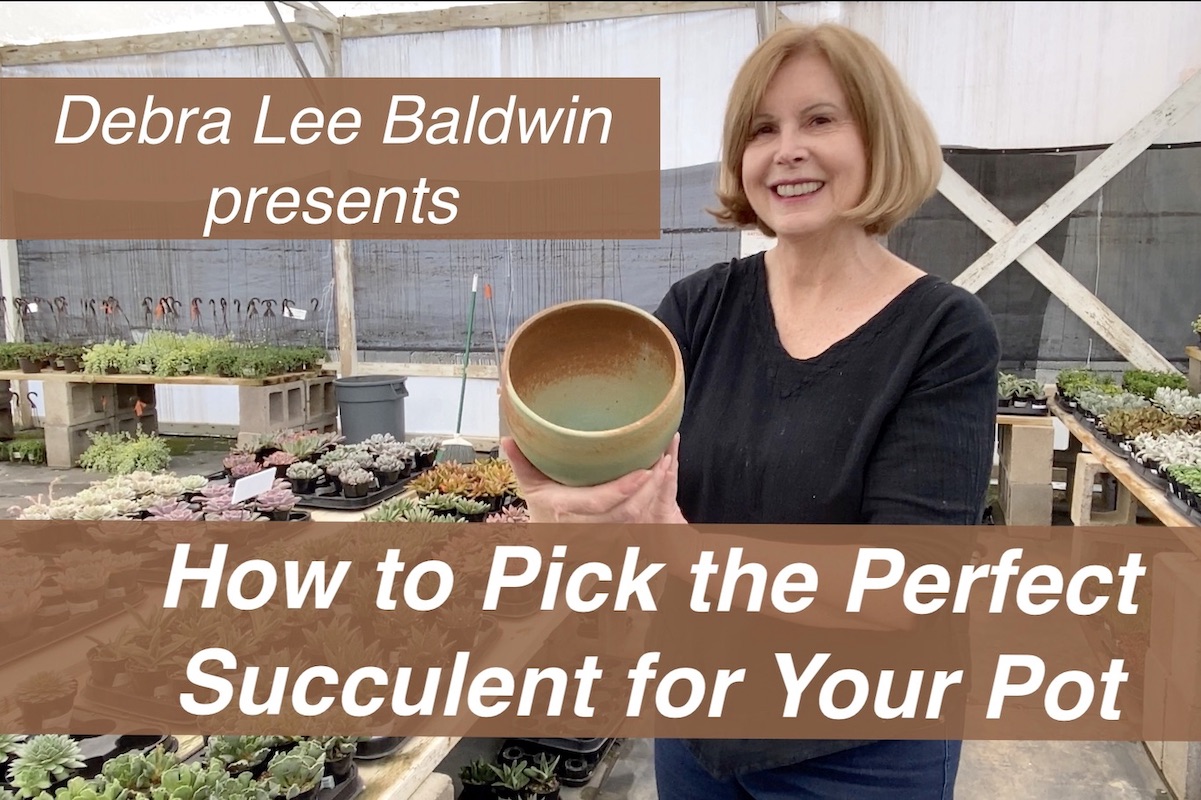
Succulent plant-pot pairing video

For years, as a contributor to Sunset and other publications, I focused on beautiful-yet-doable residential gardens. Now, as a succulent expert and author, my goal is to present well researched, useful info that is timely and relevant, that I have personal experience with, and that is consistent with my brand.

Of course it helps I'm in Southern California, the epicenter of all things succulent. We have some of the best designers, plant experts, specialty nurseries and private succulent gardens anywhere in the world. In my own Zone 9b garden, I show you plant-pot pairings, gift and holiday projects, and seasonal garden tasks.

How much time is involved?

It takes about a day to create two or three minutes of finished video. This includes preparation, research, deciding what to include, planning what-happens-when, set-up, coordinating with a helper (if any), actual filming time, shooting or compiling stills, voice-over, editing and splicing clips, adjusting audio, and (grrr) contending with Apple's new Catalina OS (which  my older iMovie program doesn't like).
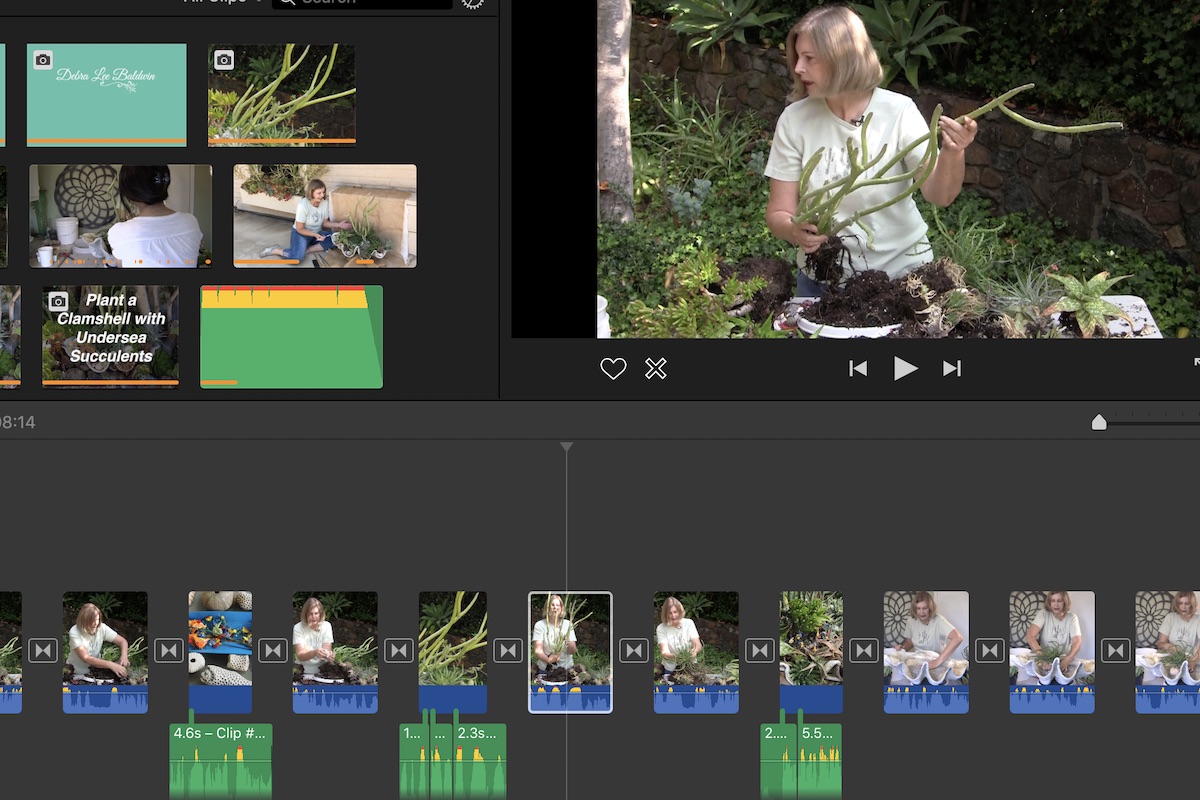
From my Succulents in Clamshell video

I do all my own editing. This screenshot is from my Succulents in a Clamshell DIY video.

But what's really frustrating...

No question there's much to be proud of, but also plenty I wish I'd done differently. It's a learning process, and of all my endeavors, videography is the least polished. Once on YouTube, there's no fixing a video without deleting it, which means erasing comments and view count. (I can always modify the description, title, thumbnail, and outbound links.)

If I had time, I'd redo my early videos. I've since ditched the annoying music. I now film only at high resolution, add closed captions [CC] for the hearing-impaired, provide plant names and resources, and respond promptly to viewer questions. Yet while overall channel views continue to rise, newer (better!) releases are being seen less and less.

You can help

Critique my channel. Let me know what you like and don't, especially among my post-2017 releases. What would you like to see more of? Less? Does length matter? And if you have a successful YouTube channel yourself, what would you suggest?

I can't complain

Every so often a comment---like this one---makes it all worthwhile.

YouTube succulent video accolade

A comment on my Agave Essentials video

Subscribe to my YouTube Channel

The post My Channel Passed 6,000,000+ Views! But… appeared first on Debra Lee Baldwin. Copyright © Debra Lee Baldwin.


from Debra Lee Baldwin https://ift.tt/3j4ZAFj
via IFTTT

domingo, 4 de octubre de 2020

Bizarre Succulents Amazing tips

Bizarre Succulents for Your Collection, Bwa-ha-ha

To me, a bizarre succulent is one that suggests something it’s not in an eerie way—i.e. a cancerous growth, reptile or body part. When I take a second look and ponder what the heck it is, I experience a deliciously unsettling ah-ha (or bwa-ha-ha) moment. Of course, what’s bizarre is in the eye of the beholder. You might go to a Cactus & Succulent Society show and hear members exclaim how “beautiful” a lumpy plant is and wonder if their eyes need checking. With that in mind, here are some of my own choices.

Btw, the bizarre succulents shown here inspired one of my few forays into fiction: Professor Mordant’s Sea-Sand Succulents. Do enjoy “moonlit” photos and a pleasantly unsettling reinterpretation of collectible-yet-creepy succulents. An excerpt: I was the only one who accepted the professor’s invitation. I calmed my trepidation by anticipating a big story…or at least a small adventure. It turned out to be both. But except for these photos, I’m unable to prove it. I fear that now, after the tsunami, this is the only record that remains…[Continue reading]

Debra’s Gallery of Bizarre Succulents


Bizarre succulents

Mammillaria elongata, crested

This is the crested, or monstrose, form of a fairly ordinary cactus that consists of fuzzy cylinders, commonly called “ladyfingers” (after the golden pastry served with afternoon tea). When ladyfingers turn monstrose, they enter an entirely different world…that of horror movies. Anyone need a couple of brains?

Bizarre succulents

Lithops sp.

Lithops, or living stones, is always plural (no such thing as a “lithop,” please). These grow glacially and can be difficult to keep alive because their tap roots are prone to rot if overwatered. In their native habitat of South Africa, lithops go without rain for months, sometimes years. To avoid being eaten by thirsty animals, they’re buried in sand to their tops, which have translucent fissures that enable sunlight to enter.

Bizarre succulents

Lophocereus schottii (totem pole cactus)

Recently at his nursery in Fallbrook, CA, succulent expert Don Newcomer showed me a rare columnar, spineless cactus from Mexico: Lophocereus schottii (totem pole cactus)…[Continue reading]


Bizarre succulents

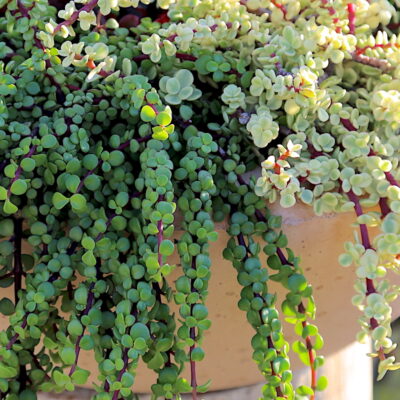
Crassula ‘Baby’s Necklace’

These remind me of eels emerging from an undersea crevice. They look as though they’re swaying in a current, hoping to ingest passing plankton or tiny fish. This is one of the “stacked crassulas”  subsection of a genus best known for jade plants. What makes such different-shaped plants similar are the flowers, which to botanists are THE defining characteristic.

Bizarre succulents

Gasteria hybrid

Doesn’t this look like it’s crawling toward you? I don’t know much about this specimen, which I shot at a nursery, other than it’s a gasteria (related to Haworthia). The color and texture alone makes it bizarre, but its shape takes it over the top.

Bizarre succulents

Medusa euphorbia in flower.

Medusa euphorbias are oddities even when not in bloom. Their stems radiate from a central point in a Fibonacci spiral, forming what looks like scaly snakes. “In Greek mythology, Medusa was a monster, a Gorgon, generally described as a winged human female with living venomous snakes in place of hair. Those who gazed upon her face would turn to stone.” (From Wikipedia.)

Bizarre succulents

Euphorbia grandicornis

This is a euphorbia that sure looks like a cactus, but its thorns don’t radiate from central points (aureoles), and the flesh has a milky sap. The Latin means “large horn;” the common name is “cow’s horn.” Plants can form thickets 6 feet tall.

Bizarre succulents

Tillandsia sp.

Air plants (Tillandsia species) are not succulents, but often are paired with them. They have a wonderful tentacled look, and some suggest spiders or sea urchins.

Bizarre succulents

Echeveria ‘Mauna Loa’

This is one of many carruncled echeverias hybridized by Dick Wright. The lava-flow leaves doubtless inspired him to name it after a volcano. Such bumpy echeverias polarize collectors, who tend to love or hate them. I think they’re cool in a weird way, and I like how each cancerous-like mass is different. Definitely a plant that makes you look twice!

Bizarre succulents

Pilosocereus sp.

I turned this photo sideways in my fictional story about sea-sand succulents, so the flowers would appear to grow upright. This cactus is truly blue, and its blooms, especially when they turn black, truly bizarre.

Bizarre succulents

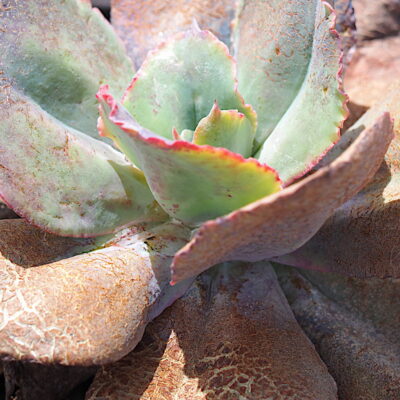
Kalanchoe luciae (Flapjack plant)

Comparisons to confections come to mind with this marvelously swirly succulent. Not all members of this species of Kalanchoe have loopy leaves, so perhaps this specimen is a cultivar (I shot it at Roger’s Gardens nursery in Corona del Mar, CA). Regardless, to keep Kalanchoe luciae compact, don’t let it bloom. 

Bizarre succulents

Fenestraria aurantiaca ‘Baby Toes’

I bought my first Baby Toes at the county fair when I was around 20. I put it on the kitchen counter and overwatered it, thereby causing it to stretch, rot and die. During the decades since, I’ve come to realize it wants a few hours of sun daily, and although sensitive, can tolerate more water than most plants in the “living stones” category (like lithops). The name comes from the Latin for “window,” referring to translucent tissue at each tip.

Bizarre succulents

Euphorbia obesa

When the succulent craze took off, these little fatties became so popular that they’ve since become scarce…typical of highly desirable succulents that are extremely slow growing. I hope sometime soon we’ll see marvelous nursery inventories of obesas again, like this one shot in ’07.

Bizarre succulents

Myrtillocactus geometrizans, crested

I associate this with Jeff Moore of Solana Succulents nursery and the undersea garden he designed at the San Diego Botanic Garden. Jeff, a lifelong resident of Solana Beach, CA, is fond of snorkeling. As a nurseryman specializing in succulents, plants like these reminded him of what he saw underwater, and voila: a trend was born.

Bizarre succulents

Boweia volubis (pregnant onion)

Here’s another succulent that polarizes collectors: Do you love pregnant onions or hate them? The bulbs, which sit atop the soil, have peeling skin and a hole at the top from which frizzy stems emerge. These twine around whatever they can find, then die back. Interesting? Definitely. Beautiful? Uh…perhaps not.

Bizarre succulents

Astrophytum ornatum, crested

You may have noticed that many bizarre plants are crested. As I explain on page 199 of Designing with Succulents (2nd ed.), “cresting happens when new growth emerges from a line rather than a point…Odd lumpy forms, sometimes but not always caused by cresting, are monstrose.” The fang-like spines on this crested astrophytum are icing on the cake.

Bizarre succulents

Aloe vanbalenii (Van Balen’s aloe)

Aloe vanbalenii is a fairly common landscape succulent, but it’s seldom this red and compact. As with many succulents that stress to colors of red and orange, this colony has tightened up, creating what looks like a multiheaded squid.

Bizarre succulents

Wooly filaments provide this high-elevation cactus with warmth in winter and sun-protection in summer. And if that weren’t off-putting enough, it’s armed with spines too. Those odd scaly protrusions are flower buds.


Related Info on This Site:

Professor Mordant’s Sea-Sand Succulents


A Dozen Reasons I Love Cacti


Books by Debra Lee Baldwin

The post Bizarre Succulents appeared first on Debra Lee Baldwin. Copyright © Debra Lee Baldwin.


from Debra Lee Baldwin https://ift.tt/34jvHvo
via IFTTT
lunes, 21 de septiembre de 2020

Autumn Succulent Checklist Amazing tips

You're aware of autumn in sun and shadows, shorter days and drier air, and so is your garden. Smart plant parents are attuned to wind, rain and frost. And they're vigilant. Succulents recovering from summer heat and sun are especially vulnerable to pests.

These seasonal succulent must-do's are for southern and coastal CA, from the Bay Area south. If you live beyond, please visit my site's Succulent Care By Season and Region page. 

Senecio and aeoniums

Blue Senecio mandraliscae and aeoniums, from my latest video: How to Fill Gaps in Your Succulent Garden

In September and October...

(1) Aeoniums and senecios (shown above) are emerging from summer dormancy. Cut back leggy aeoniums, replant rosettes, and discard old plants roots and all. See how in my video, How to Refresh an Overgrown Succulent Garden (4:48).

(2) Trim Senecio mandraliscae by several inches, and plant cuttings in gaps. Old stems branch where cut, which helps mass plantings grow fuller. See how in my new video, How to Fill Gaps in Your Succulent Garden (2:21).

(3) Apply a weed preventer (pre-emergent herbicide). This nontoxic, granulated powder stops seeds from germinating. Spread it before the first rainstorm wherever you don't want annual weeds. More.

(4) Check your garden's run-off. Create channels that divert rain from succulents in low spots. If they sit where water collects, they may rot.

(5) Treat agaves for snout weevil. This essential preventative needs doing in spring and fall. It also saves infested plants if caught early. What to use. 

Autumn succulent wreath

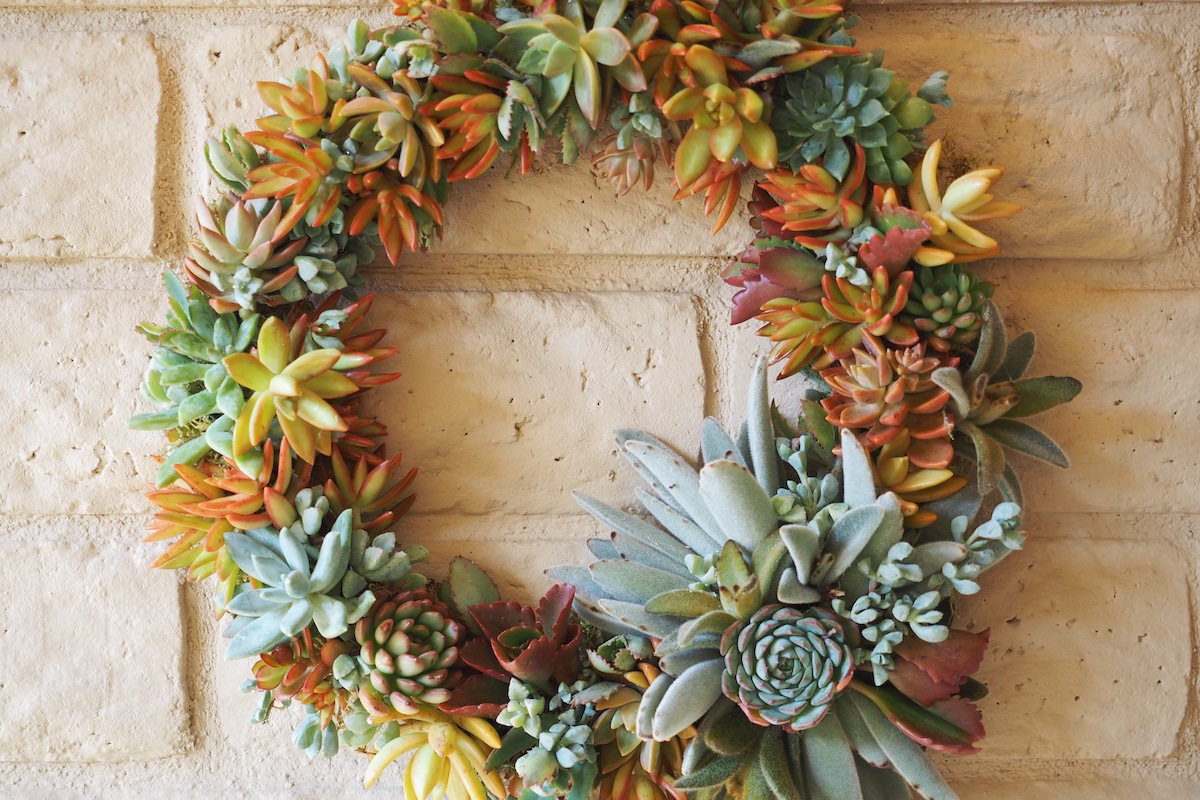
(6) Create a wreath that'll transition from fall into winter. See my video: Make an Autumn-Themed Succulent Wreath DIY (3:58).

(7) Fertilize in-ground succulents with Ironite. Ideal for newly planted gardens, it boosts spring growth. Take care it doesn't stain hardscape.

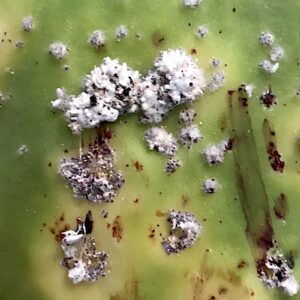
(8) Scrub cochineal scale off opuntia pads. Remove the bumpy white colonies with a soft-bristled shower brush dipped in Safer soap. Read my articleWatch the video. 

Ants on gasteria

Ants on gasteria

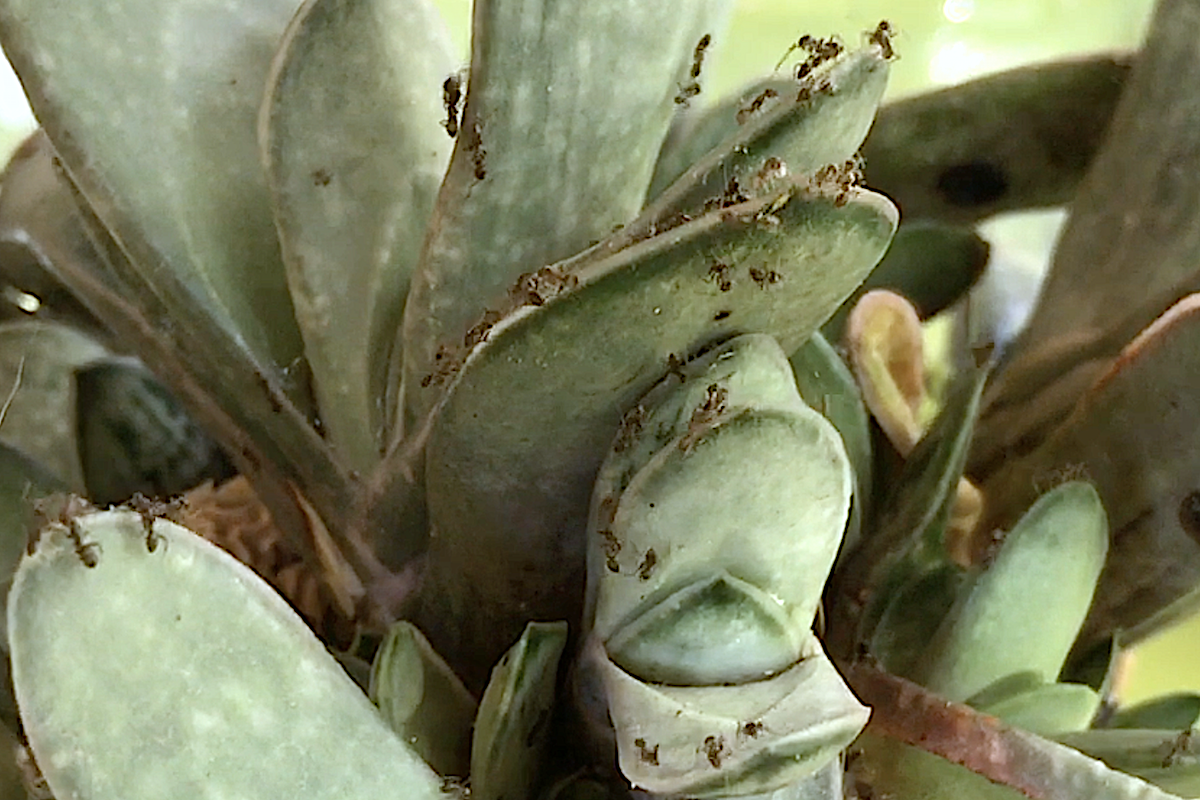
(9) Check for ants in outdoor potted succulents, especially haworthias, gasterias and aloes. A tell-tale sign is soil in the crowns, pushed up from below. What to do.

(10) Heat, sun and Santa Ana winds can desiccate succulents. Cuttings are most at risk because they lack roots, so plant them after the winds die down.

Cochineal scale on Opuntia (paddle cactus)

Cochineal Scale on Paddle Cactus, What To Do

White fuzzy lumps on paddle cactus are cochineal (coach-en-ee-al) scale, a parasite that pierces the plant’s skin and consumes its juices. It’s used to make carmine dye.

Agave Snout Weevil Prevention and Treatment

Agave experts, growers, and pest management specialists advise drenching the soil around healthy agaves with a systemic insecticide containing imidacloprid.* Untreated agaves are at high risk of infestation. If treated early enough, an infested agave may survive.  The agave snout-nosed weevil is a half-inch-long black beetle with a downward-curving proboscis that enables it to pierce an agave’s…

Mycoplasma on echeveria

Succulent Pests, Large and Small

Common succulent pests, diseases, and problems include agave grease mite, aloe mite, ant infestation, aphids, black spots, cochineal scale, deer, desiccation, etiolation, frost, gopher, hail, mealy bugs, mildew, rabbit, rot, snails and sunburn. Also find out how NOT to deal with a skunk!

The post Autumn Succulent Checklist appeared first on Debra Lee Baldwin. Copyright © Debra Lee Baldwin.


from Debra Lee Baldwin https://ift.tt/32Q0fFJ
via IFTTT
Ten Edible Succulents and How to Prepare Them Amazing tips

These ten edible succulents can go from garden to kitchen. Most are fairly easy to obtain, cultivate and prepare. The mucilaginous (goopy) texture of certain edible succulents makes them---to spin it positively---great in soups and stews. Vitamin C is one reason for their sour taste; another is the plants' sophisticated "crassulacean acid metabolism" (CAM). This peaks in early morning, so wait until later in the day to harvest.

Ten Edible Succulents and How to Prepare Them

I've listed these in order of personal preference. Those that are more difficult to find or cultivate, are less palatable, or that I've yet to try, are farther down the list. And because I couldn't resist (it's just so interesting!) I've included an edible succulent that'll get you high. Why haven't I included aloe vera and tequila agave? Simply because they need processing.


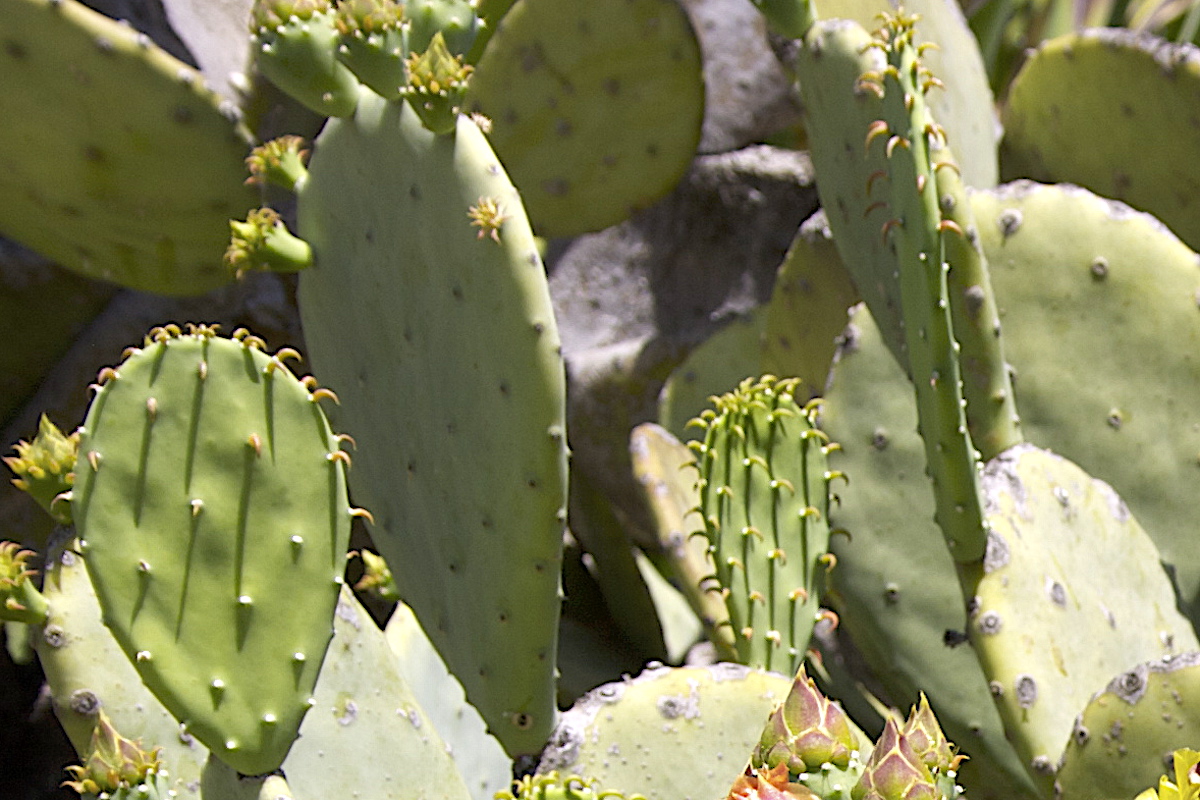
Opuntia pads

Young, bright green pads are best. Older ones can be woody.

Opuntia cactus (paddle cactus)

Eat tender, thumb-sized new pads raw and in salads. For the Mexican dish nopales, use young pads about four to eight inches long. Opuntia ficus-indica is the species most often sold in markets. Scrape off spines and cut into bite-sized pieces. Boil or roast until tender. Use as a side dish or add to salsa and tacos. Dislike the goop? Grill the pads. Score in a cross-hatch so the goo oozes out and evaporates. Gosh they're good!


Dragon fruit

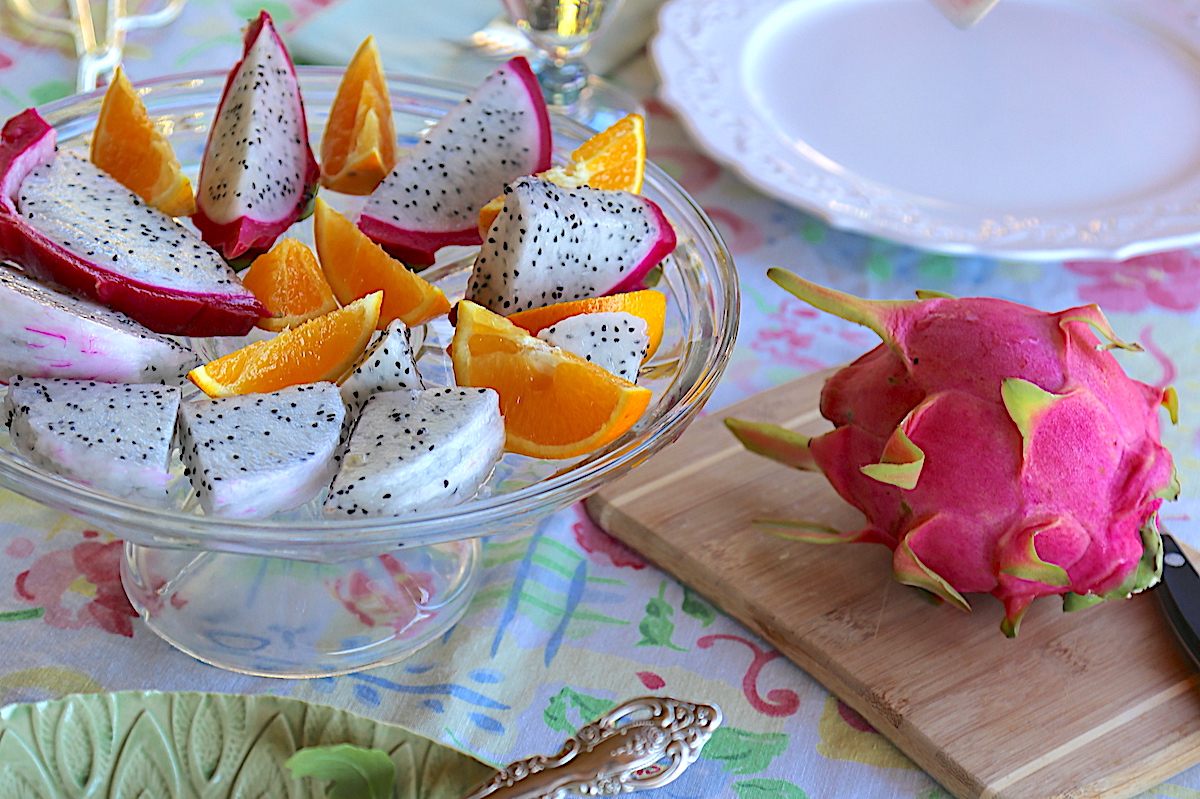
Dragon fruit makes a lovely addition to a fruit plate.

Dragon fruit

Although the fruit of many cacti are edible, you have to contend with spines and abundant small seeds. Those easiest to harvest and prepare are dragon fruit (pitaya, in the genus Hylocereus). I do grow it in my inland Southern CA garden, but clearly it prefers its native habitats of Central and South America. The climbing vine needs sun to thrive, bloom and set fruit, but (here) if not shaded, it burns. Dragon fruit, sold at farm stands in the fall, is beautiful but bland. Tiny black seeds make the flesh crunchy. Peel, slice, and eat raw or juiced. There exist dozens of cultivars.


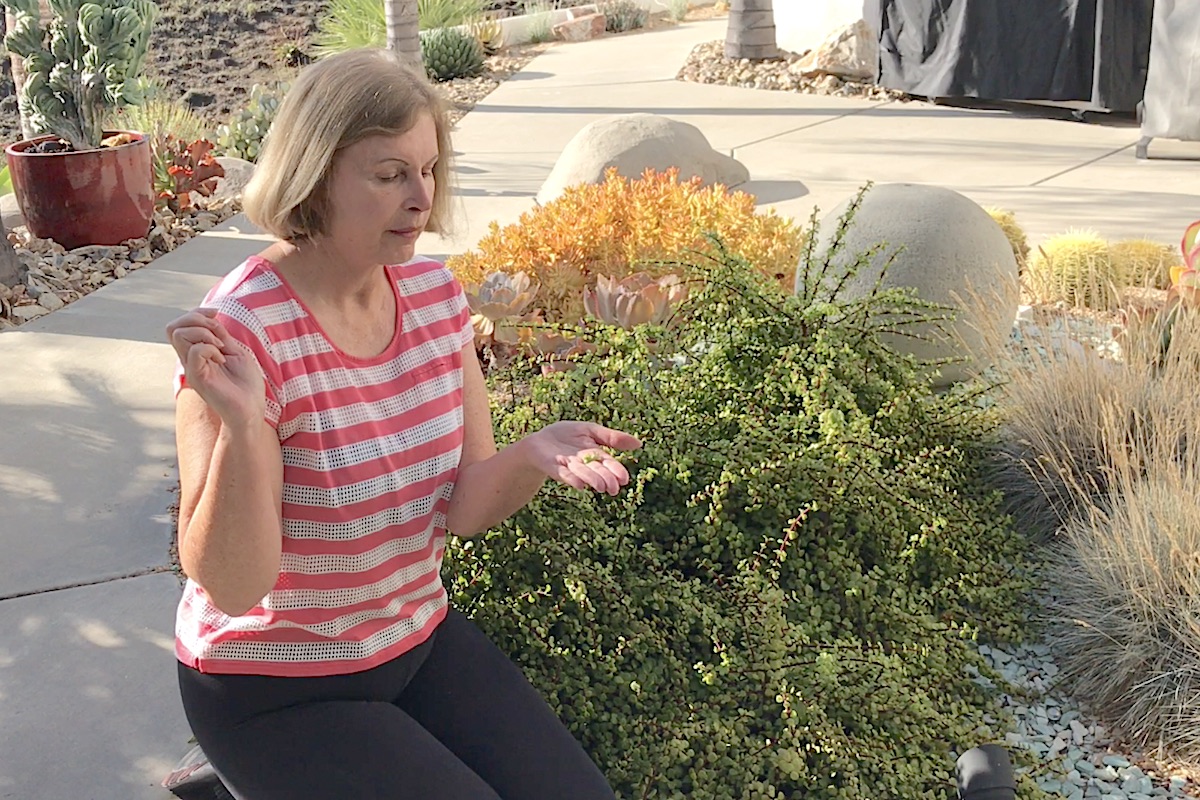
Tasting portulacaria afra

Elephant's food is sour and crunchy.

Portulacaria afra (elephant's food)

I wouldn't be without this versatile landscape succulent. It's native to South Africa (where it's the primary diet of elephants). It grows effortlessly here in California, yet also thrives in desert and tropical climates. See how I use elephant's food as a garnish in this video. Learn more about this remarkable succulent's attributes.


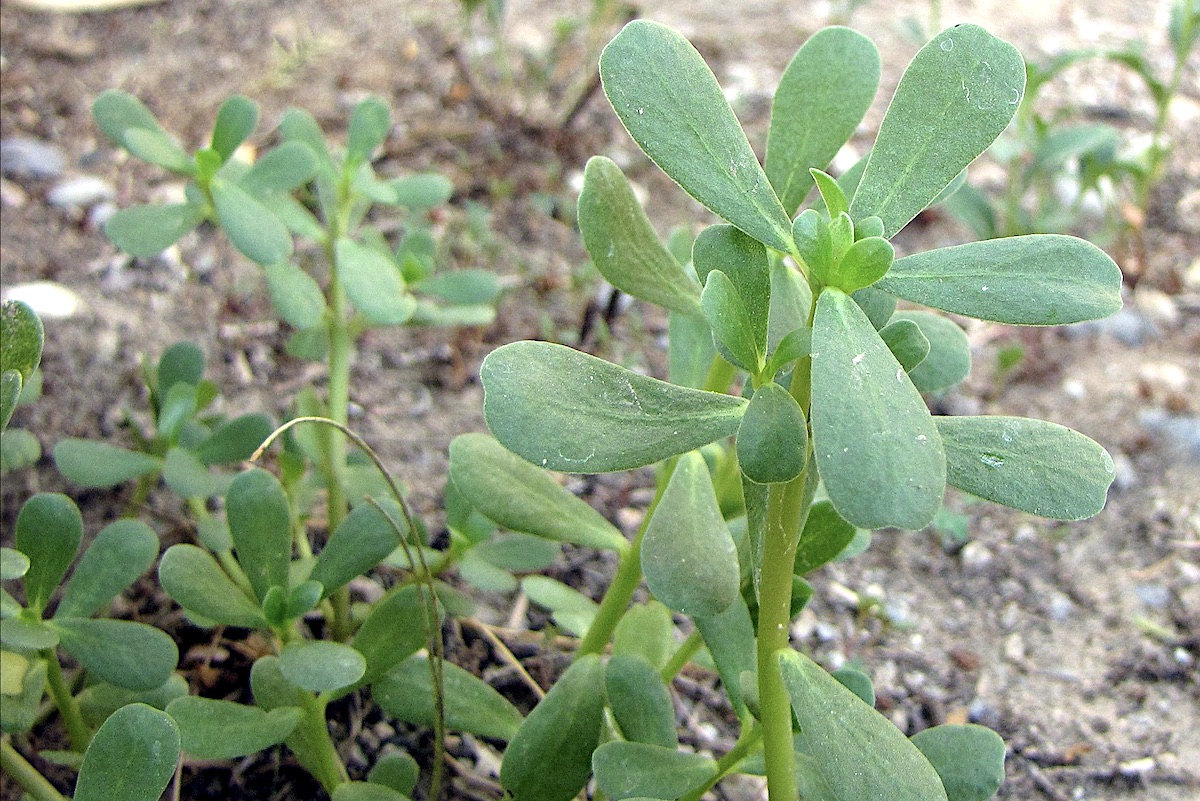
Purslane edible succulent

Purslane is a weed worth having.

Purslane

Purslane (Portulaca oleracea) is both a vegetable and an annual weed. The taste is similar to watercress, so use it as you might spinach or lettuce. It's loaded with vitamins, minerals and antioxidants, and is higher in omega-3 fatty acids than other greens. I occasionally run across it when weeding my garden, so do watch for it in yours. Or start it from seed. Use it as an ornamental filler for succulent container gardens, hanging pots and window boxes.


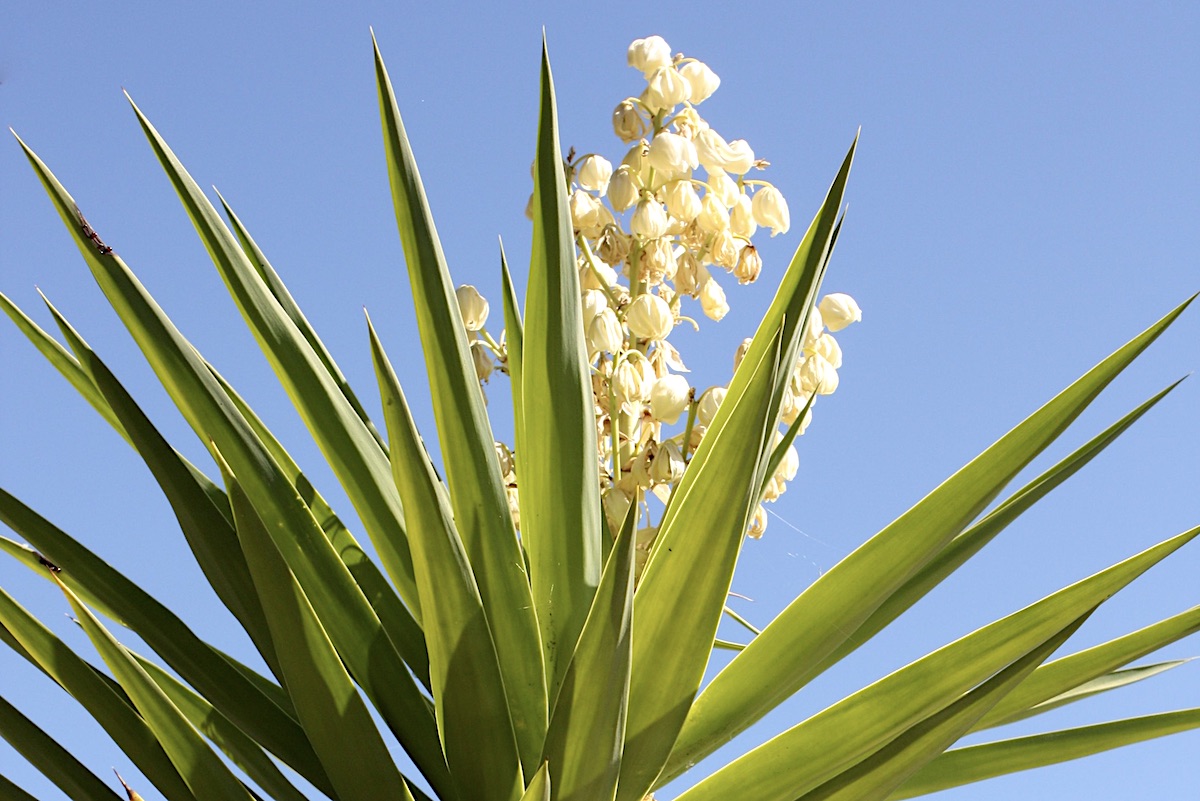
Yucca aloifolia (Spanish bayonet)

The challenge with yucca flowers is not how to prepare them, but how to get to them.

Yucca flowers

Please don't confuse yucca with botanically unrelated "yuca" (cassava root). Yucca roots are not edible. (I occasionally see the two confused in markets and on menus. Makes me crazy.) Harvest blooms while yet in bud, because open flowers are bitter. Remove pistils and steam or sauté petals until tender. Add to egg dishes, casseroles and meat stews. Or as they do in Yucatan, make yucca-petal tamales.


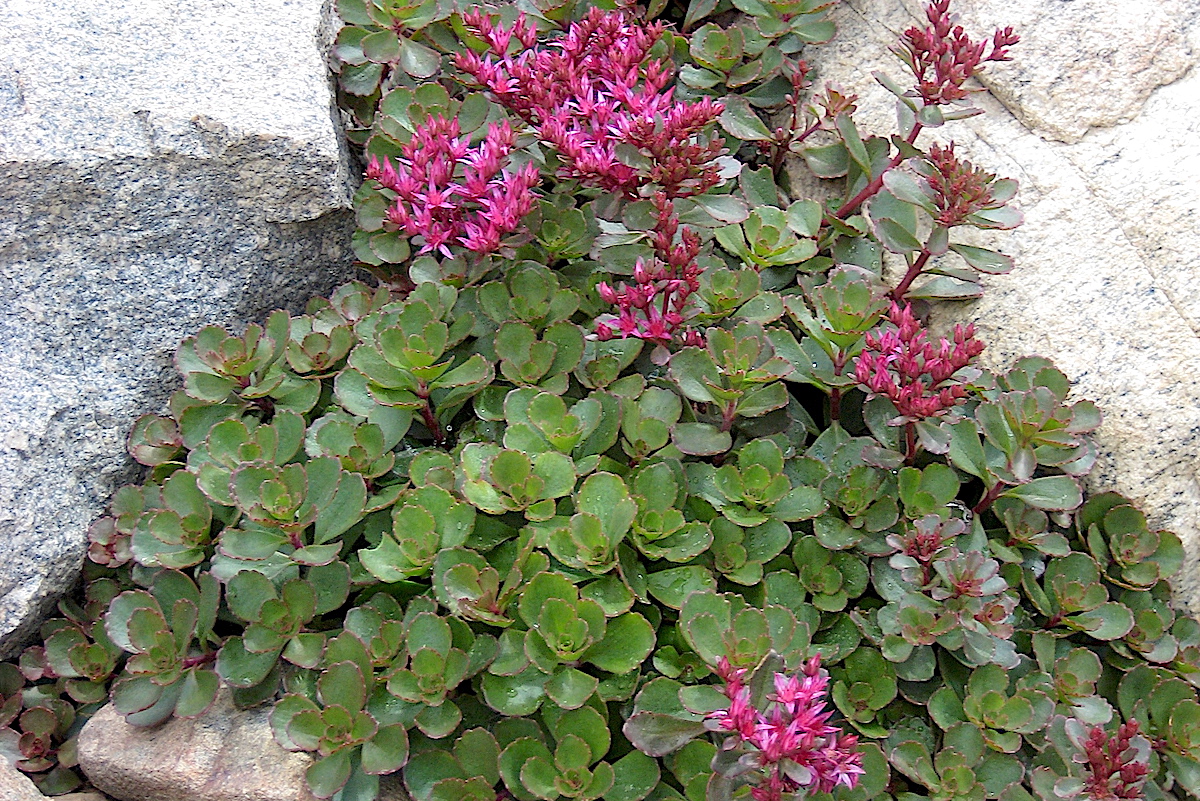
Sedum, red flowers

You're more likely to find edible sedums in cold climates.

Red-flowering sedums

The peppery leaves, stems and roots of fine-leaved stonecrops (as opposed to fat-leaved sedums) add flavor to stir-frys. Cooking moderates bitterness. Large amounts can upset the stomach. Use only red-flowering varieties in salads; those with yellow flowers are mildly toxic when raw.


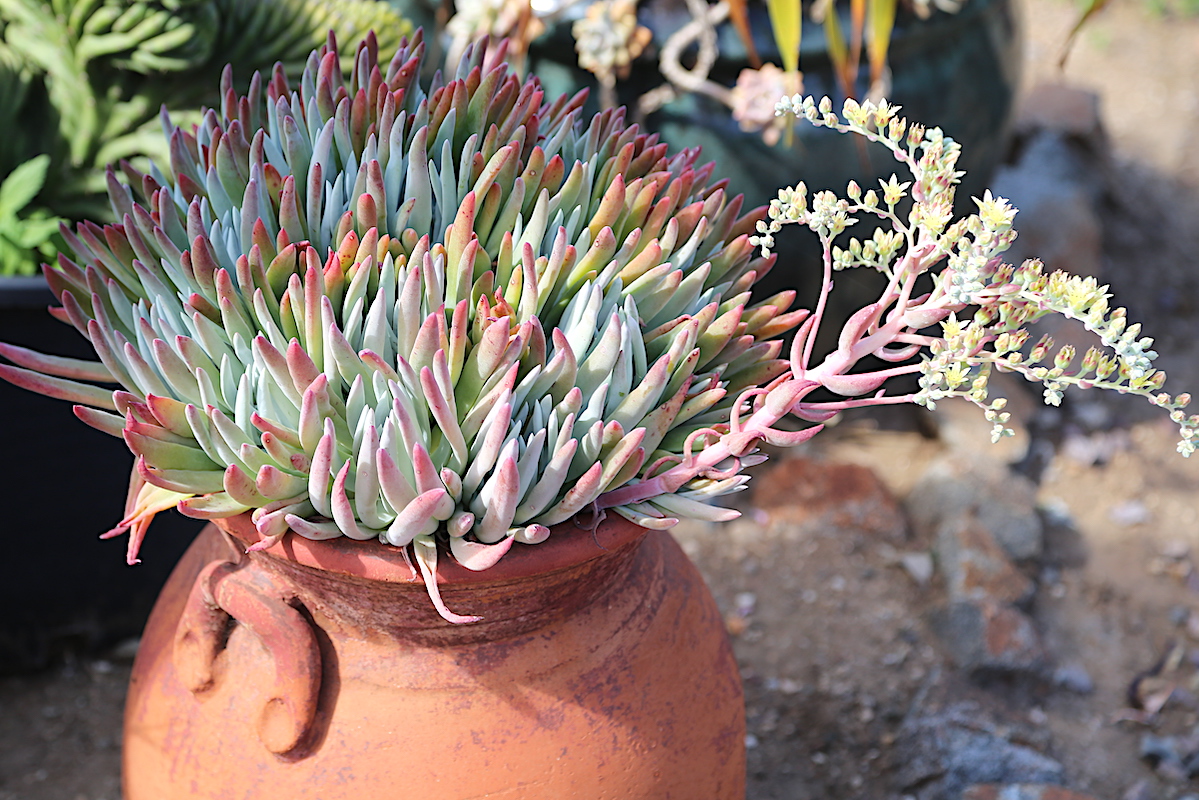
Dudleya edulis

With its pink and orange tips and powdery blue leaves, Dudleya edulis is too pretty to eat.

Dudleya edulis

The common name, chalk lettuce, is a hint. This California native has upright, grayish, powdery leaves shaped sort of like green beans. It needs to be cooked to be palatable.


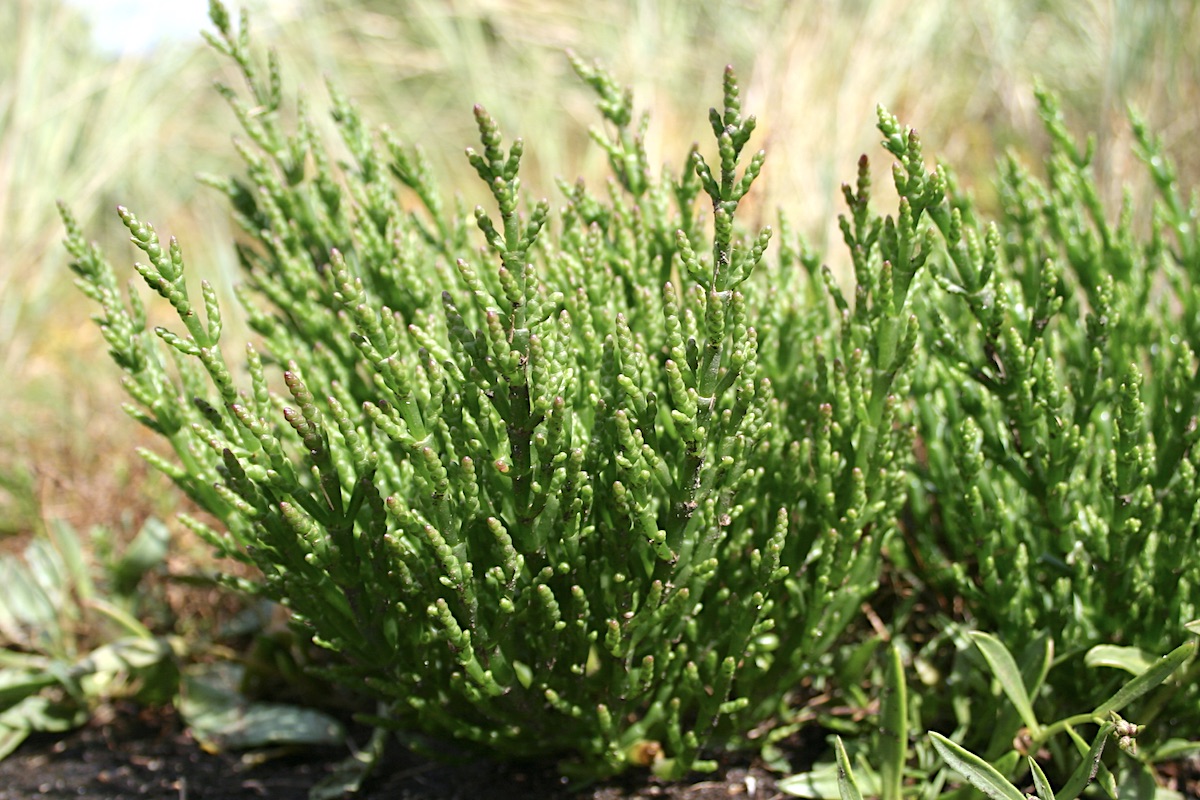
Salicornia

It's easier to forage Salicornia than grow it.

Salicornia

Salicornia europaea (sea beans, sea asparagus, marsh samphire), an annual succulent found on the edges of salt marshes, is tasty cooked or raw. It's gaining popularity among chefs as a garnish because of its salty, crispy crunch (blanch first). The plant is common in the wild but challenging to cultivate. If you want to try, grow it in sandy soil and when watering, add 1 tsp. sea salt per pint.


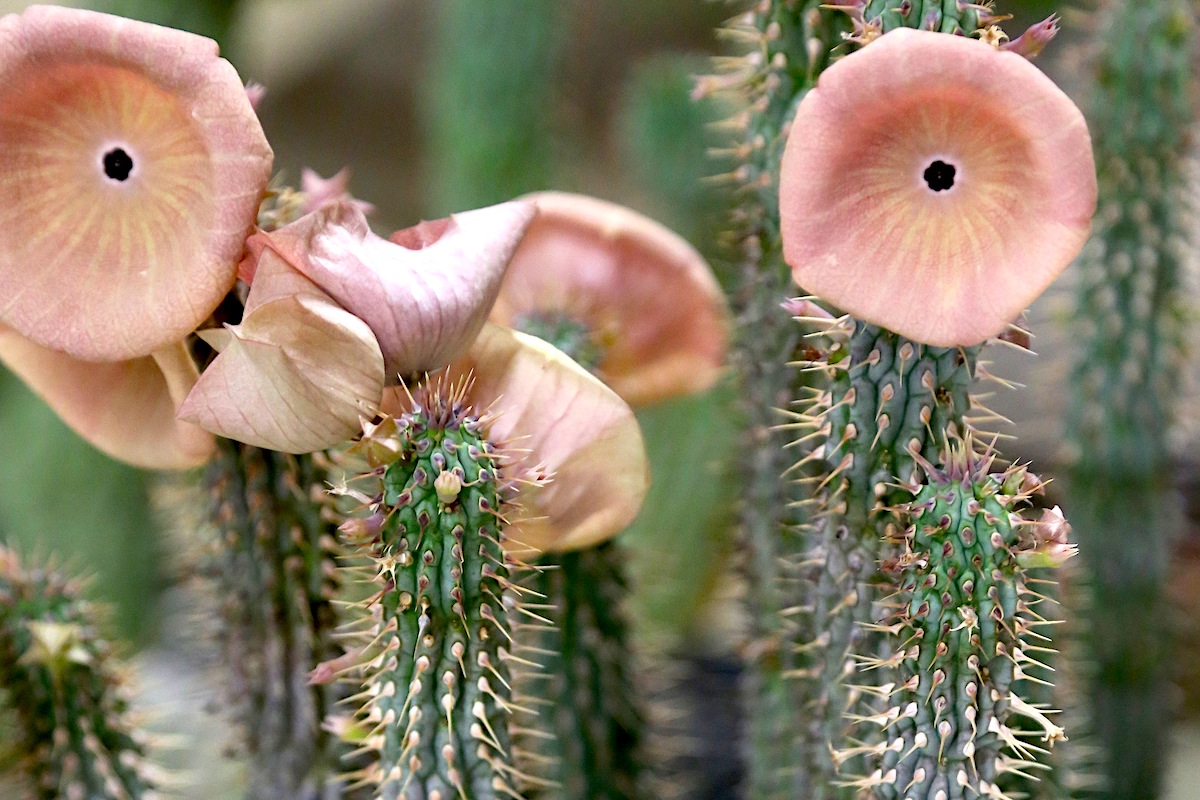
Hoodia gordonii

I'm not aware that the Hoodia gordonii flowers are edible, but I just had to show you them.

Hoodia gordonii

This stapeliad is used by indigenous peoples of South Africa to assuage hunger pangs during Kalahari hunting trips...hence its renown as an appetite suppressant here in the Land of the Overfed. Slice off the spikes and consume raw. The taste and texture are reminiscent of cucumber.


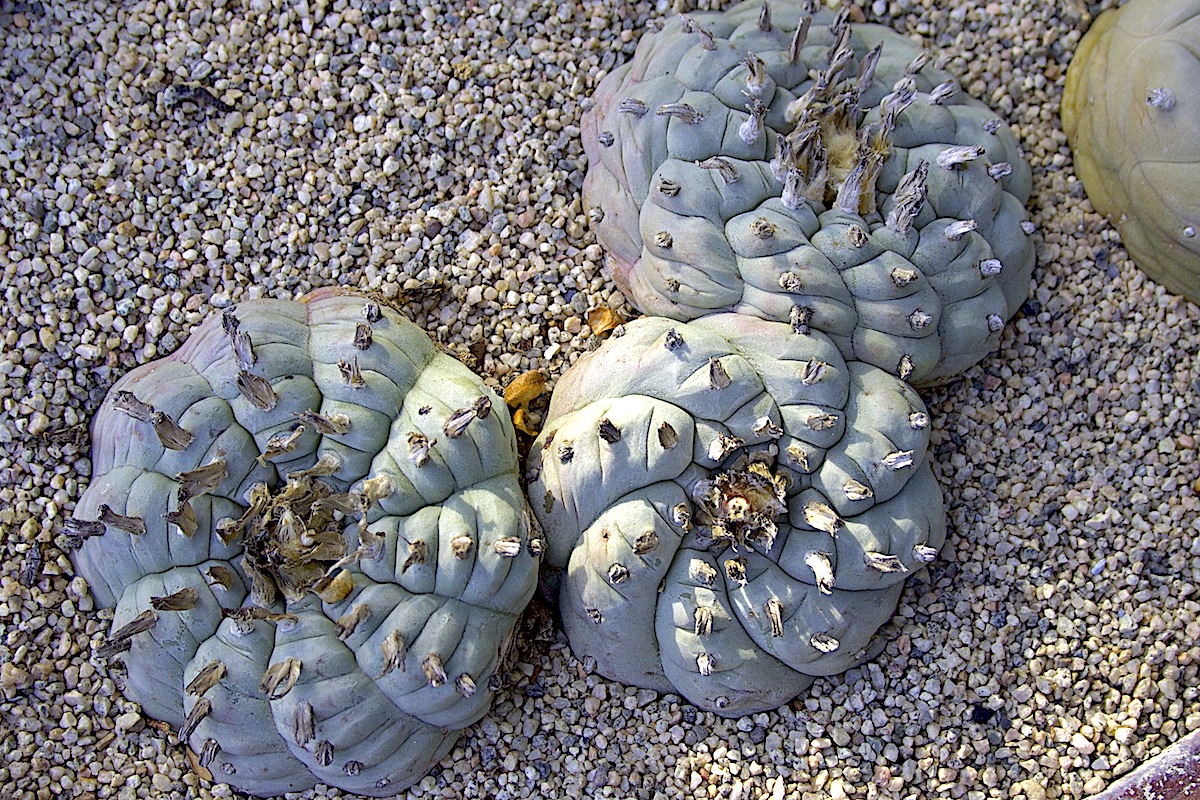
Peyote (Lophophora williamsii)

These are peyote "buttons."

Peyote

You didn't hear it from me, but impressive specimens of this muffin-sized cactus often are on display at Cactus and Succulent Society shows, labeled merely Lophocereus williamsii---an inside joke that generates grins and elbow nudges. Because it's a source of the hallucinogenic drug mescaline, peyote is illegal to possess and ingest except for members of the Native American Church. It's an emetic; vomiting is not uncommon during religious rituals. Sadly, peyote is endangered in its native Texas due to over-harvesting.


Note: This article is for educational purposes only. I am neither a culinary professional nor a medical herbalist. I take no responsibility for any allergies, stomach upset or other concerns that might result from cultivating or ingesting plants mentioned. -- Debra Lee Baldwin 

Related Info on This Site

Portulacaria afra Minima and Variegata

Portulacaria afra: Uses, Photos and Varieties

Portulacaria afra: Uses, Photos and Varieties Native to South Africa, elephant’s food thrives outdoors in warm, sunny climates such as CA, Arizona, Florida and Hawaii About Portulacaria afra Portulacaria afra (elephant’s food, elephant bush, spekboom) thrives in warm, sunny climates. Unlike many other South African succulents, Portulacaria afra is fine with high humidity and rainfall (it…

Cactus Details, Photos and Varieties

Cactus Care, Gallery and Names All cacti are succulents, but not all succulents are cacti. They’re an acquired taste, but once hooked (forgive the pun) you’ll collect more and more. About Cacti Native to deserts and dry regions of the Americas, cacti are succulents at their simplest: a water-storing body and vestigial leaves (spines). These…

The post Ten Edible Succulents and How to Prepare Them appeared first on Debra Lee Baldwin. Copyright © Debra Lee Baldwin.


from Debra Lee Baldwin https://ift.tt/2FWaqPQ
via IFTTT
viernes, 11 de septiembre de 2020

Post-Summer Succulent Concerns Amazing tips

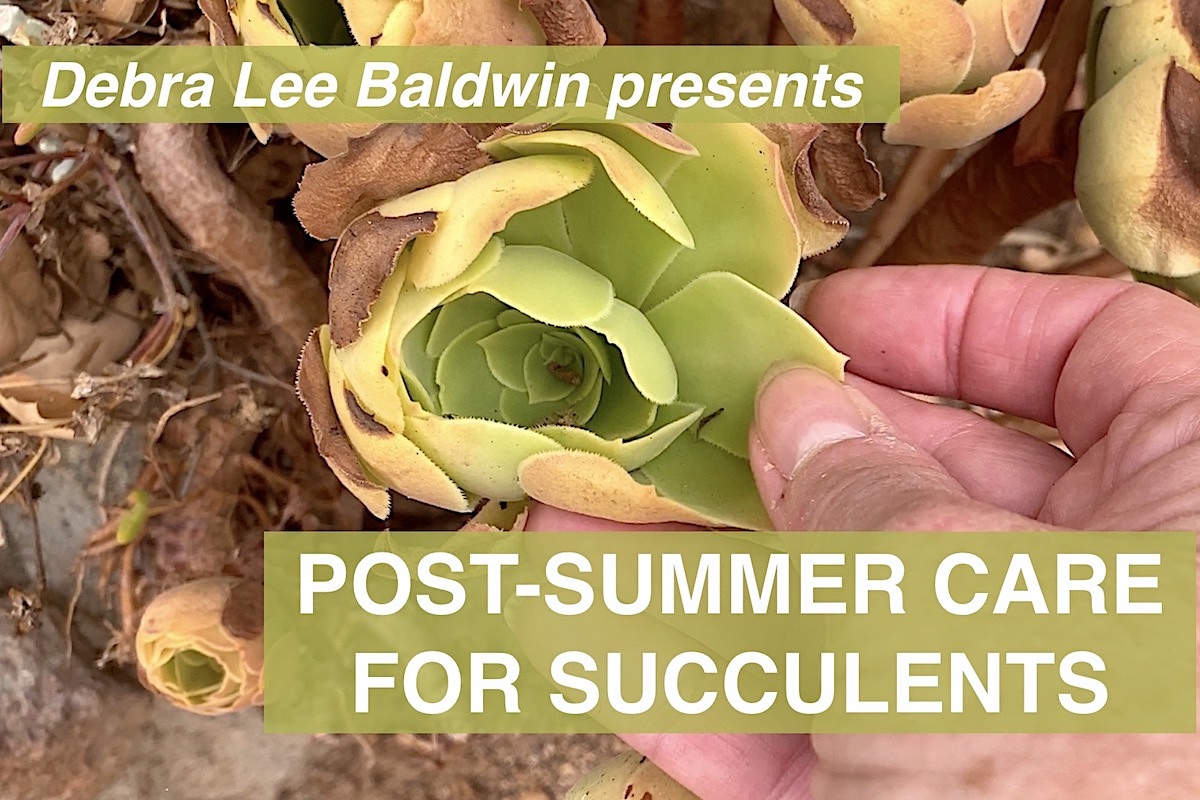
Following a brutal, early-September heat wave, I tackle common, post-summer succulent concerns. See them in my new six-minute video: Post-Summer Care for Succulents (6:49).

Video: Post-Summer Care for Succulents 1200x800 Video: Post-Summer Care for Succulents

It's a candid, warts-and-all, behind-the-scenes, damage-control assessment. You may notice that my garden is not quite the Eden I showed you six months ago in Debra Lee Baldwin's Idea-Filled Succulent Garden (15:00).

Yet as sad as many of my succulents look (perhaps yours do too), I have good news: These are resilient plants. Follow my simple suggestions and---if they're still breathing---your succulents will likely bounce back.

Diagnose and fix post-summer succulent concerns

Numbers in parenthesis indicate where these topics appear in the video.

Scorched tips (0:52). The method I demonstrate for pruning Agave attenuata works for winter frost-burn, too.

Sunburn (1:32 and 4:59). I show you preemptive measures, but once the damage is done, there's not much you can do except trimming.

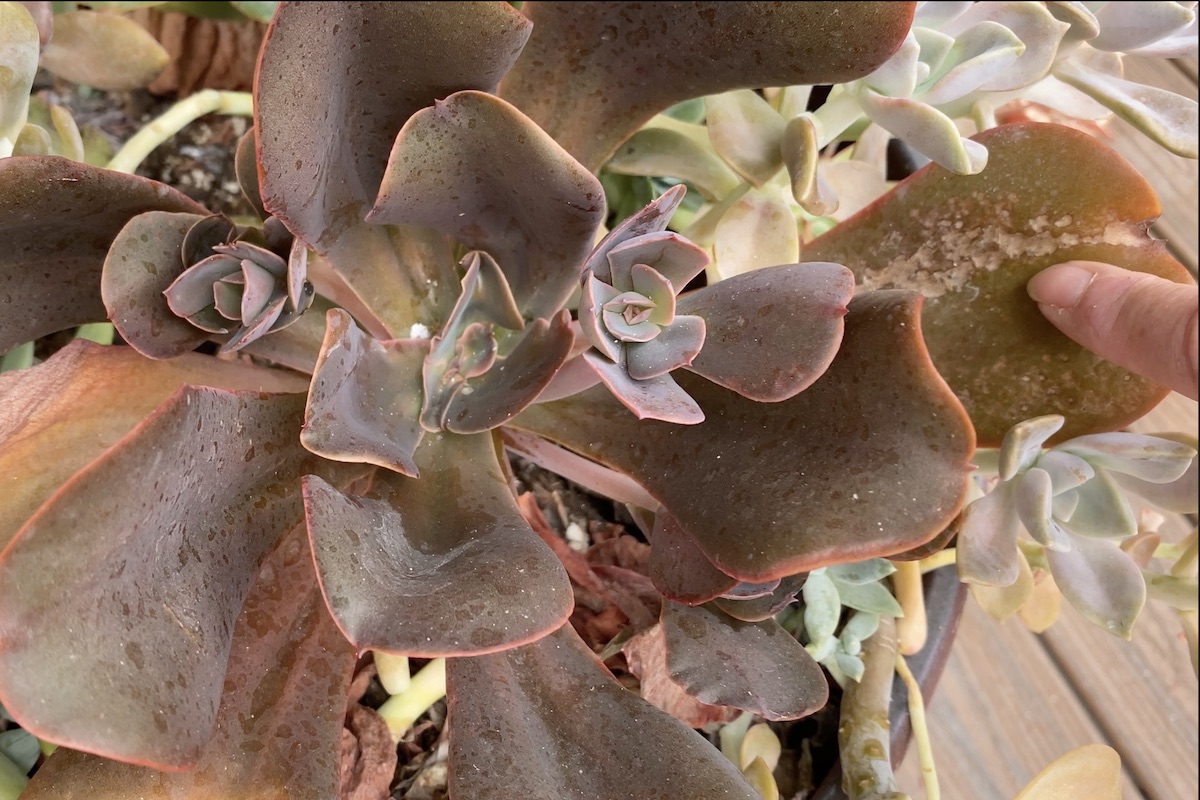
Echeveria with edema, mealy bugs

Echeveria with edema, mealy bugs

Echeveria edema (1:46). Shading my echeverias during the heat of the day helped most of them, but unfortunately not all.

Mealy bugs (2:05). These lint-like pests snuck up on my echeverias when I wasn't looking. I immediately dosed them with alcohol.

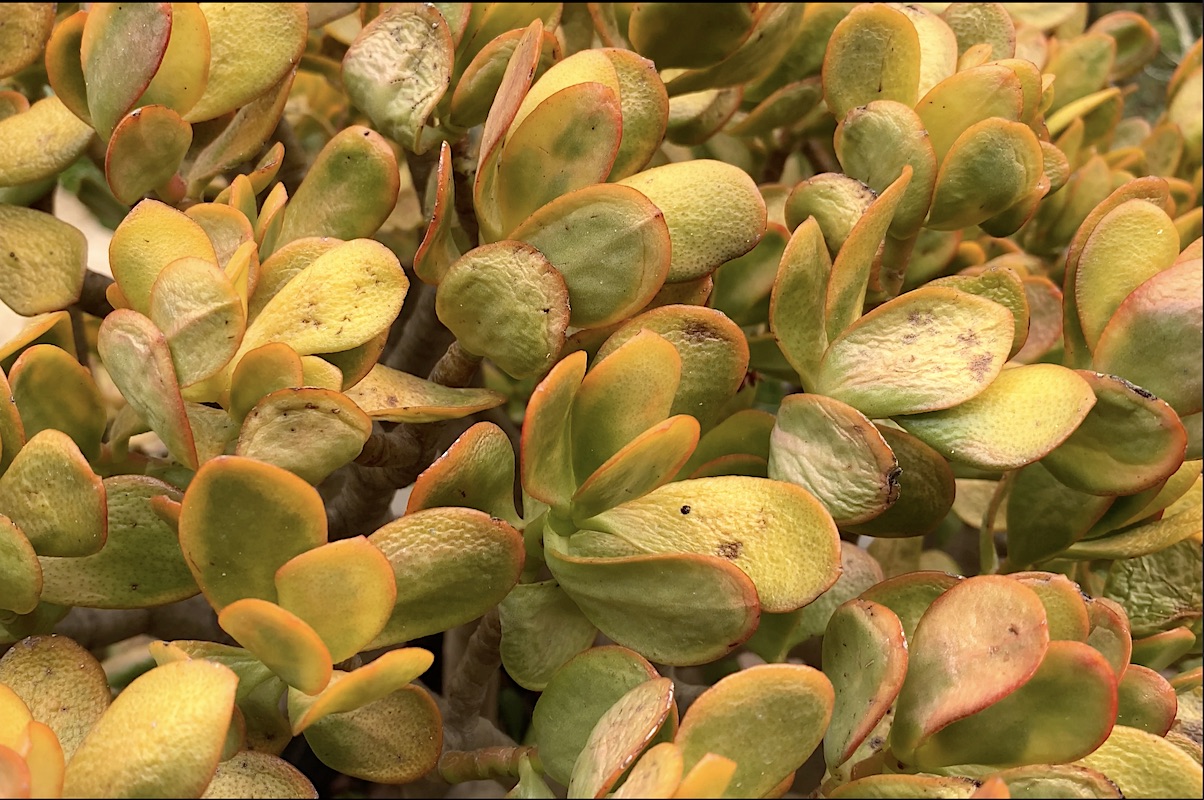
Sunset jade with shriveled leaves

Sunset jade with shriveled leaves

Shriveled leaves (2:49). Succulents naturally draw on stored moisture to survive dry spells. No worries, leaves will plump when it rains.

Yellow stems and burned patches (3:08). These can be serious, but it depends. My dragon-fruit cactus surprised me.

New plants, wrong location (3:18). Looks like I need to redo (and rename) my "mangave terrace."

Dead-looking aeoniums (4:31). It's tempting to yank them, but wait! Take a closer look. They may merely be asleep.

Watering opuntia

Hose-watering opuntia

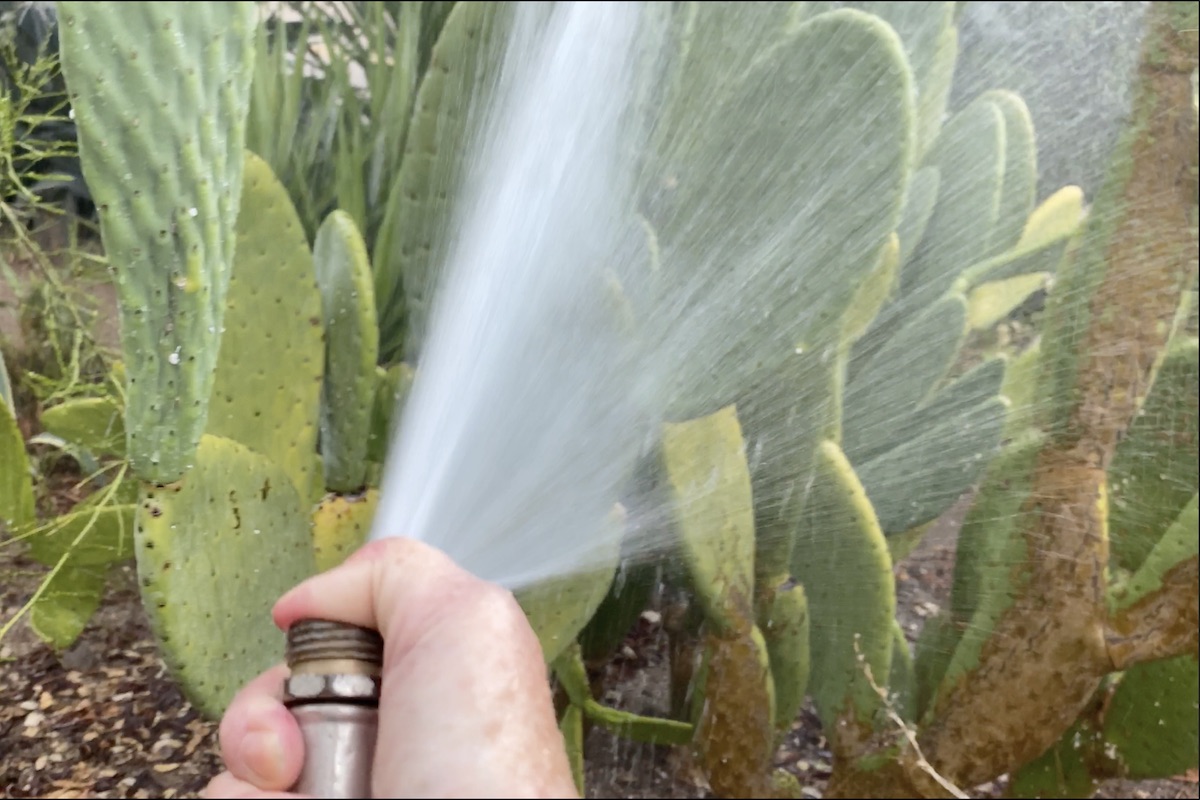
Keeled-over paddle cactus (5:29). Oops. Guess it needed more hydraulic pressure (i.e. water).

Cochineal scale (6:16). Another sneaky pest! I take a two-for-one approach: While hand-watering opuntia, I blast off the bugs.

Cochineal scale on Opuntia (paddle cactus)

Cochineal Scale on Paddle Cactus, What To Do

White fuzzy lumps on paddle cactus are cochineal (coach-en-ee-al) scale, a parasite that pierces the plant’s skin and consumes its juices. It’s used to make carmine dye.

Agave 'Blue Flame' and dasylirion

Late Summer Succulent Care: Six Essentials

These six late-summer care essentials for succulents come from my own experience with growing hundreds of varieties for decades. In my inland Southern CA garden, late summer heat can do as much damage than midwinter frosts. Below is what I do routinely every year.

No-Water Succulents for Southern California Gardens

  Certain readily available succulents not only get by on rainfall alone, they’ll grow in nutrient-poor soil and can handle searing sun and frost. No-water succulents for Southern California gardens that are native to the Southwest and Mexico include dasylirions, agaves, cacti and yuccas. They thrive from south of the border to the Bay Area and…

Mycoplasma on echeveria

Succulent Pests, Large and Small

Common succulent pests, diseases, and problems include agave grease mite, aloe mite, ant infestation, aphids, black spots, cochineal scale, deer, desiccation, etiolation, frost, gopher, hail, mealy bugs, mildew, rabbit, rot, snails and sunburn. Also find out how NOT to deal with a skunk!
The post Post-Summer Succulent Concerns appeared first on Debra Lee Baldwin. Copyright © Debra Lee Baldwin.


from Debra Lee Baldwin https://ift.tt/3bO2kop
via IFTTT