sábado, 10 de abril de 2021

Succulent Personal Shoppers, How to Find or Become One Amazing tips

Using FaceTime, succulent personal shopper shows clients what's new, interesting, seasonal and in limited supply at succulent specialty nurseries. As you direct her from your device, your shopper fills a tray with your selections. She then purchases, packs and ships them, or arranges delivery if you're in the area.

At present, I'm aware of two succulent personal shoppers. It's likely there will be more...maybe you yourself?
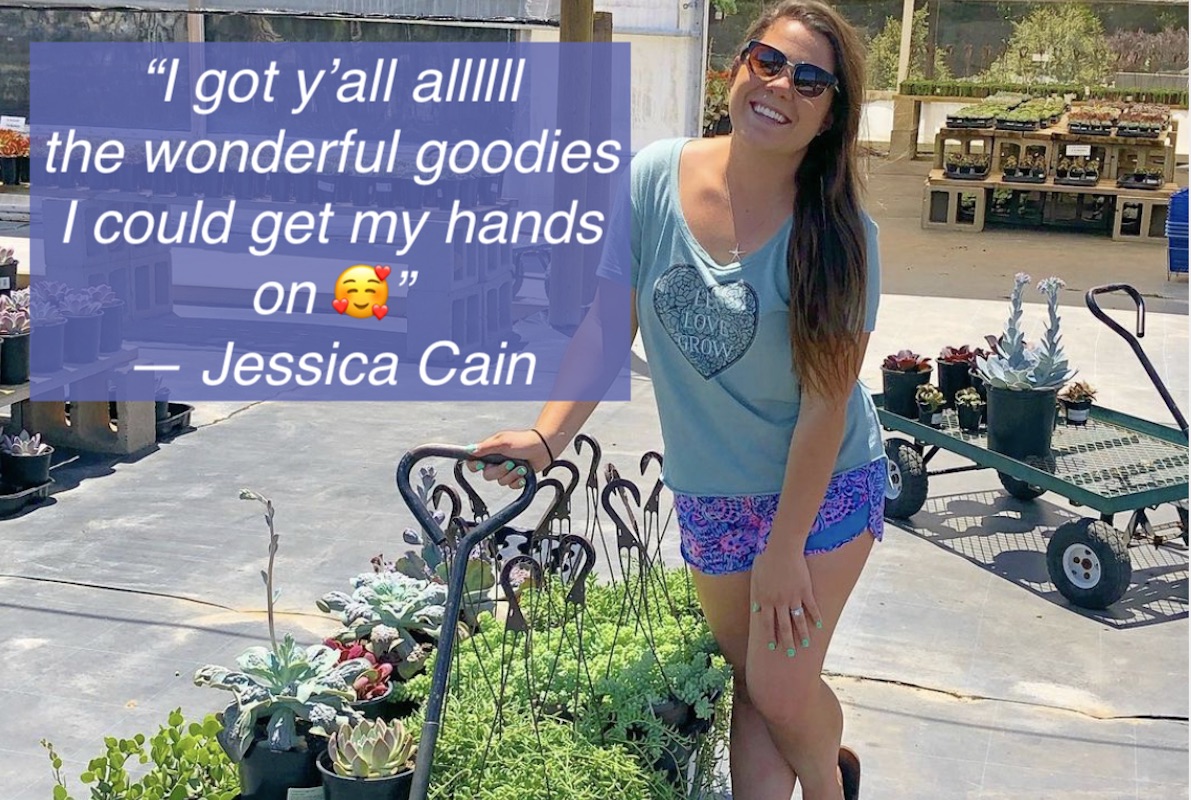
Succulent Personal Shopper (c) Debra Lee Baldwin

Jessica Cain of In Succulent Love, at Oasis Water Efficient Gardens

Why Succulent Personal Shoppers?

This innovative service solves a dilemma for customers and growers alike. Succulent personal shoppers show eager buyers what's available, and nurseries needn't say "no" to distant (sometimes insistent) collectors.

Due to high demand, succulent specialty nurseries are scrambling to keep up. Many don't have the staff or resources to package and ship plants, respond to customer inquiries, or keep online inventories up to date.

Note: Mountain Crest Gardens, the largest supplier of mail-order succulents, does everything right. MCG's impressive, ever-expanding inventory is fast catching up with Southern California's. I'm a proud affiliate. Check it out! 

Oasis, the Succulent Mecca

Complicating the supply-demand situation is the simple fact that it can take years for highly desirable varieties to grow large enough for sale.

Cool succulents, new and old, tend to show up at Oasis Water Efficient Gardens in Escondido north of San Diego. Oasis is owned by Altman Plants, a mega-grower that supplies Lowe's and Home Depot.

True, Altman sells retail online, but at present the selection can't compare with what you might find on a leisurely stroll through Oasis.
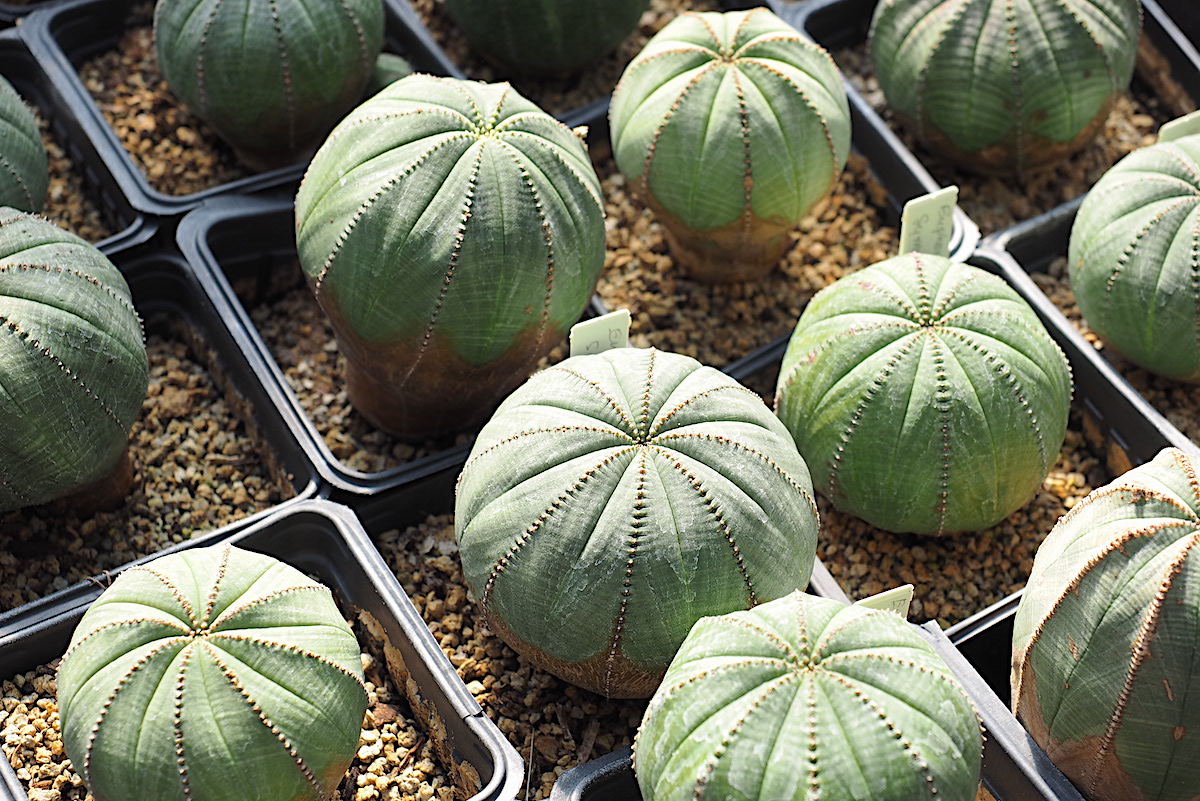
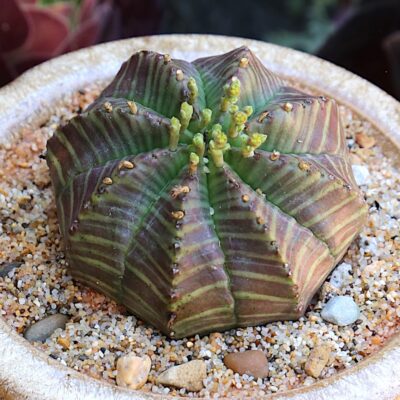
Euphorbia obesa (c) Debra Lee Baldwin

One adorable slow-grower that's nearly vanished due to demand is Euphorbia obesa.

Who's doing it?

Succulent-savvy entrepreneurs Jessica Cain of In Succulent Love and Teri Colbry of the Little Succulent Shop are bridging the supply-demand gap. And they're super busy.

I ran into Teri at Oasis recently, and on the spur of the moment did a short video of her assisting a client in Texas. In the video, Teri explains how it all works and what she charges.

I asked Oasis' manager Carmen Contreras if others provide this service. "Those are the only two that are succulent shoppers," she said. "The others have Esty or other online store fronts."

I also checked with California Cactus Center, a well known succulent nursery in Pasadena. Owner Molly Thongthiraj said as far as she knows, no one is doing it there. But then, CCC has decades-old rarities (like ariocarpus) that she doesn't recommend exposing to the rigors of shipping---or for that matter, to regions where it's not likely to thrive.
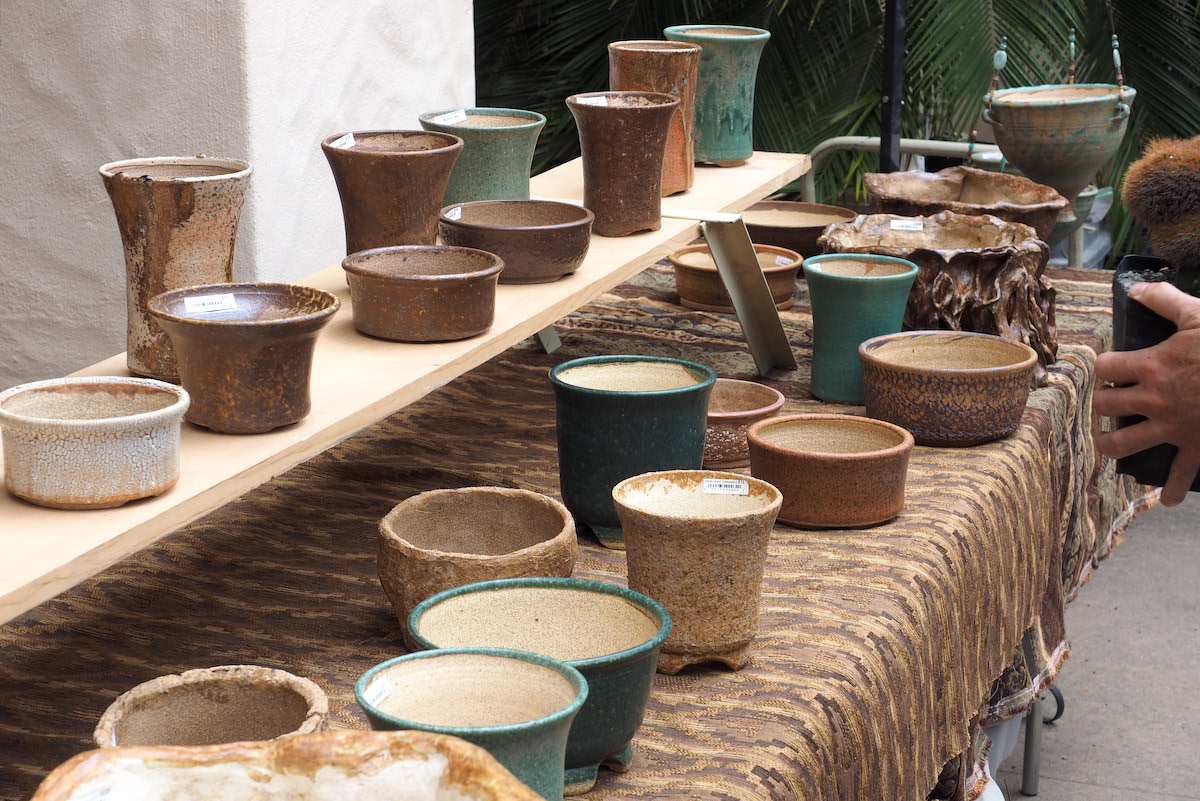
Don Hunt art pots (c) Debra Lee Baldwin

Don Hunt's art pots, on display at a Cactus & Succulent Society Show & Sale

Molly and I agreed that the art pots CCC sells (by Don Hunt and others) would likely interest clients of succulent personal shoppers---certainly as long as the traditional source, Cactus & Succulent Society Shows, aren't happening.

A Client's Perspective

Succulent enthusiast Jeanne Meadow uses Teri's service occasionally, and also recommends her online sales. "They're really something to watch," Jeanne says. "Thousands of people tune in. Teri shows a plant and gives it a number, and the first person to type that number gets it."

When Jeanne stopped by Teri's house the other day, she was amazed. "Seventy-six orders in big boxes!"
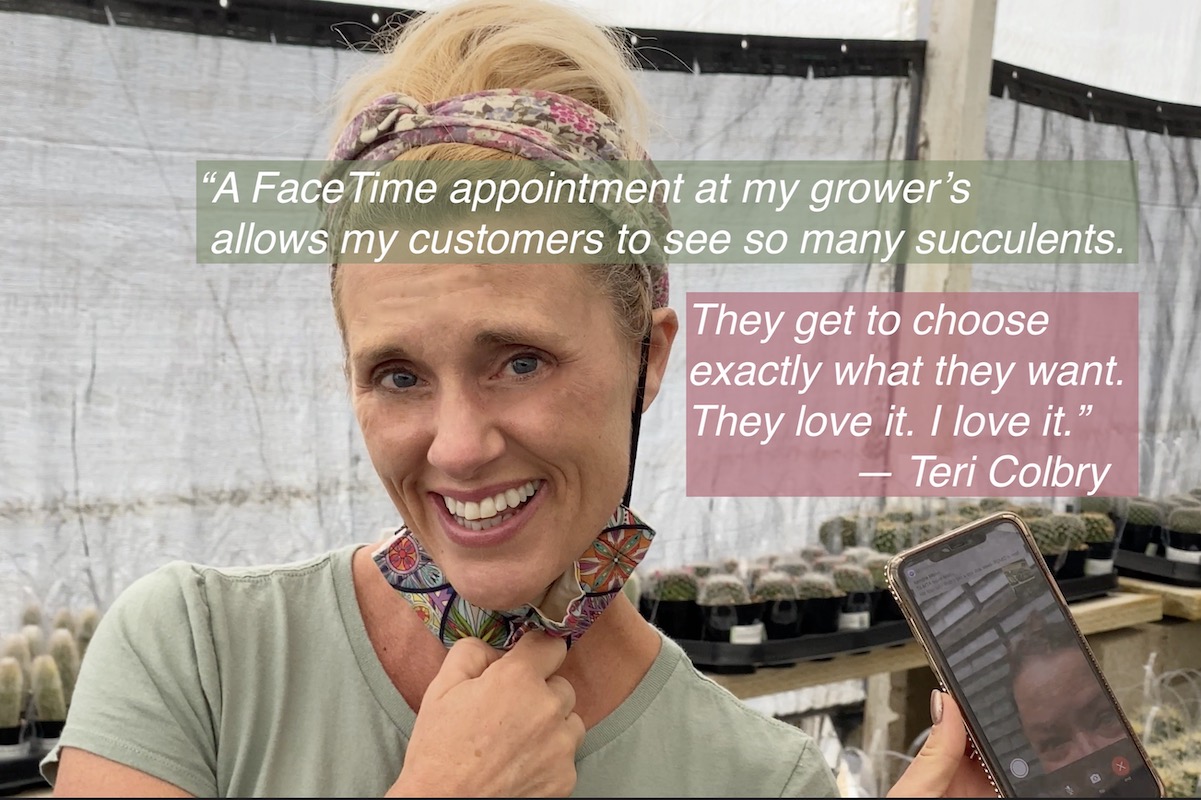
Succulent Personal Shopper (c) Debra Lee Baldwin

Teri Colbry of the Little Succulent Shop. From the video. 

Personal shoppers may be a luxury, but they do make it possible to cherry-pick desirable rarities. Moreover, if you're looking for a certain succulent, it's a good bet Teri or Jessica knows if and where it's available.

Want to be a succulent personal shopper?

In addition to business and multitasking skills, you'll need:

  • Excellent knowledge of succulents
  • A resourceful, can-do attitude
  • Lots of time and energy
  • Space for processing orders and storing plants
  • An online presence and followers
  • Organizational and marketing know-how
  • Ability to safely package and ship fragile plants.

Your Turn

Do you know of others who provide this service? Or ways collectors might obtain plants from specialty nurseries that don't ship? Share your thoughts in the Comments!


Related Info on this site

Mail order succulents

Where do YOU shop for succulents?

Find out what to do if the succulents you want aren’t available near you. See others’ favorite succulent sources, mail-order and walk-in, and share yours in the comments below. Please tell us your city or region, what you’ve purchased, and anything else that might be helpful.  

Succulent Show in San Diego

San Diego Succulent Sources and Destinations

In San Diego and Beyond… Nurseries, public gardens and destinations in North America’s “epicenter of all things succulent” Planning your visit Due to a perfect climate for succulents and a surging demand, San Diego county has a wealth of succulent specialty nurseries, each with its own distinct character. Land is more affordable away from coastal…

The post Succulent Personal Shoppers, How to Find or Become One appeared first on Debra Lee Baldwin. Copyright © Debra Lee Baldwin.


from Debra Lee Baldwin https://ift.tt/3mCFCoo
via IFTTT

lunes, 5 de abril de 2021

Succulent Ice Plants, New Page and Video Amazing tips

Spring is the time to select ice plants so you know what you're getting. 

Announcing my new Ice Plant Page and Video!

The brilliantly beautiful succulent ice plants you'll see in the new page on this site and new video thrive in Zones 8-11. They come in eye-popping hues of purple, pink, lavender, rose-red, bright red, gold, orange and yellow.

In both the new page and new video, you'll find out how to effectively use ice plants in your garden and landscape, and see how beautifully they combine with other succulents and low-water flowering plants.

These cultivars and species of Drosanthemum and Lampranthus create vivid living bouquets. They're the daytime equivalent of neon lights!

Enjoy and discover:

  • A gallery of 50+ design ideas featuring ice plants
  • Which annuals and perennials look amazing with them
  • The ice plant that's lasted 30+ years in my garden
  • How to prune ice plants (and why you should)
  • How to ruin a perfectly good ice plant
  • Which one is terrific for containers
  • Which ice plant variety is notorious, and why
  • How to ensure that ice plants look their best
  • What ice plants MUST have in order to bloom
  • Why you no longer see red apple ice plant
  • Which cultivar blooms on-and-off all year
  • Why ice plants are called "mesembs."

[Read More]

Lampranthus aurantiacus, Drosanthemum speciosum (c) Debra Lee Baldwin

Ice Plant Uses, Photos and IDs

Ice Plant Uses, Photos, and Varieties What you need to know to successfully select and grow ice plants. Gallery of warm-climate varieties, all ID’d See the Video About Ice plants Succulent ice plants have in common shimmering, daisylike flowers. The bloom time for most is spring. Typically for the rest of the year, they’re merely…

The post Succulent Ice Plants, New Page and Video appeared first on Debra Lee Baldwin. Copyright © Debra Lee Baldwin.


from Debra Lee Baldwin https://ift.tt/2PYGCHe
via IFTTT
domingo, 21 de marzo de 2021

Rojas Succulents Nursery Tour Amazing tips

If you're looking for a great succulent nursery to tour, head for family-owned Rojas Succulents and Cacti, located on 1-1/2 acres in Fallbrook, CA, midway between Riverside and San Diego. Rojas does everything right. Their superb inventory ranges from succulents for gardens to collectible rarities, and includes unusual variegates (succulents with streaked or multicolored leaves).

Why Rojas is Worthy

A trip to Rojas is worthwhile for reasonably priced, perfectly grown plants, including varieties you're not likely to find elsewhere. In a nutshell, the nursery...

  • Has experienced owners. Matriarch Rosalina Rojas has years in the nursery business, specifically growing succulents. To learn her remarkable story, scroll down.
  • Keeps getting better and better. In six years, they've expanded from two greenhouses to eleven.
  • Is customer-oriented. The owners have a great attitude. "When people come, they go on a hunt for something they don't have," says Rosalina's son, co-owner Carlos Rojas. "That's what we're here for, to share our passion."
  • Sells mail-order. If you're unable to visit in person, you can shop online. Many of their finest collectible succulents are on Etsy.

Tour Rojas Succulents

Recently I toured the nursery with Carlos as host and guide. In the video, he shows what he's especially proud of: fancy ruffled echeverias, unusual Aeonium species, and a greenhouse reserved for collector's specimens. (Visiting it is by appointment only.) You'll also discover their watering formula for healthy, pest-free plants!

The Backstory

This first appeared in 2014 as a post for Gardening Gone Wild. 

ROSALINA’S DREAM: A NURSERY OF HER OWN

Variegated Aloe nobilis (c) Debra Lee Baldwin

I photographed this Aloe nobilis ‘Variegata’ and the other succulents shown here at Roja’s Succulents,

Once a renowned nursery, Cooper’s Cactus and Succulents ceased to exist when John Cooper passed away. However, his plants live on, as does his kindness. According to former employee Rosalina Rojas, “John Cooper made it possible for me to have my own nursery."

Variegated graptopetalum (c) Debra Lee Baldwin

This variegated Graptopetalum pentandrum is one of Rosalina's introductions

“I’ve been in the US for 26 years, and I’m a citizen,” Rosalina says proudly. She originally is from Guanajuato, Mexico. “One of my sons is fighting for our country,” she added. Francisco is in the Special Forces. Her other son, Carlos, helps with the nursery. Carlos introduced himself to me at the Succulent Celebration at Waterwise Botanicals Nursery, and urged me to visit. I’d heard good things about Rosalina and the quality of her plant material.

Crested aeonium (c) Debra Lee Baldwin

This crested, variegated aeonium is an example of the rare succulents Rojas specializes in

“It’s my passion and my living,” Rosalina told me, adding that having her own nursery made it possible for her to raise her sons as a single mom. Following in her mentor’s footsteps, Rosalina cultivates many beautiful, rare and unusual varieties. So, what treasures did I bring home? One was an unusual senecio with beadlike leaves.

Senecio with globular leaves (c) Debra Lee Baldwin

Senecio with globular leaves

And a variation of Kalanchoe luciae (paddle plant) with rolled leaves. Rosalina calls it the “taco kalanchoe.”

Rare kalanchoe (c) Debra Lee Baldwin

Rare Kalanchoe luciae with rolled, variegated leaves

When you’re in the area, do visit Rojas and mention that you heard about the nursery here. You also might want to consult my comprehensive list of San Diego Succulent Destinations. Incidentally, Rosalina wasn’t the only person Mr. Cooper helped. Others continue to cultivate plants he grew at his nursery---a great legacy!

Rojas Succulents and Cacti, 2005 E. Alvarado St., Fallbrook, CA 92028; 760/271-4962. Monday-Saturday 9 to 4. @rojassucculents on Facebook, Instagram and Etsy.

Note: No disclaimer needed! I wasn't paid to promote this business. ;+) Debra

Floral style succulent arrangement (c) Debra Lee Baldwin

Echeveria Info, Photos & Varieties

Echeveria Info, Photos & Varieties How to grow echeverias perfectly, plus an extensive gallery, all ID’d About Echeverias Here you’ll find expert advice to help you grow echeverias perfectly, with a gallery of 150+ beautiful, notable species and cultivars. Learn about the plants’ native habitat, optimal care, light and water requirements, flowering, soil, fertilizer, pests,…

Succulent Show in San Diego

San Diego Succulent Sources and Destinations

In San Diego and Beyond… Nurseries, public gardens and destinations in North America’s “epicenter of all things succulent” Planning your visit Due to a perfect climate for succulents and a surging demand, San Diego county has a wealth of succulent specialty nurseries, each with its own distinct character. Land is more affordable away from coastal…

The post Rojas Succulents Nursery Tour appeared first on Debra Lee Baldwin. Copyright © Debra Lee Baldwin.


from Debra Lee Baldwin https://ift.tt/3969Uuu
via IFTTT
jueves, 11 de marzo de 2021

Just How Juicy ARE Succulents? The Science of Succulence Amazing tips

Just how juicy ARE succulents? In my new video of the same name, I rank common succulents 1-to-10 on a "Juiciness Scale." Slicing and squishing may seem silly---even cruel---but there's method to my madness. I aim to entertain you, certainly, but also encourage you to learn the "how" and "why" of these marvelous plants. On this page you'll discover the fascinating Science of Succulence: how leaves, skin, roots and more make succulents, well, succulent---as well as astonishingly efficient.

The Science of Succulence

Succulents come from climates with low rainfall, strong sun and low humidity. In regions where thin-leaved plants would quickly shrivel, succulents survive---even thrive. The key is the quality of succulence: juicy, moisture-filled leaves that the plants draw on during hot, dry spells. Depending on the time of year and the variety, a succulent's moisture content may be as high as 95%.

Smart leaves

Glottiphyllum leaf squished (c) Debra Lee Baldwin

Glottiphyllum linguiforme (from the video)

Succulent leaf cells expand during rainy weather and shrink during drought. Certain varieties such as aloes also contain a gelatinous goo (mucilage). Although thick leaves mean less light reaches the plant for photosynthesis (chlorophyll + sunlight = energy for growth), that's OK because succulents are from climates with few cloudy days. In fact, some succulents further shade themselves with spines or filaments, or have a powdery coating that deflects UV light.

Waxy skin

The thick, waxy skin of succulents has comparatively few surface openings (stomata) that enable gas exchange (transpiration) with surrounding air. This minimizes evaporation and ties in with crassulacean acid metabolism (CAM), which makes succulents---in particular elephant's food (Portulacaria afra)---renowned for their ability to scrub harmful carbon from the atmosphere. Learn more.

The role of roots

Generally a tap root anchors a succulent, and it sends delicate roots laterally just below the soil surface. These shallow roots absorb even small amounts of rain and irrigation. Roots of succulents may contract during dry spells to avoid desiccation, then regrow when rains return.

Regional adaptations 

Succulents are nothing if not smart! The way they deal with hostile environments is amazing. Here are two examples.

Saguaro cactus (c) Debra Lee Baldwin

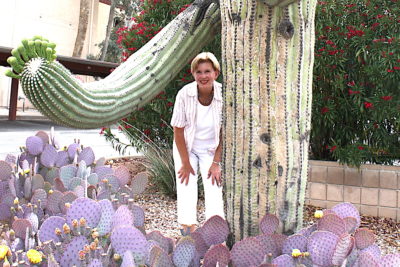
Yours Truly with a saguaro cactus in Tucson

Ribbed cacti of the desert Southwest expand during seasonal rains, then gradually shrink during periods of intense sun, high heat and low humidity. Such moisture depletion deepens surface "valleys," serving to shade the plant and lessen its exposure to the elements.

Lithops (c) Debra Lee Baldwin

Lithops have patches of translucent tissue

In arid regions of Africa, certain small succulents have translucent tissue at their leaf tips. These dots, fissures or windows let sunlight enter plump plants that are buried up to their necks to avoid being eaten or sun-scorched. “Living stones” such as lithops as well as certain haworthias come to mind, but my favorite is Fenestraria (baby toes)---partly because the Latin name means “windows.”

Fenestraria aurantiaca (c) Debra Lee Baldwin

Fenestraria aurantiaca (baby toes) has windowed tips


Juicy Succulents video (c) Debra Lee Baldwin

Am I crazy or cruel? Don't miss my "Juicy Succulents" video!

Related info on this site 

Portulacaria afra in ground (c) Debra Lee Baldwin

How Succulents Combat Global Warming

When you grow succulents in your garden, you’re helping combat global warming.  The plants are especially efficient at scrubbing carbon dioxide from the atmosphere.  It has to do with

The post Just How Juicy ARE Succulents? The Science of Succulence appeared first on Debra Lee Baldwin. Copyright © Debra Lee Baldwin.


from Debra Lee Baldwin https://ift.tt/2OJr0qy
via IFTTT
domingo, 28 de febrero de 2021

Euphorbia or Cactus? How to Tell Amazing tips

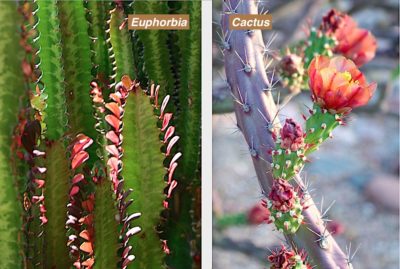
How can you tell a spiny euphorbia from a cactus? Evaluate these key characteristics: the type of spines, flowers, and leaves (or lack thereof).

Recently, while compiling my site's new Euphorbia page, I happily acquired the ability to tell at a glance a spiny euphorbia from a cactus.

Milky sap Succulent Euphorbia (c) Debra Lee Baldwin

The defining characteristic of euphorbias is their milky sap.

Sure, you can break a stem, and if it drips milky sap, it's a euphorbia---whether poinsettia, spurge or a succulent tree. But hey! Now you don't have to.

Discover the differences here, then take the quiz on my YouTube channel. I promise you'll be delighted at your new knowledge!

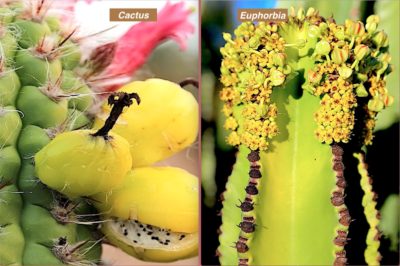
Euphorbia vs cactus, fruit & flowers (c) Debra Lee Baldwin

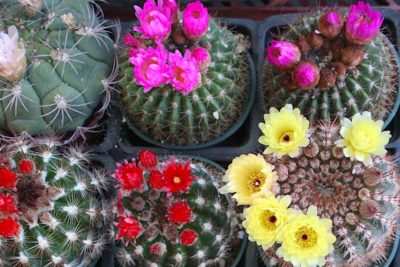
Cactus (left) shows spines, areoles, a pink flower and seed-filled fruit. At right, a euphorbia's flowers are tiny and yellow, and some have formed pods.

Euphorbia or Cactus? Check the flowers and fruit

Euphorbia blooms are tiny relative to the plant. They're most often yellow but may be pale green, cream, pink or red. What looks like petals are actually bracts that surround true flowers.

Succulent euphorbia flowers (c) Debra Lee Baldwin

Euphorbia bracts look like yellow forget-me-nots

Bracts with five rounded petals resemble forget-me-nots, but are waxy and last longer.

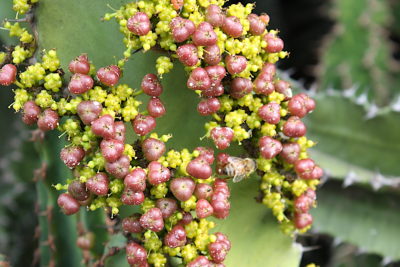
Succulent euphorbia fruit seed pods (c) Debra Lee Baldwin

Euphorbia seed pods can be larger and more interesting than the flowers

They're followed by inedible, seed-filled fruit that's knobby, spherical or pumpkin-shaped.

Small cactus in bloom (c) Debra Lee Baldwin

Many small cacti are crowned with vivid flowers in spring

Cactus flowers on the other hand tend to be showy, vividly colored and short-lived (a day or so). Delicate, satiny petals form flowers that look a bit like daisies or water lilies.

Fruit that follows cactus flowers is ovoid and in some species edible. Tiny black seeds dot the flesh.

Euphorbia or Cactus? Examine the spines

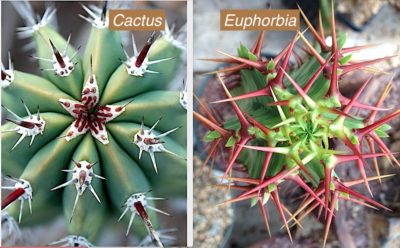
How to tell a cactus from a spiny euphorbia

Areoles of cacti (left) are a different tissue from the skin, and spines appear to poke out through it.

A defining characteristic of cacti is that spines emerge from areoles (bumps or tissue) that are different from the skin of the plant. Cactus spines also tend to be needlelike. Although not all cacti have spines (visible ones at least), all cacti have areoles.

Euphorbia thorns

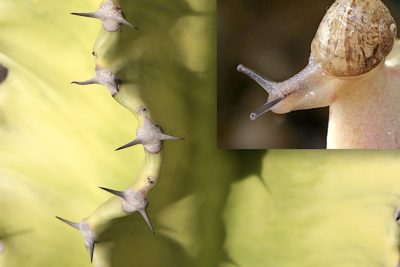
Euphorbia thorns make a V like a snail's head

Euphorbia spines are hard tissue like rose thorns, and often form a V suggestive of cattle horns or a snail's head. (Note: Many succulent euphorbias have no thorns.)

Euphorbia horrida peduncles (c) Debra Lee Baldwin

Dry flower stems (peduncles) cling to the ribs of Euphorbia horrida.

In some Euphorbia species, stems supporting bracts dry and cling to the plant. These "peduncles" may look like spines, but they are not sharp and snap off easily.

Euphorbia or Cactus? Look for leaves

Succulent Euphorbia vs Cactus, leaves

Euphorbia trigona 'Rubra' (left) is fringed with lovely red leaves. Cholla at right has spines for leaves.

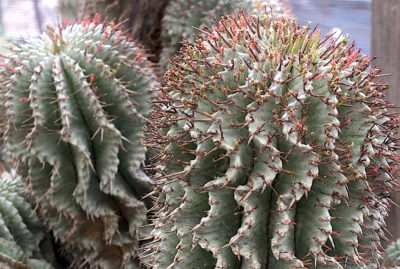
Surprisingly, spiny, cactuslike euphorbias produce leaves. If you don't see any, it's because in most species they tend to be insignificant, and they fall off seasonally.

Technically, cacti have "modified leaves:" spines. Stems of cacti may also look like leaves. However, cacti---unlike euphorbias---lack leafy leaves.

Incidentally, cacti are native to the Americas, and succulent euphorbias are from the Old World, mainly Africa. Over the last few centuries, collectors have helped these plants naturalize in warm, dry climates worldwide. But if you’re watching a movie that takes place millennia ago, and Jesus or Alexander the Great strides past a cactus, someone in Hollywood didn’t do their homework.

Test Your Knowledge

Related info on this site

Spherical succulent Euphorbia meloformis (c) Debra Lee Baldwin

Succulent Euphorbias: Photos, IDs, Garden Uses, Cautions

Euphorbia Uses, Photos and Cautions Native primarily to South Africa, succulent euphorbias thrive outdoors in mild, arid maritime climates. They’re wonderfully sculptural and collectible, but do be careful when handling. About SUCCULENT EUPHORBIAS Euphorbia is a huge genus composed of plants with milky sap, including spurges and poinsettias. Those that are succulents range from marble-size spheres…

The post Euphorbia or Cactus? How to Tell appeared first on Debra Lee Baldwin. Copyright © Debra Lee Baldwin.


from Debra Lee Baldwin https://ift.tt/3bTaUmm
via IFTTT

jueves, 25 de febrero de 2021

Treat Your Agaves Before It’s Too Late Amazing tips

Feel free to copy-and-paste this info onto your NextDoor site, and (please!) use it to notify your garden club and friends. -- Debra

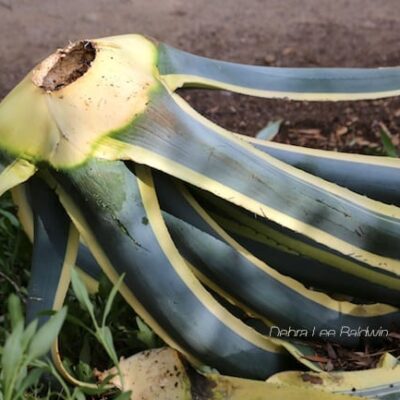
The agave snout-nosed weevil exists in greater numbers and is more active this spring than ever before. Don't wait for signs of infestation; take preventative measures now to protect your agaves, furcraeas, beaucarneas, yuccas and mangaves. And please, don't let your yard become a breeding ground for weevils that move on to your neighbors'! Learn More: https://debraleebaldwin.com/caring-for-succulents/agave-snout-weevil-prevention-treatment/

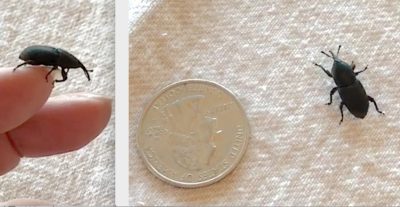
Agave snout-nosed weevil (c) Debra Lee Baldwin

How tough are they? Well, after its photo shoot, "My" agave snout-nose weevil went on to live in a tightly lidded glass jar with no sustenance for about a week.

Flightless Beetle Lands in Europe

I envision the evil weevil contentedly sipping a gin-and-tonic aboard British Airways. (No straw needed.)

From a Feb. 24 comment on my Agave Snout Weevil Prevention and Treatment page"We live in London, UK. We have a very large Century Agave which has lived inside since we bought it. We noticed the odd beetle on the floor but thought nothing of it. Over the months our agave looked more and more upset, leaves turning down and yellowing. We saw more beetles and then my husband whose desk is next to it started to HEAR the grubs chomping away! It’s 8ft tall and weights over 100kg. Does anyone know any UK treatments that might work? I realise we are unlikely to be able to save the plant but I want to make sure the beetles are removed."

In a Feb. 21 email from a subscriber near Faro, Portugal: "The snout beetle has arrived in the Algarve in the south of Portugal. I have well over 100 Agaves and they are being attacked by the beetle. I lost close to 50 already."

Also: Jardin Sostenible (Sustainable Garden), a landscaping firm in Valencia, Spain, cautions that "picudo negro" has arrived. They say it affects aloes and bird-of-paradise, too, but that's most likely some other bug (there's always another bug). In any case their photos show our beetle, sigh.

Agave Snout Weevil Prevention and Treatment

Agave snout-nosed weevil is a half-inch-long black beetle with a downward-curving proboscis that enables it to pierce an agave’s core, where it lays its eggs. Grubs hatch, consume the agave’s heart, then burrow into the soil to pupate.

Succulent roots gone (c) Debra Lee Baldwin

Uh-oh, Is My Succulent Sick? Common pests, diseases and problems, plus solutions

Succulent Pests, Diseases and Problems Keep your succulents healthy, happy and looking their very best WEEVIL ALERT: Learn More: Agave Weevil ON THIS PAGE you’ll find photos of common succulent pests, diseases and problems; and discover causes, severity, prevention and treatments. VIDEOS: On my YouTube Channel, view my Pests and Diseases playlist (eight videos) and Oh, No!…

Succulent with cracked, scabby leaves

Succulent Pests and Problems Q&A Forum

Are pests or mysterious maladies causing problems with your succulents? This page is a forum for you to ask questions, leave comments and share what works for you. Others can see and benefit from the answers. Your own tried-and-true solutions are welcome, too! 

The post Treat Your Agaves Before It’s Too Late appeared first on Debra Lee Baldwin. Copyright © Debra Lee Baldwin.


from Debra Lee Baldwin https://ift.tt/37LSAdB
via IFTTT

martes, 16 de febrero de 2021

Vinyl Wraps Make Utility Boxes Succulent Artworks Amazing tips

If you notice your utility boxes at all, you probably don't see them as garden enhancements. Yet it's possible for these blocky eyesores to become works of succulent art. Not necessarily by painting them, though.

As you'll see in my new video, Lauraine Esparza of Hidden Meadows, CA, had her utility boxes wrapped (like a car) with vinyl laminate depicting Aeonium 'Kiwi'. As a finishing touch, she'll plant those same succulents around it.

The idea originated with San Diego photographer Lee Sie, who in 2012 first wrapped a box near his home to discourage taggers. "They don't tag objects that have a busy pattern," Lee told me at Lauraine's. I also found out:

Why wrapping is better than painting

-- You know what you're getting. Art is subjective, and a painted box may not be to everyone's liking.

-- Vinyl laminate lasts five to ten years depending on sun exposure. It's UV-treated, so colors stay true.

-- It's easy to clean. If need be, wipe off grafitti with Goo Gone.

-- You can select designs from Lee's site or have him create a custom one.

Hummingbird on utility box (c) Lee Sie

On a utility box in San Diego's Point Loma neighborhood, a hummingbird enjoys Crassula 'Campfire' flowers. From www.LeeSiePhotography.com.

-- Should your box stand out or disappear? If you prefer the latter, wrap it with a photo of nearby shrubbery.

-- Vinyl laminate is easily removed with a heat gun. No chemicals or sanding needed.

My friend Lauraine's utility boxes are convenient for the power company---alongside her driveway at the curb---but sad for someone who loves garden art. (In the video you may notice mosaics in Lauraine's garden by Hidden Meadows artist Marsha Rafter.)

When Lauraine asked me to help select a design from those on Lee's site, I was uncertain. Yet when I envisioned the area planted with similar succulents, the choice seemed obvious.

Lauraine's utility box, before (c) Debra Lee Baldwin

Lauraine's utility box, before wrapping. Eew. 

The charming Lee Sie

During the three-hour installation at Lauraine's, I stopped by and became excited to share Lee Sie with you. In the resulting video you'll see Lee hard at work as he graciously fields my questions. The video also shows more of his installations.

Lee has wrapped over 100 utility boxes for clients in the San Diego area and beyond. Succulents are a favorite because their geometric patterns work from any perspective. At Lauraine's, Lee also wrapped two tall, narrow boxes with a bird-of-paradise print to echo plants across the driveway. (I've suggested she add a dwarf variety near the boxes, too.)

Wrapping boxes isn’t difficult, but it does take time and skill, plus a heat gun, box cutter and smoothing tool. It's a two-person job; a helper unrolled the vinyl and removed its paper backing as Lee smoothed it onto the box.

So, does the utility company mind? “They love it, because they don’t have to clean graffiti from boxes,” Lee says, adding that they do require their proprietary numbers and stickers be the box, and that it can be opened.

Watch: Lee Sie’s Succulent Utility Box Wraps (7:42)


Related Info on this site

Art in Succulent Garden (c) Debra Lee Baldwin

Add Art to Your Succulent Garden

Make your succulent garden even more inviting with outdoor art. By using it as an outdoor gallery, you’ll engage in a fun pursuit that expresses your personal style.

The post Vinyl Wraps Make Utility Boxes Succulent Artworks appeared first on Debra Lee Baldwin. Copyright © Debra Lee Baldwin.


from Debra Lee Baldwin https://ift.tt/3baXIZE
via IFTTT