martes, 15 de agosto de 2023

Echeveria Bonanza at Oasis Amazing tips

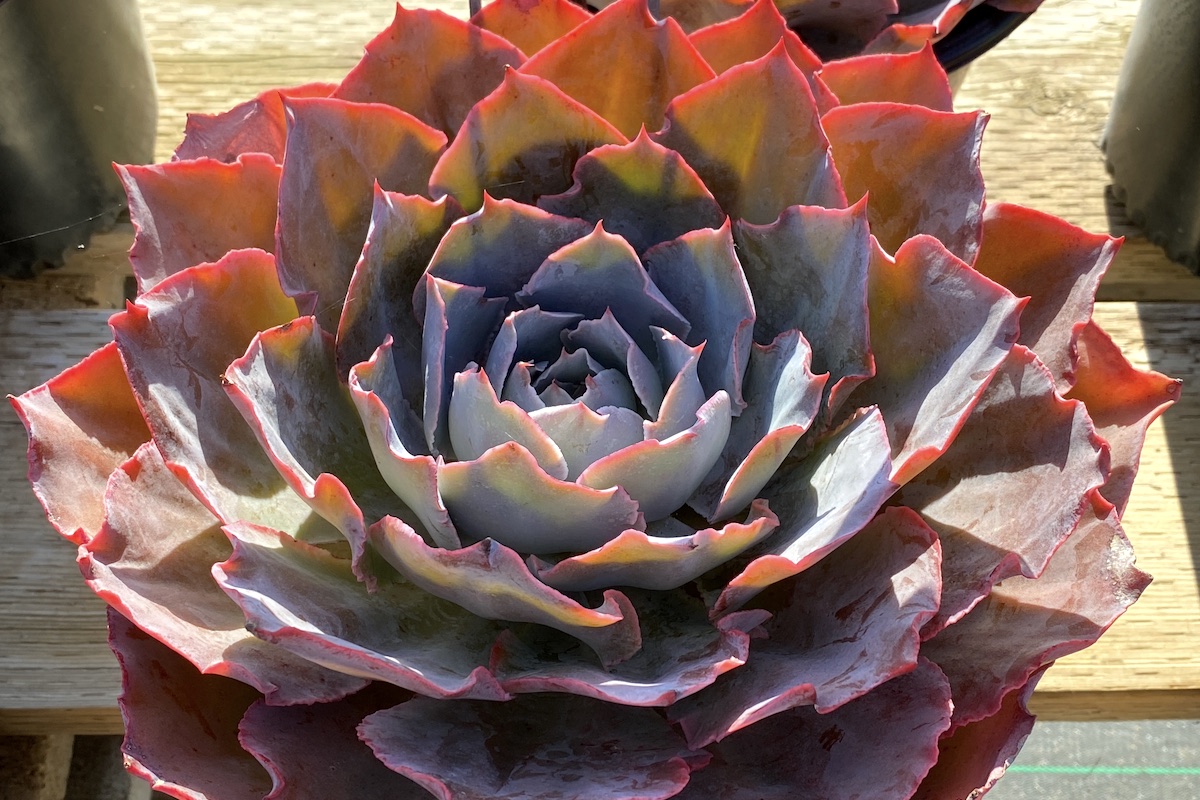
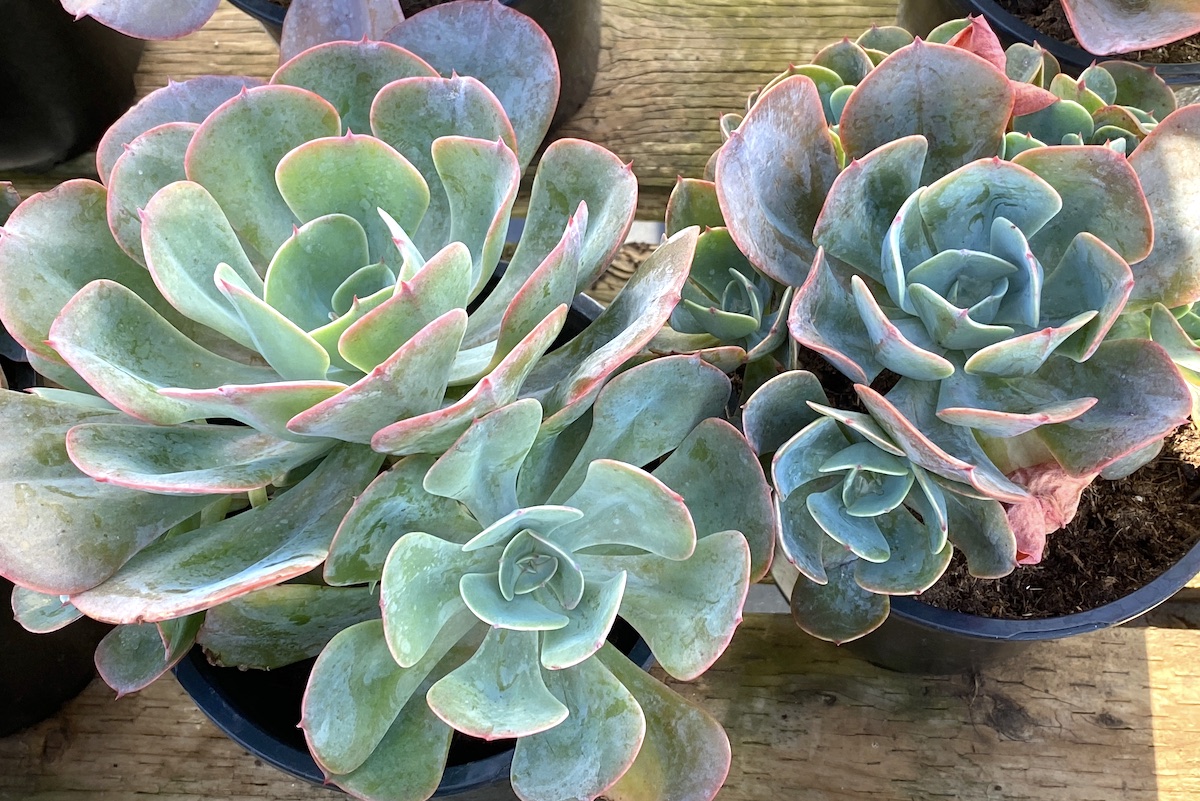
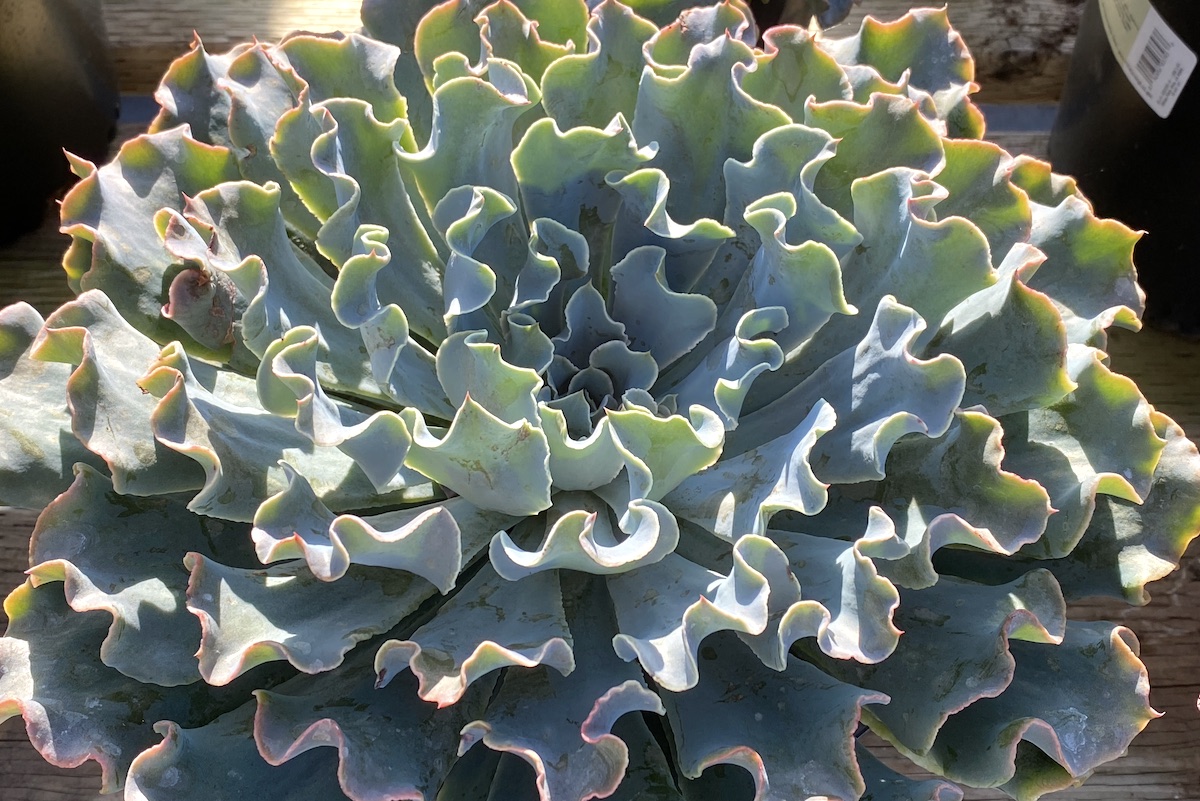
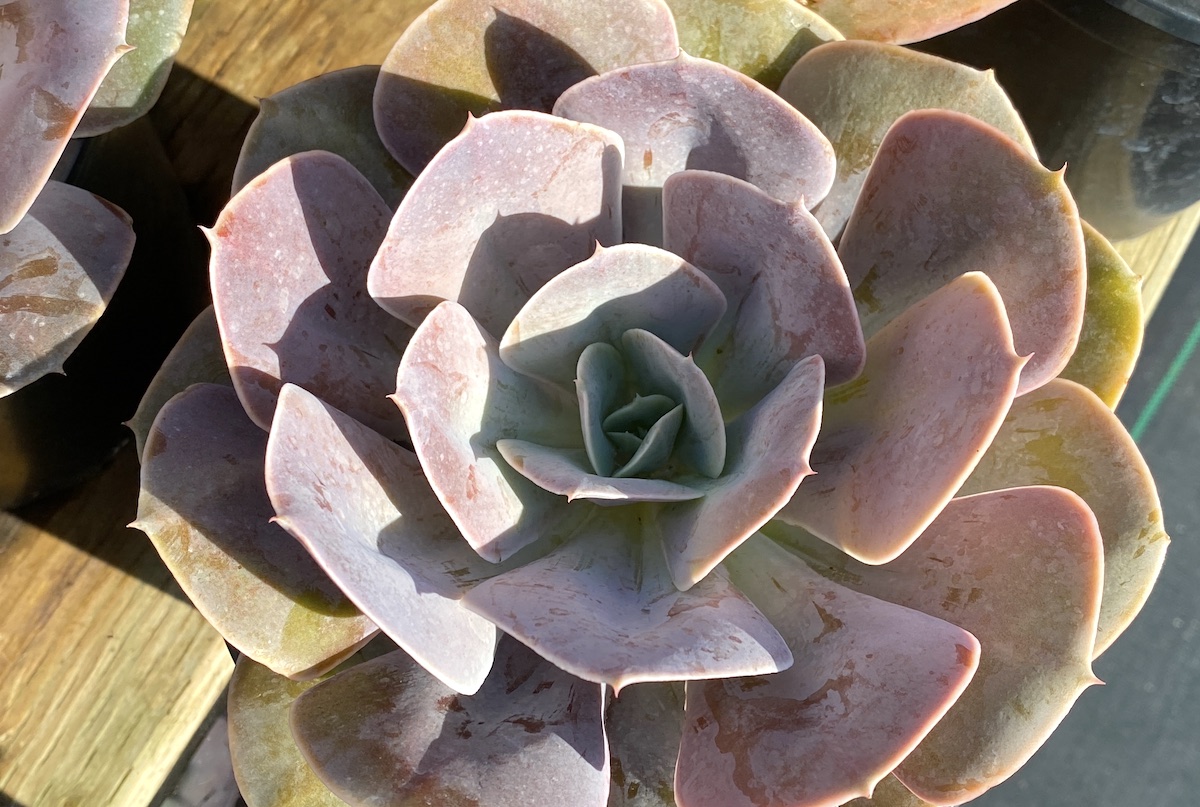
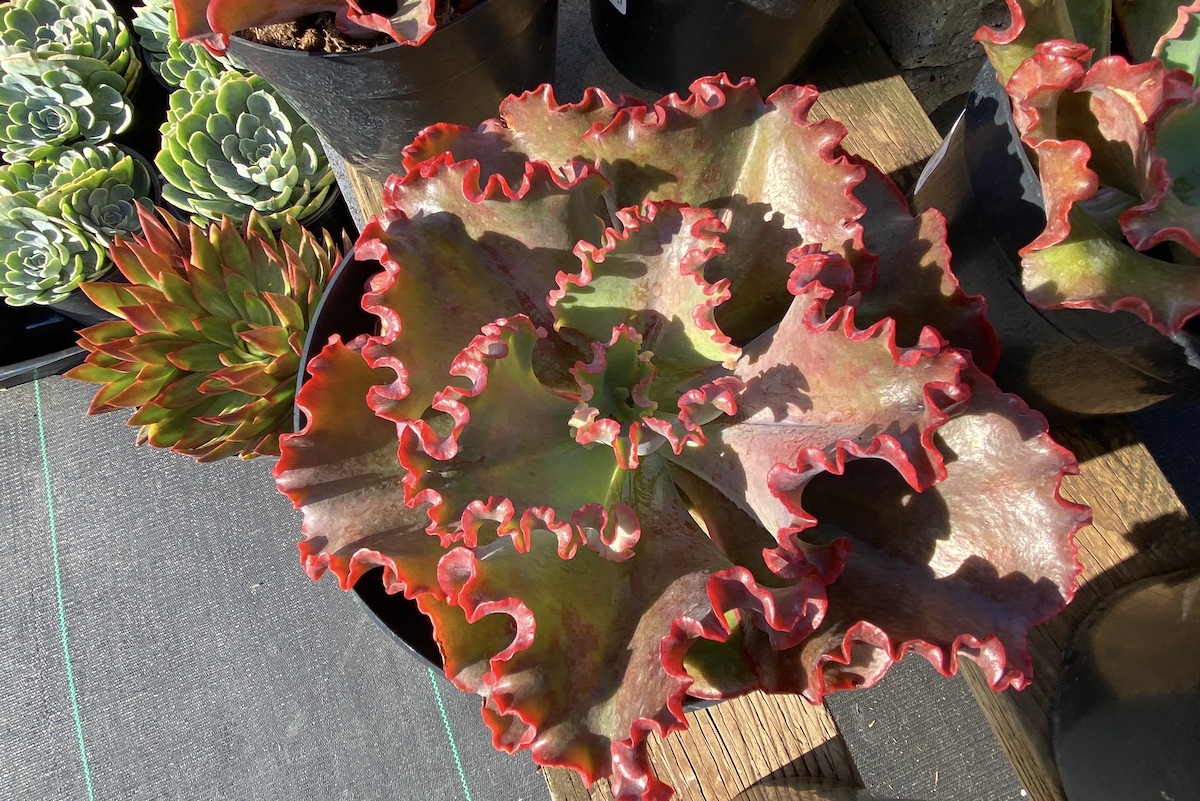
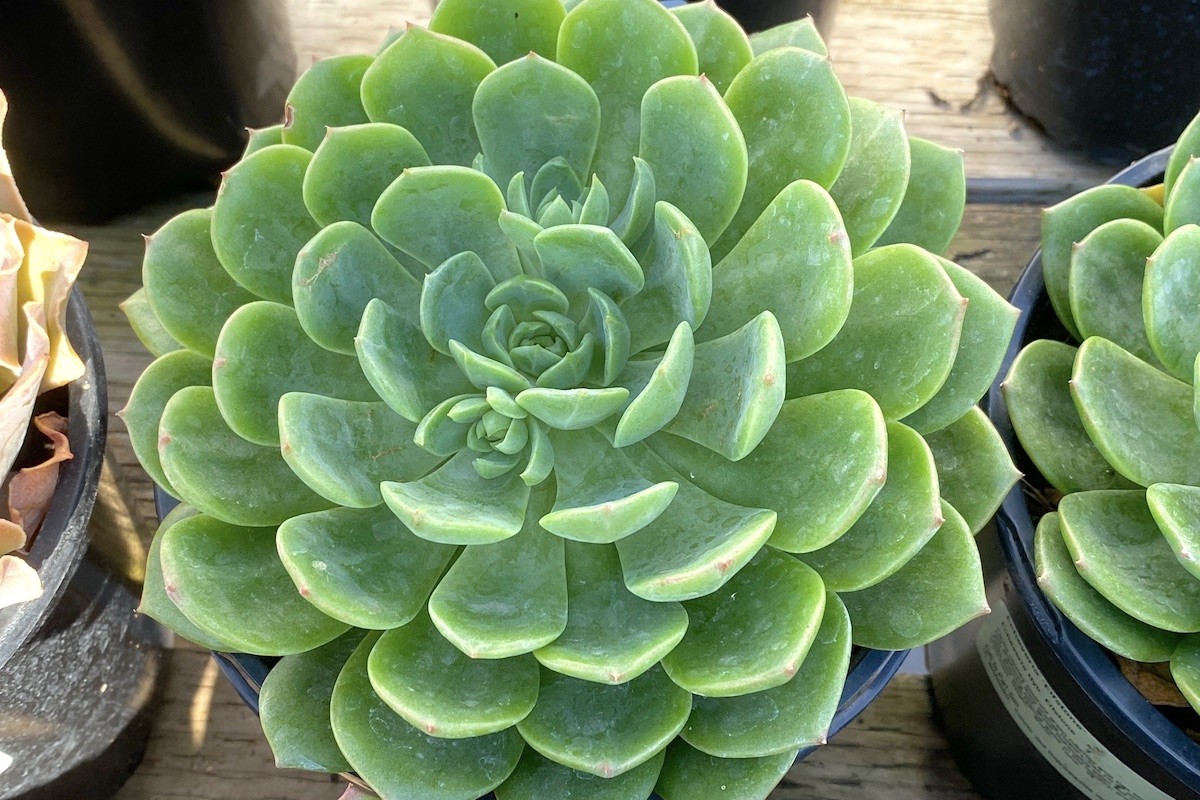
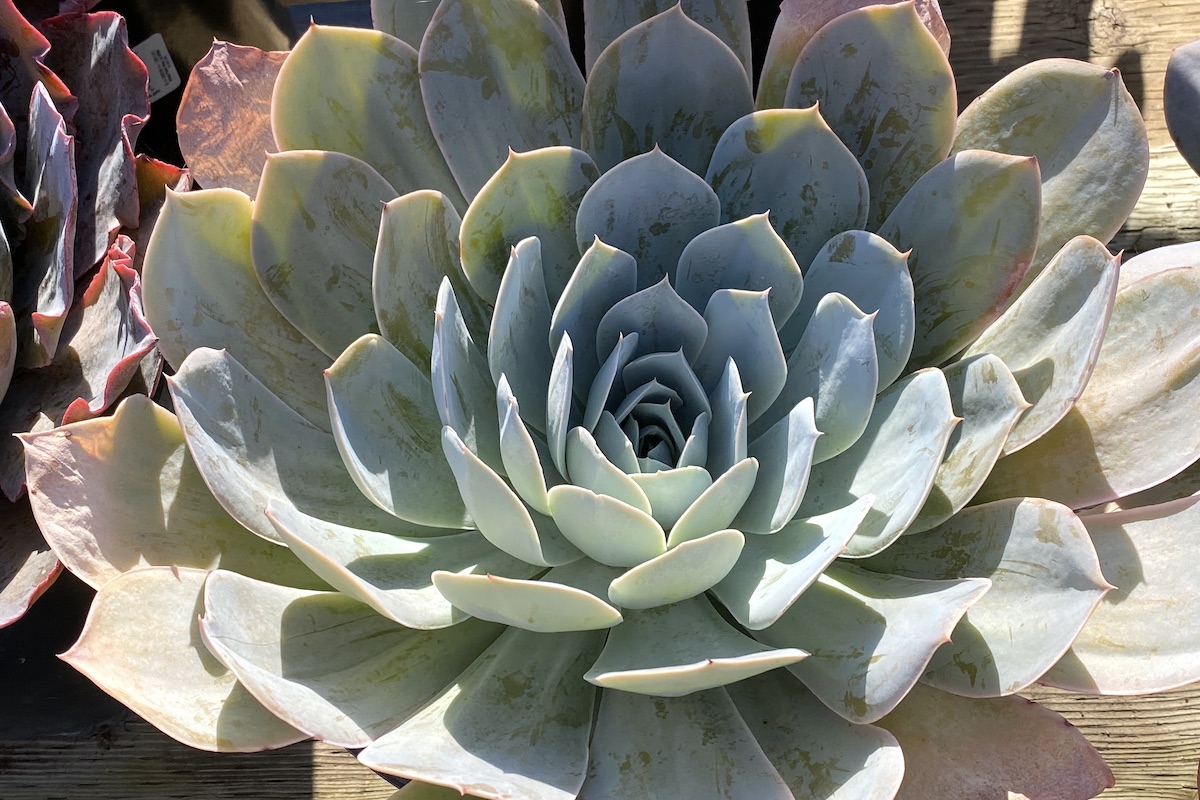
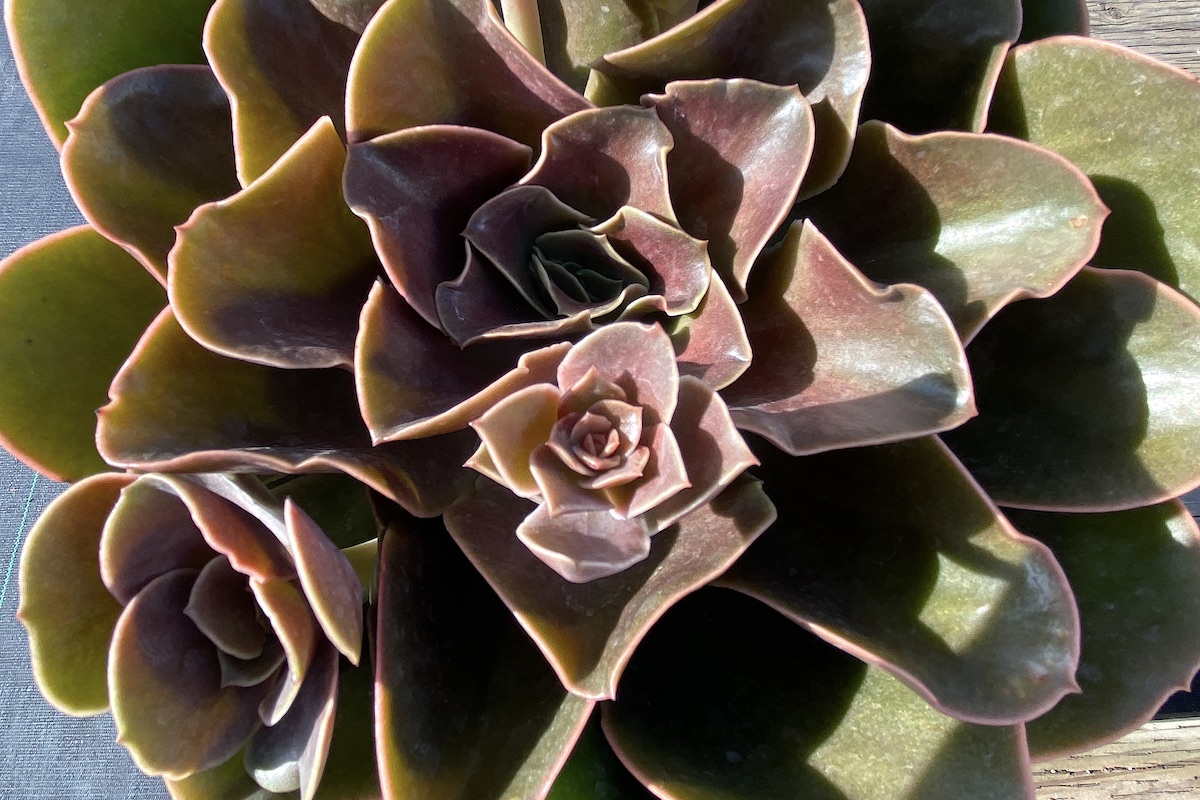
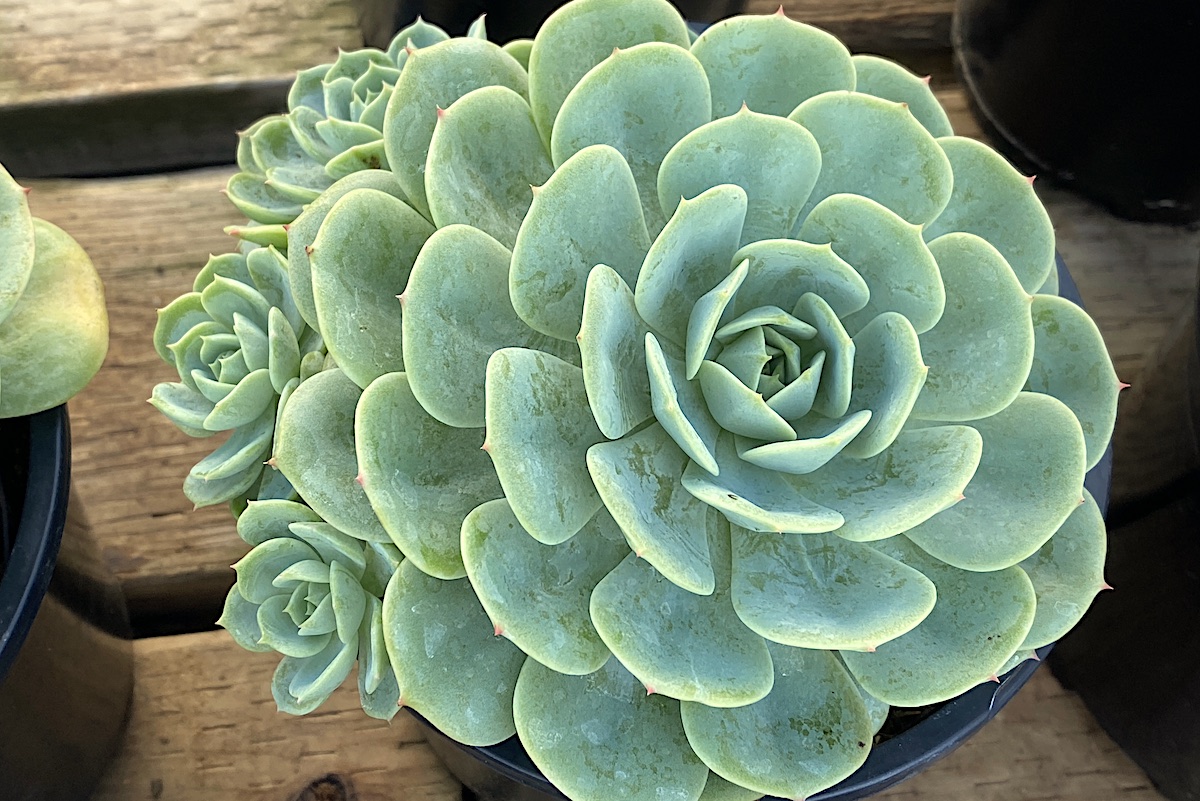
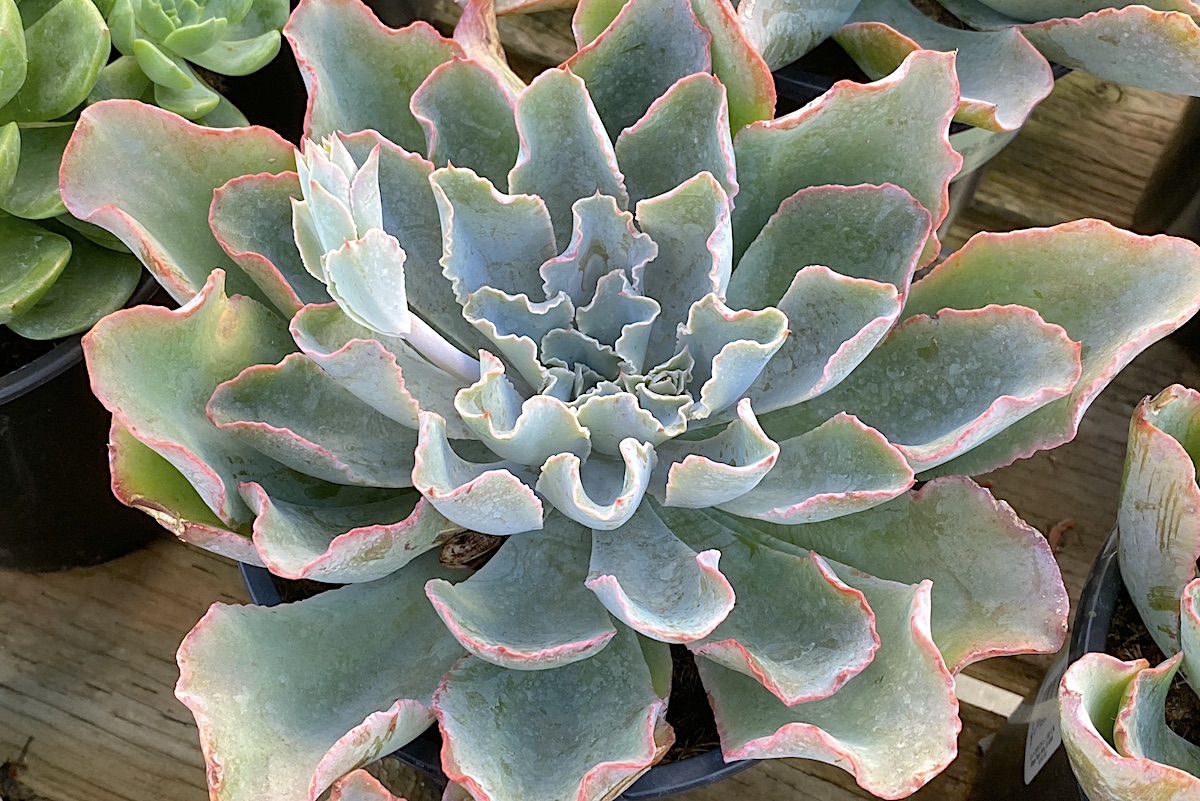
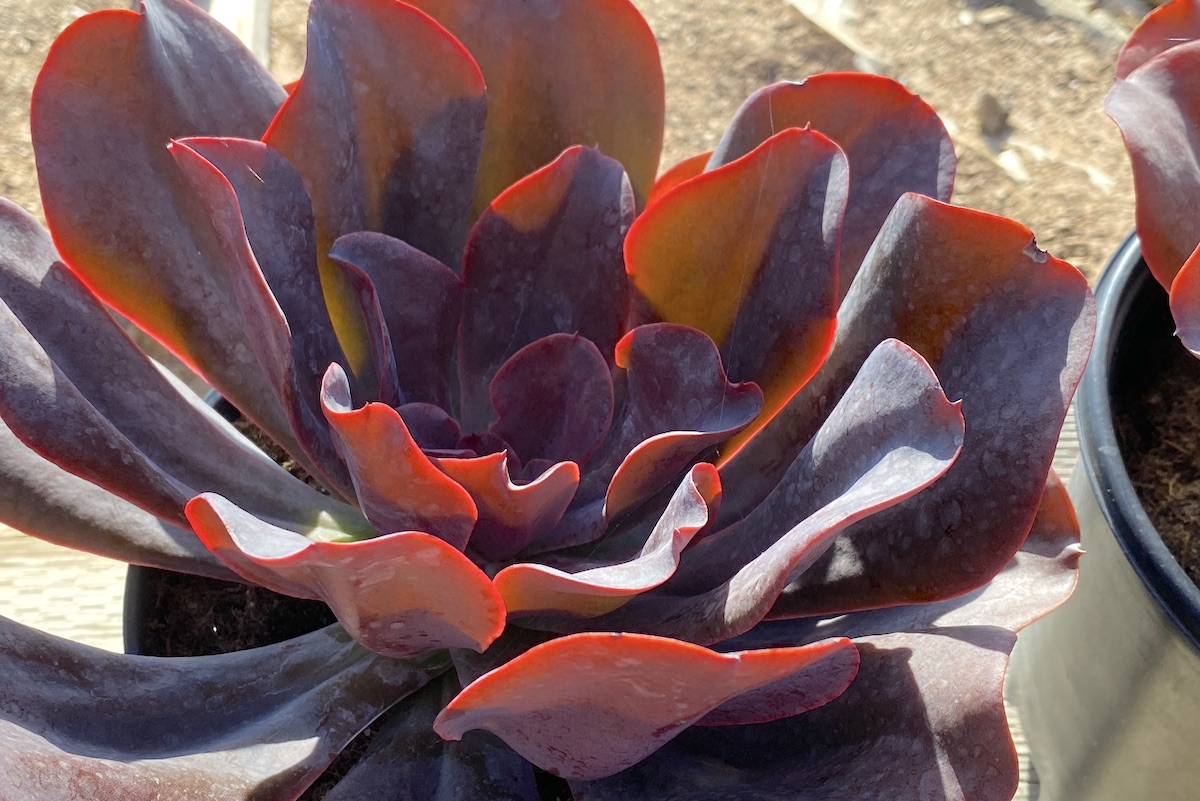
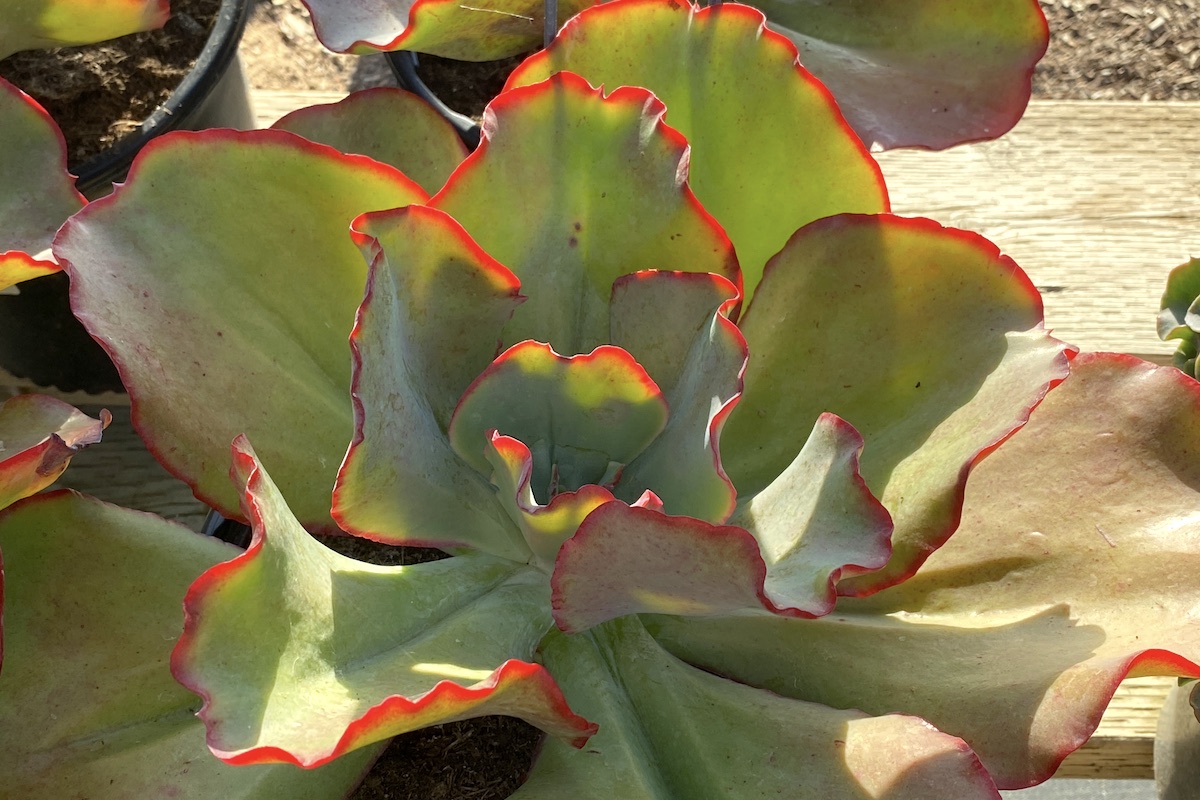
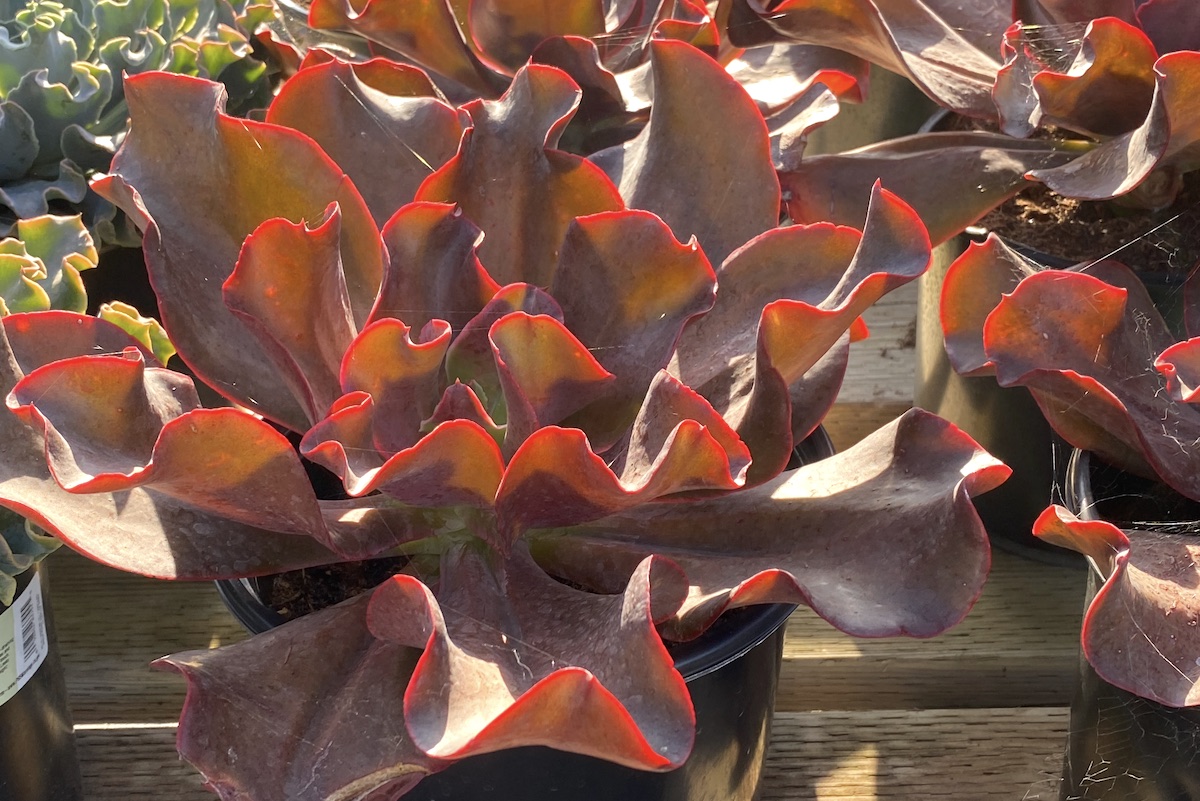
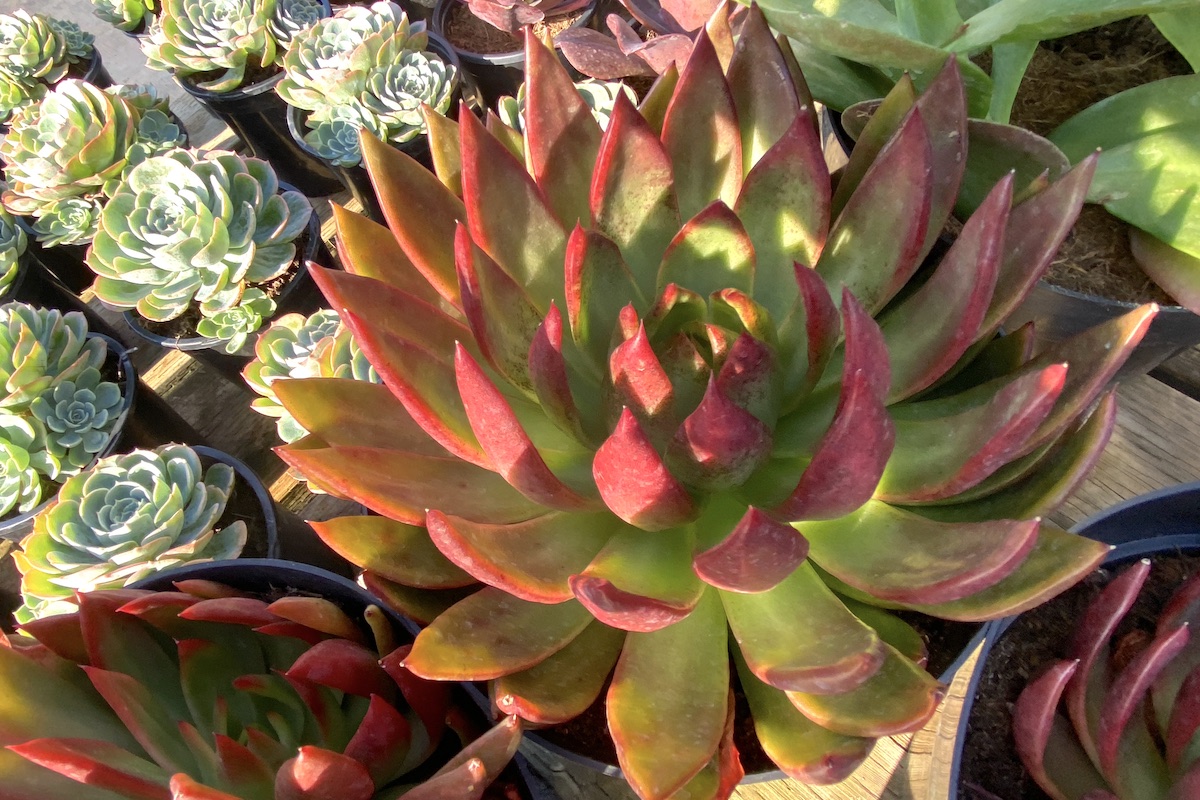
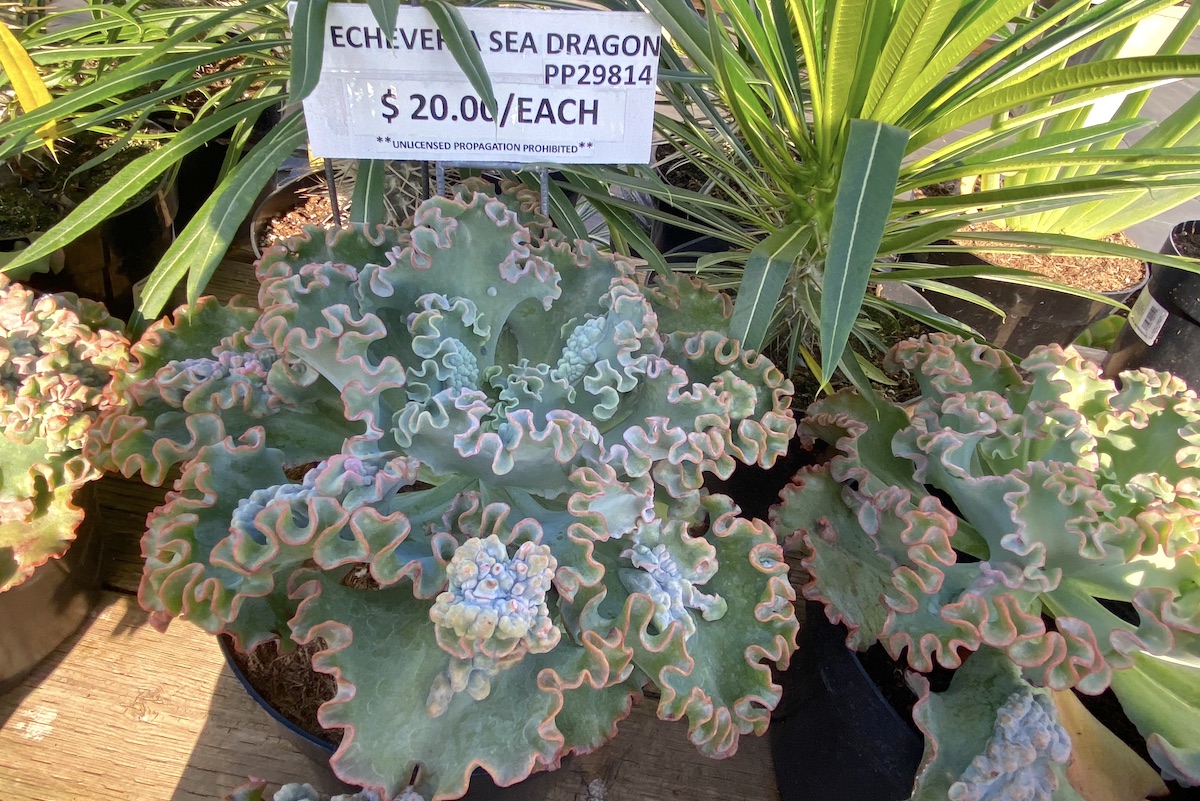
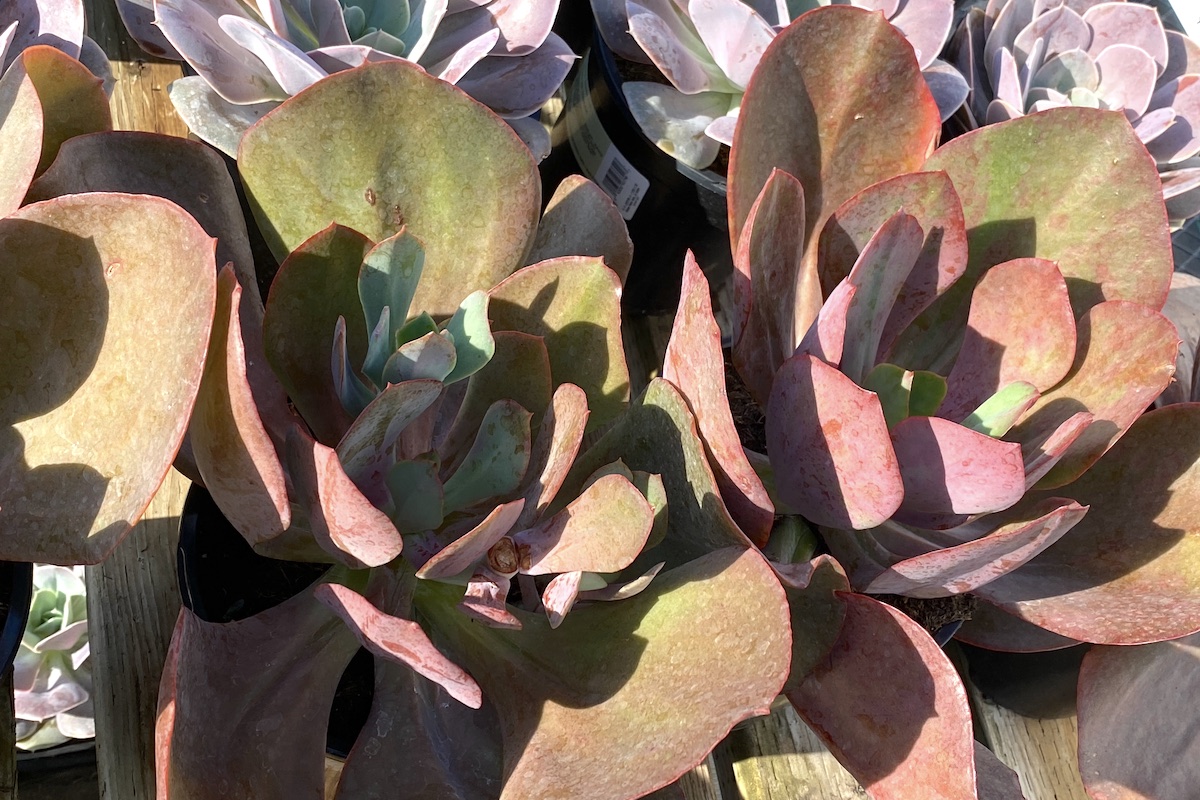
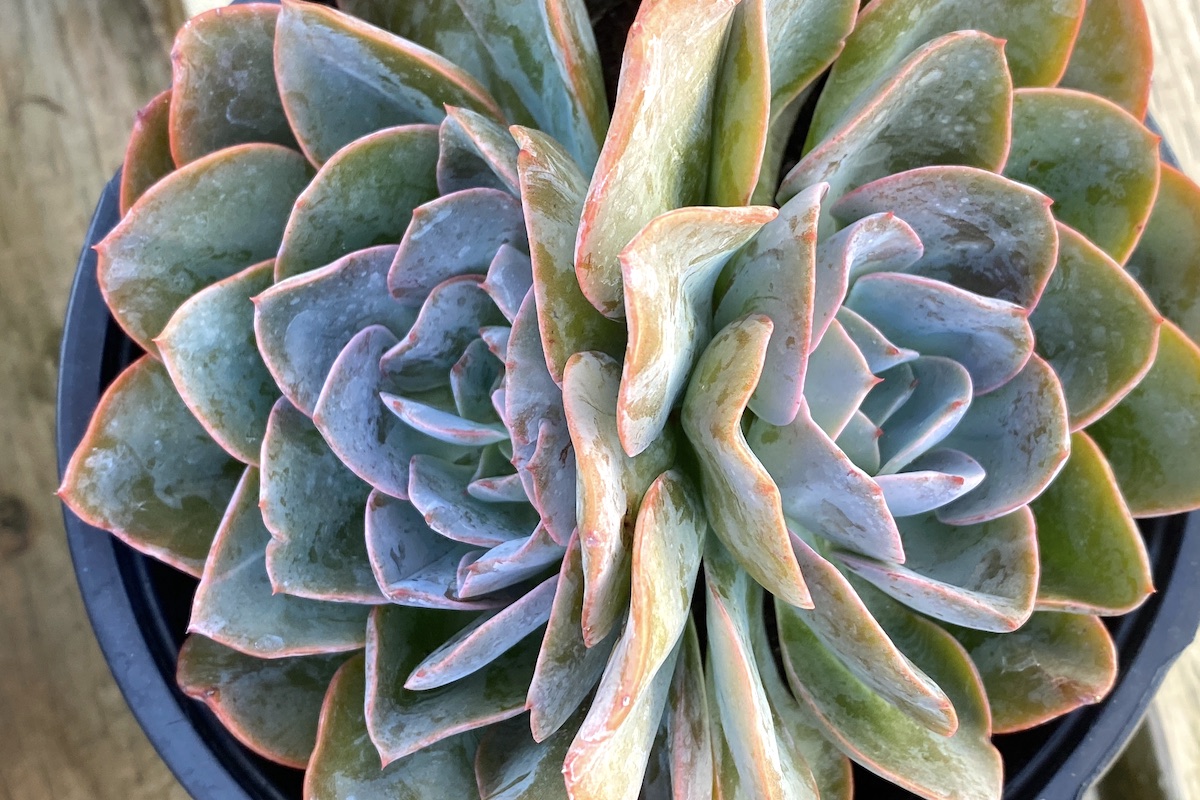
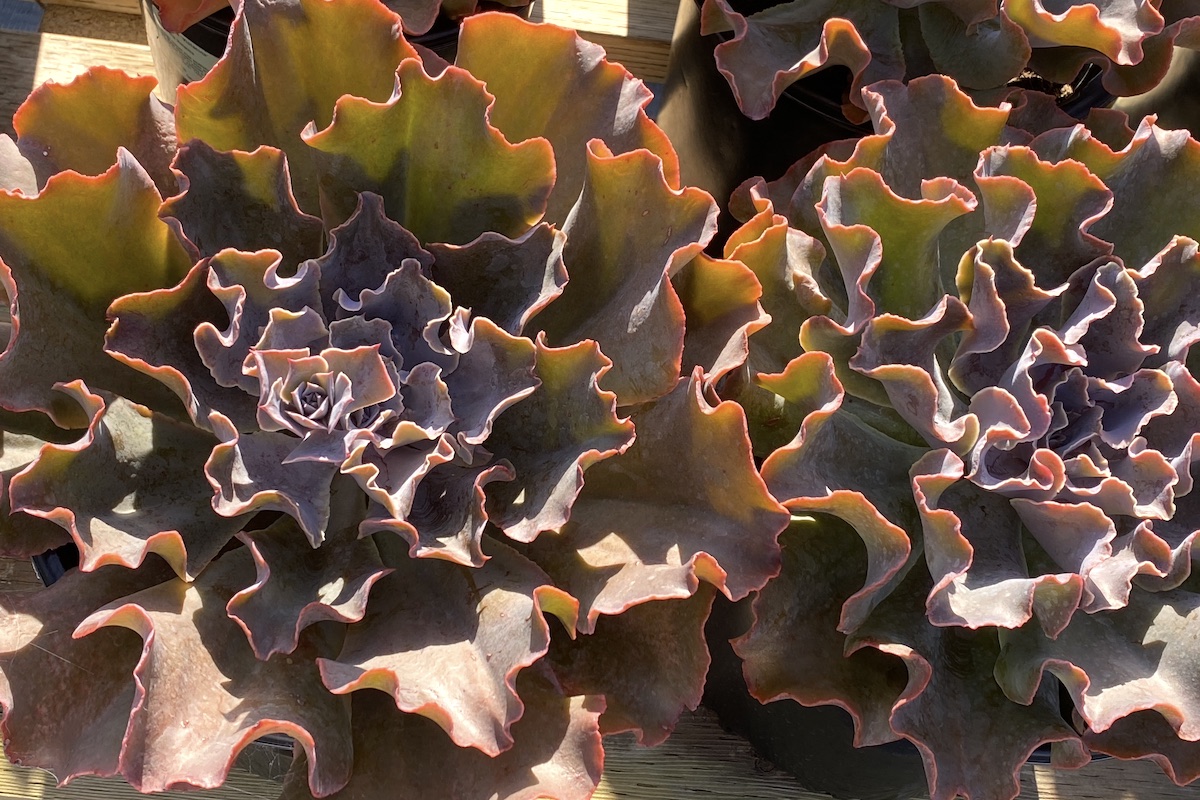
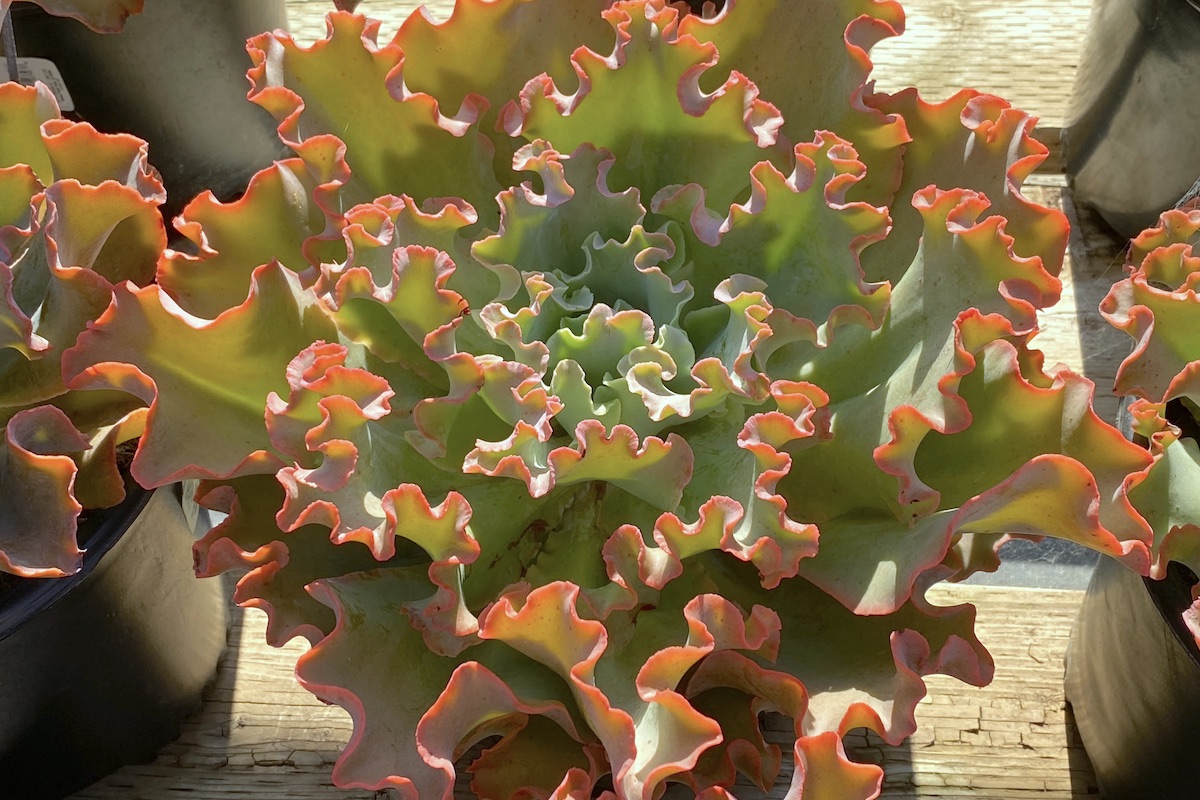
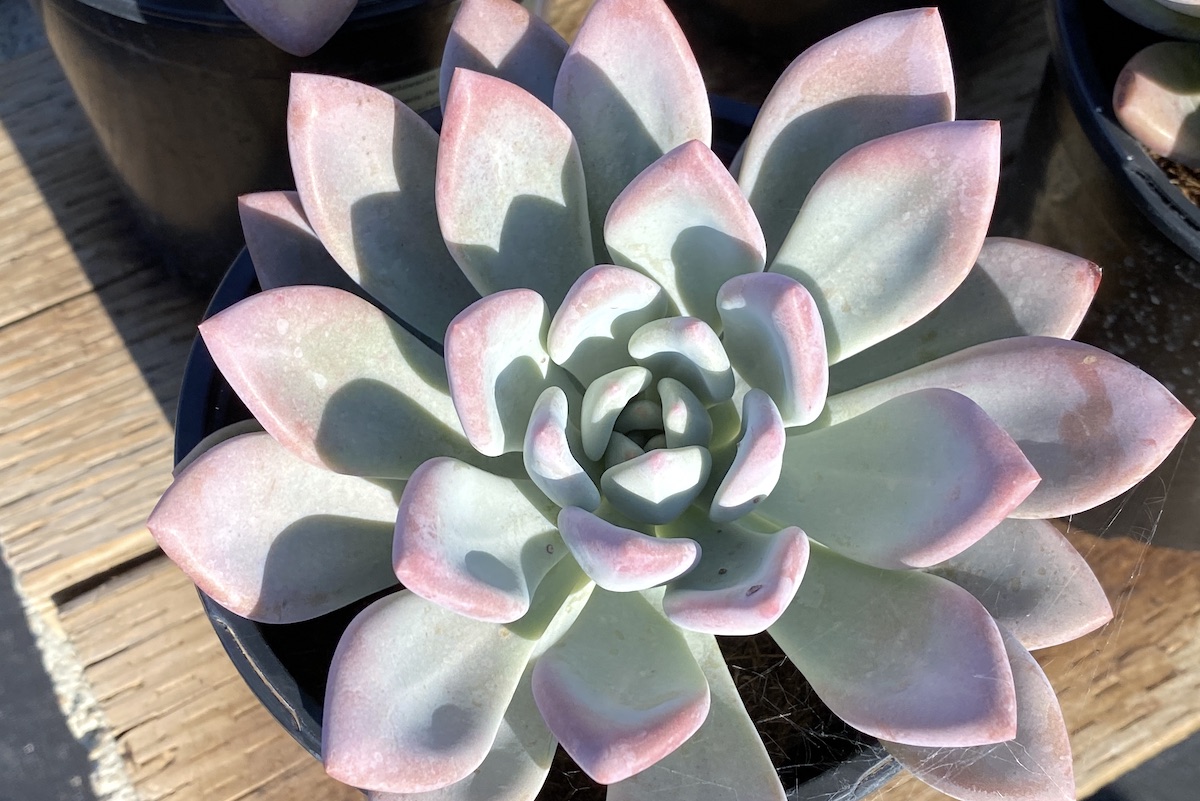
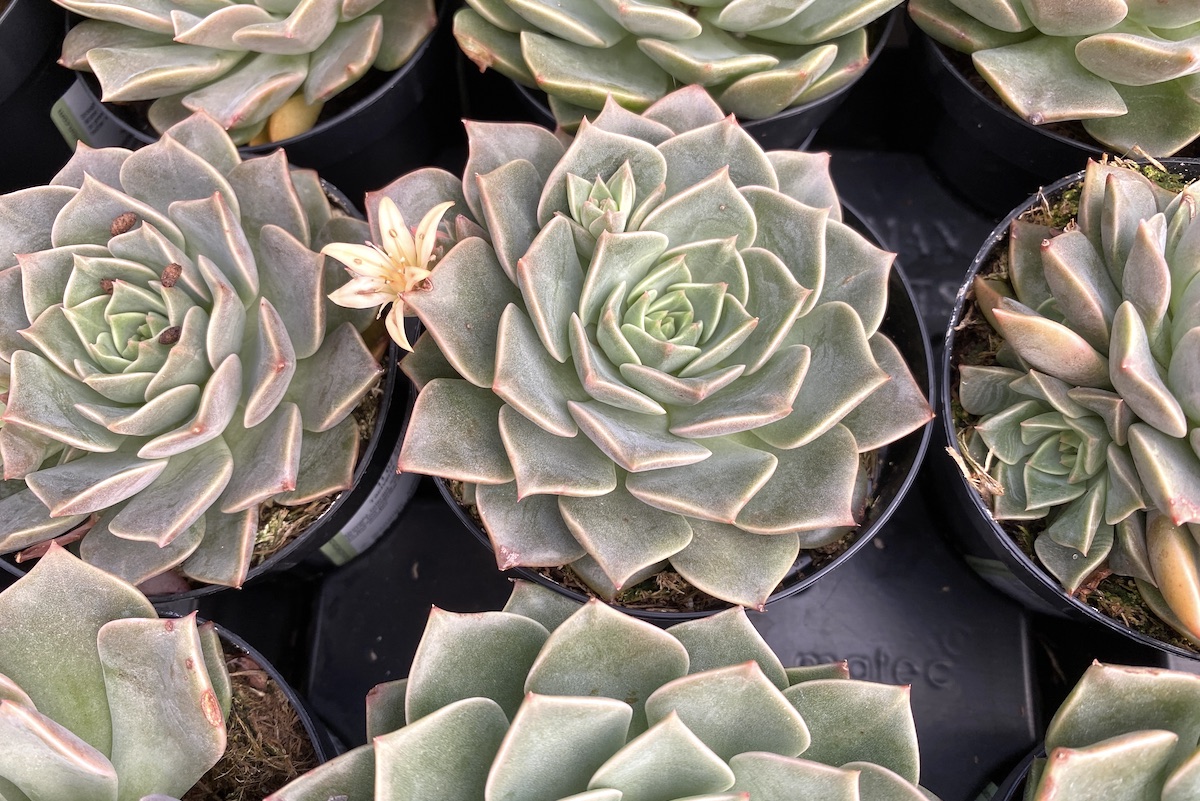
The selection of large (dinner-plate-sized) echeverias at Oasis Water Efficient Gardens right now is astonishing. Great timing, too. Autumn is nearly upon us, and an important end-summer task is refreshing our echeveria gardens. My own occupies several large pots. Annually in late August, I pull off dry lower leaves, deadhead, and enhance the assortment---hence my trip to Oasis.
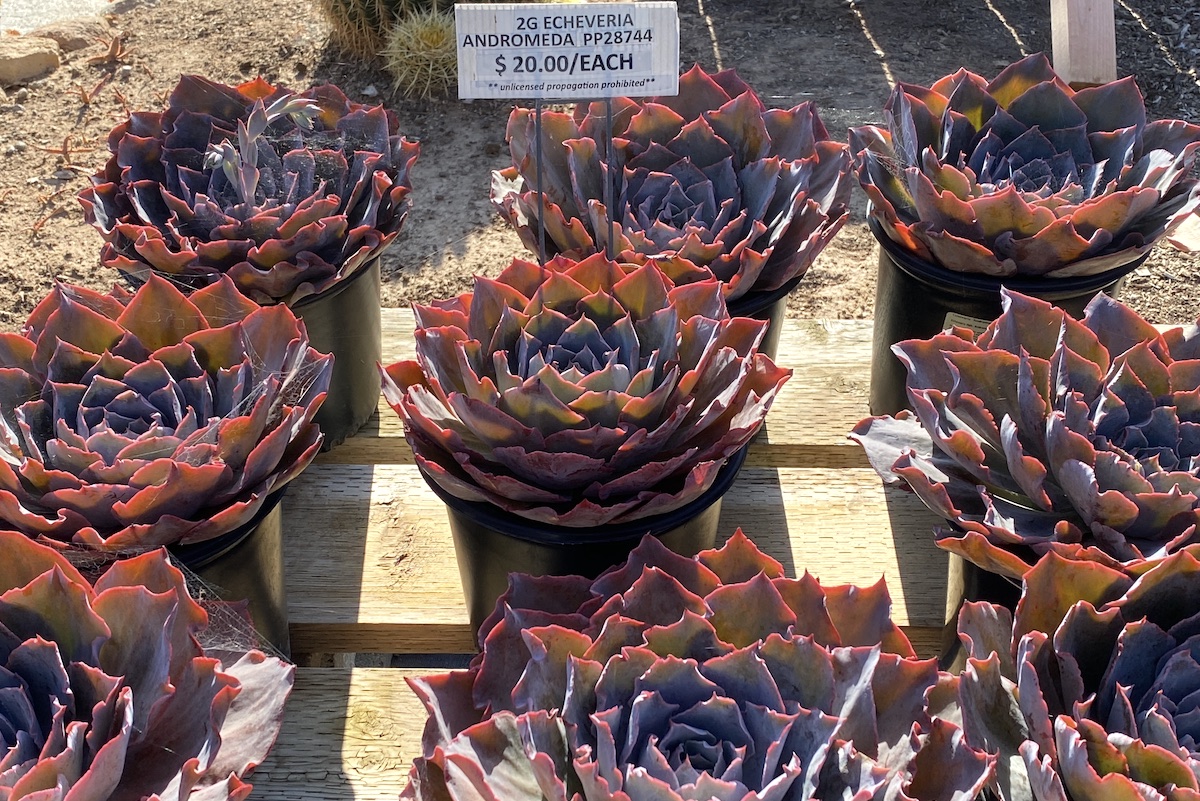
Echeveria 'Andromeda' (c) Debra Lee Baldwin

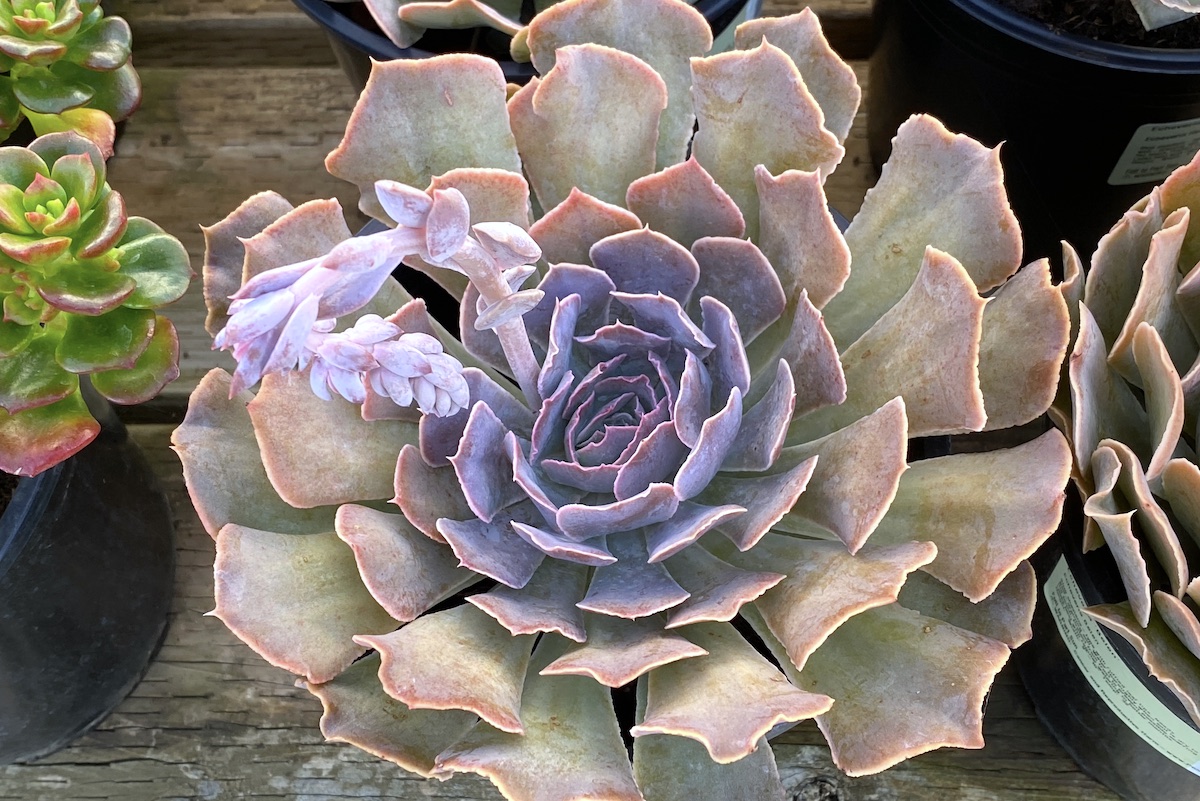
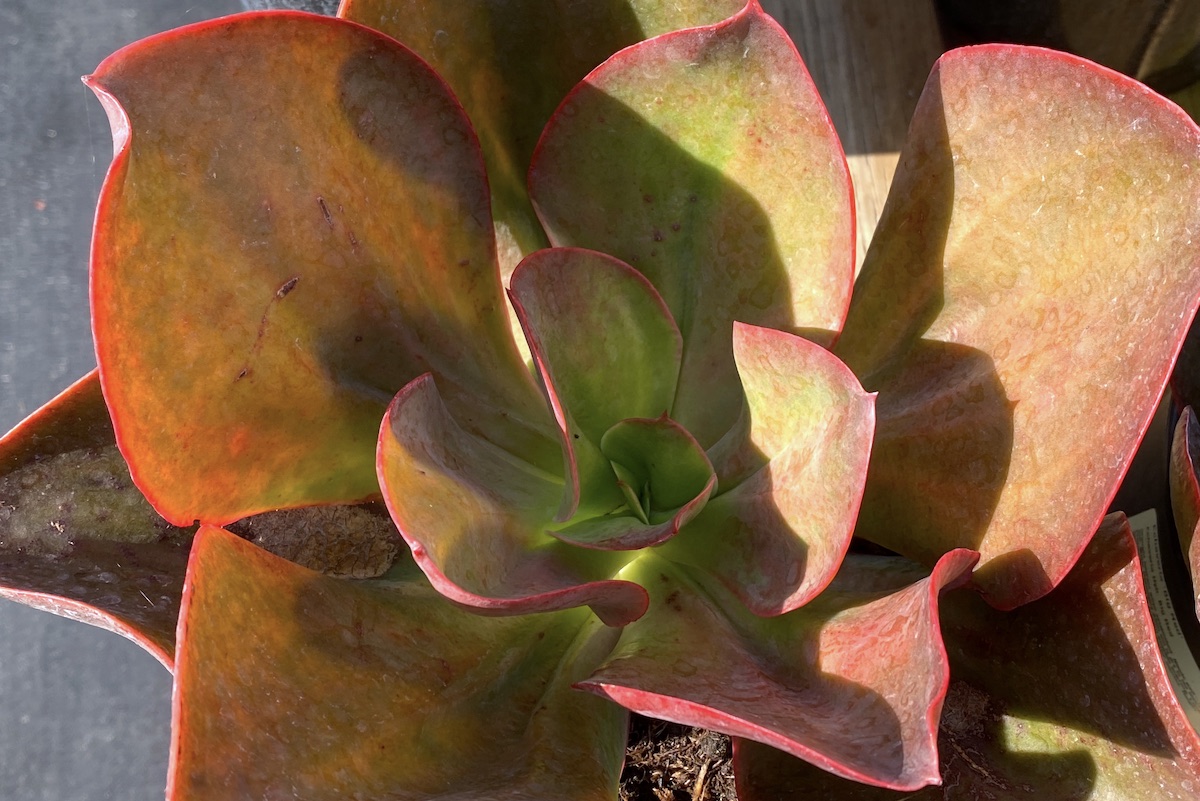
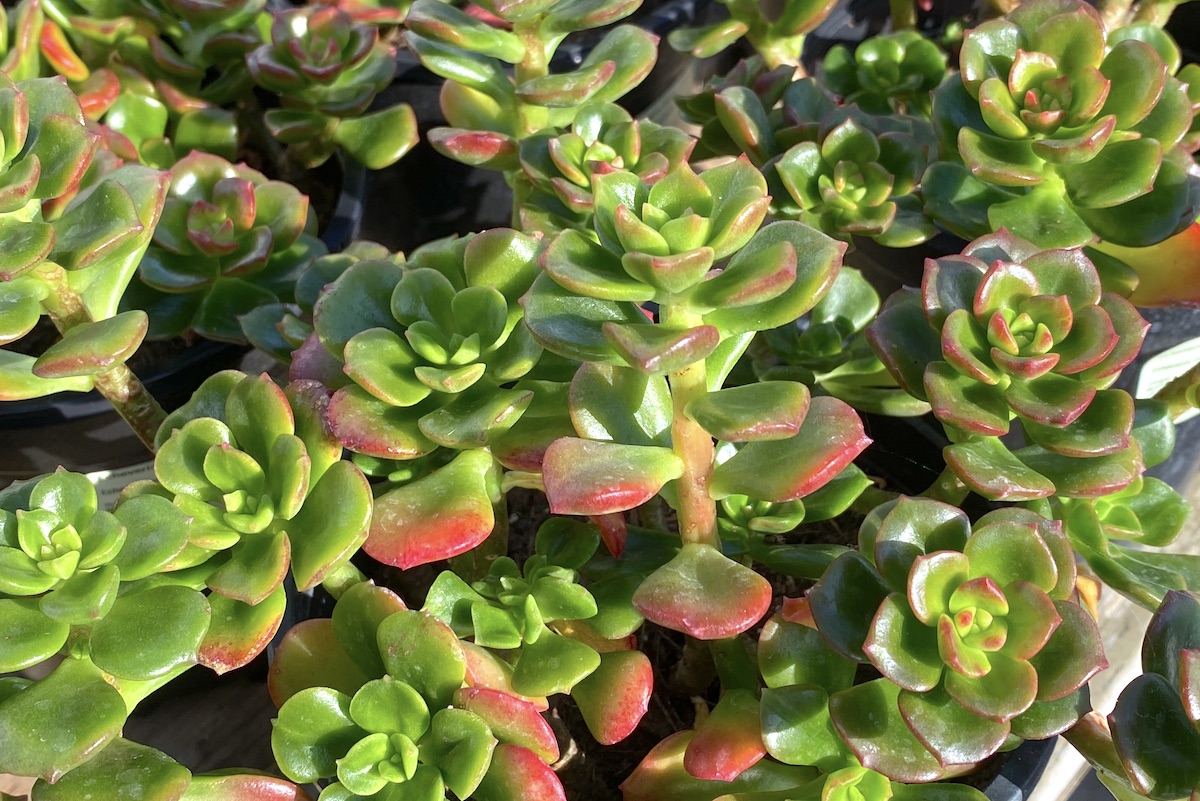
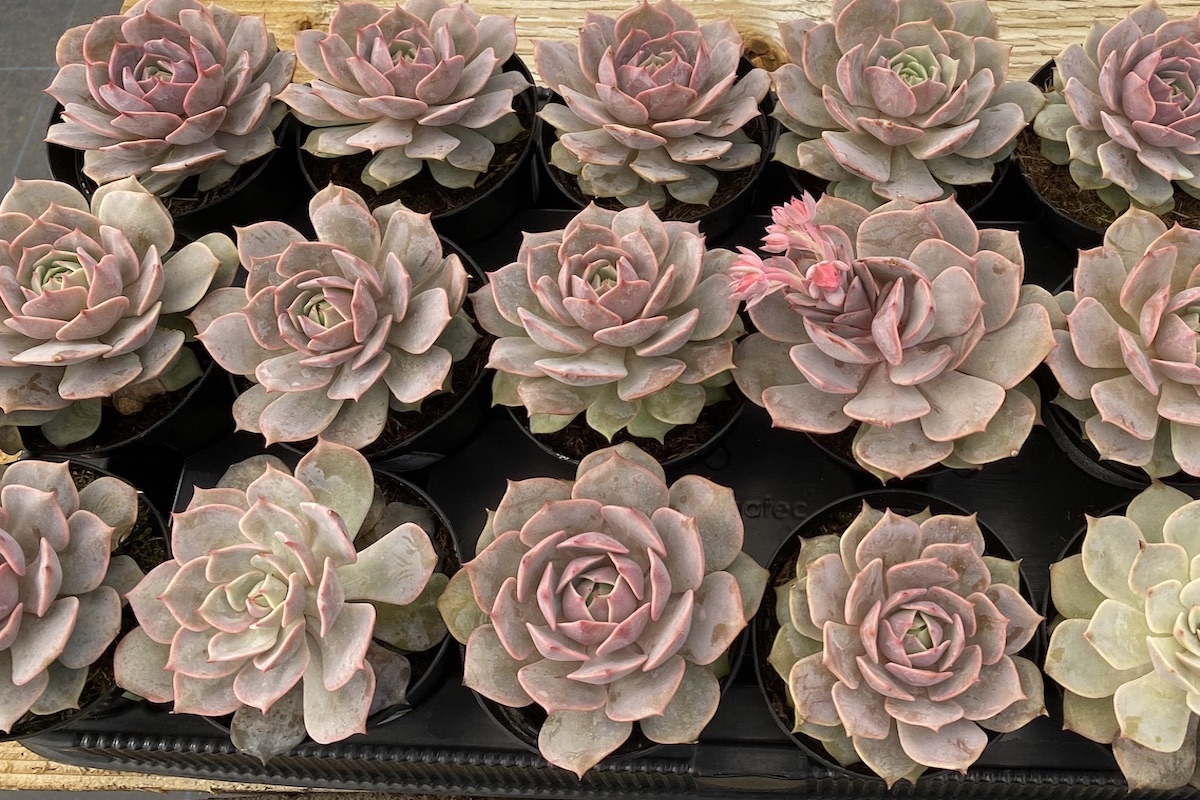
As you'll see in the Gallery below, echeverias at this north San Diego nursery are beyond beautiful.

Oasis is owned by Altman Plants, the largest wholesale grower of succulents. Oasis' selection typically includes patented Altman cultivars (indicated by PP numbers on their tags). Among them: rosy-red Echeveria 'Love's Fire' above, ripple-edged 'Crimson Tide', maroon-pink 'Fireglow', pastel pink 'Angel Kissed', and glossy 'Pink Diamond'.
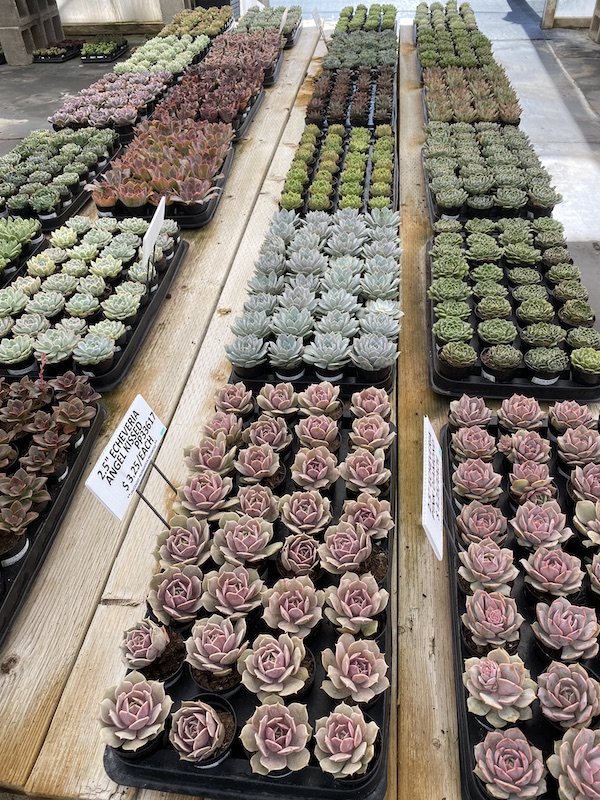
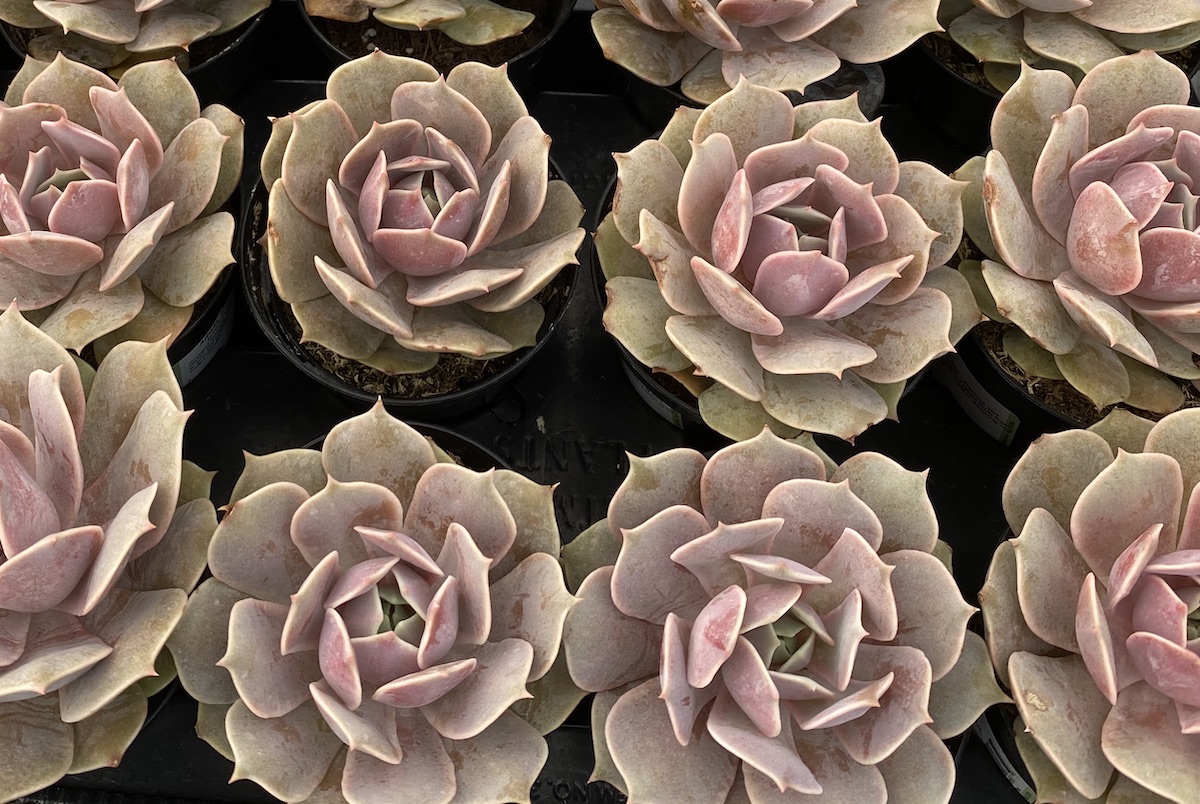
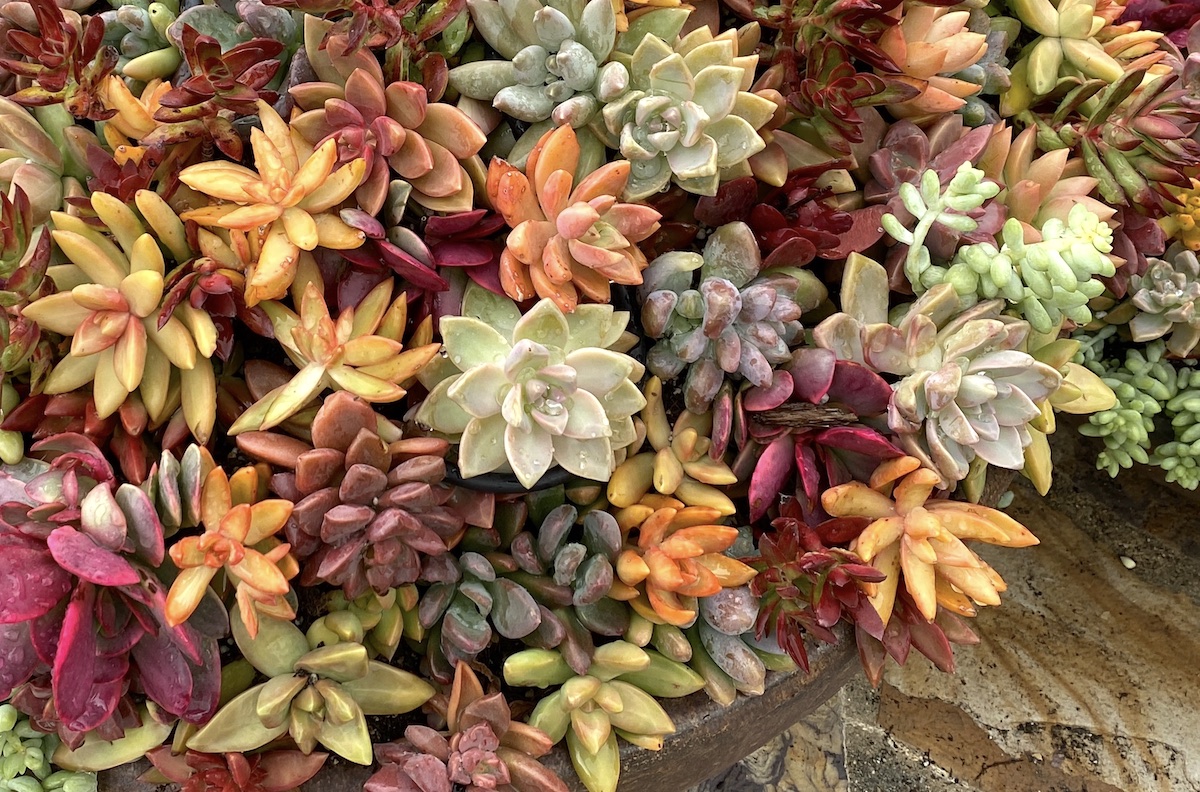
Echeverias at nursery (c) Debra Lee Baldwin

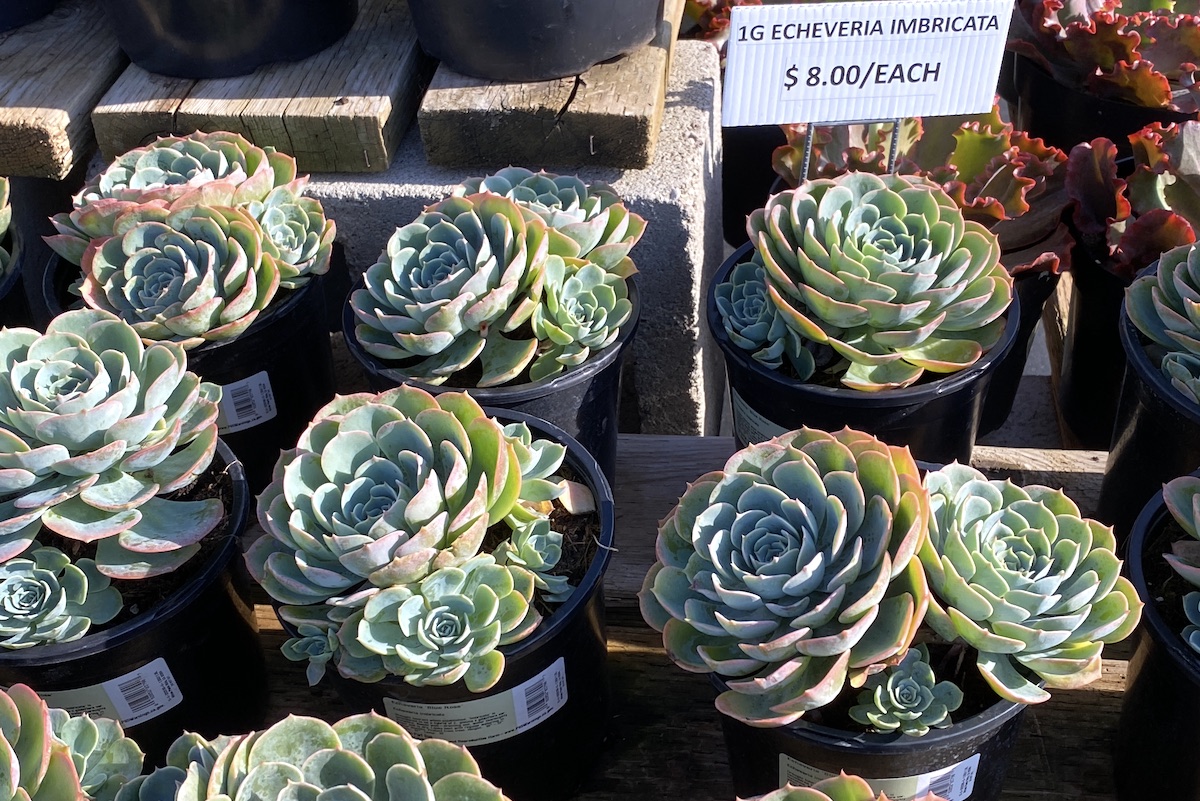
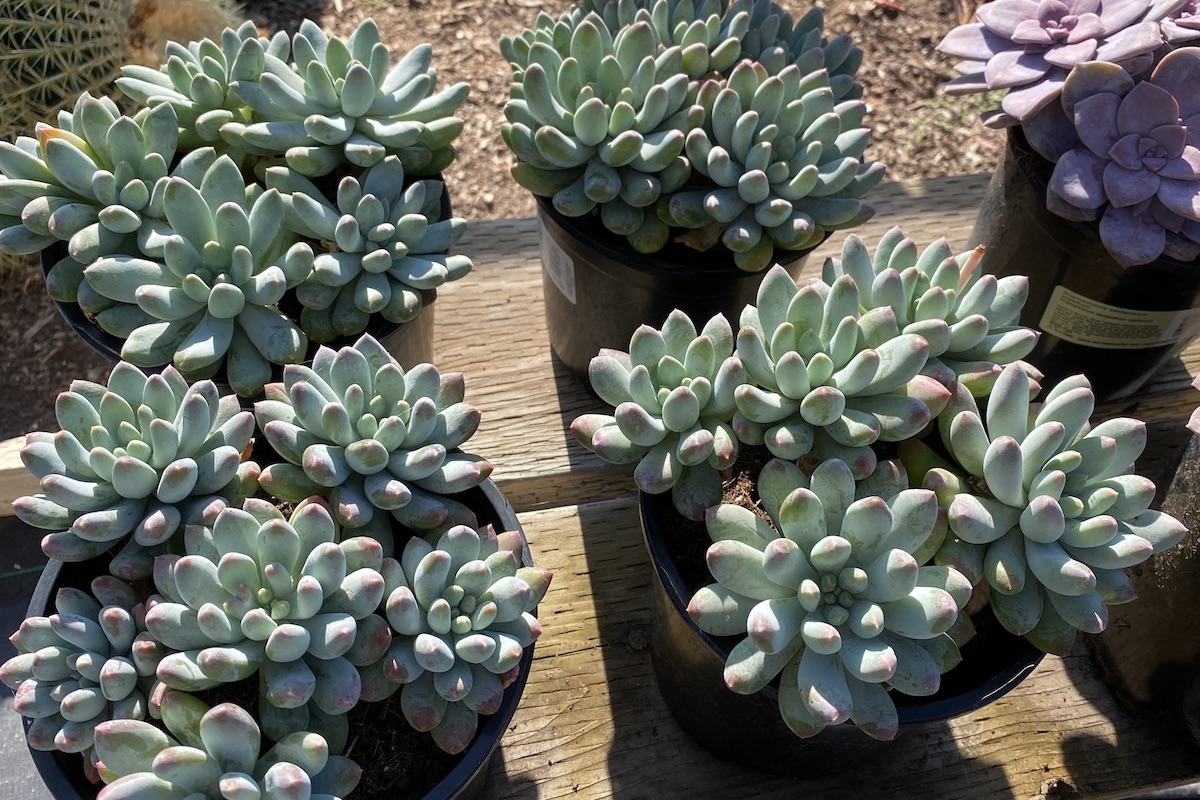
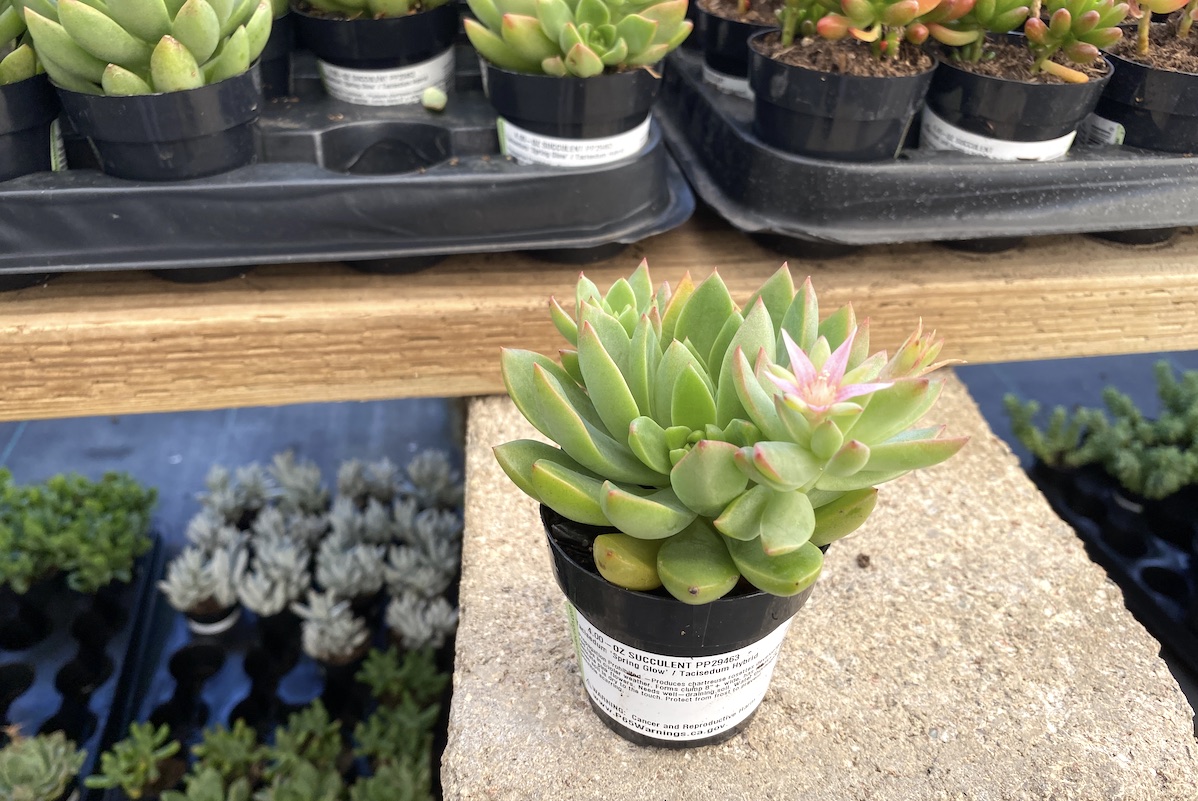
Above are echeverias in smaller pots (3-1/2" and 2-1/2"). Both of the pink varieties in the foreground are patented by grower/hybridizer Altman Plants. 

There were cultivars I'd yet to see---and that's saying a lot---like pastel lavender 'Cream Puff', wavy blue 'Hawaii' and an intergeneric patented hybrid, Tacisedum 'Spring Glow' (x Graptopetalum and Sedum).

I also was delighted to find an old favorite: Echeveria imbricata. This symmetrical, offsetting "blue rose" from Mexico once was easy to find, but after succulents took off, it became so popular it nearly disappeared. Not surprisingly, the price soared.

Speaking of prices! I mean, c'mon: $20 for 2-gallon plants, $8 for one-gallon and 8-inch, $6 for 9cm (3-1/2 inches) and $3.25 for 2.5 inch!

Can't Get There? Tari's On It

But what if you live too far away to pounce? No problem.

I called succulent personal shopper Tari Colbry and asked if she could help...and she's happy to. In fact, Tari promised to do one of her "live sales" from Oasis. These are streamed via Instagram and are a lot of fun. Tari shows a plant, talks a bit about it, and tells viewers what she'll sell it for (plus shipping).

Tari's proud to offer a wide variety of superb plants priced competitively. She visits nurseries and growers, cherry-picks best specimens (mostly succulents, but she's branching out), then sells them during her scheduled sales. Her turnover is fast, so she doesn't post photos of what she has to offer on her website.

Follow Tari on IG so you'll know when this and future live-streaming sales will be. She's off to Ecuador, so it'll be when she gets back in a couple of weeks. Why she's there is a circuitous story that involves cool plants. I'll leave it to her to tell you about it. Just know Tari is one energetic gal who enjoys getting gorgeous plants to people who can't obtain them otherwise. She ships anywhere in the US. See her in action in my video.

Also when she gets back, Tari is moving her inventory from her home to a greenhouse in Vista, CA. It's over 2,000 square feet---more than double what she has now---with lots more space for packing and shipping.

As for Oasis' echeverias...

Below are those I saw mid-August. Do keep in mind availability and quantities change daily. Disclaimer: I am not affiliated with Oasis, and for all I know, they may be dismayed if this results in a stampede. Please don't pester them with phone calls. Contact Tari instead---she's up for it.

Do you see a succulent you simply have to have? Every echeveria I've brought home from Oasis has thrived, and some are huge Check out my own collection. As always, your comments are most welcome!

Gallery
Related Info on This Site
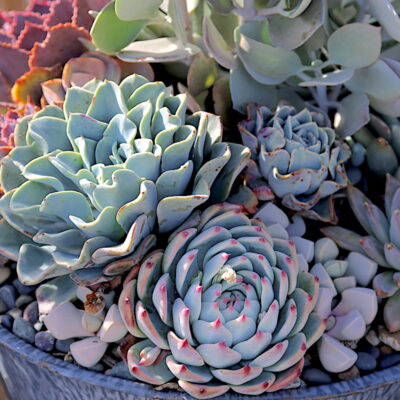
Floral style succulent arrangement (c) Debra Lee Baldwin

Echeveria Info, Photos & Varieties

Echeveria Info, Photos & Varieties How to grow echeverias perfectly, plus an extensive gallery, all ID’d See All Succulent Types Aeonium Agaves Aloes Cactus Crassula Echeveria Euphorbias Ice Plants Kalanchoe Portulacaria Senecio About Echeverias Here you’ll find expert advice to help you grow echeverias perfectly, with a gallery of 150+ beautiful, notable species and cultivars.…
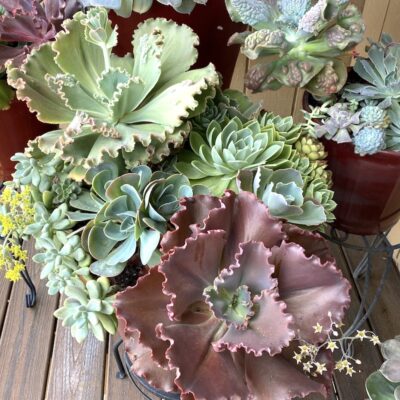
Potted echeveria garden (c) Debra Lee Baldwin

Plant an Echeveria Garden in Pots

Echeverias do great in containers, so why not plant an echeveria garden all in pots? Because echeverias have great color, symmetry and resemble fleshy flowers, my own potted collection suggests an exotic flower garden.
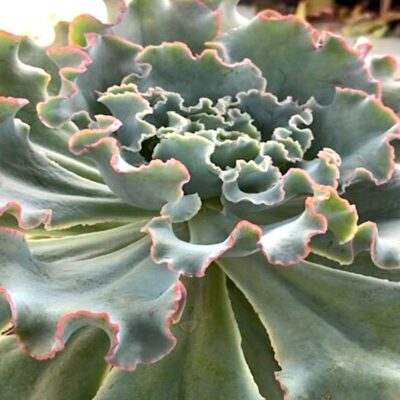
Fancy ruffled echeveria

How to Behead and Replant Echeverias

Fancy ruffled echeverias—those large, flowerlike succulents—eventually need to be beheaded and the rosettes replanted. This is a bother, but it comes with a benefit: New clones will form on old, headless stalks. But not always. Here’s how to ensure success.

The post Echeveria Bonanza at Oasis appeared first on Debra Lee Baldwin. Copyright © Debra Lee Baldwin.


from Debra Lee Baldwin https://ift.tt/pSXNH5B
via IFTTT

viernes, 4 de agosto de 2023

Propagation: What Your Succulents Want You to Know Amazing tips

In my new video I show and explain how your succulents want to propagate, if you help them or not...and whether you like it or not! When propagation happens, you may be delighted or dismayed. Delighted, because you get free plants; dismayed because you get too many.

It all comes down to observation. Succulents are good at telling you what’s important to them. You'll soon discover how yours want to reproduce in your garden or pots. See examples from the video below.

Note: I use the terms "offsets," "plantlets" and "pups" interchangeably to refer to baby plants that grow from the parent via a sort of botanical umbilical cord. Depending on the type of succulent, this pipeline of nutrients might be above or below the soil.

When leaves pop off easily

Succulents with leaves that pop off easily (c) Debra Lee Baldwin

Succulents with leaves that detach easily

You know that little snap when a plump leaf falls off? Leaves of sedums, graptopetalums, pachyphytums, and pachyverias tend to fall off if you merely brush against them. This is infuriating, but do consider the plants’ perspective: They’re simply trying to clone themselves...and you can help. Tuck the fallen leaf where it’ll produce its own little leaves and roots atop the soil beneath the mother plant.

When stems work best for propagation

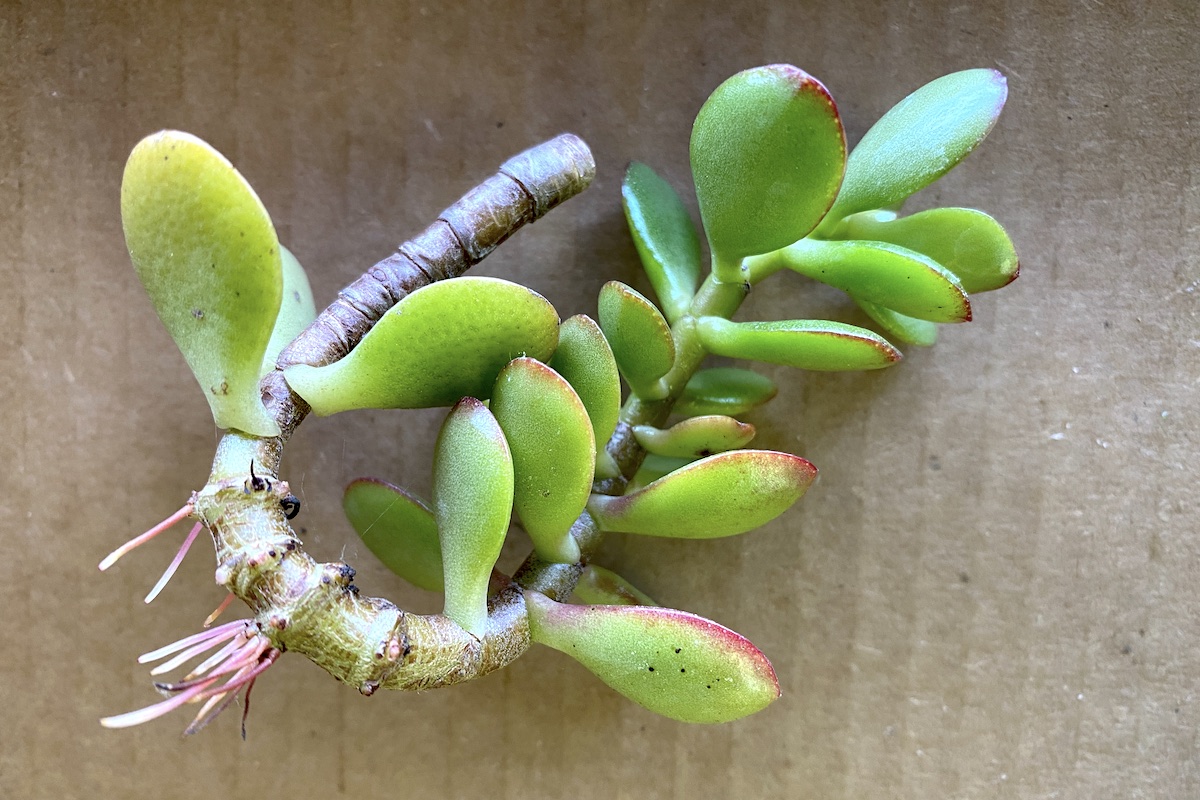
Jade cutting with roots (c) Debra Lee Baldwin

Jade cutting with roots

Succulents with stems propagate readily from cuttings, and jade is one that drops stems for that very purpose. If this fallen jade stem could talk, it would say, “Plant me please.” Notice how drying out a bit has made it curl. It's all set to go, with roots that point downward and leaves that go upward. Both form from meristem (growth) tissue.

What cacti want you to know

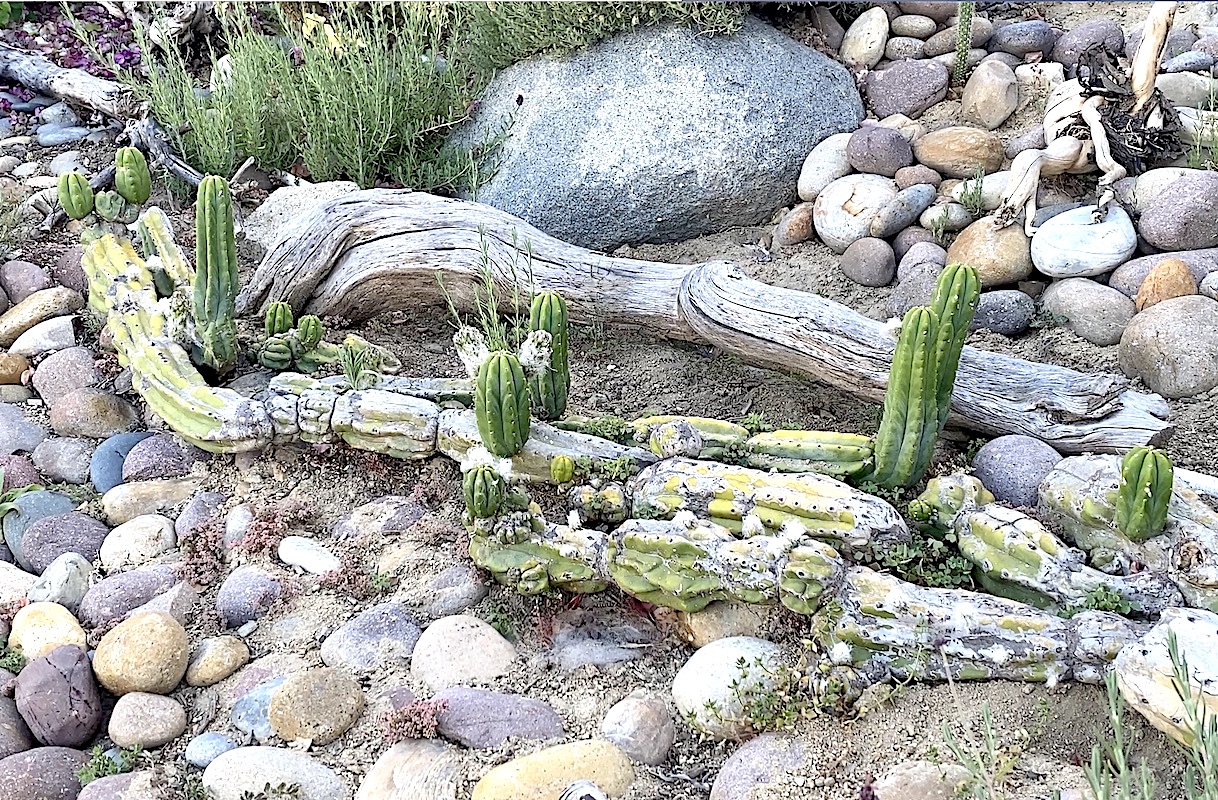
Ceroid cactus with offsets (c) Debra Lee Baldwin

Ceroid cactus with offsets

If you wonder why cacti tend to fall over or break apart easily, consider how doing so helps them propagate. Columnar species tend to be shallow-rooted and top-heavy. By falling over, they're able to launch a family.

What aerial roots are all about

Aeonium with aerial roots (c) Debra Lee Baldwin

Aeonium with aerial roots

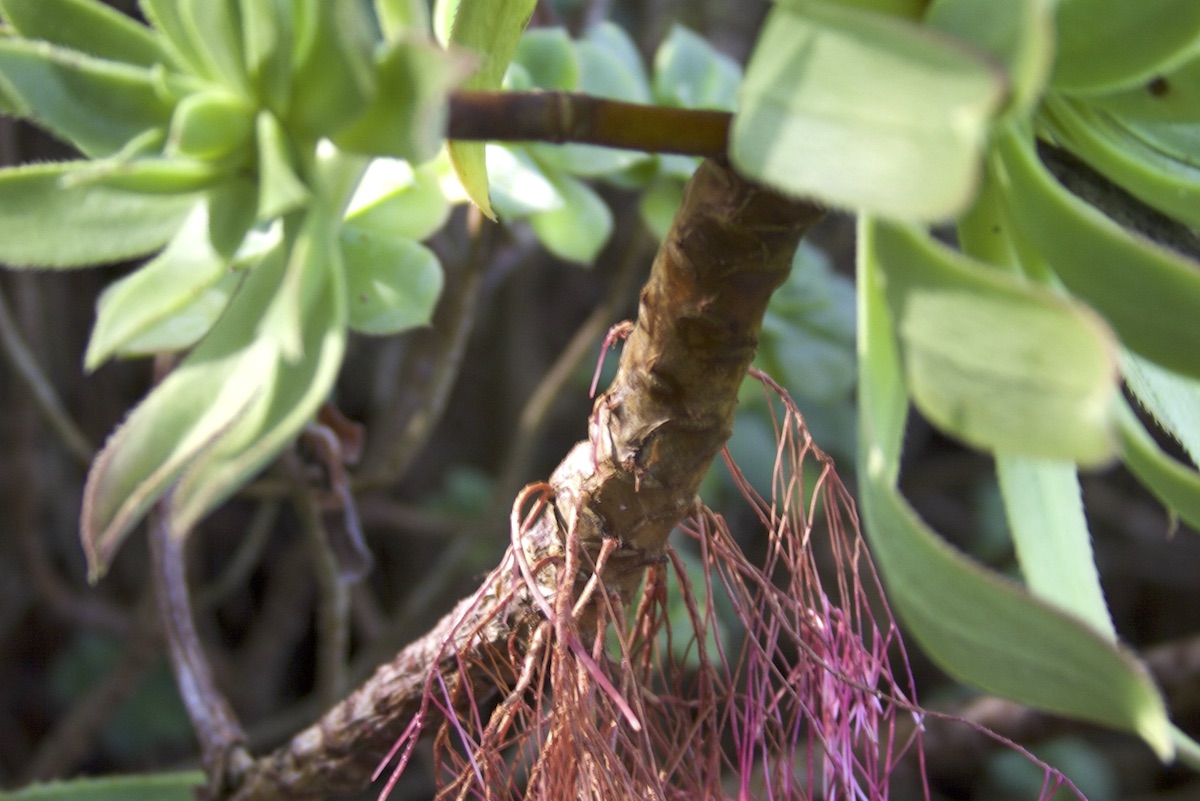
Stems that are still on plants may send roots into thin air, like this aeonium. Aerial roots are almost always about propagation. This succulent is saying, "I'm SO ready to leave home!"

What pups are trying to tell you

Agave americana 'Marginata' and pups (c) Debra Lee Baldwin

Agave americana 'Marginata' and pups

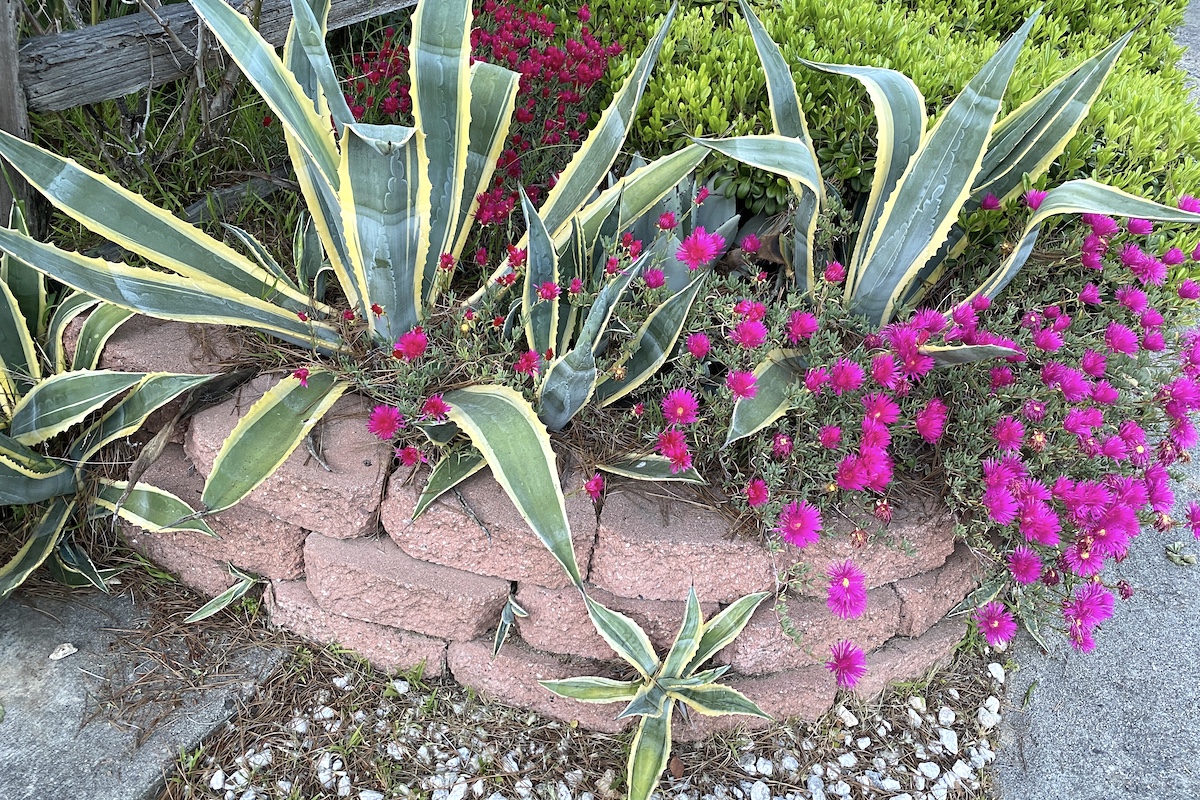
Pups grow from underground roots that run parallel to the surface of the soil. These are white until they break through. When exposed to the sun, root tips form leaves that turn green and photosynthesize.

You may think pups look cool, like the Agave americana “Marginata’ above with feral plantlets poking out of gaps in a terrace. No! They’re baby alligators, cute until they get huge.

When baby plants form on leaves or flower stems

Haworthia fasciata offset (c) Debra Lee Baldwin

Haworthia fasciata offset

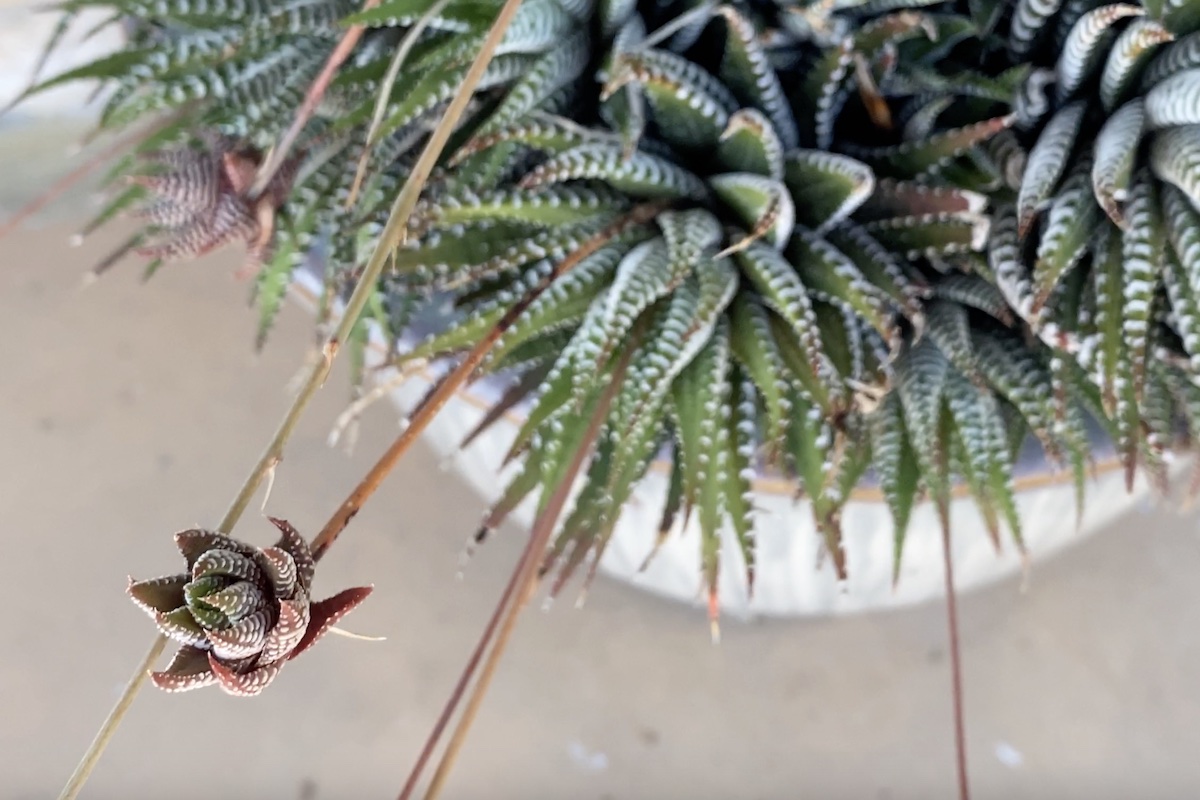
Haworthias are efficient at creating offsets from their roots, but every so often a plant will produce one or more plantlets on a flower spike. As the baby plant grows, it gets heavier. Gravity lowers it to the ground where it takes root---hence the long stem. Other succulents that do this include Crassula multicava and bryophyllums.

When tissue damage produces baby plants

Barrel cactus with offsets (c) Debra Lee Balwin

Barrel cactus with offsets caused by tissue damage

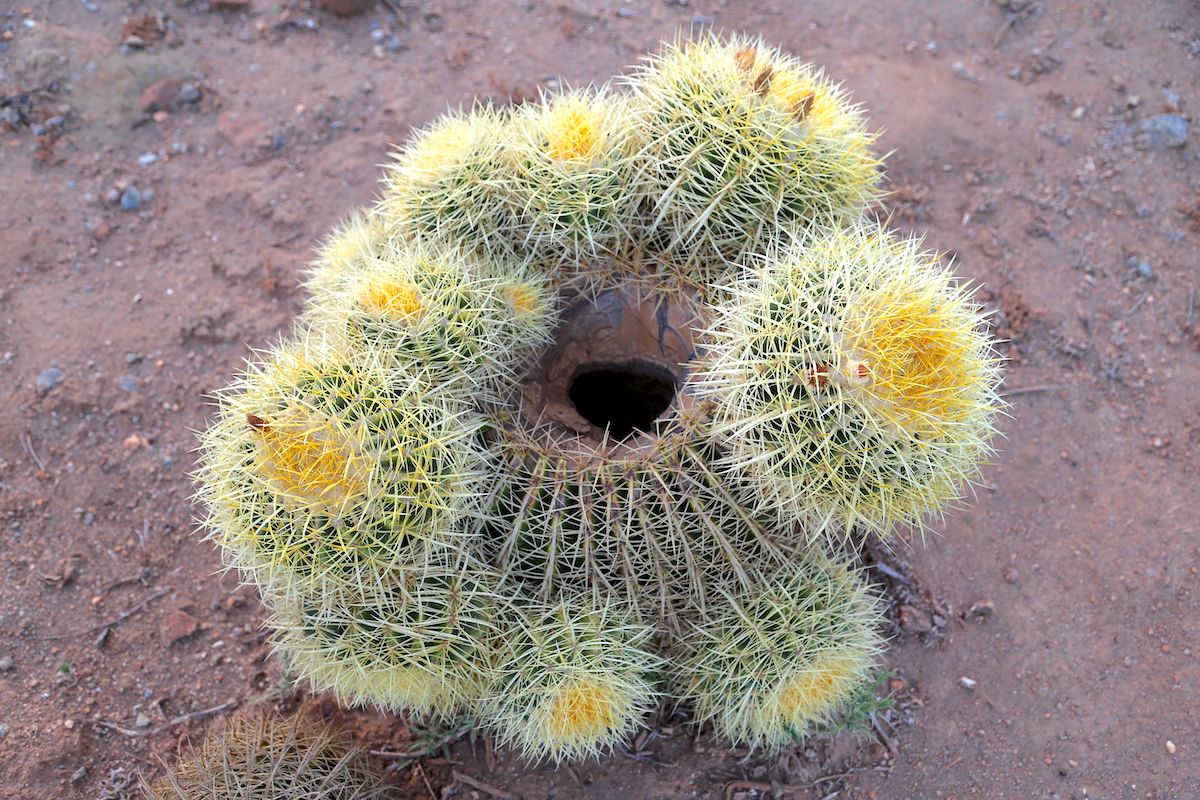
Cacti, agaves, mangaves and other succulents may produce offsets as a result of tissue damage. Above, a gopher ate the root of this barrel cactus up into its core, which stimulated the plant’s meristem tissue. Damaging the meristem is a method professional growers and collectors use to propagate succulents. They may, for example, cut out the cores of agaves, then remove the little clones that result.

What yuccas want you to know

Yucca aloifolia (c) Debra Lee Baldwin

Yucca aloifolia started from cuttings

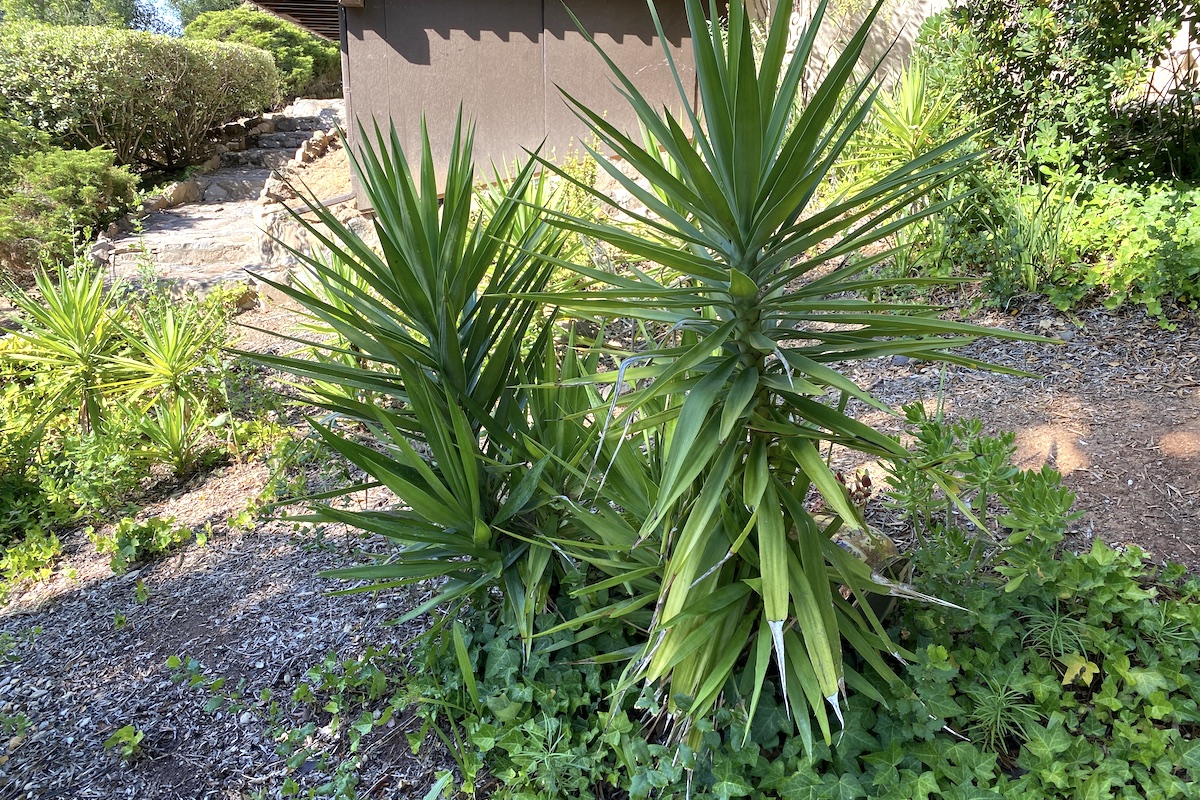
Because a yucca’s lower trunk is a water tank, it can get by on rainfall alone once established. Don’t plant a yucca near your home’s foundation, pipes or anything that an ever-expanding, bulbous base might encroach upon. I prune my yuccas to make them fuller and more shrublike. And if I want more yuccas, the cuttings root readily.

When succulents need your help

Echeveria in need of beheading (c) Debra Lee Baldwin

Echeveria in need of beheading

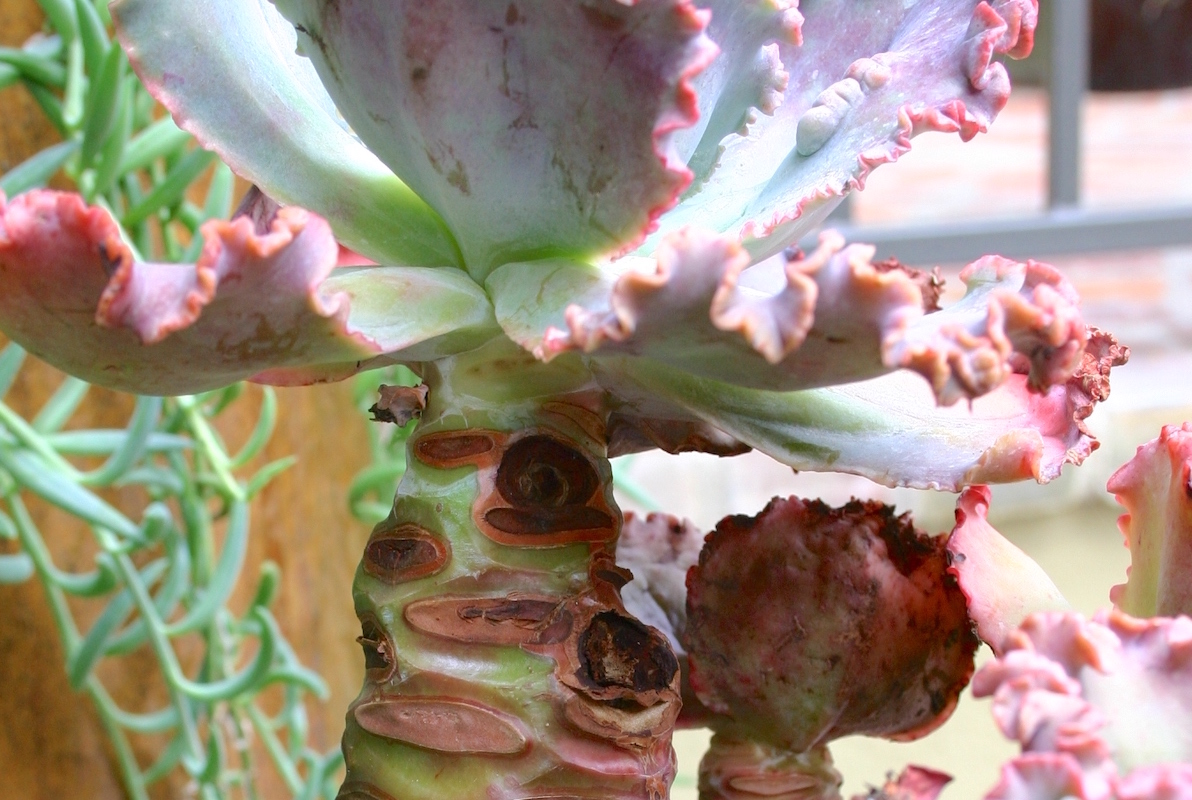
Leggy aeoniums and echeverias that have ever-smaller rosettes atop naked stems can use your help with propagation. Cut off the top along with enough stem to anchor the rosette, set it aside until roots form, then plant in good soil.


The above is merely an overview of the 18-min video. Types of succulents in the video include sedums, agaves (large and small), echeverias, aeoniums, crassulas, graptoveria, graptosedum, cacti (paddle, columnar, spherical), kalanchoes (bryophyllums), sempervivums, aloes, euphorbia, haworthias, stapeliads and yuccas.

Have you had an interesting or potentially helpful experience propagating your succulents? Please share it in the Comments below! 

Related Info On This Site

How to Propagate Succulents

How to Propagate Succulents Learn the many ways to make more succulents from existing plants Recognize growth-producing tissue Most succulents can be propagated vegetatively—via stem cuttings, pulling apart offsets, or rooting leaves. The key is to locate the growth tissue that grows roots. This meristematic tissue is at… bands on stems where leaves once were attached the base…

Succulent Basics, Must-Do’s, FAQs, and Essentials for Success

Below are succulent basics, must-do’s and answers to FAQs—the essentials for growing succulents successfully. If all this is new to you, you’ll want to refer to this page often. And even if you’re experienced, you’ll find it a great resource!

The post Propagation: What Your Succulents Want You to Know appeared first on Debra Lee Baldwin. Copyright © Debra Lee Baldwin.


from Debra Lee Baldwin https://ift.tt/PC8EkDp
via IFTTT

jueves, 20 de julio de 2023

I’m in Architectural Digest! Sadly… Amazing tips

I'm in Architectural Digest!  Sadly, they didn't interview me about design...which is a little disappointing because I wrote Designing with Succulents and was a regular contributor to Better Homes & Gardens and Sunset. That said, being in AD is a huge honor. Plus they used my photos (example above).

The topic: How to propagate succulents

In the article I explain how to start succulents from cuttings, pups, offsets and leaves. Does that sort of thing interest you? You'll find plenty of good info here on my site and on my YouTube channel. And of course, if you like, you can read the AD article.

Btw, I gave those links to the writer and also explained how to start succulents from cuttings, pups, offsets and leaves. We talked for over an hour with email follow-ups. Even so, the article has several misconceptions and at least one egregious error. If you spot them, kudos to you! Do share them (or if you think I'm overreacting) in the Comments below.

I was in The New Yorker recently, too.

That article also is not about design, but nevertheless is an honor (many thanks to Jeanne and Barry Meadow for bringing it to my attention). It references a book I wrote pre-succulents: Taco Titan, The Glen Bell Story.

What? You never heard of it?

Well, after I profiled Mr. Bell for the San Diego Union-Tribune, Bell Enterprises and Taco Bell Corp. wanted me to do his biography. I'm proud of the book; it's a good read. After it came out, KFC asked, but I declined doing one about The Colonel. If I hadn't, what do you suppose I'd be doing today? Speculations welcome in the comments below.

Related Info:

How to Propagate Succulents

How to Propagate Succulents Learn the many ways to make more succulents from existing plants Recognize growth-producing tissue Most succulents can be propagated vegetatively—via stem cuttings, pulling apart offsets, or rooting leaves. The key is to locate the growth tissue that grows roots. This meristematic tissue is at… bands on stems where leaves once were attached the base…

TV, Radio and Media

TV, Radio and Media Features, interviews and articles Here you’ll find excerpts and links to a few of many media articles and interviews in which Debra Lee Baldwin is featured and quoted as an expert on succulents and their design uses. Included are book reviews, radio, podcasts, TV news, Wall St. Journal, Washington Post, KPBS,…

The post I’m in Architectural Digest! Sadly… appeared first on Debra Lee Baldwin. Copyright © Debra Lee Baldwin.


from Debra Lee Baldwin https://ift.tt/xvmsRjr
via IFTTT

sábado, 8 de julio de 2023

Discover Stacked Crassulas Amazing tips

My love affair with stacked crassulas began three decades ago. On a garden tour I saw a succulent with leaves stacked like pancakes along pendant stems. I took photos and finally tracked down the plant (Crassula perforata) several years later. Today stacked crassulas are much easier to come by, and desirable varieties number in the dozens.

Crassula perforata in Mark Rafter pot (c) Debra Lee Baldwin

Crassula perforata in a Mark Rafter pot

What's a stacked crassula?

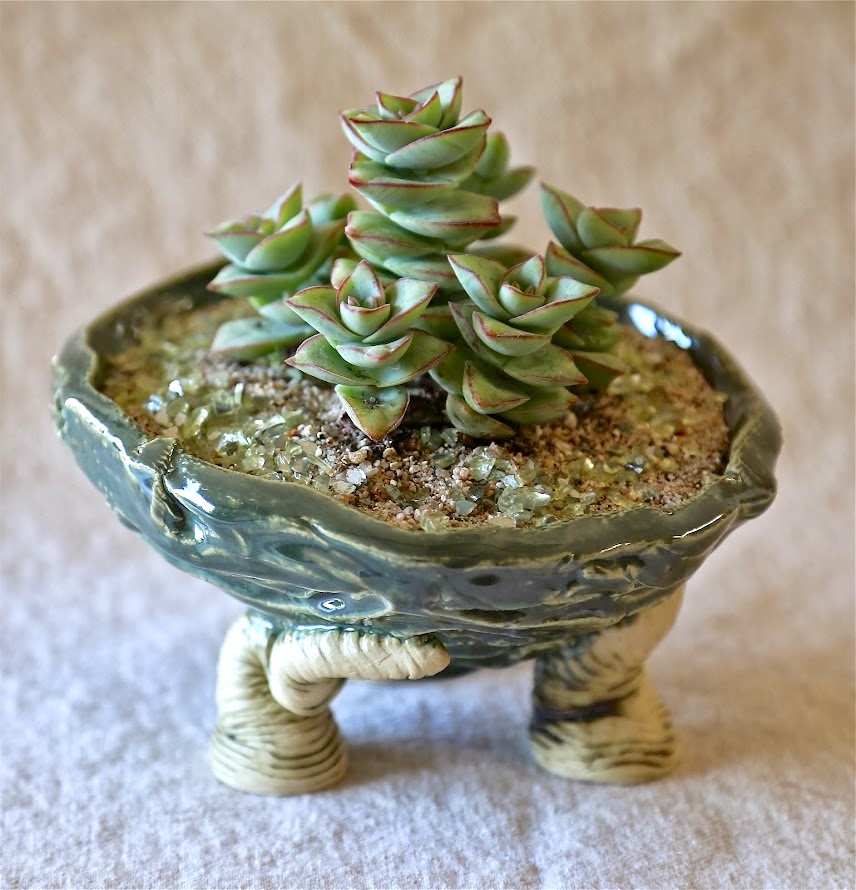
"Stacked crassula" describes those species and cultivars in the genus Crassula with stems that go through the middle of the leaves. This creates what looks like stacks of bagels, beads on a necklace, minarets, pagodas, alternating plus-signs, rounded stars, rattler tails, pinwheels and more.

Crassula deceptor (c) Debra Lee Baldwin

Crassula deceptor

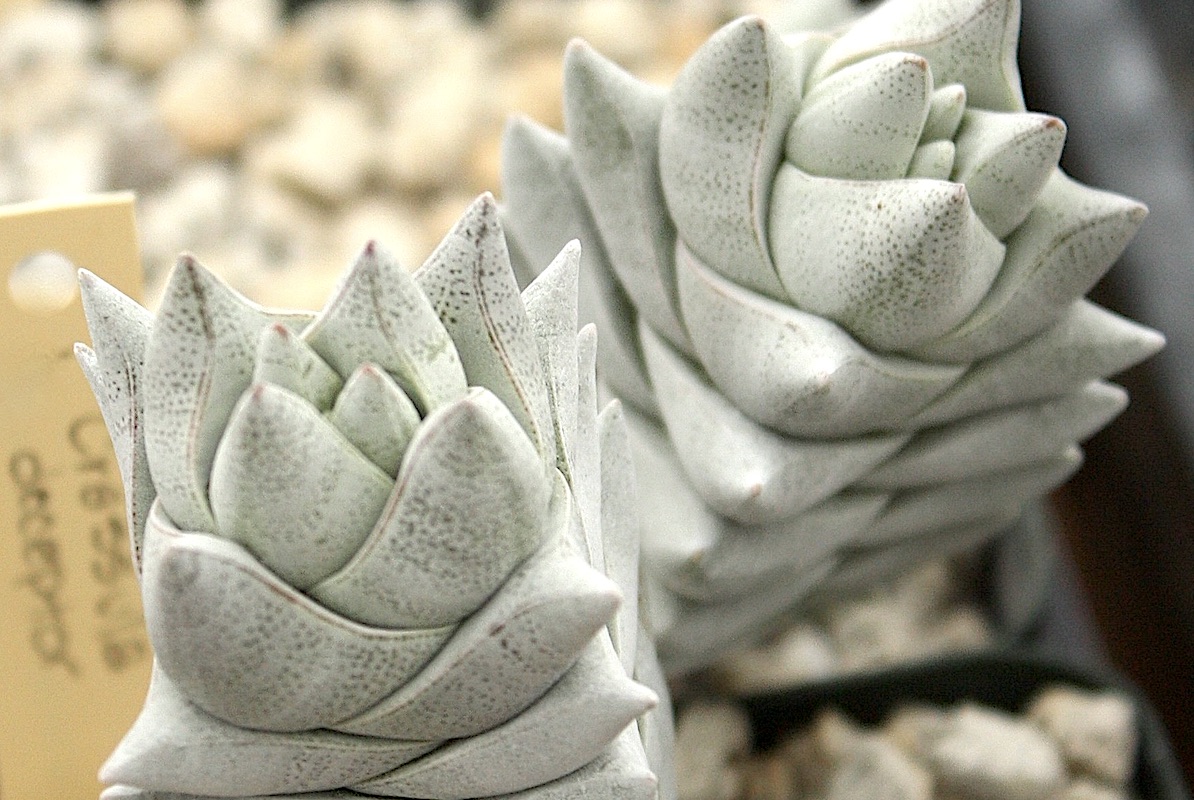
Leaves vary from chunky (Crassula 'Moonglow') to dainty (Crassula 'Petite Bicolor'). Colors range from silvery white (Crassula deceptor) through shades of blue, green, brown and maroon. Flowers are tiny and clustering---similar to those of jade plants (one reason they're in the same genus). Stems vary from green "watch chains" (Crassula muscosa) to caterpillars (Crassula 'Baby's Necklace'). Go to the Crassula Gallery.

Stacked Crassula video

I'm so proud of my comprehensive, eye-candy video and eager for you to see 20+ collectible, easy-care and endearing varieties. Each has its own form, color and personality. In the video, you'll learn names, how to care for them, see them showcased in pots, and find out how to take cuttings. Yes, it's possible to propagate succulents with leaves so tight they conceal the stems! And---spoiler alert---it's easy.

Because names vary...

I've painstakingly researched plant names, which tend to be confusing or inaccurate online. I suspect this has to do with the same variety looking different depending on sun exposure, and vendors trying to ID plants from photos. Also to assist my viewers, I tracked down the parentage of crosses and cultivars, and (with glee I hope you share...or at least are patient with), I translate intimidating-yet-insightful Latin names.

Crassula pellucida 'Petite Bicolor' (Little Missy) (c) Debra Lee Baldwin

Crassula pellucida 'Petite Bicolor' (Little Missy) is among the more delicate stacked crassulas 

Where and how to grow them

Stacked crassulas are too small to grow in the open garden---at least in mine, where they'd soon be engulfed or forgotten. Where I live in the foothills northeast of San Diego (Zone 9b), I grow stacked crassulas in pots in sheltered outdoor areas. Like shrub crassulas (jade plants), stacked species are frost-tender.

Growing indoors shouldn't be a problem; most are suited to windowsill pots. Thicker-leaved varieties want less water than thin-leaved ones, and are more likely to rot if overwatered. All want as much sun as possible, short of burning. They do fine in dappled shade, but will reward you by reddening and flowering in greater sun. A few hours of full sun in the morning or late afternoon should do it.

See My Gallery of Varieties

Go to my Crassula page for care-and-cultivation info and a comprehensive gallery of plants, all ID'd.

Shop for Stacked Crassulas

An online source with a consistent inventory and good selection is Mountain Crest Gardens. Not to mention their nomenclature is reliable (yay!). Also look for rarities at Cactus & Succulent Society shows and succulent specialty nurseries. Oasis Water Efficient Gardens in San Diego's North County consistently offers the more common varieties. If you can recommend other sources, do mention them in the comments.

Related Videos and Links

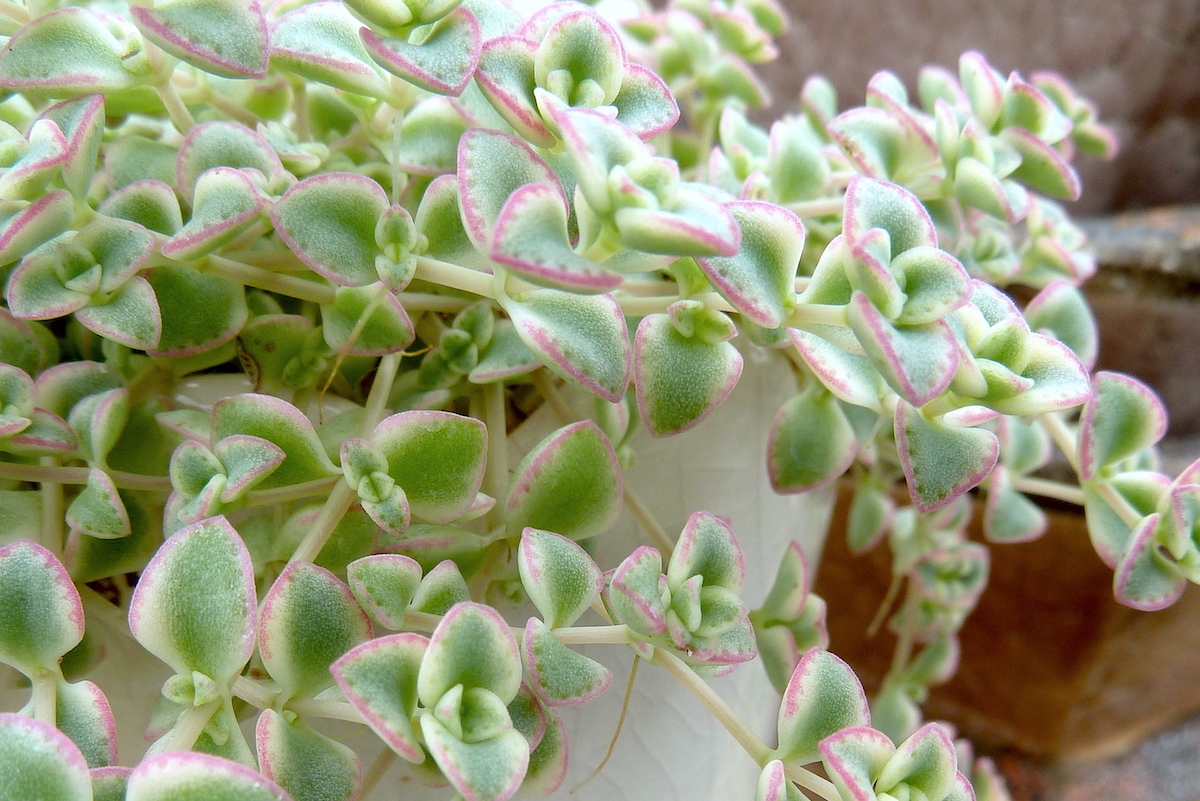
Crassula 'Tricolor' (c) Debra Lee Baldwin

Crassula (Jade and More): Details, Photos and Varieties

Crassulas are among the easiest, most trouble-free succulents to grow, with one caveat: With few exceptions, they’re frost-tender (tend to be damaged when temperatures drop below 32 degrees F). Shrub varieties are very easy to start from cuttings, and stacked jades will send forth whiskery roots from between their tight leaves—simply snip off the stem and bury in potting soil so that roots are covered (it’s OK to bury a few leaves too). Crassulas, like aloes, also stress beautifully to shades of red, yellow and orange. Give variegated varieties adequate sun or they’ll revert to solid green.

Kalanchoe luciae (paddle plant) stressed before-and-after (c) Debra Lee Baldwin

Are Your Succulents Well Stressed? 50 Before-and-Afters

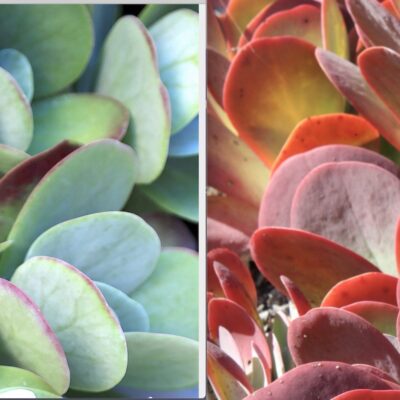
Are your succulents well stressed? Given the right conditions, certain varieties turn from green or blue to brilliant reds, oranges and yellows. See 50 before-and-afters. How much a succulent “colors up” depends on…

The post Discover Stacked Crassulas appeared first on Debra Lee Baldwin. Copyright © Debra Lee Baldwin.


from Debra Lee Baldwin https://ift.tt/sfloexg
via IFTTT